Best Time To Visit Helsingor Travel Guide
Plan best time to visit helsingor with top picks, neighborhood context, timing tips, and practical booking advice for a smoother trip.
On this page
Best Time To Visit Helsingor
Helsingør sits on the northeastern tip of Zealand, 45 kilometres from Copenhagen, and the season you choose shapes almost every part of your visit. Summer brings the longest daylight, the biggest crowds, and the Shakespeare festival at Kronborg. Shoulder months — May and September — offer mild weather with noticeably thinner queues. Winter turns the town quiet and intimate, with Christmas markets in the castle courtyard and almost no tourist competition for the casemates.
This guide breaks down what each season actually delivers, month by month, and explains how the timing question changes if you are planning a a day trip from Copenhagen rather than an overnight stay. The short answer: June through early September for the full experience, May or late September for smart value, and December if you want Kronborg almost to yourself. For official travel planning resources, consult VisitDenmark for comprehensive seasonal guidance.
Season by Season: When to Visit Helsingør
Summer (June–August) is peak season for good reason. Daylight runs from around 04:30 to 22:00 in late June, giving you far more usable hours than anywhere else in Europe at the same latitude. Kronborg opens at 10:00 and stays open until 18:00, and the surrounding grounds fill up quickly by mid-morning. The Hamlet Sommer festival — outdoor Shakespeare performances staged on the castle courtyard — runs across late July and into August most years, turning an already dramatic setting into a genuine theatrical event. Book tickets for both the castle and the festival well in advance if you plan to attend.
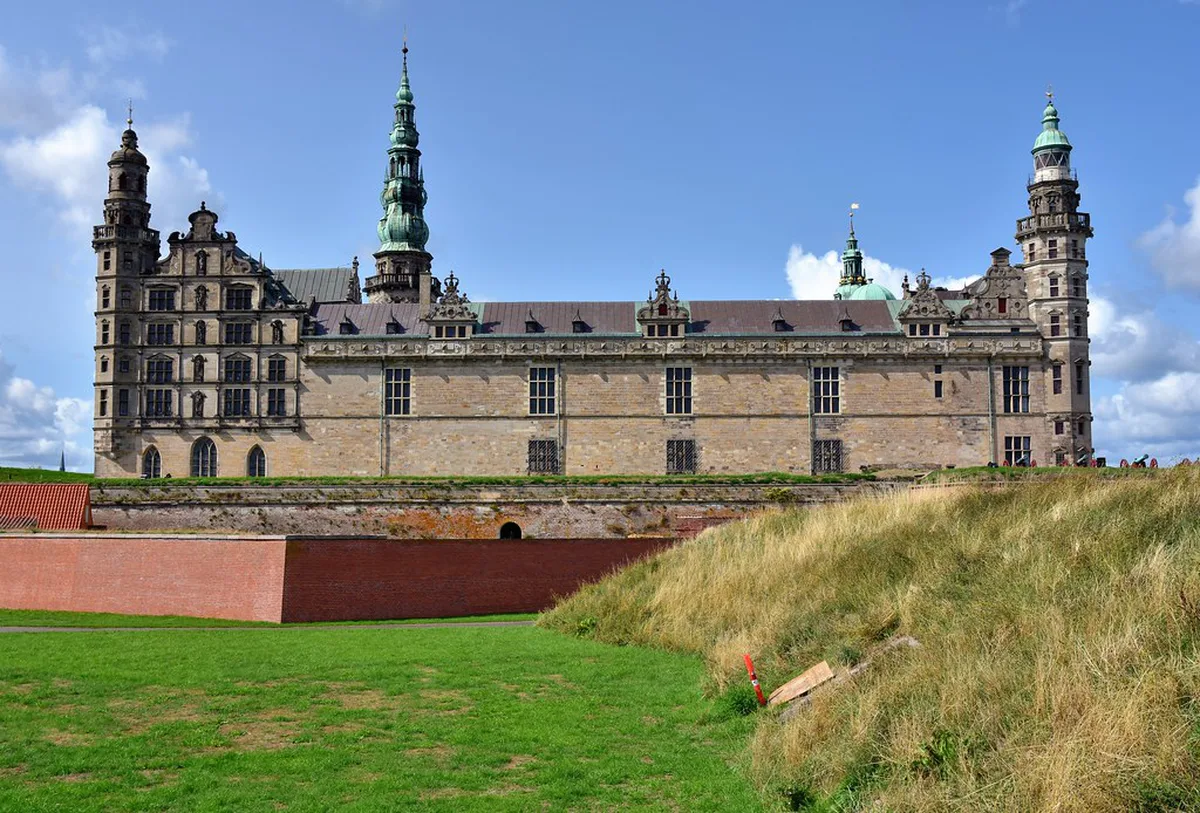
Shoulder season (May and September) is the most rewarding window for many travellers. Temperatures sit between 12 °C and 18 °C, the crowds thin out considerably after the school holidays end, and prices for accommodation in Helsingborg just across the strait often drop by 20–30%. The guided tours at Kronborg — Hamlet's Castle, Kronborg Queens, and Secrets of Kronborg — are only available from 1 July to 31 August, so September visitors must settle for self-guided or the basic All About Kronborg tour (offered at 14:00 in September). May, on the other hand, gives you all the flowers in the Marienlyst castle gardens without any of the August heat.
May and September are ideal for day trips from Copenhagen—the 45-minute train journey feels shorter when the weather is mild, and you'll reach the castle gate right at opening without the long summer queues that build by 11:00.
Winter (October–March) is for travellers who want Kronborg's dark casemates to feel genuinely eerie. Visitor numbers drop sharply, and you can walk through the dimly lit underground corridors almost alone. The castle closes at 16:00 in winter, and it is closed on Mondays in February. A Christmas market fills the courtyard in December, and the town's half-timbered streets feel especially cosy against the grey Øresund backdrop. Pack for cold, damp conditions — temperatures sit around 2–6 °C, with frequent wind off the strait.
The Hamlet Sommer festival (late July–early August) is the single reason to visit Helsingør at peak season—Shakespeare performances staged on the castle ramparts with the Øresund Strait as your backdrop are unforgettable. Book tickets weeks in advance; they sell out quickly.
Helsingør Weather Month by Month
The table below shows average conditions across the year. Daylight hours are approximate for midsummer and midwinter peaks; shoulder months fall between the two extremes. Rain in Helsingør is fairly evenly distributed year-round — there is no clear dry season — so a compact umbrella is useful regardless of when you visit.
| Month | High °C | Rain (mm) | Daylight | Notes |
|---|---|---|---|---|
| January | 2 | 60 | ~7 h | Quiet, cold, windy |
| February | 2 | 45 | ~9 h | Coldest month. Castle closed Mondays |
| March | 5 | 45 | ~11 h | Minimal crowds |
| April | 9 | 40 | ~13 h | Gardens begin to bloom |
| May | 14 | 45 | ~16 h | Excellent shoulder month, gardens in bloom |
| June | 17 | 55 | ~18 h | Peak season. Castle open until 18:00 |
| July | 19 | 65 | ~17 h | Hottest, busiest. Hamlet festival late July |
| August | 19 | 65 | ~15 h | Still busy. Festival continues into August |
| September | 16 | 60 | ~13 h | Crowds thin. Ideal for photography |
| October | 11 | 65 | ~10 h | Autumn colours on coastal paths |
| November | 6 | 65 | ~8 h | Very quiet. Good for museums |
| December | 3 | 60 | ~7 h | Christmas market. Cosy atmosphere |
The starkest practical difference between summer and winter is not temperature but daylight. In June you can arrive at 09:00, spend two hours at Kronborg, walk the old town, have lunch at the harbour, visit the Maritime Museum, and still catch a 19:00 train with light to spare. In December you lose usable daylight around 15:30, which limits what you can realistically fit into a day trip from Copenhagen.
Best Time for a Copenhagen Day Trip to Helsingør
Trains on the DSB Coastal Railway (Kystbanen) run every 15–20 minutes from Copenhagen Central Station and Nørreport. The journey takes 45–55 minutes. A standard one-way ticket costs 60–95 DKK depending on zones; if you have the Copenhagen Card, both the train and admission to Kronborg and the Maritime Museum are included. The Copenhagen Card is genuinely worth calculating for a full day trip — admission to Kronborg alone is 145 DKK per adult in 2026.
For a day trip, the optimal departure window is 08:00–09:00 from Copenhagen. An 08:30 train from Copenhagen H arrives before 09:30 in Helsingør, letting you walk the 1.1 km to the castle and be at the gate right at opening (10:00). This approach is especially important in July and August, when the castle fills up quickly by 11:00. Helsingør Station itself is worth a moment — the Dutch Renaissance building from 1863 has been declared the most beautiful railway station in Denmark. Return trains depart from directly next to the ferry terminal roughly every 15–20 minutes through the evening, with a journey time of about one hour back to the city centre.
If you are driving, the E47 from Copenhagen runs 65 km to Helsingør in under 50 minutes. Paid parking is available at Parkering Kronborg Slot (Nordhavnsvej, run by APCOA) right next to the castle. The only clearly signed free parking is 24-hour Parking Helsingør on Google Maps, about 1.5 km from Kronborg — a 15-minute walk that works fine if you plan to explore the whole town anyway.
Exploring Kronborg's Crownwork and Grounds
Kronborg's star-shaped outer fortification — the crownwork — is the first thing you encounter after crossing the moat bridges. It is free to walk and open at all times, which makes it a good option even if you arrive before 10:00. The ramparts, green spaces, and views of the Øresund Strait toward Helsingborg in Sweden are some of the best angles in the entire complex. On a clear morning you can see Ven Island rising out of the strait between the two coasts.
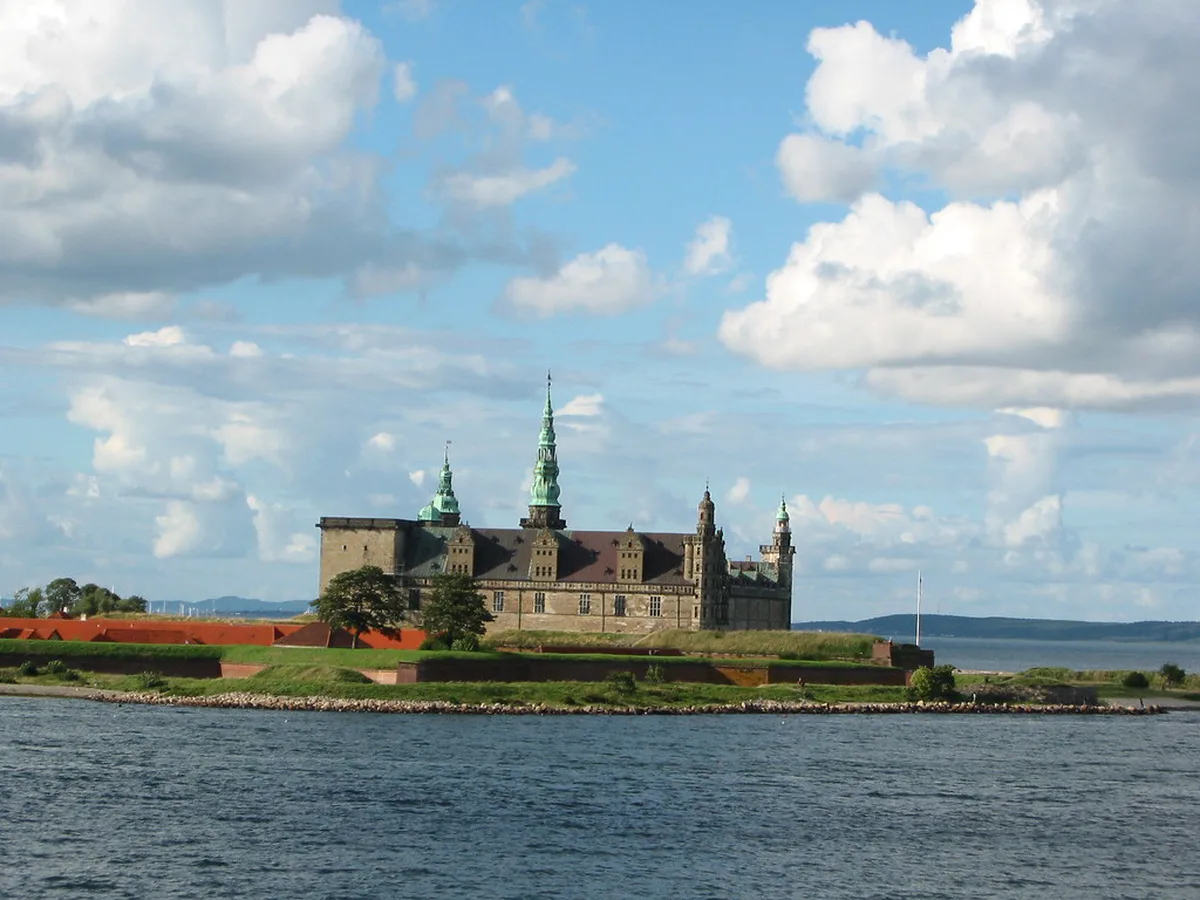
Tickets for the castle interior are sold at the small yellow Brohus (bridge house) at the first bridge crossing — this booth typically has no queue, unlike the desk inside the castle. You can also book online at Kronborg's official site. The interior includes the royal apartments, the Great Hall (one of the largest Renaissance halls in Northern Europe at over 60 metres long), the chapel, the Cannon Tower, and the casemates. A self-guided visit with all areas covered takes most visitors about two to two and a half hours.
The guided tours — Hamlet's Castle, Kronborg Queens, and Secrets of Kronborg — run only from 1 July to 31 August. If you want a guided experience outside summer, the All About Kronborg tour runs at 14:00 in shoulder and autumn months. An audio guide via a third-party app is available year-round; the information panels inside each room are detailed and available in English, so many visitors find them sufficient without a guide.
Climbing the Cannon Tower
The Cannon Tower is included in standard admission and involves 145 steps up a narrow spiral staircase. The climb is straightforward for most visitors — not steep enough to be strenuous, but narrow enough that you cannot pass someone coming the other way. Budget around 20 minutes for the climb and the views from the top. Expect wind on the viewing platform regardless of the season: it is the dominant feature of Helsingborg Strait weather.
Clear days in May, June, and September give the best visibility from the top. On a good day you can see Helsingborg, the ferry crossing the strait, Ven Island, and the sweep of Kronborg's crownwork and fortifications directly below. In high summer, a haze over the water sometimes softens the visibility. The autumn light in September is often the sharpest for photography from any elevated point in the town.
The Casemates, Holger the Dane, and the Winter Bat Colony
Kronborg's casemates run underground beneath the castle and are included in standard admission. Built in the 1570s, these tunnels were designed to shelter up to 350 soldiers through a six-week siege, equipped with food stores, cannons, a forge, and stabling. The corridors are damp and dimly lit, but there is enough lighting and route signage to navigate without a torch. The suggested route is clearly marked.
The statue of Holger the Dane sits in a chamber at the deepest point of the casemates. According to Danish legend, Holger will awaken when Denmark faces its darkest hour. The statue has been in place since the 1980s. What no competitor guide mentions: if you visit in winter, the casemates are home to a bat colony that roosts in the upper reaches of the tunnels. The bats are harmless and largely invisible unless you look carefully with a light, but they add a genuinely strange atmosphere to the already eerie space. Winter visitors who skip the casemates because of the cold are missing one of the most memorable parts of the site.
The casemates entrance is in the castle courtyard. Allow around 20–25 minutes. The floors are uneven stone, so flat shoes with grip are more practical than sandals or heels in any season.
The Old Town, Maritime Museum, and Lunch
After the castle, follow the path back toward town and you pass the Danish Maritime Museum on your left. Designed by Bjarke Ingels Group and built into the former dry dock next to Kronborg, it won recognition as one of the eight greatest new museums globally according to the BBC. The underground galleries focus on Denmark's seafaring heritage and are comfortable year-round. Plan around one hour. The M/S Café inside the museum is a good stop for an open-faced sandwich before heading into the old town.
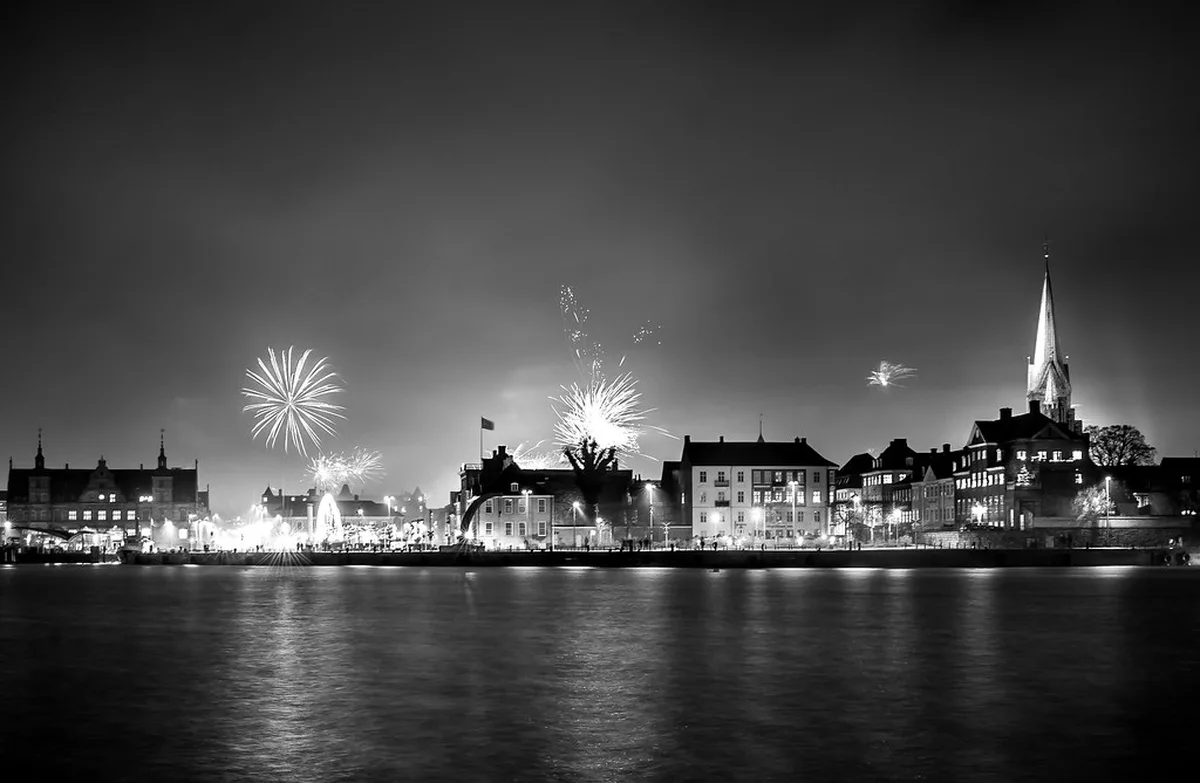
St. Mary's Church and the Carmelite Priory — considered the oldest still-standing monastery in Scandinavia, founded in 1430 — is a short walk into the old town. Access is by pre-booked guided tour only; if you have not arranged one in advance, the exterior courtyard and cloisters are still worth seeing. Learn more about Helsingør on Wikipedia. St. Olaf's Church (Sankt Olai), Helsingør's red-brick Gothic cathedral, is open Tuesday to Saturday 10:00–14:00 from September through April. The Ship Broker's House (Skibsklarerergaarden) on Strandgade uses actors to recreate the Sound Dues era — it is free with the Copenhagen Card and takes around 30–40 minutes.
For lunch, Axeltorv square in the old town is the practical centre. Gæstgivergaarden at Kampergade 11 serves hearty Danish stew and meatballs in a pub setting directly on the square. Café Chaplin overlooks the square and handles salads and sandwiches well for a lighter meal. The best option for groups or those who want variety is Værftets Madmarked — the shipyard food market near the waterfront, with stalls covering everything from fish and chips to Thai and Indian dishes. It is busy in summer but worth it. If you want coffee and cakes, Kagefryd at Stengade 58 is a reliable bakery in the old merchant quarter.
The Hamlet Shakespeare Festival: The One Date That Changes Everything
Every competitor article mentions that Kronborg is Hamlet's castle. None of them explain what happens there in late July and August in concrete terms. The Hamlet Sommer (Hamlet Summer) festival stages live Shakespeare performances — most years Hamlet itself, occasionally other plays — in the castle courtyard and on the ramparts. The setting is extraordinary: the Øresund Strait at dusk, the castle walls lit by production lighting, audiences in the open air. Tickets sell out weeks in advance and cost roughly 200–450 DKK depending on the production and seating tier.
If the festival is your primary reason to visit, book the performance ticket first and build your travel dates around it, not the other way around. The festival typically runs across two to three weekends in late July and into the first two weeks of August. Check the official Kronborg or Hamlet Sommer website in April or May for 2026 dates and ticket release. Combine the evening performance with a full day of castle exploration the same day: arrive at 09:30, spend the morning and early afternoon at the castle and town, eat at the food market around 17:00, then attend the evening performance. This is the single most distinctive thing you can do in Helsingør that cannot be replicated at any other time of year.
Accommodation and Staying Overnight
Most visitors come to Helsingør as a day trip from Copenhagen, but an overnight stay opens up the early morning castle grounds (before the day-trip crowds arrive by train from 10:00 onward) and the evening light on the Øresund Strait. Options in the town include Hotel Skandia and Hotel Hamlet in the town centre, and Marienlyst Strandhotel and Danhostel Helsingør on the beachfront. Marienlyst is the most comfortable beach option; the Danhostel is budget-friendly and well-located for walkers.
Staying in Helsingborg on the Swedish side of the strait is a less obvious alternative. The our complete Helsingør guide are all within a short ferry ride — the crossing takes under 20 minutes and ferries run frequently — and Swedish accommodation prices are often lower than Danish equivalents, especially in summer. This works particularly well if you have a car and are combining Helsingør with other sites in the region.
Frequently Asked Questions
Is Kronborg Castle worth visiting in the winter?
Yes, Kronborg Castle is definitely worth visiting in winter for a cozy, crowd-free experience. The interior rooms are atmospheric, and the Christmas markets in the courtyard are a seasonal highlight. You can learn more about the best spots in our the full Helsingør overview guide.
How long should you spend at Kronborg Castle?
Most visitors should plan to spend at least 2 to 3 hours exploring the castle. This allows enough time to see the royal apartments, the chapel, and the dark casemates below. If you enjoy history, you might want to stay longer for the guided tours.
What is the best month for weather in Helsingor?
June and July typically offer the best weather with the most sunshine and mild temperatures. These months provide the best conditions for outdoor walking tours and harbor activities. However, May and September are excellent alternatives with fewer tourists and pleasant air.
Helsingør rewards visitors in every season, but the timing question has real stakes. June through August delivers the longest days, the Shakespeare festival, and all guided tours at Kronborg — at the cost of the largest crowds. May and September offer the best balance of comfortable weather, open hours, and thin queues. December is genuinely special if a Christmas market atmosphere and near-empty casemates appeal to you more than summer warmth.
For a the Copenhagen day-trip plan, board the 08:00–09:00 train, arrive at Kronborg for opening, work through the castle and the old town in order, and take an early evening return. The Copenhagen Card covers the train, Kronborg, the Maritime Museum, and the Ship Broker's House — it is worth calculating against individual ticket prices before you leave.
You might also like


Continue reading
More guides you'll find useful