

Kronborg Castle Travel Guide
Plan kronborg castle with top picks, neighborhood context, timing tips, and practical booking advice for a smoother trip.
On this page
Kronborg Castle
Standing on the narrowest point of the Øresund Strait, Kronborg Castle is one of Northern Europe's most significant Renaissance fortresses. It earned UNESCO World Heritage status in 2000 and has drawn visitors from around the world ever since — partly for its military history, and partly because it is the real castle behind Shakespeare's Elsinore in Hamlet.
From the grand Great Hall to the damp casemates below ground, every part of the castle tells a different chapter of Danish history. Planning a day trip from Copenhagen is a popular choice, and Kronborg is the anchor attraction that makes the trip worthwhile.
Facts about Kronborg Castle
The story of Kronborg begins in the 1420s, when King Eric of Pomerania built a fortification here called Krogen to collect the Sound Dues — a toll levied on every ship passing through the strait. At its peak, these tolls accounted for roughly two-thirds of the Danish crown's revenue, making this one of the most profitable chokepoints in European history.
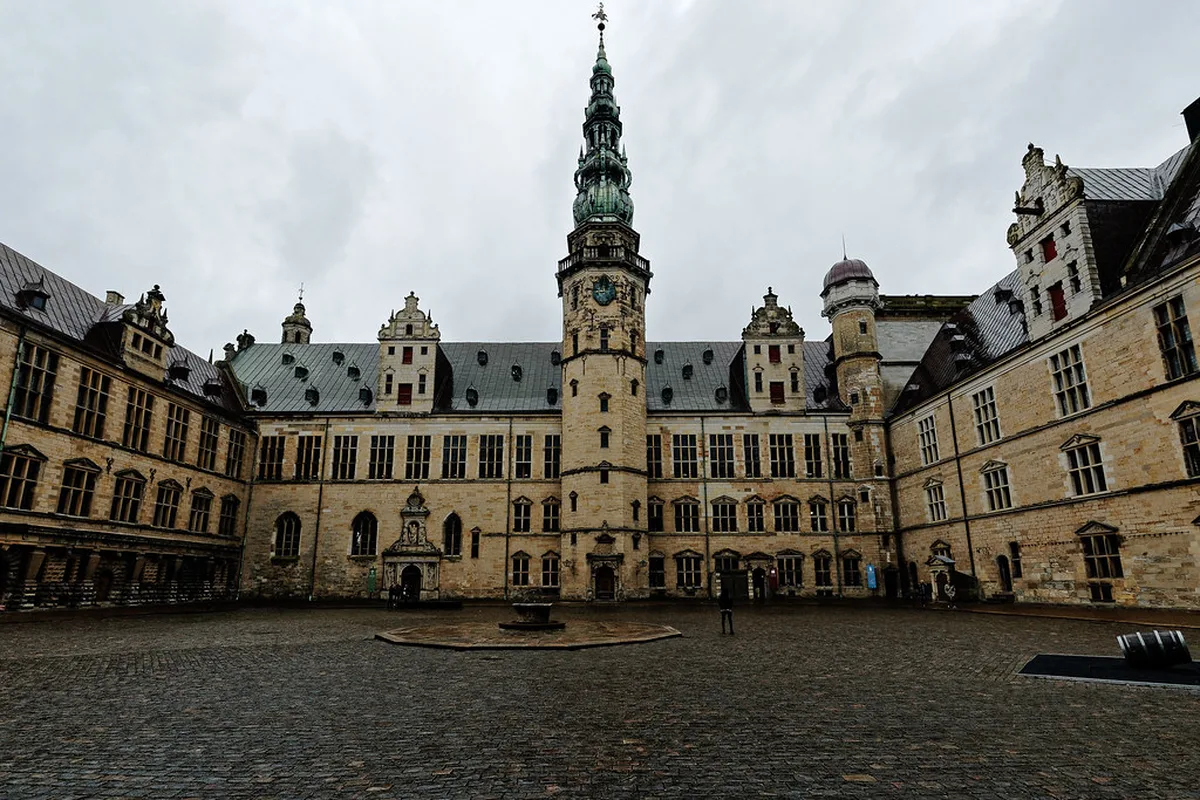
King Frederick II replaced the old structure with the Renaissance palace you see today, completing the transformation between 1574 and 1585. A catastrophic fire in 1629 gutted most of the interiors; only the chapel survived intact. Christian IV oversaw the rebuilding, and in 1658 Swedish forces plundered the castle during one of the many Scandinavian wars of the period.
From 1785 to 1923, the castle served exclusively as military barracks and a prison — which explains why the interiors feel more purposeful than lavish. The Great Hall, stretching over 60 metres, remains one of the largest Renaissance halls in Northern Europe. It is a striking space, but austere, not ornate.
Admission is 145 DKK for adults during the peak season (June through August) and 95 DKK for the rest of the year. Children under 18 enter free. You can book Kronborg ticket prices and hours online to skip the queue in summer, or use a Copenhagen Card for free entry alongside a free train ride from Copenhagen.
Kronborg Castle is a UNESCO World Heritage Site, recognized for its outstanding universal value as a Renaissance fortress. The castle's control of the Sound Dues made it one of Europe's most profitable strategic chokepoints — at its peak, tolls collected here funded roughly two-thirds of Denmark's royal revenue. This economic history shaped Denmark's power and the entire Baltic trade route.
Kronborg as Hamlet's Castle
Kronborg is internationally known as Hamlet's castle — the real-world Elsinore that William Shakespeare used as the setting for his tragedy. "Elsinore" is simply the anglicised name for Helsingør, the Danish city that grew up around the fortress. Shakespeare gave the play its Danish geography in the late 1590s, a period when the castle's fame as a power centre was well established across Europe.
The playwright almost certainly never visited. But English acting troupes regularly performed for the Danish court at Kronborg during the 1580s and 1590s, and accounts of the fortress circulated widely in Elizabethan England. Shakespeare had enough detail to set an entire royal drama here without leaving London. The ghost on the battlements, the court intrigue, the sea-facing ramparts — the geography of the play matches what you actually see when you walk the walls today.
The castle leans into this legacy with purpose. A dedicated "Hamlet's Castle" themed guided tour runs daily from 1 July through 31 August (included with admission), walking visitors through the rooms that correspond to scenes in the play. The annual Shakespeare Festival — typically held in the courtyard in late summer — brings professional productions of Hamlet to the exact setting Shakespeare imagined. If your visit coincides with a performance, it is a rare experience.
Whether or not Shakespeare stood here, the connection is genuine enough that the castle is listed as a Shakespeare heritage site by the Globe Theatre in London. For many visitors, that literary weight is the thing that elevates Kronborg above a standard castle visit.
Opening Hours and Ticket Prices
Kronborg operates on a seasonal schedule that shifts meaningfully through the year. In winter (November through 22 March), it opens Tuesday to Sunday from 11:00 to 16:00 and is closed on Mondays. Spring hours (23 March through 31 May) run 10:00 to 17:00 every day. Summer (1 June through 1 September) extends to 10:00 to 18:00, and autumn (2 September through 31 October) reverts to 10:00 to 17:00. Always verify the current schedule on the official Kronborg Castle website before travelling.
| Opening Hours by Season (2026) | |
|---|---|
| Season | Hours |
| Winter (Nov 1 – Mar 22) | Tue–Sun 11:00–16:00 (closed Monday) |
| Spring (Mar 23 – May 31) | Daily 10:00–17:00 |
| Summer (Jun 1 – Sep 1) | Daily 10:00–18:00 |
| Autumn (Sep 2 – Oct 31) | Daily 10:00–17:00 |
| Ticket Prices by Visitor Type | |
|---|---|
| Visitor Type | Price (2026) |
| Adult (peak: Jun–Aug) | 145 DKK |
| Adult (off-peak) | 95 DKK |
| Student (peak) | 135 DKK |
| Student (off-peak) | 85 DKK |
| Child under 18 | Free year-round |
| Copenhagen Card holder | Free (covers train + admission) |
Adult tickets cost 145 DKK in peak season and 95 DKK off-peak. Students pay 135 DKK in summer and 85 DKK outside it. Children under 18 are free year-round. The Copenhagen Card covers both your train fare from Copenhagen (around 80–90 DKK each way) and castle admission — making it worth the calculation if you plan to visit more than two or three attractions in the capital region on the same trip.
Most visitors find that two and a half to three hours is enough to cover the interior rooms, the chapel, the casemates, and the tower. If you plan to walk the outer ramparts slowly and have lunch, budget four hours. The crownwork and exterior fortifications are free to enter and worth at least 30–45 minutes on their own.
The Crownwork and Casemates
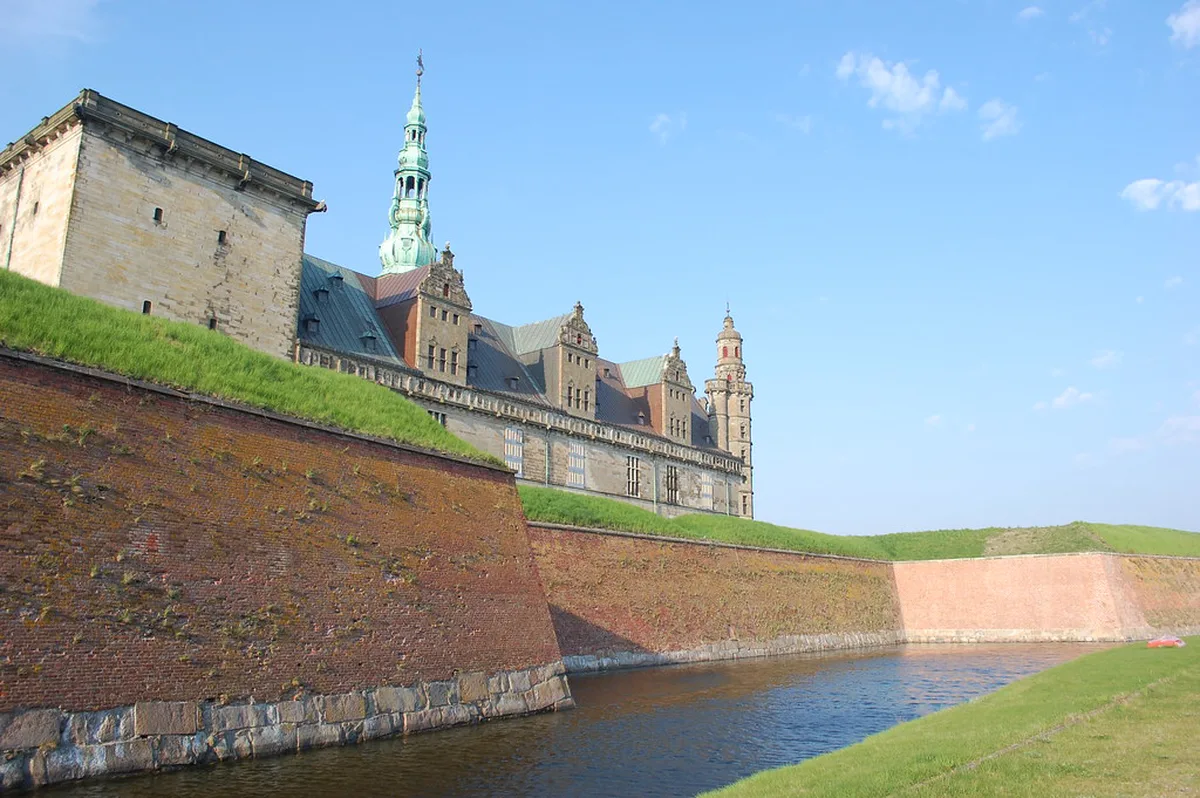
The first thing you notice approaching Kronborg is the outer fortification — a star-shaped crownwork of ramparts, moats, and bridges that encircles the castle proper. This defensive ring dates to the 17th century and reflects the military paranoia of a nation constantly threatened by Swedish ambitions. Crossing the two bridges over the moat before you even reach the main courtyard gives you a tangible sense of how seriously the Danes took this position.
The casemates are reached from inside the castle and deserve at least 20 minutes. Built in the 1570s, these underground passages could house up to 350 soldiers and were stocked for a six-week siege — food, cannons, a forge, and stabling for horses. The corridors are damp and dimly lit, but well-signed; the route is clearly marked and you will not get lost. Wear a light jacket even in summer, and use solid walking shoes as the stone floors are uneven.
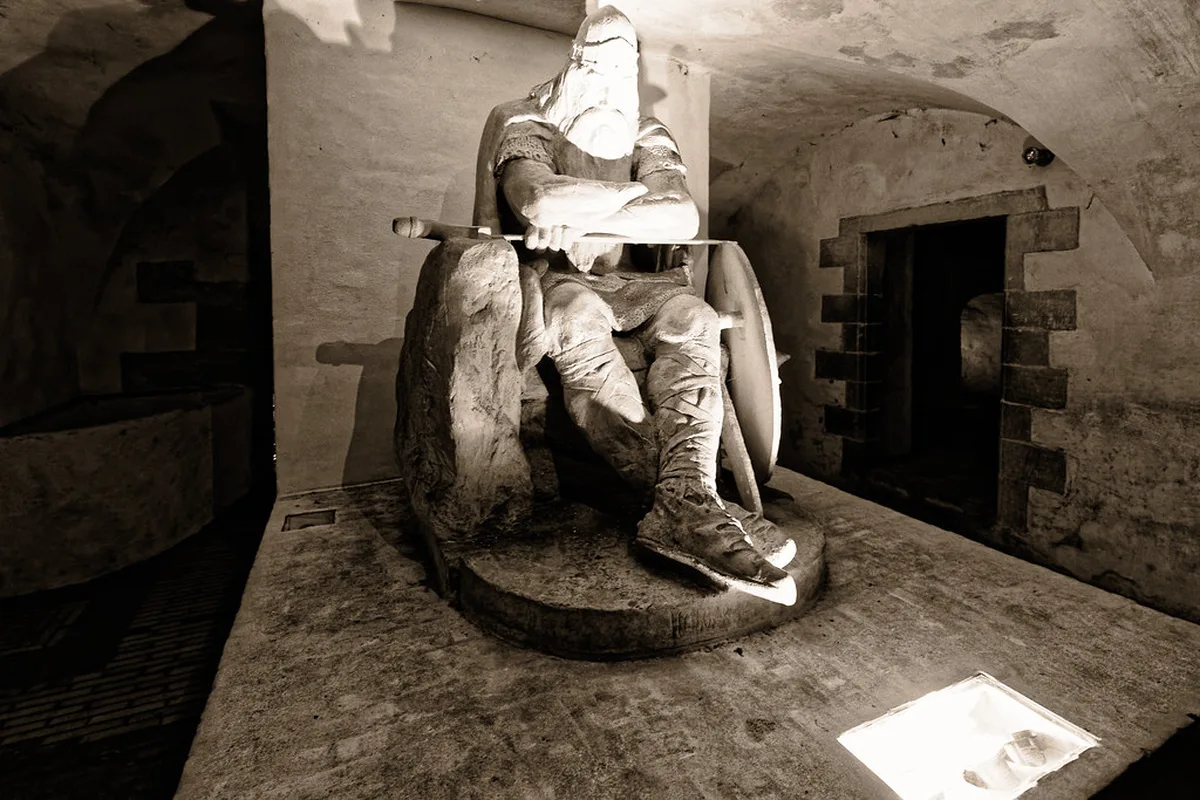
The most famous resident of the casemates is the statue of Holger Danske — Holger the Dane. Danish folklore holds that this warrior sits asleep beneath the castle, and that he will rise and defend Denmark if the nation ever faces its darkest hour. The statue was carved in 1985 and has become one of the most photographed spots in the entire castle. In winter, the casemates also host a colony of bats, which adds a different kind of atmosphere. The the M/S Maritime Museum sits just outside the crownwork walls and pairs naturally with an afternoon visit.
Holger Danske is more than a sculpture — he is a deep-rooted Danish legend. The name appears in medieval Scandinavian sagas as a warrior king, and the folklore about him awakening to defend Denmark during national crisis has been invoked throughout Danish history. The modern statue in the casemates has become a symbol of Danish resilience and is one of the castle's most visited spots.
Climbing the Cannon Tower
The Cannon Tower offers the best panoramic view in Helsingør, but you have to earn it: 145 narrow steps on a spiral staircase that is steep enough to be challenging for anyone with mobility concerns or a dislike of confined spaces. The climb takes around five minutes at a steady pace and the reward is immediate.
From the viewing platform you can see the full sweep of the Øresund Strait, the Swedish city of Helsingborg just four kilometres across the water, Ven Island further north, and the entire star-shaped crownwork spread out below you. On clear days the proximity to Sweden is startling — you can see individual buildings on the far shore. It is the clearest illustration of why whoever controlled this narrows controlled Baltic trade.
Go early in the day if possible. The platform is small and the number of visitors allowed at once is limited by safety regulations. Afternoon queues on peak summer days can add a 20-minute wait. The views are best in morning light, and the wind — which is almost constant here — is typically calmer before midday.
The Chapel
The Kronborg Chapel is the only part of the castle that survived the 1629 fire completely intact, which makes it historically unique. King Frederick II originally opened it in 1582, and the interior you see today is essentially what it looked like then: white walls, black and white checkered floors, and a richly carved oak pulpit that is one of the finest surviving examples of 16th-century Danish craftsmanship.
There are no frescoes — the chapel's aesthetic is austere, matching the rest of the castle — but the original pews from the 1580s are still in place and the carved woodwork on the pulpit rewards close inspection. The chapel was repurposed for military use at various points in the 19th century and restored for religious services in the 1840s. It remains a consecrated church today and is relatively small, so crowds rarely linger long.
For visitors focused on Hamlet, the chapel has additional resonance: in the play, Hamlet famously declines to kill Claudius while he is at prayer. Standing in the actual chapel of the castle that inspired the story adds an odd layer of literary texture that is hard to get elsewhere.
Getting to Kronborg Castle
The simplest route from Copenhagen is the DSB Coastal Railway from Copenhagen Central Station to Helsingør Station. Trains run approximately every 20 minutes and the journey takes about 45 minutes. Helsingør Station is roughly a 10–15 minute walk from the castle gates through the town centre. There is also a train and bus option to Kronborg Castle for those who prefer a more direct connection from outlying areas.
By car, Helsingør is 65 kilometres from central Copenhagen along the E47 motorway — typically under 50 minutes in light traffic. Paid parking (APCOA Parkering Nordhavnsvej) sits immediately beside the castle. Free 24-hour parking is available about 1.5 kilometres away near the marina, which adds a 15-minute walk but pairs well with a stroll through town.
A ferry runs between Helsingborg in Sweden and Helsingør year-round, taking around 20 minutes. If you are travelling from Sweden or combining Kronborg with a trip to southern Sweden, this is a convenient option. Tickets are purchased at the ferry terminal. Planning a the Copenhagen day-trip plan by train is by far the most common approach and the easiest to execute without advance planning.
Events and Best Time to Visit
Summer is the clearest window for a Kronborg visit: the castle opens its longest hours, all guided tours run (including Hamlet's Castle, Kronborg Queens, and Secrets of Kronborg), and the Shakespeare Festival typically takes place in the courtyard. July and August are the busiest months — expect queues at the ticket desk and the tower unless you arrive at opening time or book ahead. September is arguably the sweet spot: opening hours are still long, crowds thin noticeably, and the autumn light on the strait is exceptional.
December brings a Christmas market inside the castle courtyard, which transforms the space with local craft stalls and traditional Danish seasonal food. It is one of the more atmospheric Christmas markets in the region. The castle runs on shorter winter hours during this period, so check the schedule carefully if you are planning around the market.
Live history reenactments featuring actors in period costume run on selected weekends through summer. These are worth noting on the castle's events calendar if you are travelling with children or have a strong interest in the military history of the site. For wider context on what is happening in town, the our complete Helsingør guide calendar covers festivals and events across the whole city. If you want the sunrise silhouette of the castle or quiet photography access, check where to base yourself — staying locally lets you arrive before tour groups from Copenhagen.
The Copenhagen Card: What It Actually Saves You
Both competitors mention the Copenhagen Card in passing, but few visitors realise how cleanly it covers a Kronborg day trip. A return train ticket from Copenhagen to Helsingør costs roughly 160–180 DKK (80–90 DKK each way at standard DSB rates in 2026). Add the 145 DKK peak-season castle admission and you are already at 305–325 DKK before any other stops. A 24-hour Copenhagen Card starts at around 599 DKK but covers both the train and the castle entry, plus free or discounted entry to 87 additional museums and attractions across the region.
The card makes financial sense if you plan to visit one or two more paid sites on the same day — the Denmark's Maritime Museum next door (admission 145 DKK separately), Frederiksborg Castle, or any Copenhagen museum on your return. It breaks even quickly. If you are only doing Kronborg with no other paid stops, a standard ticket is cheaper. The calculation is simple but surprisingly few guides state it clearly enough to be actionable.
The Copenhagen Card also covers public transport across the capital region, meaning you can exit Helsingør Station, walk to the castle, and return to Copenhagen without purchasing a separate rail ticket. Buy the card digitally before you leave — it activates when you first scan it, so there is no risk of starting the clock early.
Kronborg is not a typical castle visit. The interiors are sparse by royal standards — this was a military command post, not a pleasure palace — but the location, the scale of the fortifications, and the literary gravity of the place add up to something more than the sum of its parts. The casemates alone are worth the trip, and few views in Denmark match what you see from the Cannon Tower on a clear day.
Whatever draws you here — the UNESCO history, the Hamlet connection, or the sheer drama of the site on the water — plan around the when to visit Helsingør for optimal weather and fewer crowds. In 2026, the castle remains one of the most rewarding half-day excursions in Scandinavia.
Frequently Asked Questions
How do I get to Kronborg Castle from Copenhagen?
You can take the train and bus to Kronborg Castle from Copenhagen Central Station. The train ride takes approximately 45 minutes, followed by a pleasant 10-minute walk through the historic streets of Helsingor to the castle gates.
Is Kronborg Castle worth visiting?
Yes, it is absolutely worth visiting for its unique mix of UNESCO-protected architecture and literary history. The experience of exploring the dark casemates and the grand ballroom offers a comprehensive look at Danish royal and military life that few other sites can match.
How long should you spend at Kronborg Castle?
Plan to spend at least 3 hours at the castle to see the main interiors, the chapel, and the underground passages. If you enjoy history or photography, you may want to allocate 4 to 5 hours to include the outer fortifications and a lunch break.
You might also like


Continue reading
More guides you'll find useful


