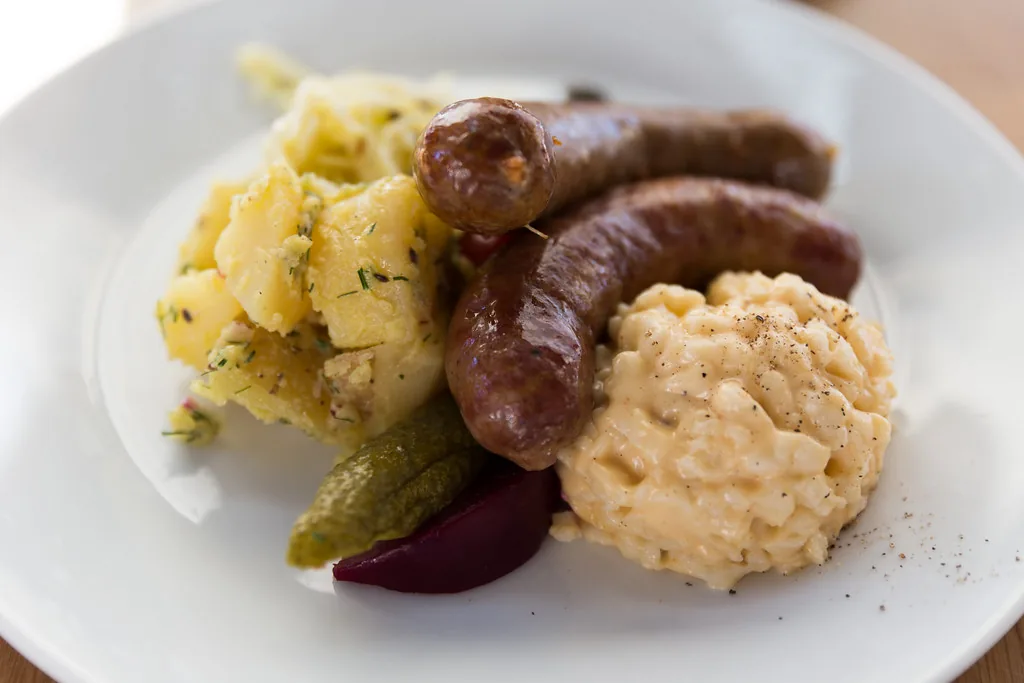
12 Best Restaurants in Odense: A Local Gastronomy Guide (2026)
Explore the 12 best restaurants in Odense for 2026. From Michelin stars to street food, discover where to eat in the Garden of Denmark with our expert guide.
On this page
12 Best Restaurants in Odense
After my third visit to Odense this spring, I realized how much the city's food scene has matured beyond its fairy-tale roots. The city now balances high-end Michelin recognition with a gritty, industrial street food culture that rivals Copenhagen. This guide was last refreshed in June 2026 to ensure all pricing and booking details remain accurate for your next trip.
Odense serves as the capital of Funen, an island often called the Garden of Denmark due to its fertile soil. Local chefs here have immediate access to incredible berries, root vegetables, and even Funen bison from farms south of the city. The region's farm shops on Fyn showcase the island's agricultural heritage and give visitors a window into local producers. You will find that the best restaurants in Odense prioritize these seasonal ingredients above all else.
Whether you seek a historic inn or a modern warehouse vibe, the variety here is surprisingly dense for a mid-sized city. I have personally tested these spots to ensure they offer consistent quality and genuine Danish hospitality. For broader context on Denmark's culinary landscape, VisitDenmark's food guide positions these local establishments within the country's fine-dining renaissance. Prepare for a journey through open-faced sandwiches, avant-garde tasting menus, and the best local cakes in the country.
Key Takeaways
- Best Overall: Restaurant ARO for its Michelin-starred innovation in a former machine workshop.
- Best for Families: Storms Pakhus for its variety of stalls and relaxed communal seating.
- Best Traditional: Restaurant HOS for authentic Danish smørrebrød at lunch.
- Best Value Gourmet: Det Glade Vanvid for the Koch brothers' fixed-price all-inclusive concept.
- Practical Tip: Book high-end restaurants at least two weeks in advance for weekend tables.
Storms Pakhus
Storms Pakhus is Odense's industrial-chic street food market, housed in a raw 19th-century harbor warehouse that once stored grain and machinery. The building's exposed brick walls and steel rafters give the market a genuinely gritty atmosphere that sets it apart from purpose-built food halls. With 24 stalls, 6 bars, and a rotating cast of guest chefs, it is the easiest place in the city to satisfy a group with mixed tastes.
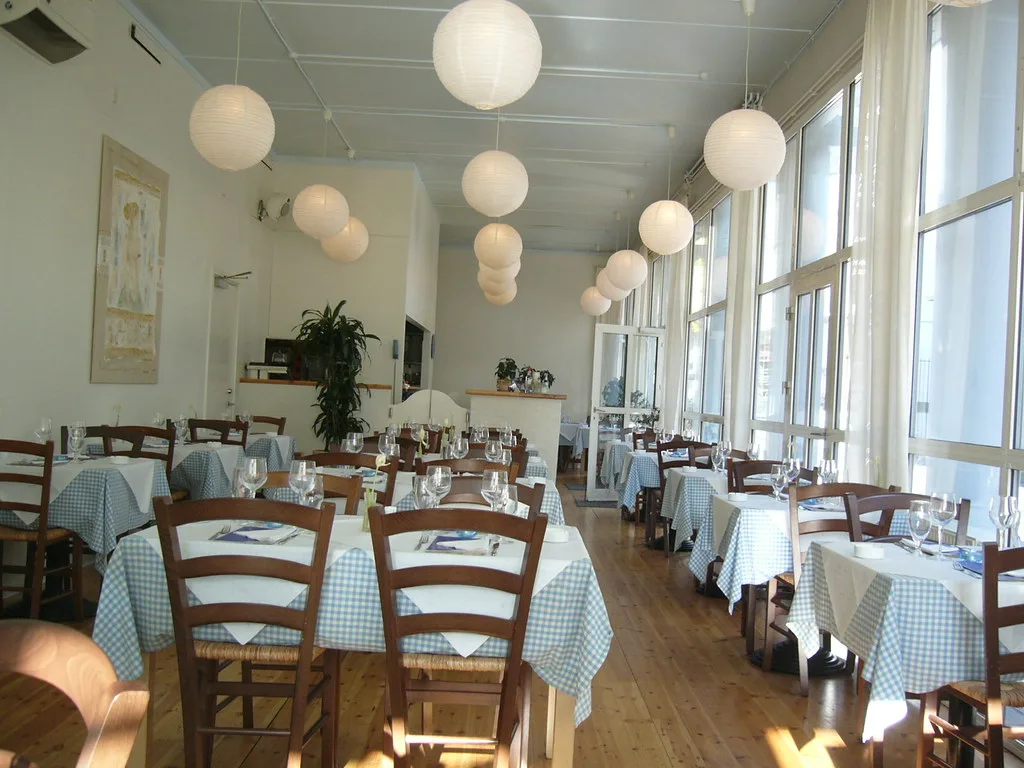
Expect to pay 75–160 DKK per dish, with stalls covering everything from Korean fried chicken to smoked Funen pork sandwiches. The market is open daily from 11:00 to 21:00, though Friday and Saturday evenings are the busiest and most rewarding sessions. Families with children are especially welcome given the communal seating and the informal pace — no reservation required.
The location at Odense's inner harbor also connects the venue to the city's industrial past as a shipbuilding and manufacturing hub. Spending an evening here among the steel and brick gives a genuine sense of what Odense looked like before H.C. Andersen took over the tourist narrative. It is street food with genuine historical context.
Restaurant ARO
Restaurant ARO holds Odense's sole Michelin star and is located inside a converted machine workshop in the industrial quarter near the harbor. The setting mirrors the food philosophy: raw industrial surfaces meet precise, delicate plating that showcases ingredients sourced directly from Funen farms. Head chef Martin Møller Nielsen has built a menu that changes with each season, so no two visits are identical.
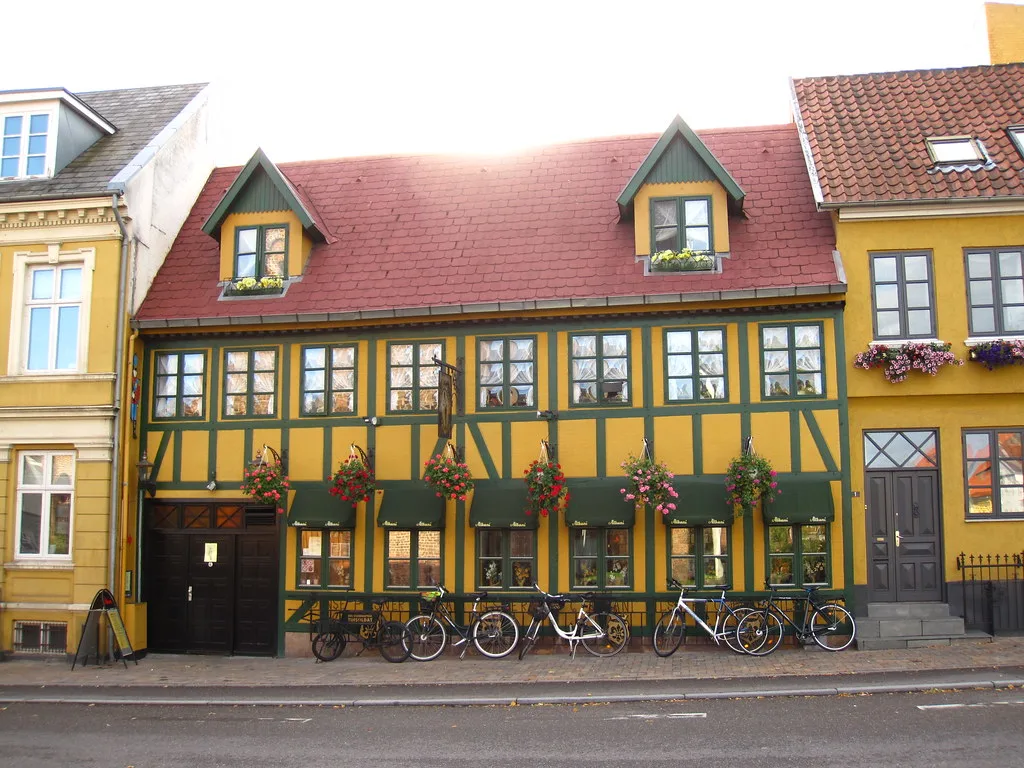
A full evening tasting menu typically costs 1,200–2,100 DKK per person, and the restaurant serves dinner from Wednesday through Saturday. Tables are almost always fully booked two to three weeks ahead on weekends, so plan accordingly. The kitchen's use of local berries, foraged herbs, and Funen bison earns it consistent recognition from the White Guide Nordic alongside its Michelin citation.
The industrial setting is not incidental — the former workshop's high ceilings and exposed beams are a deliberate nod to Odense's manufacturing heritage. Dining here feels like an act of reclaiming a forgotten part of the city and reframing it as something worth celebrating. For serious food travelers, Restaurant ARO alone justifies the train ride from Copenhagen. Check availability and details at guide.michelin.com.
Sortebro Kro
Sortebro Kro is one of Denmark's most unusual dining experiences because it sits inside Den Fynske Landsby, a living history museum on the southern edge of Odense. The inn originally held a Royal Licence dating from 1805 and was physically relocated and rebuilt within the open-air village complex. That means you walk through a working 19th-century farm settlement before sitting down to eat.
The menu is firmly rooted in classic Danish gastronomy: slow-braised meats, pickled vegetables, and open-faced lunch plates that use the same techniques favored here two centuries ago. Main courses run 350–650 DKK and the restaurant is open Tuesday through Sunday for both lunch and dinner. The outdoor courtyard is one of the most atmospheric spots in the wider Odense area, especially on summer evenings when the museum falls quiet around you.
This is the right choice for a celebratory meal or a romantic dinner where the setting does as much work as the kitchen. The context of the Funen Village museum also makes it a natural pairing with a visit to the Hans Christian Andersen House nearby. Book a table, then plan your afternoon around the museum — the combination makes for a genuinely memorable day.
Oluf Bagers Gård
Set in a cobbled 16th-century merchant courtyard entered from Hans Jensens Stræde, Oluf Bagers Gård is one of the most architecturally beautiful dining rooms in Odense. The tables are set inside a former horse stable — original stone floors and wooden stall partitions are still visible — creating a raw, rustic atmosphere that the food matches with precision. The cuisine is Danish-Nordic with a French backbone, focusing on seasonal produce from the Funen countryside.
Dinner menus range from 500–900 DKK and the kitchen operates Tuesday through Saturday from 17:30. The courtyard itself is one of the city's hidden gems for a summer aperitif before the meal. Reservations are essential; walk-ins are rarely accommodated, especially on Fridays.
Kok & Vin
Kok & Vin is a French-influenced bistro that applies classical technique to the best produce found across the Funen landscape. The kitchen consistently features duck, pork, and seasonal root vegetables from local farms, dressed with sauces that lean toward the rich, butter-forward traditions of Burgundy rather than Scandinavian minimalism. It is one of the warmest rooms in the city in terms of both temperature and welcome.
A three-course set menu costs around 450 DKK, which represents strong value for the quality on the plate. Service runs Monday through Saturday evenings and the wine list is curated around small-batch European producers with a particular strength in natural Burgundy and Loire wines. The pairing menu is worth the extra cost if you plan to linger.
MASH Odense
MASH positions itself as a high-end steakhouse, and it delivers on that promise with dry-aged cuts, polished service, and a dining room that takes itself seriously without tipping into stuffiness. Located in the city center, the menu centers on European and American beef with careful attention to sourcing and aging time. It is the right choice when a group wants a reliable, impressive meal without committing to a multi-course tasting menu.
Steaks typically run 300–800 DKK depending on cut and weight, and the venue is open daily for dinner from 17:00. The bar area operates a strong cocktail program and an extensive whiskey list that makes it a viable destination for a pre-dinner drink even if you are eating elsewhere. Weekend evenings fill quickly, so a reservation is advisable.
Madklubben Odense
Madklubben occupies the former Franck A premises, a space with genuine cultural weight in Odense's dining history. The brand runs the same high-low formula across Denmark: serious cooking at accessible prices, with a dining room buzzing with equal energy on a Tuesday as on a festive Saturday. The three-course menu sits at approximately 350 DKK, making it one of the most affordable routes to a proper sit-down meal in the city center.
The high ceilings, warm lighting, and well-designed room give it an upmarket feel that the price point does not suggest. It is a favorite for birthdays and group dinners where the expectation is quality without the formality of a tasting-menu restaurant. Open daily from 17:00, with no reservations needed for smaller groups on weeknights.
Restaurant HOS
Restaurant HOS is the definitive address in Odense for traditional Danish smørrebrød. Open for lunch Monday through Saturday, it serves the city's most carefully constructed open-faced sandwiches: dense rye bread topped with pickled herring, roast beef with remoulade, or fried plaice with green dressing. The ingredients are sourced weekly from Funen suppliers, so the menu shifts slightly with the season. For more context on this iconic Danish tradition, exploring smørrebrød's 19th-century origins enriches any visit.
Lunch plates cost 145–300 DKK depending on the number of pieces ordered. The room is intimate and fills quickly after 12:00, so booking a table the morning of — or the day before — is strongly recommended. This is also the right place to explain the etiquette of smørrebrød to a group of first-timers: the traditional order is herring first, then meat or fish, then cheese, always on the dark rye rather than white bread.
For more context on pairing a smørrebrød lunch with the city's main sights, see the where to eat in Odense overview on this site, which maps dining neighborhoods against the main cultural attractions.
Restaurant Goma
Goma brings a Kaiseki-influenced Japanese approach to Odense, translating the style's emphasis on seasonal progression and visual precision into a Scandinavian context. The basement dining room is dimly lit and minimal, which focuses attention entirely on the food arriving at the table. Tasting menus start at 600 DKK and the kitchen is open Monday through Saturday from 17:30.
The Omakase option allows the chef to build the menu around whatever arrived from the market that morning, which consistently produces the most interesting outcomes. The signature ginger-based cocktails have developed a local following and make for an excellent opening before the meal. Book at least a week ahead for any weekend seat.
Det Glade Vanvid
Det Glade Vanvid, which translates loosely as Pure Madness, was founded by brothers Lasse and Michael Koch. The concept is straightforward and unusual in the Danish dining landscape: you pay a fixed price that covers aperitif, starter, main course, wine pairings, dessert, and coffee. There are no supplemental charges and no decisions to make beyond which evening you want to arrive.
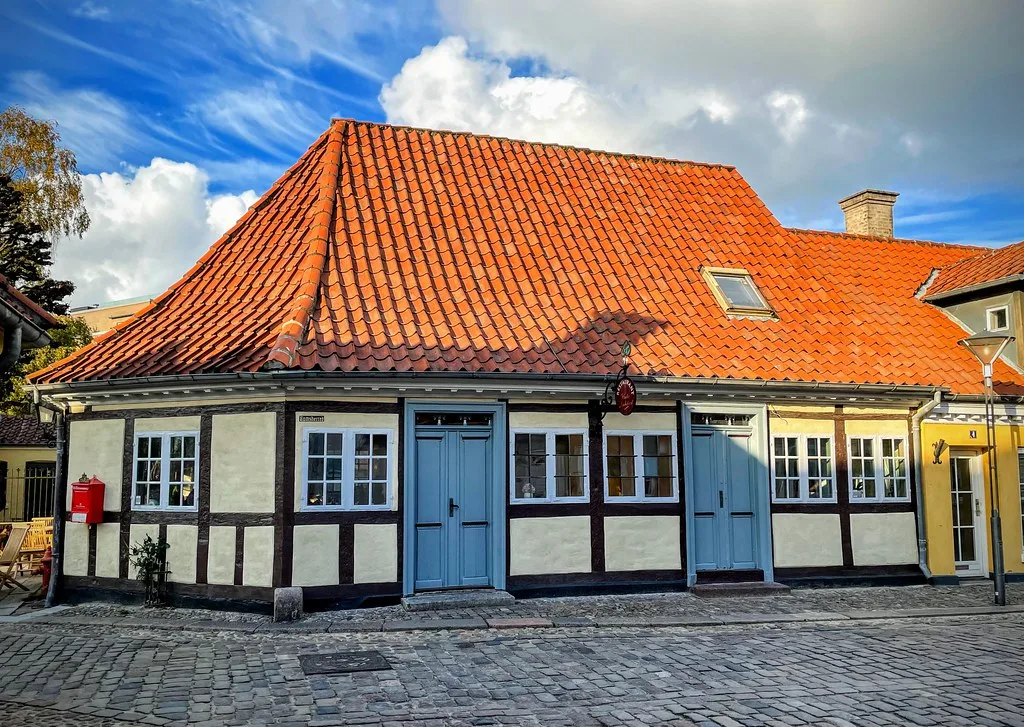
The all-inclusive price runs 600–800 DKK depending on the day of the week, with set seating times Tuesday through Saturday. The food quality sits well above what the price level might suggest, which is the point of the concept — the Koch brothers built Det Glade Vanvid specifically to remove the anxiety from gourmet dining. It is the strongest value proposition in the Odense restaurant scene for 2026.
This is the right pick for travelers who want a genuine fine-dining experience without scrutinizing a bill at the end of the evening. The fixed format also makes it excellent for first-time visitors to Odense who want a curated introduction to the local food culture without having to navigate an unfamiliar menu.
Restaurant Hanzo Odense
Hanzo operates as an Asian street food restaurant with a high-energy dining room that draws heavily on Tokyo izakaya culture: small plates, natural wine, and karaoke booths at the back of the venue. The menu covers Japanese, Korean, and Vietnamese flavors in small-plate format, with individual dishes running 95–250 DKK. The 'Hanzo Visit' tasting selection covering ten dishes is the most efficient way to try the range if you cannot commit to individual plates.
The restaurant is open daily for dinner, with weekend lunch service also available. It draws a genuinely mixed crowd of locals and visitors, and the energy level peaks on Friday nights when the karaoke fills up. Reservations are recommended for groups of four or more.
Café Skt. Gertrud
Café Skt. Gertrud has operated since 1986 and is Odense's closest equivalent to a Parisian brasserie: wicker chairs, zinc bar, oysters on the menu, and service that runs from morning coffee through late evening. It sits on the main pedestrian shopping street, which makes it the natural first and last stop of any day spent exploring the city center. The outdoor terrace in summer is one of the best spots for people-watching in the whole of Odense.
Main courses run 200–450 DKK, covering steak frites, moules marinières, and a rotating daily special. The kitchen is open daily from 10:00 until late, making it one of the few top-quality options for an early lunch or a late dinner. Brunch is also served on weekends, drawing the city's café crowd from about 10:30 onward.
Odense Breakfast and Morning Café Culture
Most dining guides to Odense focus exclusively on lunch and dinner, but the morning café scene here is exceptionally strong and worth planning around. Café Korn on Vesterbro serves what many locals consider the best brunch buffet in the city — a substantial spread of cold cuts, eggs, bread, and pastries at around 179 DKK per person. Café Sølle in Nedergade is the quieter alternative, better for a single excellent coffee and a piece of house-baked rye bread before a morning at the H.C. Andersen House.
This matters practically because the city's top lunch spots — particularly Restaurant HOS — fill up by 12:15. Eating a proper breakfast at 09:00 to 10:00 allows you to hold off until 13:00 and still get a table without a reservation. The morning café route also passes many of Odense's most photogenic streets, including Vintapperstræde and the Brandts Passage area, which makes combining breakfast and a walk the most efficient use of a short visit.
If you want to take something of Odense home, the morning is also the right time to visit a local bakery for Brunsviger — the island's signature yeasty coffee cake, saturated with brown sugar and butter. Do not buy this at a supermarket. Wendorff bakery and The Sourdough Bakery both produce versions worth comparing. Locals take the distinction between a good and a mediocre Brunsviger seriously, and so should you.
Practical Tips for Dining in Odense
Most restaurants in Odense are cashless, so ensure you have a debit or credit card ready for all transactions. MobilePay is widely used by locals, though it requires a Danish phone number to set up. Always check whether a service charge is included, as this is standard practice across Danish hospitality — tipping is appreciated but not mandatory.
If you have specific dietary requirements, Odense is exceptionally accommodating to vegans and gluten-free diners. Nearly every menu clearly marks allergens, and chefs are generally happy to modify dishes with advance notice. Mention any allergies at the time of booking to allow the kitchen to prepare alternatives.
The city is compact, and the majority of restaurants on this list are within 15 minutes' walk of the central train station. Sortebro Kro is the only venue that requires a short bus or taxi ride to reach. Evening dining peaks around 19:00, while street food markets at Storms Pakhus stay lively until 21:00 or later on weekends.
| Restaurant | Price Range (DKK) | Meal Type | Atmosphere | Best For |
|---|---|---|---|---|
| Storms Pakhus | 75–160 | Street Food / Multi-Stall | Industrial, Casual | Families, Groups |
| Restaurant ARO | 1,200–2,100 | Tasting Menu | Industrial Minimalist | Fine Dining, Celebration |
| Restaurant HOS | 145–300 | Lunch / Smørrebrød | Intimate, Historic | Authentic Danish, Quick Bite |
| Det Glade Vanvid | 600–800 | Fixed-Price All-Inclusive | Warm, Welcoming | Value Gourmet, Decision-Averse |
| Kok & Vin | 450 | Three-Course Set Menu | Warm, Intimate | French Classics, Wine Pairing |
| MASH Odense | 300–800 | Steakhouse | Polished, Serious | Steak Lovers, Cocktails |
| Sortebro Kro | 350–650 | Dinner / Classic Danish | Historic, Atmospheric | Romantic, Museum Visit |
| Oluf Bagers Gård | 500–900 | Dinner / Nordic-French | Raw Rustic, Courtyard | Romantic, Architectural Beauty |
| Restaurant Goma | 600+ | Kaiseki / Omakase | Minimal, Focused | Adventurous Eaters, Seasonal |
| Madklubben Odense | 350 | Three-Course Menu | Upmarket Casual | Birthdays, Groups, Budget-Conscious |
| Restaurant Hanzo Odense | 95–250 | Small Plates / Asian | High-Energy, Modern | Casual Dining, Karaoke |
| Café Skt. Gertrud | 200–450 | Brasserie / All Day | Parisian Chic, Social | Brunch, People-Watching, Late Dining |
Frequently Asked Questions
Which Odense restaurants have Michelin stars?
As of 2026, Restaurant ARO holds a prestigious Michelin star for its innovative seasonal cooking in an industrial setting. Several other venues like Sortebro Kro and Kok & Vin are frequently recognized in the Michelin Guide for their high quality and service.
Where can I try traditional Danish food in Odense?
Sortebro Kro is the best choice for a traditional historic meal in a scenic setting. For a classic Danish lunch, Restaurant HOS offers the city's most acclaimed smørrebrød, featuring local ingredients and expert preparation techniques.
Is Storms Pakhus worth visiting for families?
Yes, Storms Pakhus is ideal for families due to its wide variety of food stalls and relaxed communal seating. The industrial warehouse atmosphere is lively and informal, allowing children to choose their favorite dishes while adults enjoy local craft beers.
Odense has successfully transitioned from a quiet provincial town into a legitimate culinary destination that demands attention. From the refined elegance of Sortebro Kro to the bustling energy of Storms Pakhus, there is a table for every traveler. The industrial settings of ARO and Storms Pakhus, the medieval courtyard of Oluf Bagers Gård, and the living-history atmosphere of Sortebro Kro collectively make the city's restaurant scene something you cannot replicate anywhere else in Denmark.
Book your tables early, try the local Brunsviger, and allow a morning café stop to anchor the day before you commit to lunch. Your 2026 trip to Odense promises to be a feast for both the imagination and the palate.
Explore More Odense Guides
Deep-dive guides for planning an Odense trip — what to do, where to eat, getting there, and seasonal highlights.
You might also like


Continue reading
More guides you'll find useful