Where to Stay in Copenhagen: 11 Best Neighborhoods and Local Tips
Discover the best areas to stay in Copenhagen with this local guide. Covers 11 neighborhoods, hotel picks for every budget, and essential planning tips for your trip.
On this page
Where to Stay in Copenhagen: 11 Best Neighborhoods and Local Tips
Finding the right neighborhood is the first step toward a perfect Danish getaway. Copenhagen offers a unique mix of historic charm and modern design across its diverse districts. You can choose between bustling harbor fronts, quiet residential streets, or cutting-edge waterfront developments.
Deciding where to stay in Copenhagen depends heavily on your budget and personal travel style. First-time visitors often prefer the central convenience of Indre By. More seasoned travelers might seek the creative energy of Nørrebro or the design-forward calm of Nordhavn.
This guide breaks down eleven distinct areas to help you plan your ideal 2026 visit. We cover everything from luxury canal-side suites to budget-friendly hostels near the train station. Each section includes a vibe check and honest pros and cons based on local experience.
Navigating the city is easy thanks to an efficient metro system and world-class bike lanes. Most major attractions sit within a short distance of the primary hotel hubs. Let us explore the best corners of the Danish capital for your upcoming adventure.
Key Takeaways
- Stay in Indre By for maximum convenience on your first trip.
- Choose Vesterbro or Nørrebro for a local, trendy atmosphere and great food.
- Book Scandic or Guldsmeden for a truly authentic Scandinavian hotel experience.
- Use the Metro or a rental bike to navigate between districts efficiently.
Copenhagen Neighborhoods Overview & Map
Copenhagen is a compact city that feels remarkably manageable for its size. The urban layout fans out from the historic center, known as Indre By, with the harbor running along its eastern edge. Each district possesses a distinct personality shaped by its history and local community. You can easily cross the city on two wheels in under thirty minutes.
Most visitors focus on the inner bridge districts: Vesterbro and Nørrebro sit just west and northwest of the center, separated from it by a long, narrow chain of lakes. Christianshavn and Amager Øst lie across the harbor to the east. Newer areas like Nordhavn and Sydhavn offer a glimpse into the city's architectural future. Understanding this geography helps you minimize dead commute time between sightseeing and your hotel. For a complete overview of neighborhoods and attractions, Visit Copenhagen provides official planning resources.
Public transport links every major neighborhood. The Metro runs 24 hours and connects the airport to the city center in under 15 minutes. Most tourist spots fall within zones 1 and 2 of the city pass. For route planning, Rejseplanen is the official Danish transport planner. Staying near a metro station gives you the ultimate flexibility for daily excursions and late-night returns.
Indre By: Best for First-Timers and Sightseeing
Vibe check: Historic / Busy / Tourist-central. Indre By is the historic heart of the city and the primary hub for tourists. Cobblestone streets and colorful facades define the visual landscape of this central district. You will find yourself within walking distance of Amalienborg Palace, Rosenborg Castle, and Nyhavn. This is the most efficient choice for a short weekend trip where you want to see as much as possible.
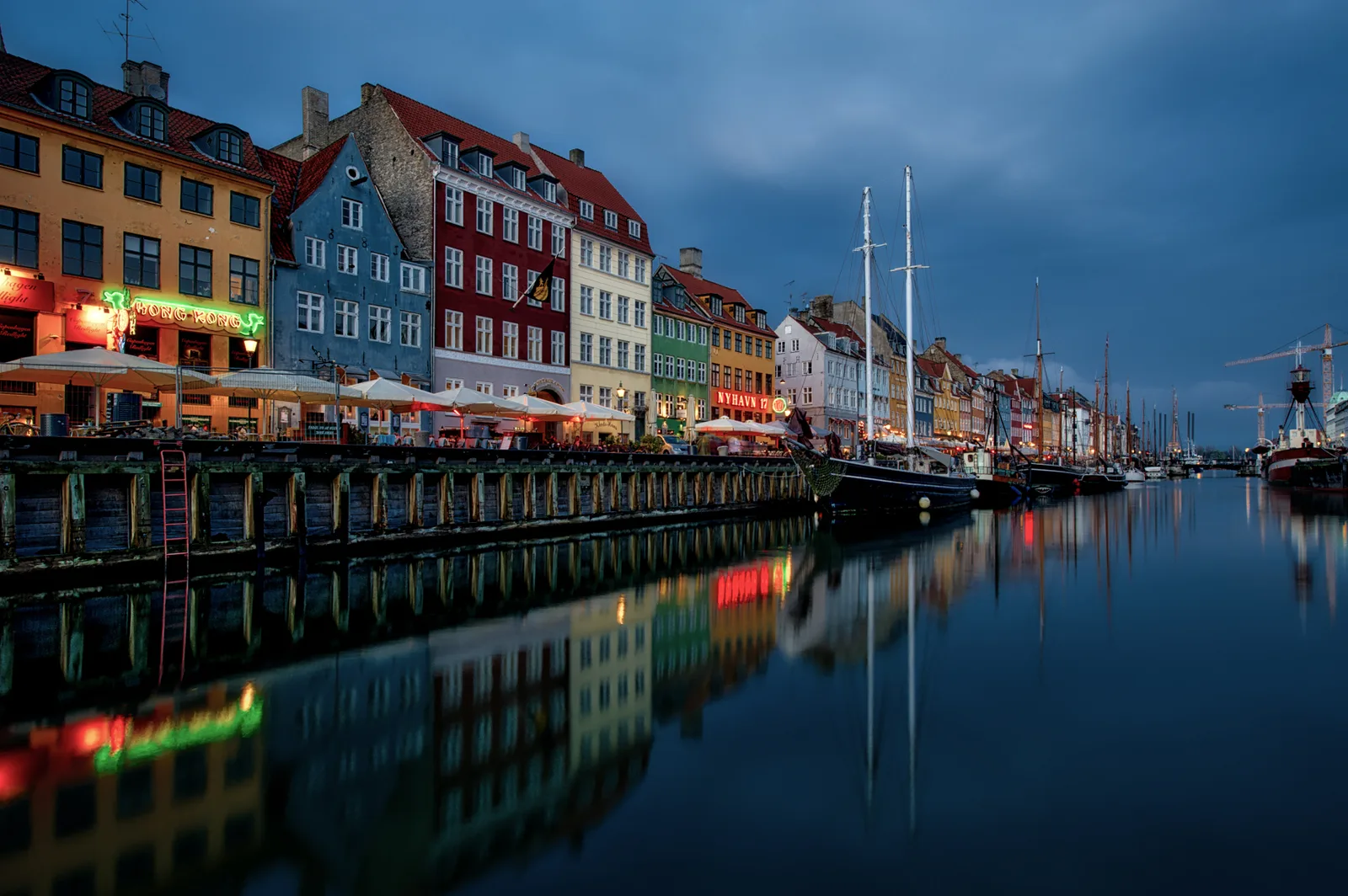
The shopping district around Strøget offers everything from high-end fashion to local Danish design. Many of the city's most iconic hotels are here, from grand luxury properties to well-run budget hostels. The area around Ofelia Plads and Nyhavn carries a price premium — expect to pay 20–40% more than equivalent rooms in Vesterbro. However, the ability to step outside and immediately be in the middle of the action is genuinely valuable on a tight schedule.
One honest caveat: Gothersgade, HC Andersens Boulevard, and the streets around Strøget are loud on Friday and Saturday nights. Light sleepers should steer toward quieter pockets near the Round Tower or the Latin Quarter. For a deeper look at what to do once you are settled in, check out our guide to the best things to do in Copenhagen.
- Luxury — Hotel Sanders: A discreet boutique property near Tordenskjoldsgade with only 54 rooms, strong service, and a restaurant that draws locals as well as guests. Rates from around 3,000 DKK per night.
- Mid-range — 25Hours Indre By: A design hotel close to Rundetårn with eclectic, playful rooms and a bar that is genuinely popular with Copenhageners. Rates typically 2,000–2,800 DKK.
- Budget — Generator Copenhagen: A modern hostel near Kongens Nytorv with private rooms available, a lively common area, and reliable WiFi. Dorm beds from around 250 DKK, private doubles from 800 DKK.
Vesterbro: Best for Nightlife and Trendy Stays
Vibe check: Gritty / Cool / Energetic. Vesterbro sits just west of the Central Station, making it incredibly accessible for international arrivals. The Meatpacking District — Kødbyen — is the crown jewel of this area, with its converted cold-storage warehouses now housing some of the best restaurants and bars in the city. The main street, Vesterbrogade, runs straight toward the center and is lined with independent boutiques and artisanal coffee shops.
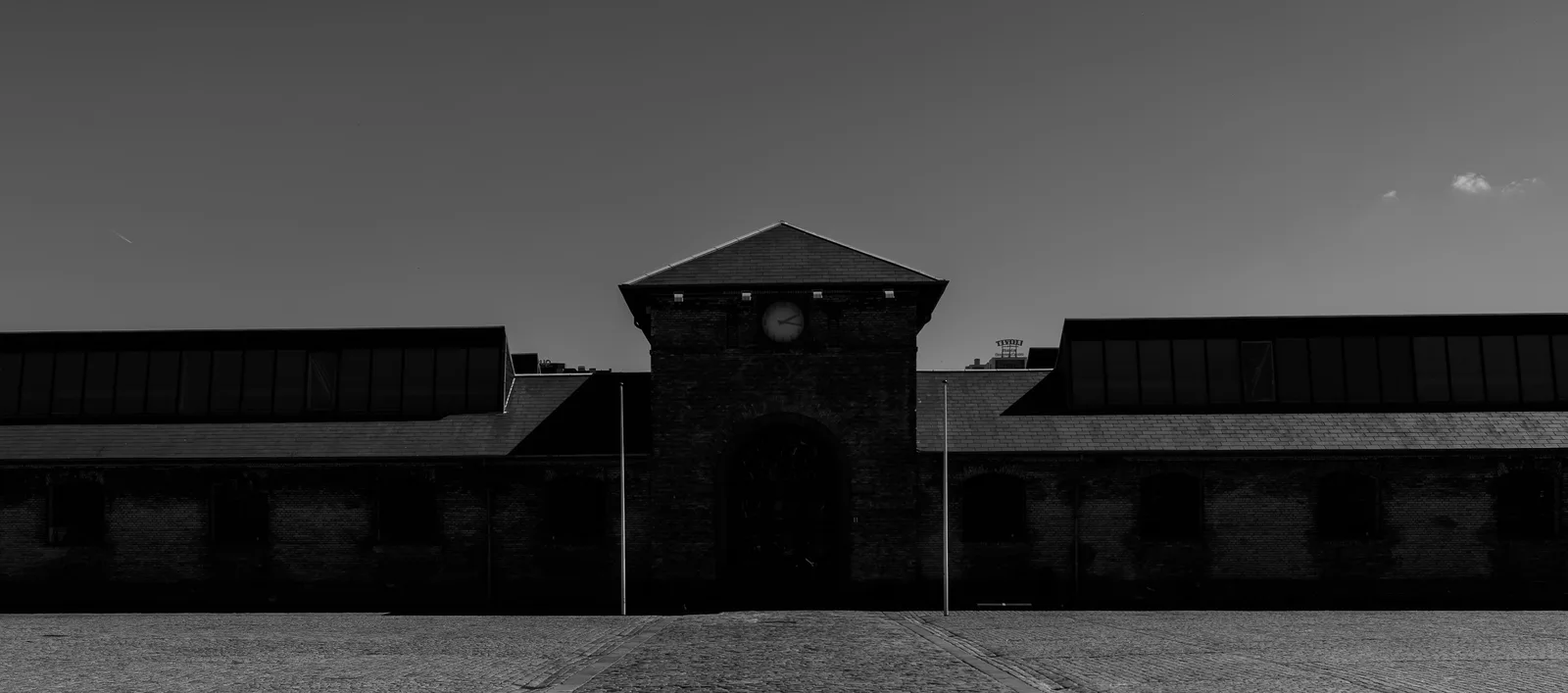
This is consistently where locals who know Copenhagen recommend visiting friends stay. You are walking distance from Tivoli Gardens and Central Station, yet the neighborhood retains a genuinely residential feel. Most hotels here offer better value than the equivalent room in Indre By. The tradeoff is noise: if you want peace and quiet, look for hotels closer to the Fisketorvet waterfront end of the district rather than near Kødbyen.
One area to avoid: the blocks of Istedgade directly adjacent to Central Station have a long-running open drug and street-drinking scene. It is not dangerous in the conventional sense, but it is an uncomfortable stretch. Hotels one block further south, such as those near Helgolandsgade or Colbjørnsensgade, are fine and far more pleasant.
- Luxury — Villa Copenhagen: Set inside the historic 1912 Post and Telegraph building right beside the station, it has a rooftop pool, sustainable sourcing throughout, and some of the best common areas in any Copenhagen hotel. Rates from 3,500–5,500 DKK.
- Mid-range — Andersen Boutique Hotel: A colorful, intimate property near Helgolandsgade run with genuine personal warmth. Rates typically 1,400–2,200 DKK.
- Budget — Urban House by Meininger: A hybrid hotel-hostel near Colbjørnsensgade with a large kitchen, bar, and both dorm and private rooms. Private doubles start around 700 DKK.
Nørrebro: Best for Local Culture and Foodies
Vibe check: Multicultural / Alternative / Food-obsessed. Nørrebro is consistently ranked among the world's coolest neighborhoods, and for good reason. This multicultural district sits northwest of the center, separated from Indre By by the long chain of lakes. The food scene is extraordinary — Jægersborggade alone has more outstanding independent food shops and cafes per meter than almost any street in the city. You will find everything from Michelin-starred Nordic tasting menus to outstanding falafel at prices that make the city center look absurd.
Assistens Cemetery provides a beautiful green escape where locals go for walks and picnics on warm afternoons. It is also the final resting place of Hans Christian Andersen and Søren Kierkegaard — two genuinely important graves visited with far less ceremony than you might expect. The neighborhood retains a working-class and immigrant-community character that keeps it from feeling like a tourist destination, which is precisely what makes it interesting.
The accommodation supply is thinner here than in Vesterbro or Indre By. You will find solid mid-range and budget options, but luxury is limited. Connections into the center are easy: the bus network and the lakes bike path (Sølvtorvet cycle route) put you in Indre By in under 15 minutes. Find more ideas for your time in the city in our budget Copenhagen guide.
- Luxury — Noora Health House: A wellness-focused property near Sortedam Dossering with minimalist interiors and a strong focus on quiet and recovery. Rates from around 2,800 DKK.
- Mid-range — Avenue Hotel Copenhagen: A classic boutique hotel near Åboulevard with comfortable, traditionally styled rooms at fair prices. Rates typically 1,200–1,800 DKK.
- Budget — Globalhagen Hostel: A community-run, non-profit hostel on Ravnsborggade with an eco focus. Dorm beds from 200 DKK, with a relaxed social atmosphere.
Frederiksberg: Best for Families and Green Spaces
Vibe check: Leafy / Upscale / Quiet. Frederiksberg is technically an independent municipality entirely surrounded by Copenhagen. It is widely considered the most family-friendly and prosperous part of the city. Wide boulevards and grand apartment buildings create an atmosphere of quiet sophistication. The area has none of the tourist-center chaos and none of the gritty edge of Vesterbro — it is simply a very well-kept, pleasant place to base yourself.
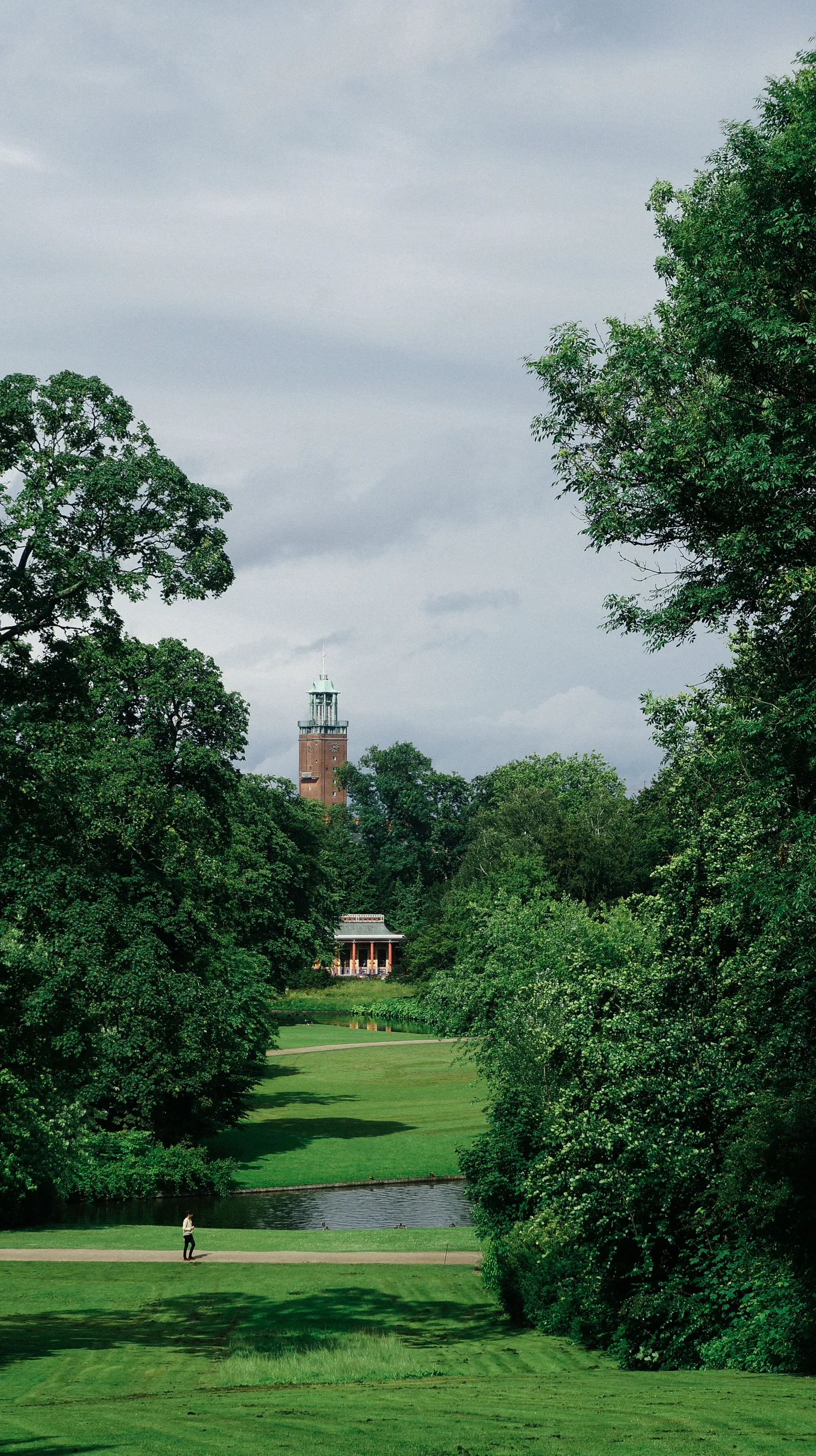
The Frederiksberg Gardens offer a vast green space perfect for afternoon strolls, royal canal boat rides, and open-air picnics. The Copenhagen Zoo sits right on the district's edge, which is a significant practical draw for families traveling with young children. Værnedamsvej is a local favorite street with French-inspired cafes, cheesemongers, and wine bars. It provides a charming village feel while remaining just minutes from the city center by Metro or S-Train.
Accommodation here skews toward larger properties and apartment rentals rather than boutique hotels. If you are traveling with a family or a group that values space, quiet, and easy access to parks over nightlife proximity, Frederiksberg is hard to beat. Check out our Copenhagen hotels for families guide for a full breakdown of child-friendly options in this district.
- Luxury — Hotel Ottilia: Set inside a converted Carlsberg brewery building with enormous round windows and dramatic industrial design. A genuinely distinctive property. Rates from 2,500–4,000 DKK.
- Mid-range — Scandic Falkoner: A large, reliable Scandic property near Frederiksberg Centret with a theater-themed design. Consistent quality and a good breakfast. Rates typically 1,300–2,000 DKK.
- Budget — Cabinn Express: Compact, clean, and functional near Danasvej. The rooms are small but smartly laid out and represent some of the best value in the city. Doubles from around 600 DKK.
Christianshavn: Best for Canal Views and Hygge
Vibe check: Romantic / Bohemian / Waterfront. Christianshavn is a series of small islands known for Dutch-style canals and historic warehouses. It offers a picturesque atmosphere that is hard to find anywhere else in the city. You can spend an afternoon wandering along the water, climbing the external spiral staircase of Our Saviour's Church for panoramic views, or cycling along quiet canalside paths with almost no cars. This area truly embodies the Danish concept of hygge.
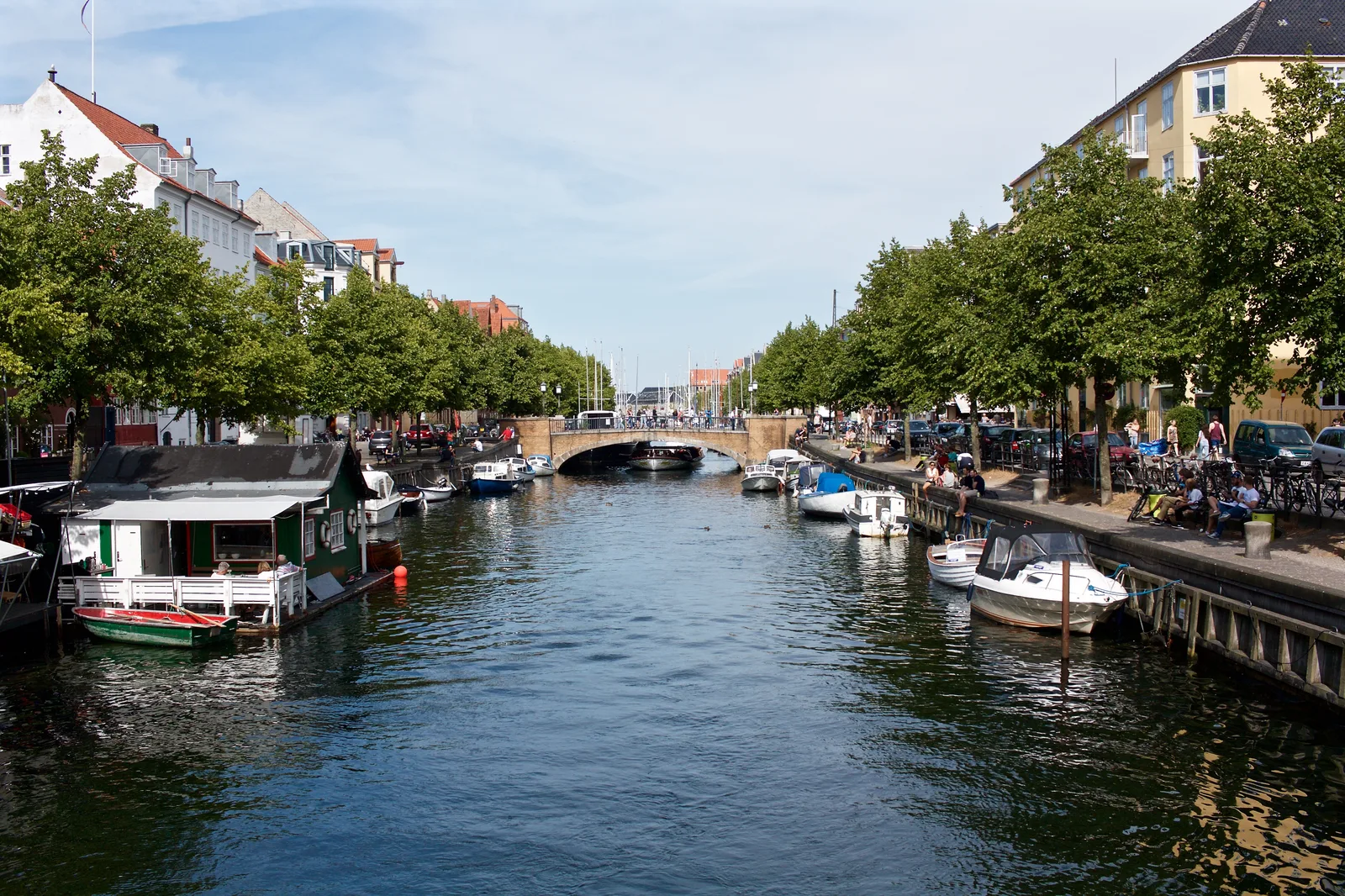
Freetown Christiania occupies a significant stretch of this district and is worth seeing on its own terms — it is a functioning alternative community, not a theme park, and the main pedestrian path through it is genuinely interesting. The neighborhood also has some of the city's most acclaimed restaurants, including several Michelin-starred addresses. You will find a mix of luxury waterfront hotels and charming apartments. The Inderhavnsbroen bridge connects Christianshavn directly to Nyhavn for easy pedestrian access into the city center.
The main limitation is choice: accommodation options here are few, and the ones that exist tend to be expensive. It is ideal for couples seeking something special rather than families or solo travelers on a budget. The Christianshavn Metro station provides direct service to both the airport and the central station without a change.
- Luxury — NH Collection Copenhagen: A modern waterfront hotel on Strandgade with excellent soundproofing despite its main-street location. Comfortable beds and strong harbor views from upper floors. Rates from 2,800–4,500 DKK.
- Mid-range — Kanalhuset: An elegant guesthouse right beside Christianshavns Kanal with quirky, upscale interiors and genuine local character. Rates typically 1,600–2,400 DKK.
- Budget — CPH Living: A converted houseboat on Langebrogade offering a genuinely unique stay. Small cabins, good views, and a memorable experience for the price. Doubles from around 900 DKK.
Nordhavn: Best for Modern Design and Quiet Retreats
Vibe check: Contemporary / Residential / Understated. Nordhavn was a working industrial port until the 2000s. It has since been redeveloped into one of the most architecturally ambitious districts in northern Europe — a deliberately car-light neighborhood of converted warehouses and new-build apartment towers right on the harbor. If you want to understand what Copenhagen thinks its future looks like, this is the neighborhood to stay in.
Hotels here are almost all modern, meaning no outdated rooms or creaky plumbing. The district connects to the center via the Metro and the Harbor Bus (line 991), and getting into Indre By takes about 12 minutes by rail. The surrounding streets are quiet and predominantly residential, which makes this one of the best areas for light sleepers who still want a central-ish location. ÅBEN Brewery is a short walk away if you enjoy good craft beer; the Konditaget Lüders rooftop is worth visiting for harbor views and pastries.
Nordhavn is also where the Copenhagen–Oslo overnight ferry departs. If you are combining a Copenhagen trip with a Scandinavian loop, basing yourself here the night before sailing is genuinely practical. The tradeoff is price — accommodation in Nordhavn trends expensive relative to what you get, and the neighborhood has limited dining options compared to Vesterbro or Nørrebro. It suits couples, solo travelers who value calm, and anyone traveling with young children.
- Luxury / Extended stay — Charlottehaven: An apartment-hotel concept with large, well-designed rooms and self-catering facilities. Strong value for longer stays. Rates from 2,200 DKK per night.
- Mid-range — Fairfield by Marriott Copenhagen: A reliable, modern property with comfortable rooms and good transport links. Better value than the equivalent Marriott in the city center. Rates typically 1,400–2,000 DKK.
Amager Øst & Islands Brygge: Best for the Local Summer Experience
Vibe check: Sporty / Local / Sunny. Amager Øst and Islands Brygge represent the modern, sun-soaked side of Copenhagen life. These areas are most famous for their harbor baths, where locals swim throughout the summer in the clean harbor water. Islands Brygge Havnebad — the original harbor bath — opens each year in June and runs through August, typically from 07:00 to 19:00 on weekdays and slightly later on weekends. Admission is free. It has five separate pools including a dedicated children's area and a large diving platform, and on a warm afternoon it fills with Copenhageners of every age. No other neighborhood gives you this experience so easily.
The area is perfectly positioned between the airport (M2 line, about 8 minutes) and the historic center (M1 line, about 10 minutes to Kongens Nytorv). Islands Brygge waterfront promenade is excellent for morning runs, and the Amager Strandpark — a constructed beach — gives you actual sand and shallow water for families. The neighborhood feels distinctly local: you will see very few tour groups here, and the cafes and grocery stores cater to residents rather than visitors.
Accommodation ranges from newer apartment hotels to economy chains. Rates are generally lower than in the city center for comparable quality. Many travelers overlook this area entirely, which means availability in peak season is sometimes better than central neighborhoods.
- Luxury — STAY Bryggen: A well-reviewed apartment-hotel on the waterfront with modern kitchen facilities and harbor views. Good for longer stays. Rates from 2,200–3,000 DKK.
- Mid-range — Zoku Copenhagen: Loft-style apartments near Amagerfælledvej with a rooftop terrace and social common areas popular with remote workers. Rates typically 1,600–2,400 DKK.
- Budget — Go Hotel City: A clean, no-frills economy hotel on Lergravsvej. No character, but reliable and well-priced. Doubles from around 650 DKK.
I Don't Recommend Staying in These Areas…
Copenhagen is safe and generally pleasant across all its neighborhoods, but a few areas will disappoint most visitors in specific ways. The blocks of Istedgade immediately adjacent to Copenhagen Central Station are the city's one genuinely uncomfortable stretch. There is a publicly funded drug consumption room in this zone, and the surrounding streets have a persistent open drug and street-drinking scene. It is not dangerous, but it is not a nice environment to walk back to at night. Hotels one block south — near Helgolandsgade — avoid this entirely.
Gothersgade in Indre By is the city's main party artery on Friday and Saturday nights. If you are a light sleeper, avoid booking rooms directly on this street or on Vestergade and the blocks immediately around Rådhuspladsen. The noise can run until 05:00 on weekends. The same caution applies to the Kødbyen end of Vesterbro if you are not a night owl yourself.
The outer parts of Ørestad can feel sterile and disconnected for first-time visitors. The architecture is impressive in an alien way, but the area lacks cafes, street life, and the historic character that makes a neighborhood pleasant to return to in the evening. It works well for business travelers or people attending events at the Royal Arena or the Bella Center, but it is a poor choice for a leisure trip. Similarly, Sydhavn is still largely a construction site in 2026 — some sections are fine, but check recent reviews for your specific street before booking.
Is It Worth Staying in Malmö and Taking the Train?
Staying in Malmö, Sweden is a popular money-saving strategy for Copenhagen visitors. Hotel prices in central Malmö are consistently 30–50% lower than in Copenhagen for comparable quality. The train across the Øresund Bridge takes 35–40 minutes from Malmö Central to Copenhagen H, and trains run roughly every 20 minutes throughout the day. For a week-long trip, the nightly savings can be significant.
Here is the commuter math for 2026. A single Øresund train ticket costs approximately 120–140 DKK (around €16) each way from Malmö Central to Copenhagen H. A return trip is therefore 240–280 DKK per day. If you are traveling as a couple, that becomes 480–560 DKK daily in train fares alone. Against a hotel saving of, say, 600 DKK per night per room, the net gain quickly narrows to almost nothing — and you are spending over 80 minutes per day commuting. For a three-day trip, the time cost is rarely worth it. For a seven-day or longer stay traveling solo, the numbers start to work out in your favor.
There is also a hidden benefit that most guides miss: Malmö is a genuinely interesting city in its own right. The old town, the Turning Torso, and the Western Harbor waterfront are all worth half a day. If you have already visited Copenhagen's main sights on a previous trip and want to see two cities in one journey, the Malmö base makes real sense. You can also plan a Copenhagen 3-day itinerary that builds in a Malmö afternoon without committing to staying there overnight.
Quick Neighborhood Comparison
| Neighborhood | Vibe | Best For | Price Tier | Top Pick Hotel |
|---|---|---|---|---|
| Indre By | Historic / Busy / Tourist-central | First-timers, sightseeing | €€€ (3,000+ DKK) | Hotel Sanders |
| Vesterbro | Gritty / Cool / Energetic | Nightlife, trendy stays | €€ (1,400–2,800 DKK) | Villa Copenhagen |
| Nørrebro | Multicultural / Alternative / Food-obsessed | Local culture, foodies | €€ (1,200–2,200 DKK) | Avenue Hotel |
| Frederiksberg | Leafy / Upscale / Quiet | Families, green spaces | €€ (1,300–2,500 DKK) | Hotel Ottilia |
| Christianshavn | Romantic / Bohemian / Waterfront | Canal views, couples | €€€ (2,800+ DKK) | Kanalhuset |
| Nordhavn | Contemporary / Residential / Understated | Modern design, quiet retreats | €€€ (2,200+ DKK) | Fairfield by Marriott |
| Amager Øst | Sporty / Local / Sunny | Summer swimmers, locals | € (1,600–2,400 DKK) | Zoku Copenhagen |
What Are the Main Hotel Chains in Copenhagen?
Copenhagen's hotel market is dominated by high-quality Scandinavian chains rather than international brands. Scandic Hotels is the largest operator in the city, with properties in Vesterbro, Nørrebro, Frederiksberg, Nordhavn, and beyond. Their properties are known for generous breakfast buffets, eco certification, and clean Nordic design. A Scandic stay will rarely surprise you but will almost never disappoint.
Guldsmeden Hotels offers a more boutique sustainable luxury experience with a distinctive Balinese-inspired warmth unusual for a Scandinavian setting. They focus heavily on organic products, wooden interiors, sauna access, and a genuinely warm service culture that stands apart from international chains. Brøchner Hotels is another locally respected group, known for converting historic Copenhagen buildings — a former brewery, a 19th-century warehouse — into architecturally distinctive properties. These local chains consistently outperform international equivalents on the metrics that actually matter to leisure travelers: atmosphere, breakfast quality, and staff knowledge of the city.
If you prefer international brands, you will find Marriott and Radisson Blu near the harbor and central station. CitizenM has a reliable property in the city center that represents strong value in the upper-budget tier. For business travelers with loyalty programs, international chains make practical sense. For everyone else, booking a Scandic, Guldsmeden, or Brøchner property almost always results in a more memorable stay.
Copenhagen Planning Cheatsheet: Essential Booking Tips
Book your stay at least three to four months in advance for peak summer travel (June–August). Copenhagen is a conference city, and this matters more than most visitors realize. Copenhagen Fashion Week runs twice a year — in late January and early August — and routinely drives a 40–60% spike in hotel rates across Vesterbro and Indre By during those specific weeks. Web Summit Copenhagen and other large trade events in spring and autumn cause similar localized spikes. Check the event calendar for your travel dates before assuming rack rates are stable.
Use the Copenhagen City Pass for unlimited travel on the Metro, buses, and S-trains within the city center zones. A 24-hour adult pass costs around 80 DKK; a 72-hour pass is approximately 200 DKK. If you plan to use the Metro more than twice per day, the pass pays for itself quickly. Tipping is not expected in Denmark — service charges are included in all restaurant and hotel bills. Rounding up for exceptional service is appreciated but entirely optional.
Most hotels offer bike rentals for around 100–150 DKK per day, and cycling is genuinely the best way to move between neighborhoods. The city maintains approximately 390 km of dedicated cycle tracks, and the infrastructure is designed so that bikes move faster than cars across most of central Copenhagen. Pack layers regardless of the season: even in July, evenings near the water can drop to 14–16°C. A light waterproof jacket takes no space and earns its keep on most visits.
Frequently Asked Questions
Which neighborhood is best for first-time visitors to Copenhagen?
Indre By is the best choice for first-timers because it puts you within walking distance of major sights like Nyhavn and Tivoli. You will save time on transport and be surrounded by historic architecture. It is the most convenient hub for exploring the city center quickly.
Is Copenhagen a walkable city for tourists?
Yes, Copenhagen is incredibly walkable and flat, making it easy to explore on foot. Most major attractions in the center are within a 20-minute walk of each other. For longer distances, the metro and rental bikes are highly efficient alternatives for all travelers.
Is it cheaper to stay in Malmö than Copenhagen?
Staying in Malmö is generally cheaper, with hotel rates often 30-50% lower than in Copenhagen. However, you must account for the 120 DKK daily train fare and the 40-minute commute each way. It is best for long-term travelers or those on a strict budget.
What are the best family-friendly areas in Copenhagen?
Frederiksberg is the top family-friendly area due to its quiet streets, large parks, and proximity to the Zoo. It offers a safe, residential feel while remaining close to the city center. You can find many family-oriented hotels and spacious apartment rentals in this leafy district.
Are there any areas in Copenhagen to avoid staying in?
Avoid staying directly on Gothersgade if you are a light sleeper, as it is the city's main nightlife artery. Some parts of outer Ørestad may also feel too sterile and far from the historic charm tourists usually seek. Most other neighborhoods are safe and welcoming.
Copenhagen is a city of distinct neighborhoods that each offer something special for travelers. Whether you choose the historic center or a trendy bridge district, you will find world-class design and hospitality. Your choice of area will set the tone for your entire Danish experience.
Remember to book early, check the conference calendar for rate spikes, and consider your daily transport needs when selecting your hotel. Exploring the city by bike is the best way to connect these diverse districts. We hope this guide helps you find the perfect home base for your 2026 trip.
From the canals of Christianshavn to the food stalls of Nørrebro, a memorable stay awaits you. Each corner of the capital has its own story to tell and its own unique vibe to share. Enjoy your time in one of the world's most livable and beautiful cities.
Explore More Copenhagen Guides
Deep-dive guides for planning a Copenhagen trip — what to do, where to eat, day trips, and seasonal highlights.
You might also like



Continue reading
More guides you'll find useful