15 Best Budget Places and Tips to Stay in Copenhagen 2026
Discover the 15 best budget places to stay in Copenhagen for 2026. Includes cheap hotels, hostels, and local tips to save on transport and food.
On this page
15 Best Budget Places and Tips to Stay in Copenhagen 2026
Finding budget places to stay in Copenhagen 2026 takes more than a quick search — it demands knowing which neighborhoods have genuinely cheap beds and which metro connections make a peripheral location worth it. This guide was refreshed in June 2026 to reflect current pricing and the latest transport network changes.
If you plan to visit during The Copenhagen Light Festival in February 2026, book at least four to five months in advance. The festival fills the city's most affordable rooms faster than any other event on the calendar. Last-minute seekers end up paying mid-range prices for rooms that should cost half as much.
Copenhagen's budget tier is not what you find in Southeast Asia. Expect minimalist design, clean shared spaces, and excellent public transport access rather than rock-bottom prices. The fifteen options below deliver genuine value: they have been selected for price, location, and the facilities that actually reduce your daily spend — kitchen access, free breakfast, or a discount supermarket within a five-minute walk.
Best Neighborhoods for Budget Travelers in 2026
Choosing the right neighborhood is the single most effective way to cut accommodation costs in Copenhagen. Nørrebro is the standout for budget travelers: general prices run lower than the center, the street food on Nørrebrogade is some of the cheapest in the city, and the diverse dining scene means you can eat well for DKK 60–80 (roughly EUR 8–11) per meal. The neighborhood sits one metro stop from Nørreport, which connects the entire network.

Vesterbro is the next best pick. It has gentrified considerably but the side streets near Istedgade still hold several high-quality hostels and no-frills boutique hotels. The immediate proximity to Copenhagen Central Station (København H) makes it the fastest neighborhood for airport arrivals and early-morning departures. The Meatpacking District (Kødbyen) on the western edge provides affordable late-night food options that are genuinely cheaper than the Nyhavn tourist corridor.
The M4 metro extension, which reached full operation across the 2024–2025 period, has made Sydhavn and Nordhavn meaningfully more viable for budget stays. You can now reach Kongens Nytorv from Orientkaj in around fifteen minutes without changing lines. Hotels and apartments in these newer districts often offer larger rooms for the same nightly rate as a cramped central attic, and several new Netto and Lidl branches have opened to serve the growing residential population there.
| Neighborhood | Price Range | Best For | Nearest Metro |
|---|---|---|---|
| Nørrebro | EUR 80–100 | Budget eating (DKK 60–80/meal), solo travelers | Nørreport (1 stop) |
| Vesterbro | EUR 90–105 | Airport access, nightlife, diverse hostels | Central Station (adjacent) |
| Sydhavn / Nordhavn | EUR 88–130 | Larger rooms, M4 connectivity, quiet residential | 15–20 min to center |
Avoid booking anything directly behind Central Station unless you see a significant discount. The generic business hotels in that pocket charge tourist-corridor premiums for rooms that rarely match the Danish design standard you find one metro stop further out. Christianshavn offers canal-side charm and is only a short bridge-crossing from the city center, but limited hotel supply means rates hold high — it suits couples more than solo backpackers on tight budgets.
Kanalhuset: Authentic Christianshavn Living
Kanalhuset occupies a historic merchant house dating to 1754 on Overgaden Oven Vandet 62a, overlooking a quiet canal in Christianshavn. The twelve boutique rooms on the basement floor are simply furnished — bed, wardrobe rack, minimal clutter — but the communal dining restaurant on the ground floor gives the property genuine character. Locals come here for the set dinner, which means the atmosphere never tips into tourist-bubble territory.

Fourteen larger apartments on the upper floors include a kitchenette and living area, making them practical for stays of four or more nights when self-catering cuts overall costs. Some rooms sleep up to five, which makes this a competitive option for small groups splitting the bill. The decor throughout is reclaimed-retro: flea-market finds, graphic print wall hangings, velvet sofas.
2026 price expectation: from EUR 115 per night for a standard double. Skip Kanalhuset if you need a lift or expect modern amenities — the building's character comes precisely from what it lacks. Book the shared dinner separately when reserving your room, as seats fill before arrival.
Zoku Copenhagen: The Best Hybrid Home-Office Stay
Zoku at Amagerfælledvej 108 in Ørestad is the strongest option in the city for digital nomads and extended stays. Each unit is a mini apartment: loft bed above a kitchen-living-dining room with a four-seat table, designed for people who need to work and cook during a longer trip. The communal rooftop bar-workspace draws a reliable evening crowd of solo travelers and remote workers, which makes it social without being a party hostel.

The location caveat is real: Ørestad is a ten-to-fifteen-minute metro ride from Nyhavn on the M1 line. For a short weekend trip focused on sightseeing, this feels removed. For stays of five or more nights where kitchen savings compound daily, the distance barely matters and the value is hard to beat in Copenhagen's market.
2026 price expectation: from EUR 145 per night. You can personalise the room by selecting your own artwork from Zoku's curated collection — a small touch that makes a week-long stay feel less anonymous than a standard hotel.
Scandic Kødbyen: Industrial Style in the Meatpacking District
Scandic is Denmark's most reliable budget chain: consistent quality, predictable value, and no surprises on the bill. The Kødbyen branch at 3 Skelbækgade puts you at the edge of the Meatpacking District in Vesterbro, within walking distance of both Central Station and the Fisketorvet shopping mall. A cocktail bar, well-equipped gym, and bunk-bed family rooms round out a property that genuinely works for more than one type of traveler.
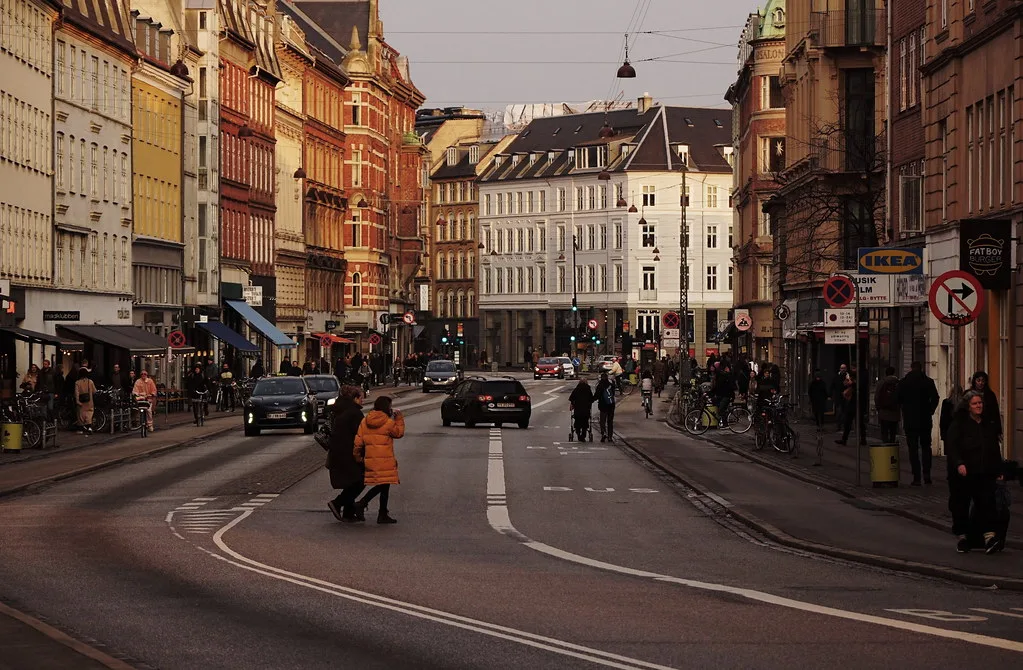
The hotel leans into its location visually — the bar decor references the area's meatpacking history — but the rooms themselves are clean Scandinavian minimalism. Family rooms with a kids' loft bed above the main bed are a strong option for parents who need to reduce per-person costs without sacrificing comfort. Pets are welcome, which is rarer at this price point than you'd expect.
2026 price expectation: from EUR 90 per night. The nearest Netto supermarket is a five-minute walk on Istedgade, making self-catering lunches easy from this base.
66 Guldsmeden: Eco-Friendly Boutique Comfort
The Guldsmeden chain has a distinct identity in Copenhagen's hotel market: Balinese-inflected decor, certified organic breakfasts, and responsibly sourced linens. The Vesterbro outpost at Vesterbrogade 66 has 74 rooms and a courtyard with Airstream caravans that give it a personality competitors rarely match at this price tier. Four-poster beds with Moroccan kilim rugs are the standard room style; it is eccentric in the best possible sense.
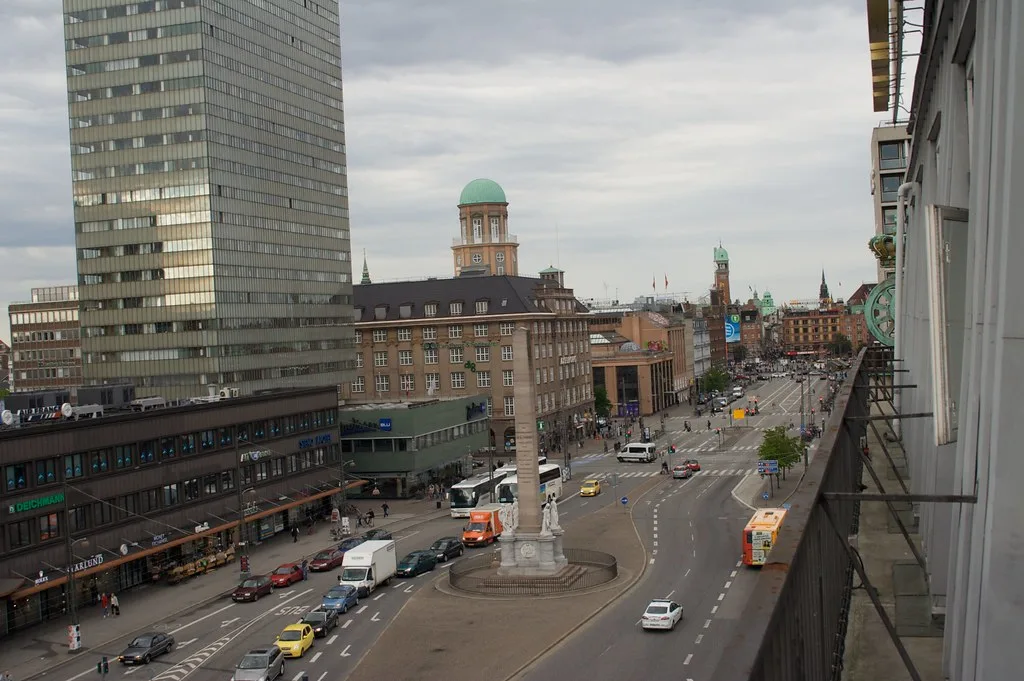
The organic breakfast buffet is included in many rate plans and is genuinely worth factoring into cost comparisons — a full Danish breakfast from a café on Vesterbrogade would cost EUR 15–20 on top of a room that's cheaper on paper. Check-out is at 12:00, which is later than most Copenhagen hotels and reduces the awkward gap between check-out and an afternoon flight.
2026 price expectation: from EUR 120 per night including breakfast. The hotel rents recycled bicycles for daily use — a better deal than Donkey Republic rentals for multi-day stays. Skip 66 Guldsmeden if you need very quiet surroundings: Vesterbrogade is a busy tram corridor and street noise reaches the lower-floor rooms.
Motel One Copenhagen: High-End Design at Low-End Prices
Motel One at Løngangstræde 27 in Indre By is the strongest argument for a central budget stay in Copenhagen. The Town Hall, Christiansborg Palace, the National Museum, and boat tour departures at Nyhavn are all within a ten-minute walk. The hotel is also one of the few in the city to offer compact single rooms, which are rare and disproportionately good value for solo travelers.
Rooms are minimal — peacock-patterned covers on otherwise neutral Danish Mid Century palette — but the communal spaces lift the experience: a green garden courtyard, a dimly lit bar, and a simple breakfast room. Book via the official Motel One listing to compare flexible and non-refundable rates before committing. The non-refundable rate often runs EUR 20–30 cheaper and is worth taking if your dates are fixed.
2026 price expectation: from EUR 100 per night. Skip Motel One if you need a kitchenette — the property has no self-catering facilities, so food costs will be higher unless you use nearby Netto on Studiestræde for picnic supplies.
Ibis Styles Copenhagen Orestad: Modern and Accessible
Ibis Styles at 47 Ørestads Boulevard sits next to the Bella Center metro station on the M1 line, fifteen minutes from the airport and ten minutes from the city center by metro. The interior design — neon lights in the lobby, nature-inspired wallpaper, cheerful primary colors — makes it feel more considered than a typical chain budget hotel. Room windows look directly onto Amager Fælled, Copenhagen's largest green space, which softens what is otherwise a fairly characterless commercial district.
The location also benefits from the M4 cross-service: from 2025, you can reach Ørestad on the combined M1/M4 service and access Nordhavn and the waterfront more directly. An Andersen bakery branch operates immediately next to the hotel — one of the better bakery chains in the city and a cheaper breakfast option than the hotel's own buffet.
2026 price expectation: from EUR 88 per night. Bikes are available to rent from the hotel. Skip Ibis Styles if you want to walk to central attractions — the metro is necessary for every outing, which adds a daily cost if you are not using a transport pass.
CPH Living Hotel: A Unique Stay on a Converted Barge
CPH Living at Langebrogade 1A is a twelve-room boat hotel moored in the harbourside district near Islands Brygge. The concept is genuinely singular: coastal-coloured rooms with hidden storage, showers with harbor views, and a rooftop terrace for summer evenings. The proximity to the Islands Brygge harbor pool means you can swim in the harbor for free and return to a hot shower — a combination that costs nothing and remains one of Copenhagen's best warm-weather experiences.
One specific warning that competitors consistently skip: the barge sits in an active harbor and passing boats create perceptible motion, particularly at night. Most guests find it mild and charming; travelers with inner-ear sensitivity or motion sickness history should factor this in before booking. The effect is stronger during windy weather and in the spring shoulder season.
2026 price expectation: from EUR 130 per night. Skip CPH Living if you are a light sleeper sensitive to movement or harbor sounds — the ambient noise from the water and occasional passing vessels is not filterable. The hotel is also a twelve-minute walk from the nearest metro station, so late nights in the center require a taxi or a long walk.
Generator Hostel: The Social Hub of Central Copenhagen
Generator at Adelgade 5-7 is the best-located hostel in Copenhagen for travelers who want to combine a cheap bed with proximity to nightlife and historic streets. Kongens Nytorv and the colorful Nyhavn canal are a short walk away. The communal bar area — with its pétanque court and shuffleboard — creates a social environment that operates well past the kitchen closing time, and the nearby Gasoline Grill burger stand (routinely ranked among the city's best burgers) is a solid late-night option under EUR 15.
Dorm rooms in the eight-bed configuration are standard hostel quality. The private rooms and family rooms (which sleep four) are where Generator differentiates: they offer hotel-level cleanliness at hostel economics, making them the best option for couples or small families who want a social location without paying boutique-hotel rates. Note that noise from the bar area reaches the lower-floor private rooms on weekend evenings.
2026 price expectation: dorm beds from EUR 38; private doubles from EUR 105. The nearest Netto is on Store Kongensgade, a seven-minute walk — useful if you want to stock up before a day trip.
Copenhagen Island: Sleek Architecture by the Harbor
Copenhagen Island at Kalvebod Brygge 53 was designed by Kim Utzon and occupies an artificial island south of Fisketorvet. Its 326 rooms lean into nautical detailing — rosewood mini bars, metallic ship-mast bedside elements, a pale duck-egg blue palette — in a way that feels curated rather than kitschy. Business travelers use this hotel heavily, which means it prices aggressively on weekends and in the low season to fill rooms that cost more Mon–Thu.
The location advantage is often understated: the Bicycle Snake bridge (Cykelslangen) is a short walk away, providing a scenic cycling route directly into Vesterbro and the Meatpacking District. Room sizes are compact — a consistent Copenhagen theme — but executive and junior suite upgrades add balcony space at a manageable premium. The harbourfront promenade makes for an excellent early-morning run without needing to navigate city traffic.
2026 price expectation: from EUR 90 on weekends, EUR 135 on weekdays. Skip Copenhagen Island if you need to be central on foot — the Fisketorvet area requires the metro or a bike for most sightseeing.
Wake Up Copenhagen: The Ultimate Minimalist Budget Choice
Wake Up Copenhagen on Bernstorffsgade is the most strategically located pure-budget hotel in the city. The eleven-storey, 585-room concrete tower sits between the harbor and Central Station, a five-minute walk from Tivoli Gardens. Rooms are simple, white, and clean — graphic curtains provide the only color — with nothing pretending to be a design statement. That honesty about what you are paying for is refreshing in a market full of budget hotels with inflated self-descriptions.
Standard rooms on the lower floors are the cheapest; rooms on the upper floors cost more but deliver genuine views over the harbor and the Tivoli Gardens trees. Bike rental and a basic 24-hour café are available in the lobby. Triple and four-person family rooms exist, making this workable for budget-conscious small families who need no amenities beyond a central postcode.
2026 price expectation: from EUR 80 per night. Skip Wake Up if you need a large bathroom — the compact rooms have proportionally small bathrooms that feel tight for longer stays or for two people sharing. For anything over four nights, the minimal space becomes a genuine quality-of-life issue.
Danhostel CPH City: Five-Star Hostel Facilities
Danhostel CPH City at H.C. Andersens Blvd 50 is the largest and most comprehensively equipped hostel in Copenhagen: 192 rooms across seventeen floors, with bar, breakfast buffet, shared kitchen, laundry facilities, and a pet-friendly policy. The building sits directly on one of the city's busiest roads, which creates consistent traffic noise at street level — request a harbor-facing room on the upper floors for the view and the quiet. From the top floors, the entire Inderhavnen harbor panorama opens up.
Private family rooms, four-bed rooms, and small apartments make Danhostel practical for a wider range of travelers than most hostels. The shared kitchen is open 24 hours and well-maintained, making it the best base for budget travelers determined to cook most of their own meals. Tivoli Gardens is a ten-minute walk; the harbor swimming area at Islands Brygge takes fifteen minutes by bicycle.
2026 price expectation: from EUR 45 per dorm bed; private family rooms from EUR 125. The nearest Lidl is on Vesterbrogade — a seven-minute walk and the cheapest grocery option in the immediate area for self-caterers.
CityHub and the Pod-Hotel Format: What No Competitor Mentions
CityHub Copenhagen in Vesterbro operates on a different model than any hostel or hotel on this list. Each "hub" is a private pod: a fully enclosed sleeping capsule with its own door, a 42-inch screen, integrated lighting controls, and enough storage for a week's luggage. You share bathrooms and a lounge, but the privacy level is closer to a hotel single room than a dorm bed. This format suits solo travelers who want guaranteed quiet and personal space without paying for an entire hotel room.
The technology integration is unusually coherent: check-in via app, wristband room access, and an on-site social app for connecting with other guests if you want company. The lounge and bar area in the communal space is well-designed and attracts a mix of solo travelers and couples. The location in Vesterbro puts you within fifteen minutes' walk of Central Station and the Meatpacking District.
2026 price expectation: from EUR 70 per pod per night. This format also works well for travelers arriving late from a flight who need only a guaranteed sleep and a shower before an early morning departure — the app-based check-in means no front-desk queues at 23:00. Skip CityHub if you are traveling as a couple and want to share a single space comfortably: the pods are designed for one occupant.
How to Save Money on Copenhagen Public Transport
The Copenhagen Card and the Rejsekort serve different traveler profiles, and choosing wrong costs money. The Copenhagen Card in 2026 costs approximately DKK 599 (EUR 80) for 24 hours or DKK 1,199 (EUR 161) for 72 hours; it covers unlimited metro, bus, and train travel plus free entry to over 80 museums including SMK, the National Museum, and Rosenborg Castle. It breaks even at roughly three museum entries plus two days of metro use — if your itinerary is museum-heavy, it wins clearly.
For stays focused more on eating, walking, and neighborhoods than on museum-hopping, the Rejsekort Anonymous card is the better tool. Purchase it at the airport for a DKK 50 deposit and top up at any station; fares are discounted around 20–25% versus single paper tickets. A standard cross-city metro journey costs around DKK 26–36 (EUR 3.50–4.80) on Rejsekort, compared to DKK 36–52 on a single ticket. For travelers staying in Ørestad or Nordhavn, the City Pass (Zone 01–99, all transport in Copenhagen for 24/48/72/120 hours) is worth comparing against the Copenhagen Card — it does not include museum entry but costs less and covers the same transport zones.
Cycling remains the cheapest option for daily movement and the most authentic. Most budget hotels offer daily rentals for EUR 15–20, which undercuts a daily transport pass for travelers covering only moderate distances. Copenhagen is entirely flat and the protected bike lane network means even inexperienced cyclists navigate safely. Donkey Republic app-based bike rentals are available across the city for around EUR 4–5 per hour or EUR 15–20 for a full day if you prefer not to commit to a hotel rental.
For more tips on getting around Scandinavia affordably, the full Copenhagen accommodation guide covers transport from a neighborhood-by-neighborhood perspective. The harbor bus (lines 901 and 902) is included in any standard transport ticket and provides a free scenic water crossing between the Islands Brygge area and the city center — a practical route from Danhostel or CPH Living Hotel that also serves as a thirty-minute harbor tour at no extra cost.
Where to Find Affordable Dining Near Major Hotels
Copenhagen's food costs are the biggest variable in a budget trip. The "Dagens Ret" (dish of the day) at local cafés and canteens typically runs DKK 100–130 (EUR 13–17) with a drink included — look for the chalkboard sign outside rather than the laminated tourist menu. In Vesterbro, Tommi's Burger Joint on Høkerboderne serves burgers from DKK 85 and is consistently cheaper than the gastropub alternatives one street over. In Nørrebro, the stretch of Nørrebrogade between Assistens Cemetery and Dronning Louises Bro has shawarma and falafel spots starting at DKK 60 for a full wrap.
The Reffen street food market at Refshaleøen is the best single destination for varied cheap eating in warmer months (open April through October). Twenty-plus vendors serve everything from smørrebrød to Korean fried chicken, with most mains under DKK 100. It overlooks the harbor from the north end of Christianshavn — reach it by harbor bus line 992 from Nyhavn in ten minutes. Check the Museum of Copenhagen's visitor information for current opening times and free cultural events near your base.
Supermarket strategy cuts costs faster than any restaurant tip. Netto and Føtex stock high-quality pre-made meals (smørrebrød, salads, warm dishes) for DKK 30–60. Lidl branches are cheaper still for raw ingredients. The best-stocked Netto for travelers in the center is on Studiestræde, two minutes from Motel One. For travelers at Danhostel or Wake Up Copenhagen, the Føtex on Vesterbrogade is the most practical — open until 22:00 on weekdays.
Timing Tips: When to Book and When to Visit
Book three months in advance as a baseline for 2026. Copenhagen's budget stock is genuinely limited — the city has relatively few beds under EUR 100 per night — and the gap between early booking and last-minute pricing is larger here than in most European capitals. During the Copenhagen Light Festival in February 2026 and Design Week in September, that timeline extends to four or five months; rooms that cost EUR 80 in early booking regularly reach EUR 160–180 at a week's notice during these periods.
February outside the Light Festival offers the lowest hotel prices of the year. Weekday stays are reliably cheaper than weekend stays across all property types. If your trip allows for a Wednesday check-in rather than Friday, savings of EUR 20–40 per night are common at the Scandic, Wake Up, and Ibis Styles properties. The shoulder months of March and October balance acceptable weather with noticeably lower pricing and thinner crowds at the major museums.
Booking directly with the hotel occasionally unlocks a free breakfast or a flexible cancellation rate not available through aggregators. This is especially true at Scandic, which runs a loyalty program that gives points toward free nights across its thirteen Copenhagen properties. For one-off stays, aggregator non-refundable rates still usually win on price — but compare both before committing.
Frequently Asked Questions
Is the Copenhagen Card worth it in 2026?
Yes, if you plan to visit at least three major museums and use the metro daily. It covers transport and entry fees, saving you roughly $30 per day compared to individual tickets.
How far in advance should I book a budget hotel?
You should book at least three months in advance for the best rates. For peak times like the Light Festival, four to five months is recommended to secure the best budget places.
Are hostels in Copenhagen safe for solo travelers?
Copenhagen is one of the safest cities in the world. Families should look at copenhagen hotels for families if they prefer more privacy and dedicated child-friendly facilities.
Copenhagen in 2026 rewards travelers who pick their neighborhood deliberately and book early. Nørrebro and Vesterbro give the best combination of affordable beds and cheap eating. The M4 metro expansion means Sydhavn and Nordhavn are now genuinely viable bases rather than isolated outposts. Whether you anchor at a minimalist Wake Up room, a pod at CityHub, or a canal-side bunk at Danhostel, the city's transport network gets you everywhere that matters within fifteen minutes.
Match your transport strategy to your itinerary: the Copenhagen Card wins for museum-heavy visits; the Rejsekort wins for neighborhood wandering and food-market days. With a Rejsekort tapped in and a Netto smørrebrød in your bag, Copenhagen on a budget is entirely achievable — and still thoroughly Danish.
You might also like


Continue reading
More guides you'll find useful