Copenhagen Light Festival 2026: 8 Things to Know
Plan your visit to the Copenhagen Light Festival 2026 with our guide to 8 essential things, including top installations, canal tours, and winter tips.
On this page
Copenhagen Light Festival 2026: 8 Things to Know
The Copenhagen Light Festival runs from 30 January to 22 February 2026, turning the Danish capital into a free outdoor gallery every evening. Artists from Denmark, the Netherlands, Estonia, Japan, Iceland, and beyond have placed around 50 light installations across six city districts. Most works light up from 17:00 until 22:00, with some exceptions like the Waterwall (#14) running 18:00–21:00. You do not need a ticket — just a warm coat and the official map on your phone.
At a glance
- Dates: 30 January – 22 February 2026
- Hours: 17:00–22:00 most days (check official map for exceptions)
- Cost: Free entry to all outdoor installations
- What to pack: Thermal layers, insulated jacket, windproof gloves, wool-lined boots (February cold is standing-still cold, not walking cold)
- Best approach: Plan 2–3 evenings across different districts rather than one marathon night
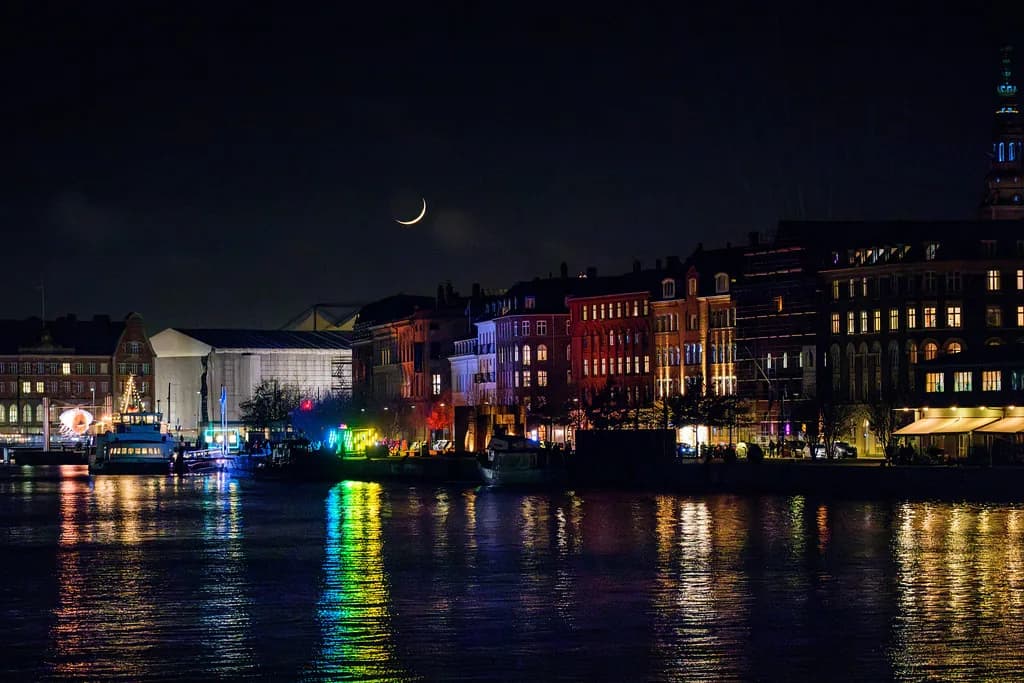
Seeing Copenhagen after dark during the festival reveals a side of the city that daylight hides. Canal reflections double the impact of every installation, and the quiet hum of the harbor amplifies the soundscapes designed into several pieces. You can find more winter travel inspiration on our Denmark travel blog. This guide covers the 2026 dates, the standout installations, guided water tours, live performances, and the practical layering strategy you need for standing still in Danish February wind.
What is the Copenhagen Light Festival?
The Copenhagen Light Festival is an annual cultural event that commissions light artists to animate the city's architecture, canals, and public squares during the darkest month of winter. It was founded to counteract the bleakness of the Nordic February, and it has grown into one of Europe's most significant light art gatherings, drawing hundreds of thousands of visitors each edition. Artists use lasers, LEDs, projection mapping, fiber optics, and sculptural light to build works that range from meditative to interactive to politically charged.
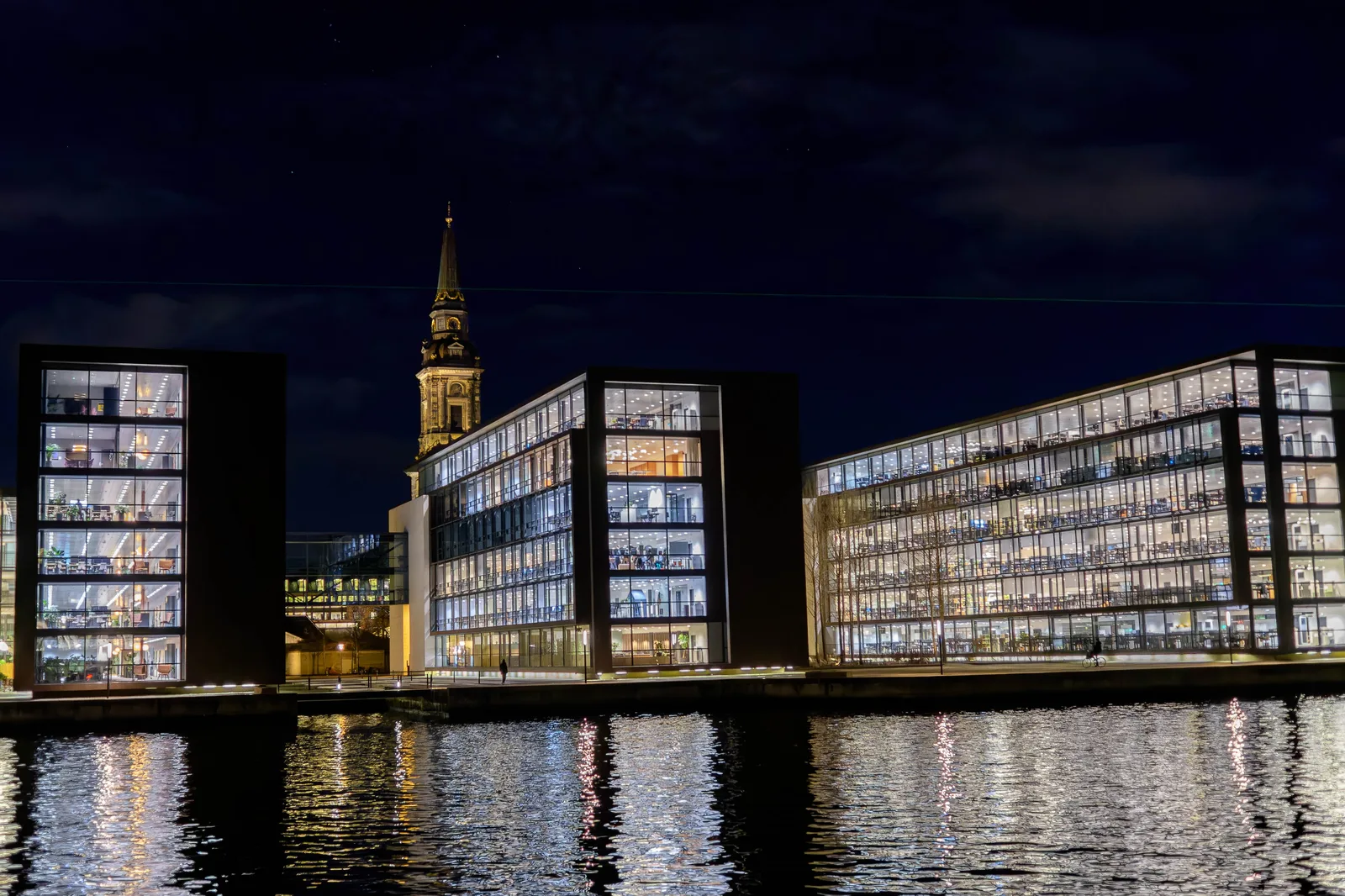
The festival covers several kilometers of walking routes across the inner harbor and city center. Each installation is positioned to interact with its specific site — a bridge, a baroque church facade, a historic warehouse, a canal surface. Entry to every outdoor work is free. That accessibility is a deliberate policy: the organizers want the festival to be a genuine public art experience, not a ticketed attraction. The result is a city where art is simply part of the evening, encountered on the way to dinner or on a bike ride home.
The 2026 edition continues the tradition of mixing established international names with younger artists developed through the Ungt Lys programme, the youth wing of the Danish Center for Light. Several works in the 2026 line-up are by students and recent graduates showing in public space for the first time alongside artists who have exhibited at light festivals in Asia and North America.
2026 Dates, Locations, and Map
The festival runs from 30 January to 22 February 2026. Installations light up at 17:00 each evening, with the majority operating until 22:00. A small number have restricted hours — the Waterwall at Ved Stranden (#14) runs 18:00–21:00 only, as it depends on the pump mechanism and weather. Check the Copenhagen Light Festival Official site for any updates, since storm conditions can occasionally suspend outdoor works early.
The 2026 programme spans six distinct districts, and knowing the geography in advance saves a lot of time. The Inner City cluster (installations #1–#32) covers Højbro Plads, Gammel Strand, Christiansborg, and the inner harbor, and it is dense enough to fill two full evenings on its own. Nordhavn (#51–#53) sits northeast of the center near the harbor development zone. Refshaleøen (#62–#63) is a former shipyard island, now an art and food hub, reached most easily by water bus or bike. Ørestad (#81–#85) is on the metro line south of the center. Nørrebro and the Lakes (#41–#42) are northwest of the city core, near the cemetery district.
The Official Festival Map shows each piece with its number, location, and a short artist statement. Download it before you go — the offline version works without a data connection. Physical maps and route advice are also available at the Copenhagen Visitor Service Location near the central station. Most first-time visitors focus on the Inner City route and add one outer district on a second evening.
Top Installations: From Sonic Glyphs to War Reflections
The most technically ambitious piece in 2026 is #94 Sonic Visual Water Drops, also known as Sonic Glyphs. The installation converts sound waves into visible patterns on a water surface, and the subtlety of the effect is highly dependent on ambient noise. Visit between 21:00 and 22:00, when harbor traffic quietens and the acoustic conditions allow the full range of frequencies to register on the water. Photographers benefit from the long-exposure possibilities here: the water surface acts as a natural diffuser.
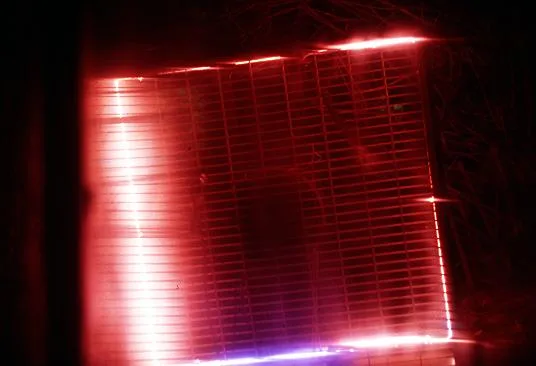
Installation #20 Lost and found in times of war is placed at Eigtveds Pakhus, an 18th-century customs warehouse on the inner harbor that served as a military supply depot during the Napoleonic Wars and later as part of the Danish Crown's trade infrastructure. The artists Jakob Fälling and Ole Samsøe project documentary drawings and portrait interviews with Ukrainians displaced by the current war. The historical weight of the building — a place that once processed the materials of earlier European conflicts — is not incidental. It is why the placement was chosen, and understanding it changes how the work reads.
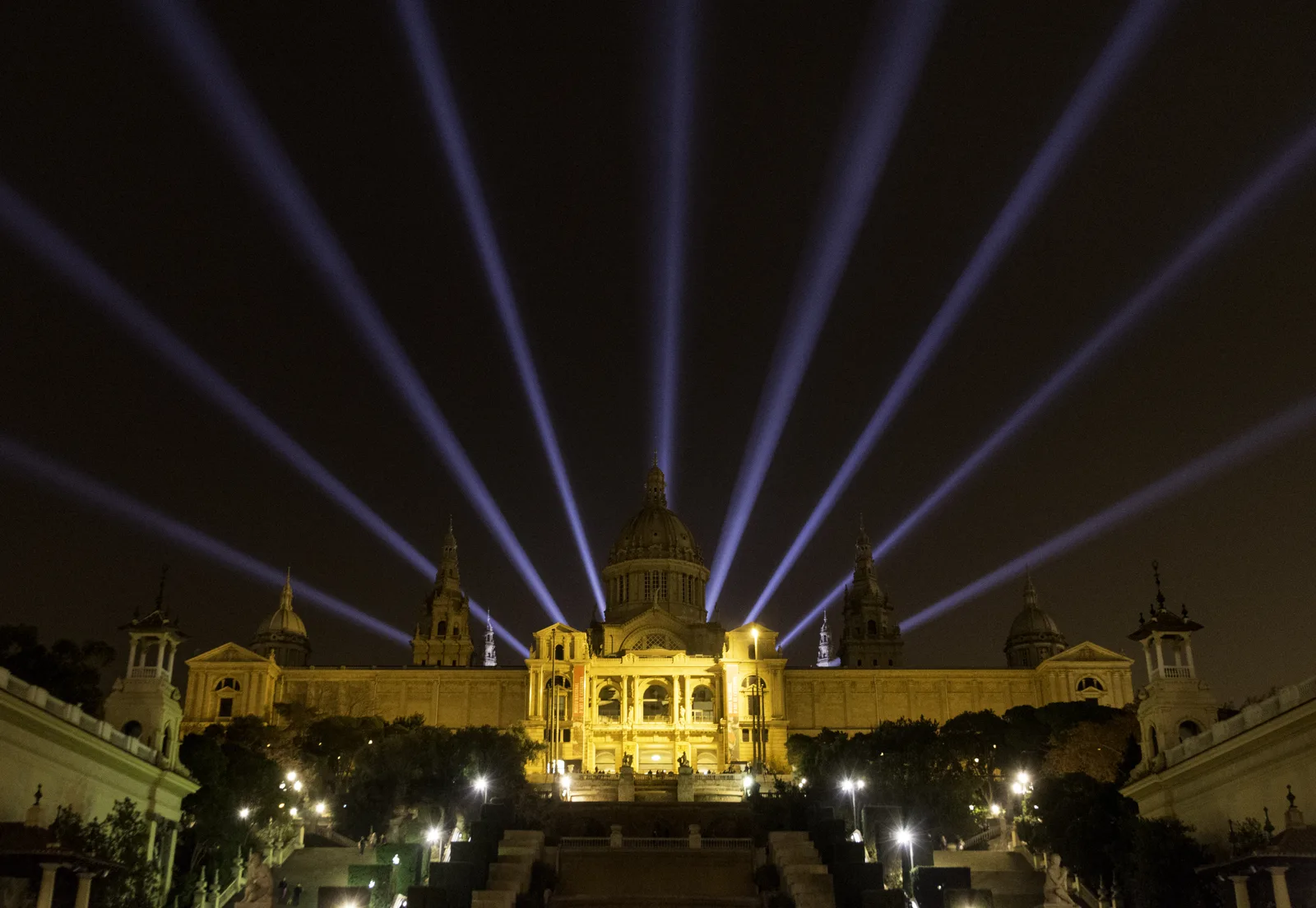
For sheer visual spectacle, #9 Green Beam (Båll & Brand) draws a laser line across the Copenhagen skyline connecting Tivoli, Danhostel Copenhagen City, and Vor Frelser Kirke. It is best seen from the Knippelsbro bridge at around 20:00, where you can look along the beam's trajectory. Installation #13 Curtain Call II places 22 upward-facing light beams at the base of Christiansborg Palace tower, lit from within simultaneously — the combined effect makes the tower appear to float. Families should route past #29 Nisse – Chasing the Light in the inner city parks for a folkloric, playful piece aimed at children, and #11 Gettin' Lost in Bluescapes at the Danish Architecture Center, which uses slow looping video and ambient sound for a meditative, all-ages experience.
- Best for photographers: #82 Time & Line // Out of order at Ørestad — a linear light sculpture with strong geometric lines suited to long-exposure shots. Visit on a still, dry night when the surface reflection is unbroken.
- Best for families: #29 Nisse – Chasing the Light in the inner city — interactive, character-based, and positioned along a walkable trail children can follow independently.
- Best for quiet reflection: #83 Vaults of Silence – In Pursuit of Light at Ørestad — an immersive light and sound piece in an enclosed space. Weekday visits are noticeably less crowded than weekends.
- Most unexpected: #14 Waterwall (Ved Stranden) — a vertical wall of water rises from the canal surface between 18:00 and 21:00, lit to shift color as the water moves. The ice sculpture formed by cold weather remains lit outside those hours.
Official Guided Canal Tours and Water Experiences
Viewing harbor-side installations from a boat gives you the water-level perspective that artists designing for a reflective canal surface specifically intend. The official festival canal boats feature live commentary tied to each piece you pass, and they access points on the inner harbor that walking routes do not reach. Book in advance via the Copenhagen Light Festival Official site — the popular Saturday and Sunday sailings sell out days ahead. The Copenhagen Visitor Service also coordinates festival information and planning assistance.

The "Netto-Bådene" hop-on-hop-off boats offer a cheaper alternative at around 85 DKK per adult (versus approximately 150–200 DKK for official festival boats). They cover the main harbor route but do not provide art commentary and may not approach every installation at close range. For a purely visual impression the Netto boats are serviceable; for understanding what you are looking at, the official tour is worth the extra cost. Both depart from Nyhavn.
The canal tour also gives you a natural warm-up break midway through a cold evening. Boat rides run for approximately 45–60 minutes. The harbor wind on the water is sharper than on land, so an extra layer is worthwhile even if you felt comfortable walking. After the tour, the Nyhavn area has several cafes where you can get hot chocolate — Hotdog Perfektionisten near the canal is one of the few spots open past 21:00 and within easy walking distance of the harbor installations.
Light Through Music and Performance
The festival's Luminous Collaborations programme pairs visual artists with musicians and performers to create one-off events in unusual venues. In past editions these have taken place at Vartov church near City Hall, the Carlsberg brewhouse halls, and waterfront warehouses in Refshaleøen. The 2026 programme includes church concerts where synchronized light projection emphasizes the vaulted ceilings and stone columns — the acoustic and visual combination in a 17th or 18th-century Danish church is unlike anything produced in a purpose-built venue.
Church concerts require a separate ticket and typically sell out within days of the programme being published. Check the official festival site in early January 2026 for the full events calendar. Most ticketed events are priced between 100–250 DKK. Some performances are interactive — the audience's collective sound or movement triggers changes in the light environment — and these tend to be hosted in the more industrial spaces of Nordhavn or Refshaleøen, where the architecture lends itself to experimental formats.
If you want to integrate a performance into your visit without the ticket cost, several of the outdoor installations incorporate live sound elements during specific evening windows. #1 TETRA at Højbro Plads uses music by Danish composer Bjørn Svin as part of the installation, with the score running on a loop throughout the festival's nightly hours. No booking required — it is simply part of the public space.
The Six Districts: How to Plan Your Route
Most guides treat the festival as a single walking route. In reality, the 2026 programme deliberately distributes installations across six geographically separate zones, and attempting all of them in one evening produces exhaustion without the depth that any individual zone rewards. A better approach is to assign one or two zones per evening and spend time at each piece rather than rushing between them.
| District | Installations | Walking Distance | Crowd Level | Best For | Access |
|---|---|---|---|---|---|
| Inner City | #1–#32 | 5–7 km | High (weekends) | First-time visitors, dense clusters | Walk from Central Station |
| Nordhavn | #51–#53 | 2 km | Medium | Post-industrial backdrop, fewer crowds | Bike or 10-min walk from metro |
| Refshaleøen | #62–#63 | Short walks between pieces | Low | Largest structures, art/food hub | Water bus or 9-km bike ride |
| Ørestad | #81–#85 | 2–3 km | Lowest | Photography (fewest people), meditative pieces | Metro: DR Byen or Ørestad station |
| Nørrebro / Lakes | #41–#42 | Short (+ cemetery walk) | Medium | Quieter, westside cemetery district | Bike or S-train to Nørrebro station |
| Vestre Cemetery / Frederiksberg | #91–#94 | 3–4 km combined | Very low | Sonic Glyphs (technical masterpiece), peaceful | Bike from center or S-train |
The Inner City cluster is the logical starting point for any first visit: it contains the highest density of works, is walkable from Central Station, and has the most cafes and sheltered rest spots along the route. Nordhavn, by contrast, is a newer district with a distinct post-industrial character — the three installations there (#51–#53) sit against a backdrop of converted grain silos and harbor cranes, which adds visual context. Refshaleøen requires a deliberate decision to go: the water bus or the 9-km cycling route are the most practical options, but the two pieces there (#62 The Fragments, #63 The Metal Colossi) are among the largest physical structures in the programme.
Ørestad is accessible directly by metro (DR Byen or Ørestad station) and contains four pieces including #82 Time & Line and #83 Vaults of Silence. It is the least crowded district on weeknights, making it the best choice if you want to photograph without waiting for people to clear the frame. The Vestre Cemetery and Frederiksberg district (#91–#94, including Sonic Glyphs) sits in the west of the city and is most naturally combined with a Nørrebro visit by bike. Plan it as a third or fourth evening once you have orientated yourself through the Inner City.
Winter Survival: Weather and Practical Tips
Copenhagen in February averages 0–3°C with wind. The critical difference from walking in that temperature is that festival-going involves standing still for several minutes at each installation while your core temperature drops. A thermal base layer, a merino wool mid-layer, a windproof and ideally waterproof outer shell, and a down-fill or synthetic insulated jacket on top is the minimum stack. Thin fashion coats fail at this task. Your hands and feet cool faster than your core: insulated waterproof gloves and wool-lined boots or at minimum wool socks inside waterproof shoes are not optional.
Warm drink stops are part of the logistics, not the indulgence. The harbor-side route between Nyhavn and Christianshavn has several kiosks serving hot chocolate, and a few sit-down cafes with outdoor heaters. For a quieter and better-quality cup, Grød on Jægersborggade (Nørrebro, close to the Nørrebro district installations) makes a dense, unsweetened dark chocolate from scratch and is open until 22:00 on weeknights. If you are visiting the Christmas markets during the earlier winter season, our guide to the Copenhagen Christmas markets has additional warm-up spots along overlapping routes.
A full Inner City circuit covers approximately 5–7 km. Adding Ørestad via metro extends the evening by 45 minutes of transit plus walking. Wear shoes with grip: canal-side cobblestones and brick paving are reliably icy after dark in February. Break the festival across two or three evenings rather than one marathon night — fatigue in the cold leads to inattention, and the less-visited late-night installations (21:00 onward) are quieter and genuinely more atmospheric.
Artist Open Call: How to Participate
The Copenhagen Light Festival runs an annual Artist Open Call for emerging and established creators to apply with new light art concepts. For the 2026 edition, applications were due in March 2025 — the committee receives proposals from artists worldwide and evaluates them on creative ambition, technical feasibility, durability in outdoor winter conditions, and fit with available sites. Both solo artists and collectives are eligible; you do not need to be Danish or based in Denmark.
The Ungt Lys programme, run through the Danish Center for Light, operates as a parallel entry point for students and young practitioners. Several pieces in the 2026 Inner City cluster — including #2 Fiber Trees, #3 Mirror Mirror, #4 Neuron, and #7 CONFLUX — come from Ungt Lys participants working in collaboration with Gammel Strand's Matrikel1 gallery. Artists interested in the 2027 edition should monitor the official site from late 2025 for the next Open Call announcement.
For visitors who want to become active participants rather than spectators, the Light Run 2026 is a social run past the major installations where participants wear illuminated gear. It typically takes place mid-festival, and registration opens a few months before the event. It is not a competitive race — the pace is social, the route covers the Inner City's main works, and the collective glow of a hundred lit runners moving through the harbor district at night is itself a piece of light art.
Frequently Asked Questions
Which Copenhagen Light Festival options fit first-time visitors?
First-time visitors should start with the harbor walk and an official guided canal tour. These options cover the largest and most famous installations in a short time. You can also find festive atmosphere tips in our guide to the best Christmas markets in Copenhagen 2026 for more winter ideas.
How much time should you plan for the festival?
You should plan for at least two to three evenings to see the majority of the works. Each evening walk typically takes two to three hours depending on your pace and stops. Breaking it up helps you manage the cold weather and enjoy the details of each art piece.
What should travelers avoid when planning their visit?
Avoid visiting only on weekend nights when crowds are at their peak. You should also avoid wearing thin clothing, as the wind off the harbor is very biting. Do not forget to check the official map, as some installations are hidden in courtyards or side streets.
Is the Copenhagen Light Festival worth including on a short itinerary?
Yes, it is absolutely worth it because many installations are centrally located and free. Even a one-hour walk after dinner allows you to see several impressive works. It provides a unique evening activity that makes a short winter trip to Denmark feel much more special.
The Copenhagen Light Festival is one of the best reasons to visit Denmark in winter. Free admission, a 24-day programme, and around 50 works spread across six distinct city districts make it a festival that rewards multiple evenings rather than a single rushed walk. Plan your districts, dress for standing still in the cold, book a canal tour early, and consider an outer district like Refshaleøen or Ørestad for a quieter, less-photographed perspective on 2026's programme.
You might also like


Continue reading
More guides you'll find useful