13 Best Christmas Markets in Copenhagen 2026 Guide
Plan your 2026 Copenhagen Christmas trip with our guide to the 13 best markets, Santa Lucia kayak parades, and essential tips for dates, food, and hotels.
On this page
13 Best Christmas Markets and Festive Highlights in Copenhagen 2026
Updated for the 2026 season from my winter 2024 visit. Copenhagen transforms from mid-November onward: market stalls go up, canal bridges fill with spectators, and every bakery window starts smelling of cardamom and cinnamon. The city is genuinely one of the best places in Europe to experience Christmas markets without making your entire trip about them.
Late November and the first two weeks of December are the sweet spots. The markets are fully running, crowds are manageable on weekday mornings, and hotel rates are slightly lower than the peak December 13–23 stretch. Hygge — the Danish concept of cozy togetherness — is not just a marketing word here. It is visible in how locals cluster around steaming cups of gløgg and linger at stalls for far longer than the cold should allow.
This guide covers all five main markets plus the unconventional Christiania market, the floating Santa Lucia parade, what to eat, how to get around, where to stay, and a clear breakdown of whether the Copenhagen Card actually saves you money on a market itinerary.
Copenhagen Christmas Market Dates and Opening Times 2026
Most markets open in early to mid-November 2026 and run until December 21–23. Tivoli Gardens and Kongens Nytorv Winter Wonderland typically stay open until early January 2027. Based on 2025 dates, Højbro Plads and Nyhavn both closed on December 21, while Tivoli and Kongens Nytorv continued through January 4. The Hans Christian Andersen market at Nytorv closed December 20. Confirm exact 2026 dates on the Official VisitCopenhagen Christmas Guide from October onward.
Standard opening hours run roughly 11:00 to 19:00 on weekdays. Friday and Saturday typically extend to 21:00 at most locations. The Kongens Nytorv ice rink opens at 10:00 daily. Tivoli opens 11:00 to 23:00 Sunday through Thursday and until midnight on Fridays and Saturdays.
All markets except Tivoli Gardens are free to enter. Denmark is nearly 100% cashless — card terminals are standard even at small food stalls, so you can leave coins at the hotel. Plan to arrive on weekday mornings if you want space to browse; weekend afternoons draw heavy local foot traffic at every square.
Tivoli Gardens Christmas Market: The Fairytale Experience
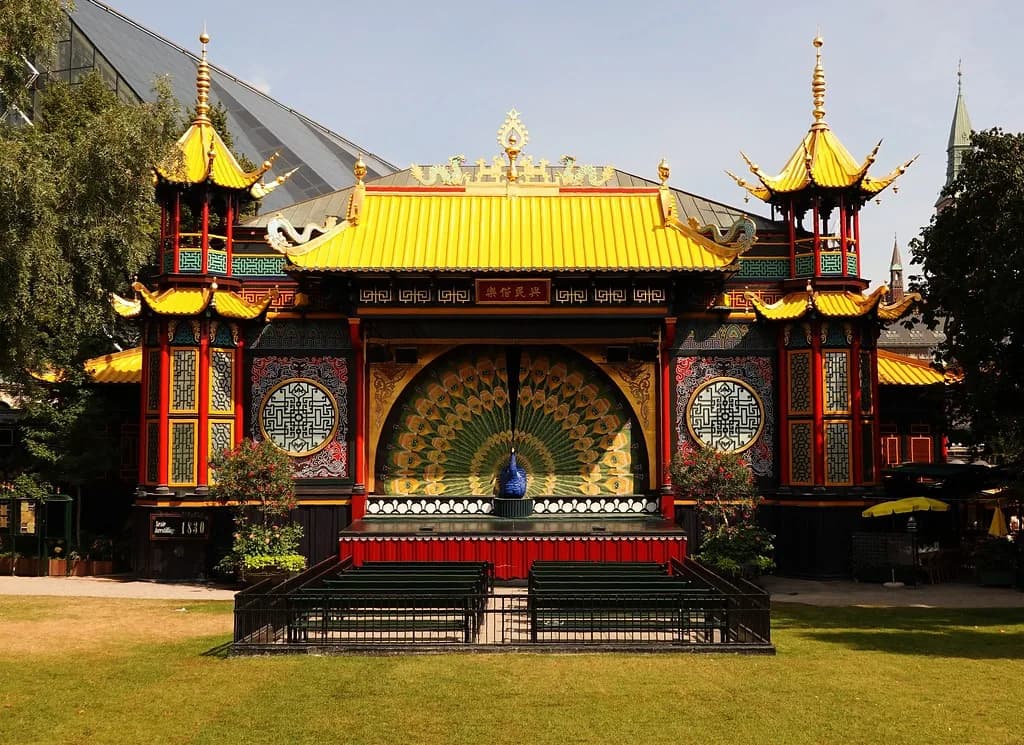
Tivoli is the centerpiece of Christmas in Copenhagen. The park — the second oldest amusement park in the world, open since 1843 — is draped in over 70,000 fairy lights during the festive season. Wooden chalets are decorated far beyond what you find at the outdoor street markets, and the full fairground rides operate alongside the stalls. If you visit only one market, make it this one.
Tivoli opens mid-November through early January 2027. Visiting after dark (sunset is around 15:30 in December) is the right call — the light show over the lake runs several times each evening, and the atmosphere is substantially more magical than daytime. Grab a stamp on your way out if you want to return the same evening without paying again.
There are three ticket options for 2026. A basic entrance ticket costs around 220 DKK (approximately 30 EUR) for adults. An entrance plus unlimited rides pass runs approximately 379 DKK. The Copenhagen City Card (Discover tier) covers Tivoli entrance as one of its 80+ included attractions. Buy any option online in advance — the entry lines during peak weekends are significant. Tivoli is located at Vesterbrogade 3, steps from Copenhagen Central Station.
Tivoli Ticket vs. Copenhagen City Card: Which Saves You More
This is the practical question most first-timers overlook until they are standing at the ticket kiosk. The Copenhagen City Card (Discover, 24h) costs around 489 DKK per adult. It covers unlimited metro and bus rides, Tivoli entry, and 80+ museums including the Designmuseum Danmark, Ny Carlsberg Glyptotek, and Rosenborg Castle. If you plan to hit Tivoli plus two or three museums in a single day, the card pays for itself.
If your itinerary is purely market-focused — Tivoli entrance plus strolling the free outdoor markets — the basic Tivoli entrance ticket at 220 DKK is cheaper. The card does not cover Tivoli rides; for that you need the separate Ride Pass (379 DKK) or add-on tokens. The City Card is not ride-inclusive even though it covers park entry.
A useful rule of thumb: if you are in Copenhagen for two or more days and plan museum visits, buy the 48h City Card (around 699 DKK) on arrival day and use it across both Tivoli and the museums. For a pure one-day market crawl, save the money and buy a standalone Tivoli entrance ticket online before you go.
Nyhavn Christmas Market: Festive Waterfront Vibes
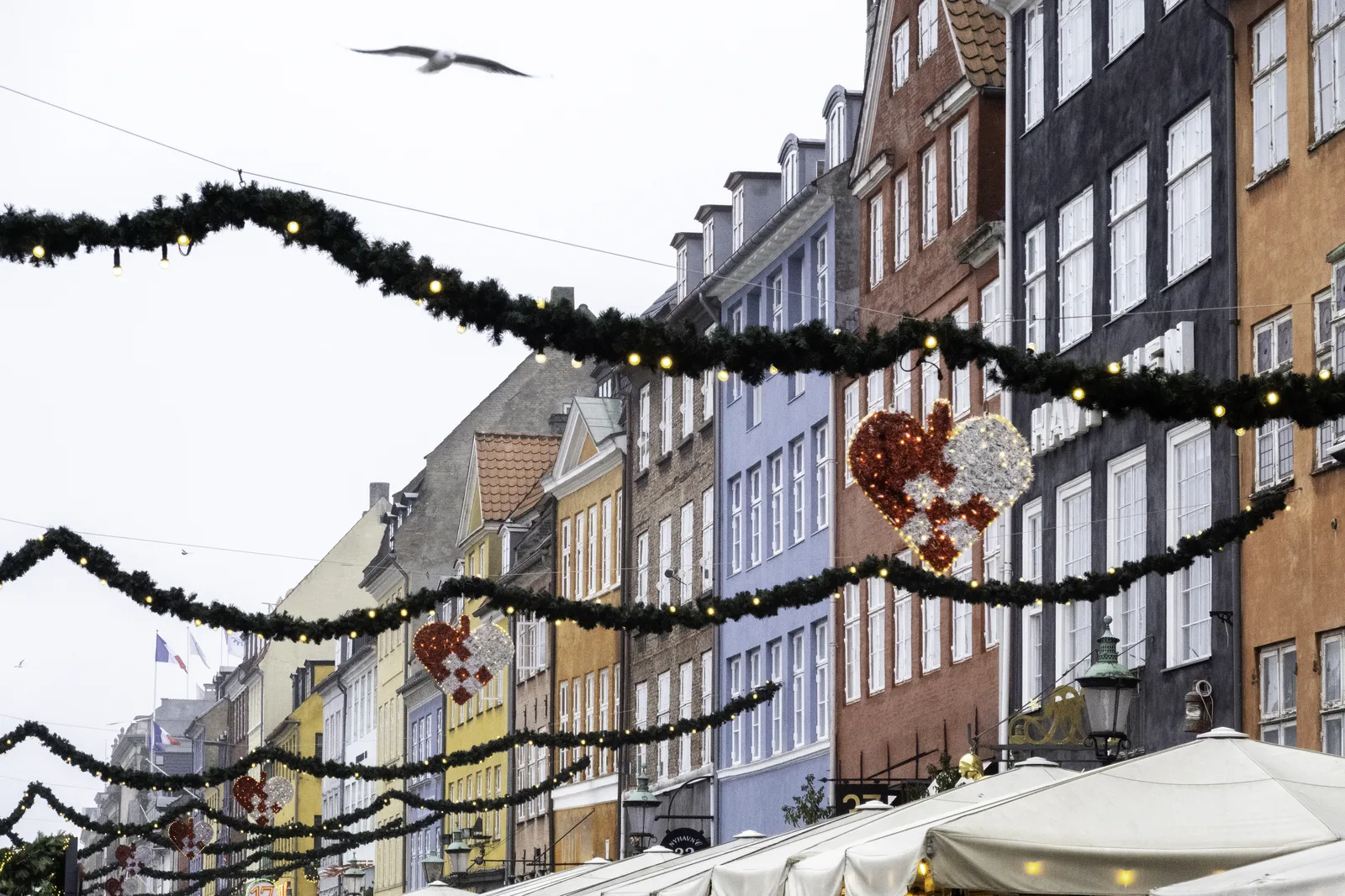
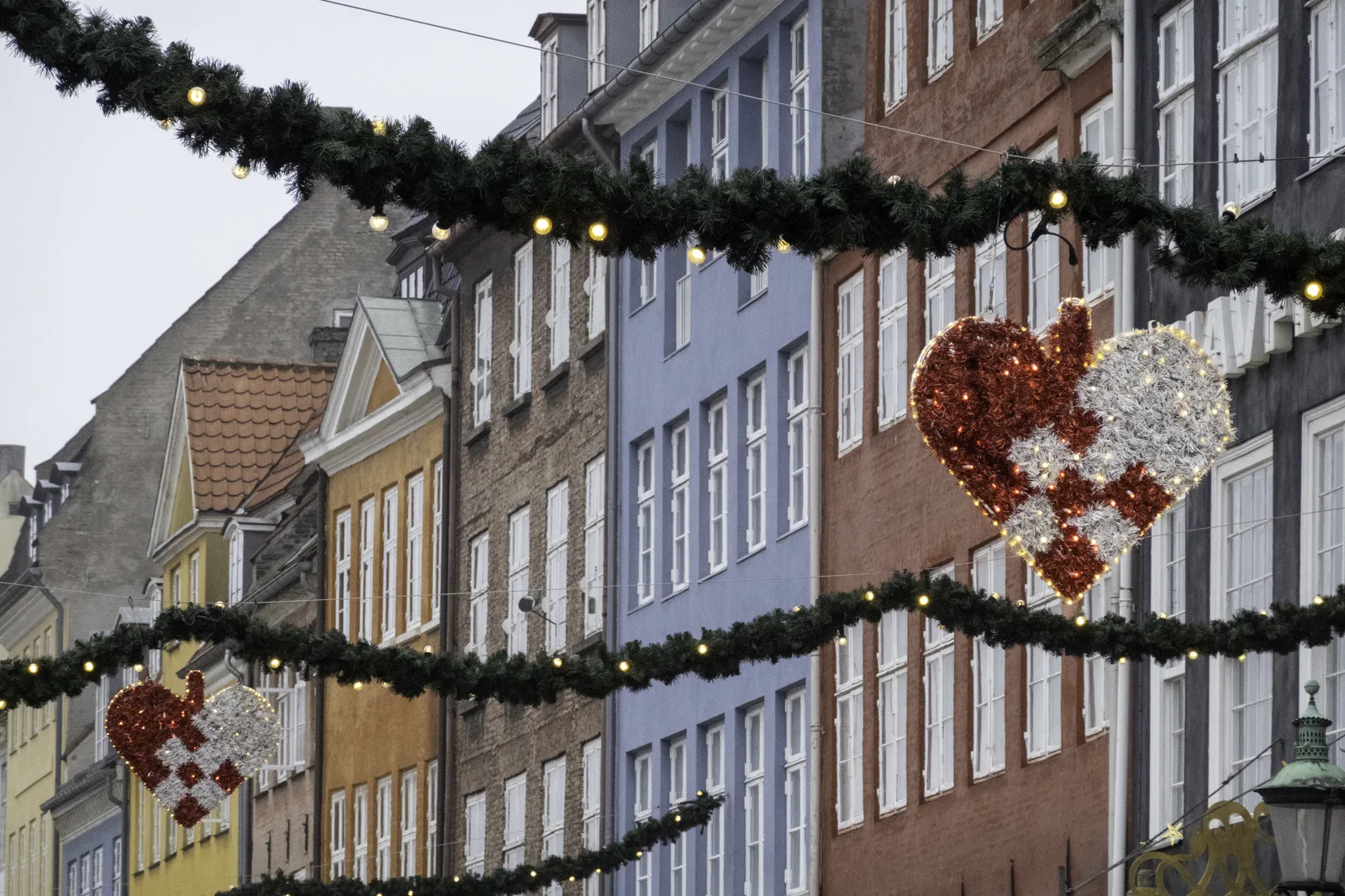
Nyhavn Christmas Market runs along the canal walkway in front of the iconic 17th-century painted townhouses. Stalls sell knitted goods, ornaments, gløgg, and churros, all with the backdrop of wooden boats decorated in lights. It is the most photographed market in the city. Cross to the south side of the canal for the best angle — that perspective shows the full row of coloured houses reflected in the water.
The market runs from early November until around December 21. Hours are typically 11:00–19:00 Monday to Thursday and 10:00–20:00 Friday to Saturday. This location is one of the most popular Copenhagen Christmas markets among tourists, so expect density on weekend afternoons. Many restaurants along the canal charge premium prices — the food market stalls are better value and more atmospheric anyway.
Nyhavn is also the best viewing point for the Santa Lucia kayak parade on December 13 (see below). Arrive by 16:30 to secure a standing spot on the bridge or canal edge before the 17:00 start.
Højbro Plads Christmas Market: Traditional International Flair
Højbro Plads is the most local-feeling of the central markets. It sits right off Strøget, Copenhagen's main pedestrian shopping street, and draws families and groups of friends rather than tour buses. The stalls have a stronger artisan and food focus: raclette potatoes, holiday churros, hot toddies, and Nutella crepes are among the regulars. There is also a Santa meet-and-greet Thursday to Sunday for families with young children.
The wooden huts have more decoration and personality than you find at Nyhavn — this is where the hygge atmosphere is genuinely strongest among the outdoor markets. Hours run Monday to Wednesday 11:00–19:00, Thursday 11:00–20:00, and Friday to Saturday 11:00–21:00. Entry is free. It is a natural stop when you are already walking Strøget and browsing the holiday window displays at Illum and Magasin du Nord department stores.
The central fountain at Højbro Plads is often lit for the season. Cafe Norden, on the corner of Strøget at Nørregade, is a good warm-up stop for coffee and cake after the market.
Kongens Nytorv Christmas Market: Ice Skating and Grand Facades
The main draw at Kongens Nytorv is the large track-style ice skating rink that encircles the King Christian V statue. The rink is open daily 10:00–21:00 from mid-November. Skate hire is available on site. The market stalls themselves are fewer and more upscale than at Højbro Plads — Hotel d'Angleterre runs its own stall here, and Juno Bakery has a seasonal stand.
The Hotel d'Angleterre facade at the north end of the square is decorated with enormous baubles, tinsel, and life-size Nordic toy soldiers — the most extravagant private building display in the city. It is worth a photograph even if you are just passing through on the way to Nyhavn, which is a five-minute walk east. You might find the Copenhagen light festival installations nearby in February when the winter cultural calendar continues.
Market stalls at Kongens Nytorv run Tuesday to Thursday 15:00–20:00 and Friday to Sunday 11:00–20:00. The ice rink closes on December 24, 25, 31, and January 1. The indoor warmth of the Hotel d'Angleterre lobby is available for a coffee without an obligation to dine.
| Market | Primary Draw | Vibe | Best For |
|---|---|---|---|
| Tivoli Gardens | 70,000 lights, rides, wooden chalets | Magical, crowded evenings | Photo ops, full experience |
| Nyhavn | Waterfront, painted houses, kayak parade | Touristy, photogenic | Instagram, Santa Lucia (Dec 13) |
| Højbro Plads | Artisan goods, raclette, local families | Cozy hygge, authentic | True Copenhagen experience |
| Kongens Nytorv | Ice skating rink, Hotel d'Angleterre display | Upscale, elegant | Skating, architectural photos |
| Hans Christian Andersen | Storybook theming, Santa meet-and-greet | Family-friendly, calm | Young children, story lovers |
| Freetown Christiania | Handmade goods, live music, indoor hall | Bohemian, artisan-focused | Unique finds, locals, warm break |
Hans Christian Andersen Christmas Market: Family-Friendly Magic
Located at Nytorv square in the heart of the city, this market is themed around Denmark's most famous author. Stalls are named after his fairy tales and decorated with hundreds of lights. There is a small ice skating rink on one side, and Santa Claus wanders the market for photographs. The atmosphere is the calmest and least crowded of the central markets, which makes it easier to visit with young children.
The food options include mulled wine, Irish coffee, pork sandwiches, and potato twists. Hours run Monday to Thursday 11:00–19:00, Friday and Saturday until 21:00. The market typically closes around December 20. Stall quality is uneven — one side of the pedestrian stretch is more curated than the other — but the overall family-friendly energy and the story-driven theming make it worth a half-hour stop if you are in the area.
Freetown Christiania Christmas Market: An Unconventional Yuletide
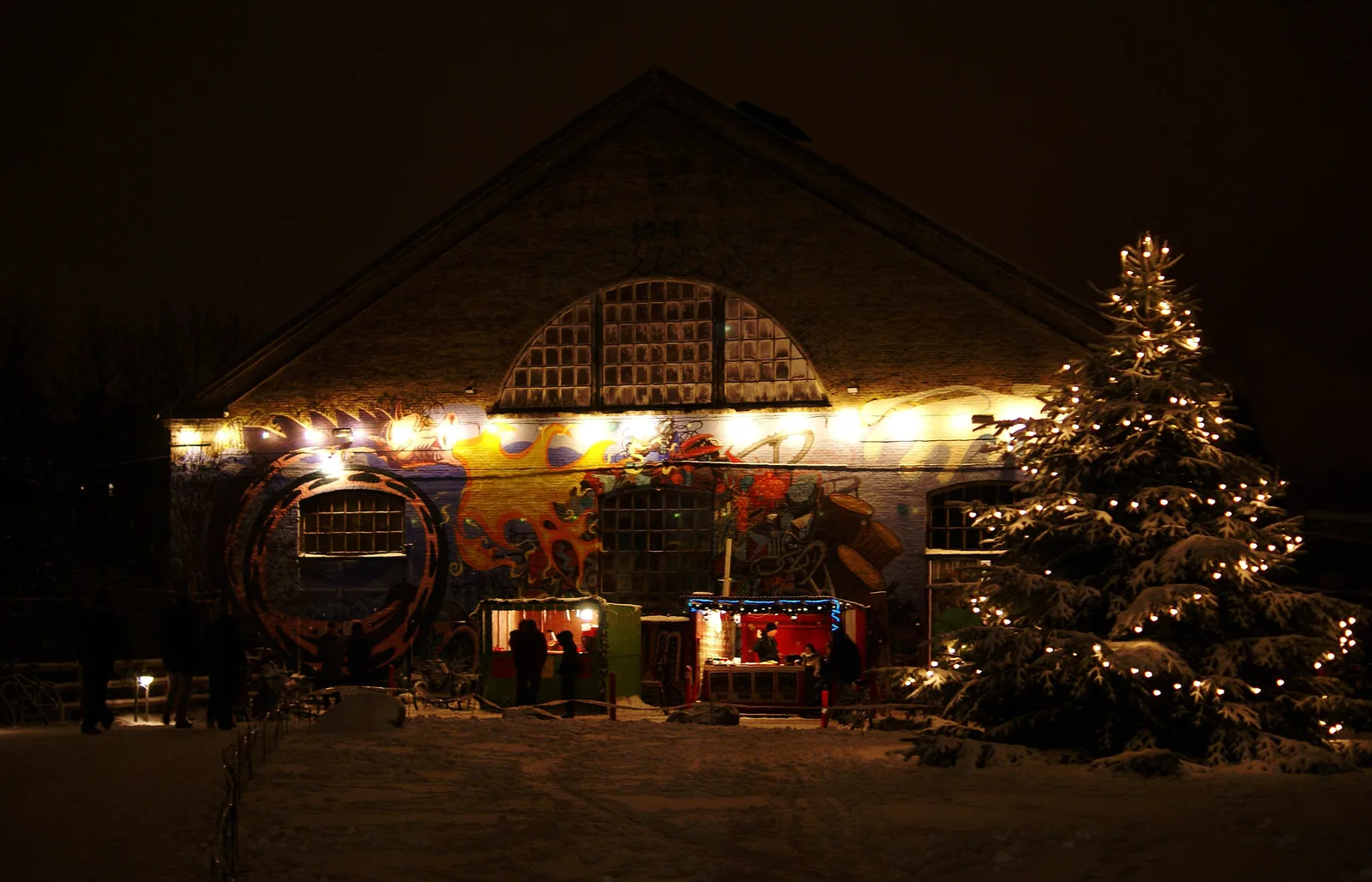
Christiania is a self-governing community in Christianshavn, accessible in about 15 minutes on foot from the city center or by metro to Christianshavn station. The Christmas market runs for roughly two weeks in mid-December inside Grey Hall, the community's main gathering space. It is entirely indoors, which is a practical advantage in December.
Stalls sell handmade jewelry, candles, ironwork, mirrors, and cards — genuinely one-of-a-kind pieces that you will not find at the central markets. Live music is usually playing. Food options lean vegetarian and organic. The vibe is bohemian and unhurried; stallholders are often the makers themselves and happy to talk about the work. It is a favorite among locals who want something beyond the standard wooden-hut format.
One practical note: photography rules in Christiania are enforced strictly along certain streets, particularly Pusher Street. Ask before pointing a camera at people or stalls. The market itself is welcoming — the photography boundaries are specific to certain areas of the community, not the market hall.
The Floating Santa Lucia Parade in Copenhagen's Canals
On December 13 each year, hundreds of kayaks decorated with lights and Christmas garlands depart from near the Kayak Bar by Knippelsbro at 17:00. The paddlers sing carols as they glide through the canals toward Nyhavn. It is a free spectator event and one of the most distinctive Christmas traditions in Copenhagen — a Nordic take on the Scandinavian feast of Saint Lucia (whose name means light), reimagined on the water.
The reflection of the kayak lights on the dark canal water is the image most people come away talking about. Arrive at your chosen viewing bridge by 16:30 at the latest. The bridges along Christianshavn canal and the Nyhavn harbor entrance are the two best vantage points. The parade is quiet and respectful as it passes — bring gloves and expect to stand still in the cold for 20–30 minutes.
The event is free and requires no registration. It draws thousands of spectators, so early positioning matters more than any other logistical detail.
Must-Try Danish Christmas Foods and Drinks
Gløgg is the essential market drink — a hot mulled wine made with red wine, cinnamon, cloves, cardamom, and dried orange peel, served with raisins and blanched almond slivers in the cup. Danish gløgg is spiced more heavily and served hotter than German Glühwein. Pair it with æbleskiver: small spherical pancake puffs cooked in a cast-iron pan with seven half-moon molds. They are served with strawberry jam and powdered sugar and are best eaten immediately while the outside is still crisp.
Roasted almonds with sugar and cinnamon are sold at almost every market and provide a warming snack while you browse. Flæskestegssandwich — roast pork belly on rye bread with red cabbage and pickled cucumber — is the market's savory staple. For sweets, look for pebernødder (small hard spiced cookies) and honninghjerter (gingerbread hearts decorated in icing). Risalamande, a cold rice pudding with whipped cream and cherry sauce, appears in restaurants and bakeries as a Christmas dessert rather than a market stall item.
Danish Christmas beer (julebryg) is released by breweries in November. Most bars near the markets carry seasonal brews from Carlsberg and Mikkeller. If you want a warm non-alcoholic option, ask for varm kakao med flødeskum — hot cocoa with whipped cream — which is standard at any market food stall.
How to Get Around Copenhagen in Winter
Copenhagen is one of the most walkable cities in Northern Europe. The five main Christmas markets are all within a 30-minute walk of each other — Tivoli to Nyhavn is the furthest pair, a comfortable 25-minute walk that passes Højbro Plads, Kongens Nytorv, and the Hans Christian Andersen market on the route. In practical terms, you can cover every central market in a single day on foot.
The metro runs 24 hours a day, seven days a week, which makes late-evening returns from Tivoli or New Year fireworks simple. The M1 and M2 lines connect the airport to the city center in about 15 minutes. Single metro tickets cost around 26 DKK; the Copenhagen City Card covers unlimited rides. From Copenhagen Airport, you can also use Uber or Bolt if you arrive with heavy bags and want a direct transfer.
Christiania is accessible from central Copenhagen via a 15-minute walk across the Knippelsbro bridge, or two stops on the metro to Christianshavn station. Cycling is theoretically possible — Copenhagen has world-class bike infrastructure — but December rain and occasional ice make it a less appealing option than in spring. Stick to walking and the metro for a winter market itinerary.
Where to Stay for the Best Christmas Atmosphere
Proximity to the markets varies a lot by neighborhood. For Tivoli access, the area around Copenhagen Central Station is ideal — the NH Copenhagen Grand Joanne sits roughly two blocks from the park entrance and is within easy walking distance of several museums. For Nyhavn and Kongens Nytorv, Hotel d'Angleterre is directly on the square (the most expensive option in the city), while Hotel Sanders nearby offers a boutique alternative at a lower price point. The 71 Nyhavn Hotel overlooks the canal directly and is the most affordable of the Nyhavn-adjacent options.
If you prefer a neighborhood with more local character, Vesterbro — the former meatpacking district west of Central Station — has a dense cluster of design hotels and independent restaurants. It is a 10-minute walk to Tivoli and a 20-minute walk to the canal markets. Nørrebro is slightly further from the markets but cheaper, with excellent cafes and bakeries to use as warm-up stops between market visits.
Book at least three months in advance for the first two weeks of December, when room rates peak across all areas. Many hotels offer Christmas packages that include breakfast and sometimes a Tivoli entrance ticket bundled in — worth checking against standalone pricing before you book separately.
Fairytale Castles and Day Trips Near Copenhagen
Kronborg Castle — the setting for Shakespeare's Hamlet — sits in Helsingør, 45 minutes north of Copenhagen by train. The castle runs Christmas events in December including a Hamlet-themed winter experience inside the Great Hall. Admission costs around 145 DKK for adults and the train from Copenhagen Central Station runs every 20 minutes. It is the most atmospheric castle day trip from the city, particularly on a clear winter day when the Øresund strait is calm.
Rosenborg Castle in the King's Garden, within Copenhagen itself, houses the Danish crown jewels and opens daily year-round. The castle is included in the Copenhagen City Card. In December the surrounding park is quiet and photogenic with bare trees and early-closing light. It is a strong half-day addition to a market-focused itinerary.
The Louisiana Museum of Modern Art in Humlebæk, one hour north by train, is worth a half-day in winter for the James Turrell permanent light installation and the sculpture garden overlooking the sea. It is not specifically a Christmas attraction, but the winter crowds are thin and the indoor galleries are a genuine warm-up option on a very cold day.
Is Copenhagen at Christmas Worth Visiting?
Copenhagen is expensive. A glass of gløgg costs 50–80 DKK at most stalls. A decent hotel in a central location starts at 1,200–1,800 DKK per night in December. Tivoli entry adds another 220 DKK per person. For a solo traveler or couple on a budget, it is a more costly Christmas break than Prague, Bruges, or Krakow.
What you get for the price is different in character from most European Christmas markets. The markets themselves are smaller than the mega-markets in Cologne or Vienna, but Copenhagen is not just a market city during December — the museums are world-class, the food scene is exceptional, the cycling infrastructure means you can move freely, and the entire city decorates itself, not just the designated market squares. The hygge atmosphere is not manufactured for tourists; it is how Danes actually spend the dark winter months.
My honest recommendation: if you can spend three nights rather than two, the itinerary becomes much more satisfying. Day 1 covers Tivoli and Højbro Plads. Day 2 covers Nyhavn, Kongens Nytorv, and a museum. Day 3 is Christiania and a half-day train trip to Kronborg or Louisiana. That pacing gives you the markets without rushing them and leaves room for the cafe culture that is just as much a part of the Copenhagen winter as the stalls themselves.
Frequently Asked Questions
When do the Copenhagen Christmas markets start in 2026?
Copenhagen Christmas markets usually start in mid-November. Most central locations open around November 15 and close on December 23. Tivoli Gardens often remains open until the end of the year.
Is the Copenhagen Card worth it for visiting Christmas markets?
The card is worth it if you visit Tivoli and several museums. It covers the entry fee for Tivoli Gardens and public transport. Use it to save money on a busy sightseeing itinerary.
What is the best Christmas market in Copenhagen for families?
Tivoli Gardens is the best choice for families with children. It offers rides, light shows, and a dedicated alpine village. The Hans Christian Andersen market is also great for kids.
Copenhagen is a top choice for a festive winter break in Europe. The variety of markets ensures there is something for every traveler type. Plan your trip early to secure the best hotel rates and flights. Check my Denmark travel blog for more planning tips and local advice.
Enjoy the warm gløgg and the beautiful lights across the city squares. Copenhagen will surely provide a memorable and hygge-filled holiday experience. May your 2026 winter trip be filled with magic and Danish charm.
You might also like


Continue reading
More guides you'll find useful