12 Best Areas and Tips to Stay in Aarhus 2026
Discover the best areas to stay in Aarhus for 2026. From the historic Latin Quarter to modern Aarhus Ø, find the perfect neighborhood for your Danish city trip.
On this page
12 Best Areas and Tips to Stay in Aarhus 2026
Aarhus is Denmark's second city, but for many travelers it quickly becomes the favorite. With around 300,000 residents spread across a compact, walkable center on the Jutland peninsula, the city delivers world-class museums, a four-Michelin-star dining scene, and a harbor waterfront that rivals anything in Scandinavia. The neighborhoods here are distinct enough that choosing the right one genuinely shapes your experience.
This guide is updated for 2026 and covers the five core areas where tourists actually stay, plus practical sections on transport, budget, and how Aarhus stacks up against Copenhagen. Whether you want cobblestone boutique streets, a modern waterfront apartment, or a local student quarter far from the tour buses, there is a base camp here that fits.
At a glance
- Best time to visit: Late May–early September for mild weather and long days
- Duration: 3–4 days ideal; 2 days minimum
- Typical cost: EUR 100–160 per person per day (accommodation + meals + activities)
- Getting there: Aarhus H train station; 3 hours from Copenhagen by DSB train
- Budget hack: Buy the AarhusCard (DKK 299–469) for museum + transport savings
Midtbyen (City Center): Best for First-Time Visitors
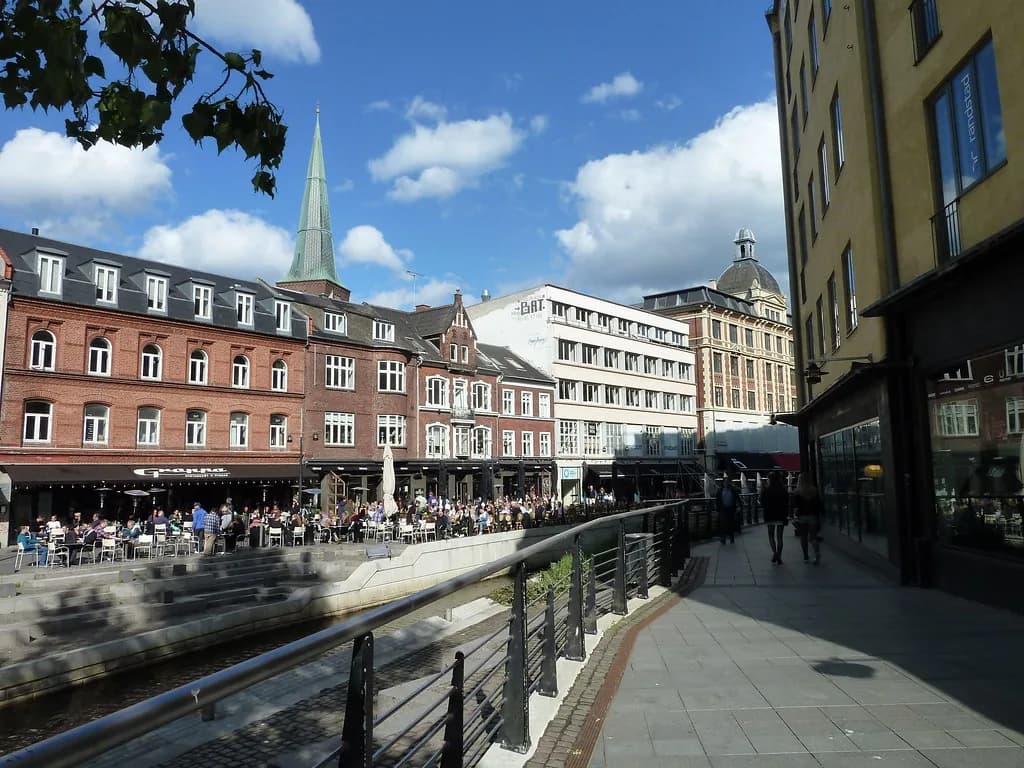
Midtbyen is the obvious starting point. The main train station drops you straight into the action, and the pedestrianized shopping street known as Strøget — locally called Søndergade — runs right through the district. From here, every major sight is within a 15-to-20-minute walk, which makes orientation effortless on a first visit.
The center holds the Salling department store with its rooftop Skywalk, a free viewpoint with city panoramas. Hotel Oasia is the standout accommodation in Midtbyen: a design-forward boutique property on Kriegersvej that pairs with the nearby Gastromé restaurant, one of Aarhus's four Michelin-starred establishments. Rates at Hotel Oasia typically run DKK 1,100–1,800 (EUR 150–245) per night depending on season.
The main drawback is noise. The canal area near the center fills up on Thursday, Friday, and Saturday evenings, so request a courtyard-facing room if you are a light sleeper. That said, there is no better base for a first trip or a tight two-day itinerary.
Latin Quarter: Historic Charm and Boutique Stays
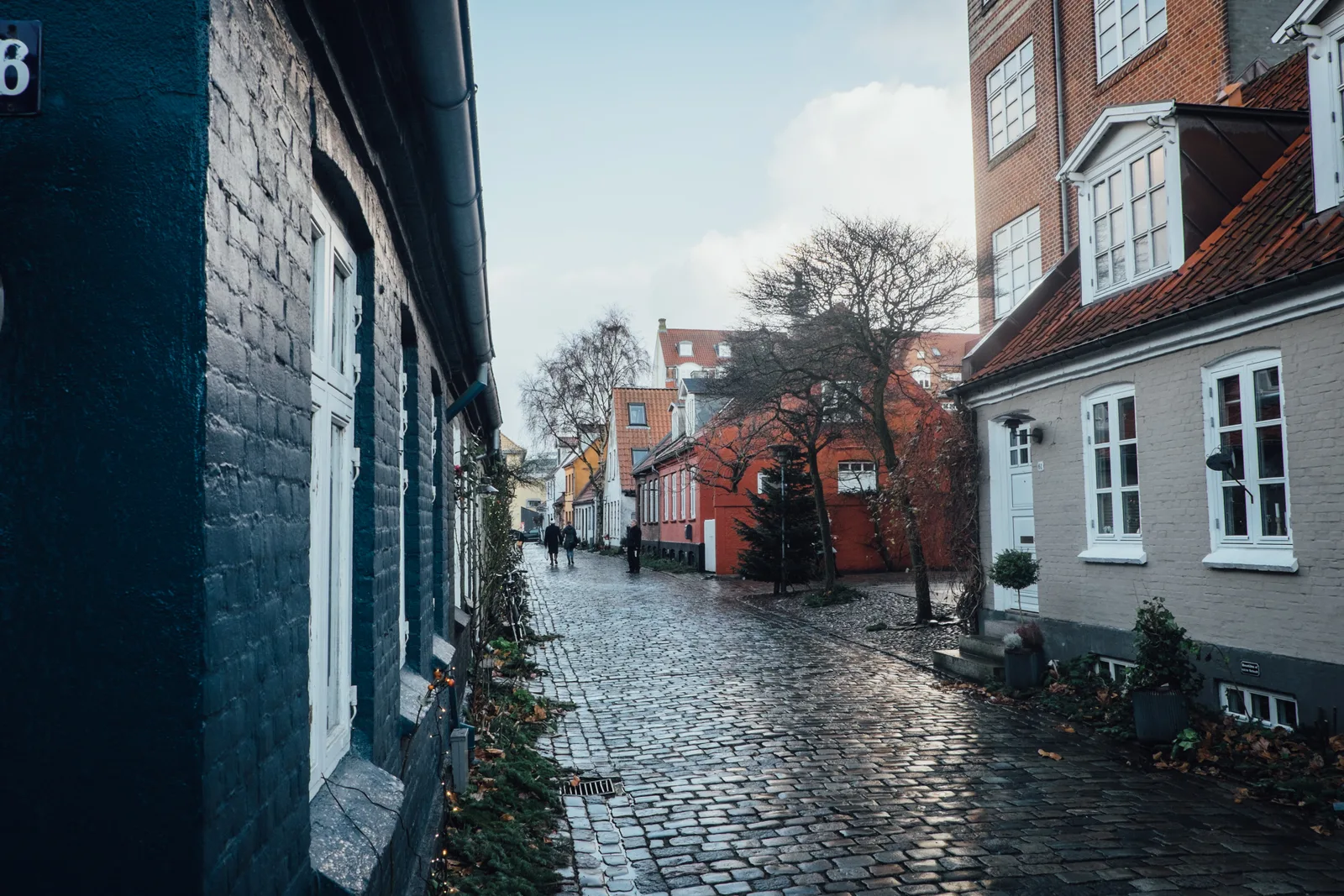
The Latin Quarter (Latinerkvarteret) sits just north of the city center and is the oldest part of Aarhus. The district grew after the city received permission to demolish the old Viking fortifications in the late 14th century, and some of the timber-framed buildings here date to the 1600s. Streets like Klostergade, Mejlgade, and Badstuegade are lined with independent designers, second-hand bookshops, and candlelit cafes.
In the middle of the quarter stands Aarhus Cathedral, a Gothic church begun in the 12th century. Just off the main drag is Pustervig Torv, a small square that locals use as an informal meeting point in the evenings. If you want aarhus city center hotels with genuine character rather than a corporate feel, boutique guesthouses in this quarter are the right pick.
Møllestien — a 240-meter cobbled alley with hollyhock-covered facades — is a few minutes from the Latin Quarter's heart and is the most photographed street in the city. Walk through it in the early morning before the Instagram crowd arrives. Boutique rooms in and around the Latin Quarter run roughly DKK 1,200–2,300 (EUR 160–310) per night; book at least two months ahead for June, July, and August.
Aarhus Ø: Modern Architecture and Sea Views
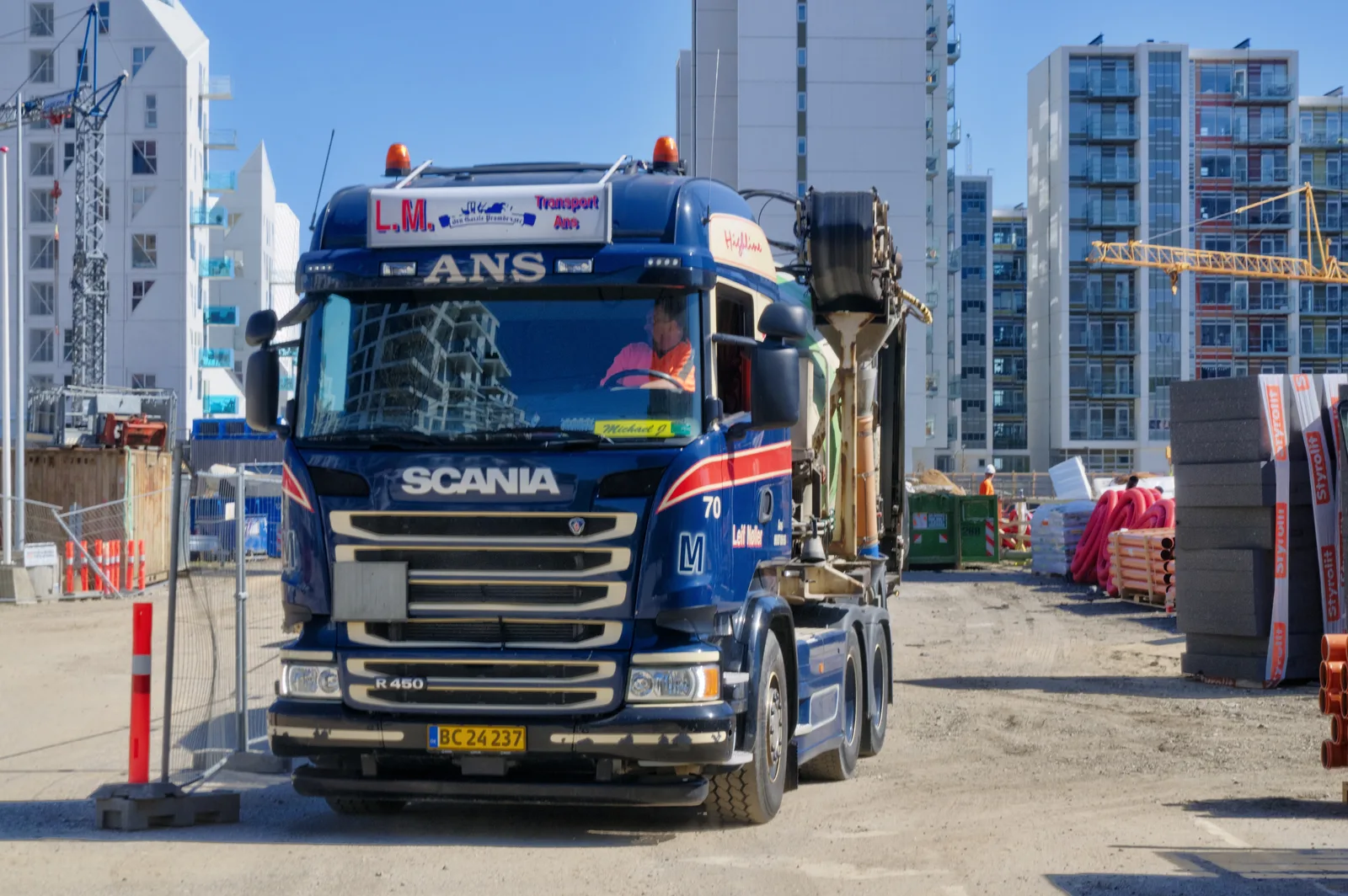
Aarhus Ø is the city's new harbor district, built on reclaimed land where container traffic once dominated. The architecture here is genuinely spectacular: the Isbjerget (Iceberg) apartment complex has jagged white facades that jut over the quay, and the Lighthouse building rises 142 meters to become the tallest structure in Denmark. Both opened within the last decade and signal the ambition behind this transformation.
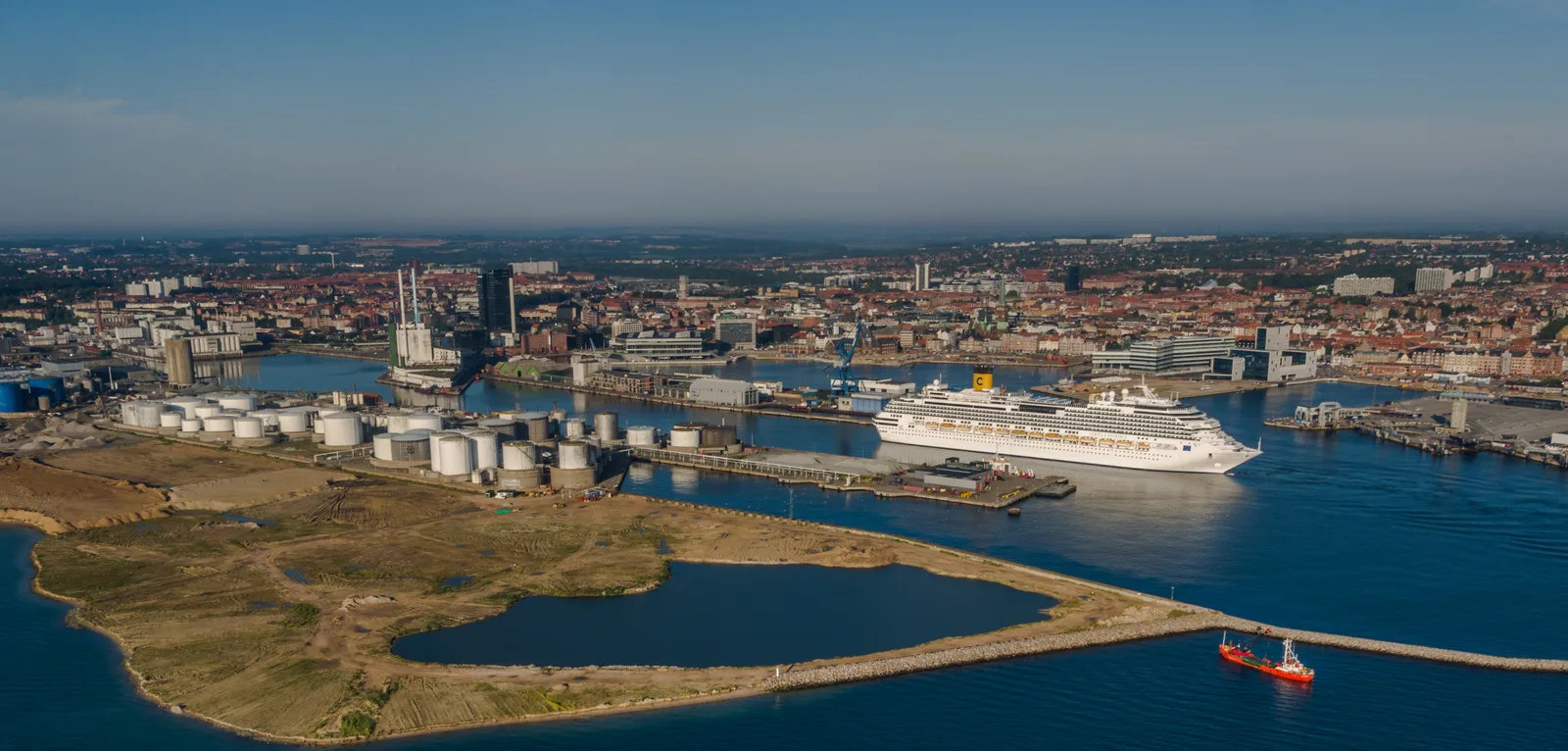
The neighborhood's key draw for visitors is Aarhus Øje — the viewpoint at the top of the Lighthouse, accessed for around EUR 20. The views cover the entire bay, the harbor bath (Havnebadet Basin 7) directly below, and the city skyline. Aarhus Øje is open daily and worth the climb on a clear day. The harbor bath itself is free to use in summer and has a 50-meter pool, diving tower, and sauna.
Staying in Aarhus Ø means a 15-minute walk or a single tram stop into the center. Modern hotel and apartment units here run DKK 1,100–2,150 (EUR 150–290) per night. It is the best area for those who want open sea air and bold contemporary design rather than historic cobblestones. The surrounding walking path at Vesterlauget Ø has several casual harbor-front eating spots that stay open until late.
Frederiksbjerg: The Culinary Soul of Aarhus
Frederiksbjerg lies just south of the rail tracks and is the neighborhood most Aarhus residents name when asked where they would live if they could choose freely. Wide boulevards intersect with quieter residential streets, and the entire area has a village-within-the-city feel. The food credentials here are the strongest in Aarhus: Jægergårdsgade alone contains natural wine bars, farm-to-table bistros, and several chefs who have worked in Michelin-starred kitchens across Europe.
Karolinelunden park runs along the eastern edge of the district and provides a pleasant morning walk. The local bakeries open around 07:00 and sell Danish pastries that bear no resemblance to the airport versions — Meyers Bageri on Jægergårdsgade is a local institution worth an early visit. Accommodation in Frederiksbjerg skews toward smaller guesthouses and self-catering apartments, usually DKK 880–1,700 (EUR 120–230) per night.
For travelers specifically chasing Denmark's food scene, basing in Frederiksbjerg makes practical sense. It cuts a few minutes off the walk to the best evening tables, and the neighborhood quiets down earlier than the canal area — useful if you want to be sharp for a multi-course tasting menu dinner.
Trøjborg: The Cozy Student Quarter and Local Life
Trøjborg sits north of the city center, close to Aarhus University, and has the most authentically local atmosphere of any area on this list. The streets here are full of independent cinemas, vintage shops, small galleries, and cheap-but-serious ethnic restaurants. The neighborhood has no obvious tourist draw, which is precisely what makes it appealing to travelers who want to slip out of the typical visitor circuit.
The Riis Skov forest starts at the northern edge of Trøjborg and offers running paths, picnic clearings, and a small beach. Accommodation prices are the lowest of any central neighborhood, typically DKK 700–1,400 (EUR 95–190) per night. The area is well connected to the center by bus and by the Aarhus Letbane light rail, which stops at several points along the route south toward Moesgaard Museum.
One honest caveat: Trøjborg is a 20-to-25-minute walk from the main train station. If you are arriving with heavy bags, use bus 3A or the Letbane rather than walking. For solo travelers, digital nomads, or anyone staying longer than three nights, this district offers the best daily-living value in the city.
Where to Stay in Aarhus: Neighborhood Comparison
Choosing between areas largely comes down to three factors: walking convenience, noise tolerance, and budget. The table below summarizes the key differences at a glance.
| Neighborhood | Walkability | Noise Level | Price/Night | Best For |
|---|---|---|---|---|
| Midtbyen | Highest | High | EUR 150–245 | First-timers, short stays |
| Latin Quarter | Moderate | Moderate | EUR 160–310 | Couples, culture travelers |
| Aarhus Ø | Moderate | Quiet | EUR 150–290 | Modern design, sea views |
| Frederiksbjerg | Moderate | Quiet | EUR 120–230 | Food-focused, longer stays |
| Trøjborg | Moderate (transit needed) | Very quiet | EUR 95–190 | Budget travelers, local life |
All five neighborhoods are within roughly 30 minutes of each other on foot. The Letbane light rail and the bus network fill in the gaps cheaply. If mobility is a concern, Midtbyen and Aarhus Ø both have flat, paved terrain with minimal gradient, while Trøjborg and parts of the Latin Quarter involve steeper side streets.
The AarhusCard: The Budget Hack Most Visitors Miss
Aarhus museums are genuinely expensive individually. ARoS charges around EUR 25 per adult. Den Gamle By ranges from EUR 20–29 depending on the month. Moesgaard Museum is approximately EUR 24. Buy three of those in a day and you have spent EUR 75 before lunch. The AarhusCard sidesteps this entirely: it covers free entry to the city's main attractions and unlimited rides on the Letbane light rail and the city bus network. In 2026 the 24-hour card runs around DKK 299 (EUR 40) and the 48-hour version is approximately DKK 469 (EUR 63).
The math is straightforward. A 24-hour card pays for itself the moment you visit ARoS and Aarhus Øje on the same day. Add one bus trip from the Rutebilstation out to Moesgaard and the savings widen further. Cards are sold at the main tourist information point near the train station and at most hotel front desks.
The detail that most guides skip is that the card also covers the harbor bus (Havnebus), which is the most scenic way to reach Aarhus Ø from the center. It departs from the Dokk1 landing stage and takes about seven minutes. Using it as transport rather than an attraction removes the EUR 20 viewpoint ticket as the first cost you pay in the harbor district.
How Many Days Do You Need for Aarhus?
Two full days is the absolute minimum to see the highlights. On that schedule you can cover Den Gamle By, ARoS, and a walk through the Latin Quarter and Aarhus Ø. You will feel rushed and will likely miss the food scene entirely.
Three to four days is the sweet spot for most visitors. This allows for a morning at Moesgaard Museum (a 30-minute bus ride south on line 18 from the center), an afternoon at the harbor bath, and at least one proper sit-down dinner in Frederiksbjerg. If you are combining Aarhus with day trips to Mols Bjerge National Park or the town of Ebeltoft, add a fifth night.
The Aarhus Festival runs every year in late August — in 2026 it spans 31 August to 6 September — and transforms the city center into an open-air venue with concerts, street theatre, and pop-up food markets. Visiting during this period requires booking at least three months ahead and adds roughly 20–30% to average accommodation prices.
Copenhagen or Aarhus: Which Danish City is Right for You?
Copenhagen has around 700,000 residents and feels like a proper international capital. Aarhus, with just over 300,000 people, has the energy of a university city that happens to punch well above its weight culturally. Copenhagen requires a metro or bicycle to move between major neighborhoods. In Aarhus, you can walk from the Moesgaard Museum bus stop to the Latin Quarter in under 20 minutes.
Both cities are expensive by European standards, but Aarhus consistently offers better value per night in terms of hotel room size and proximity to sights. Copenhagen hotel prices during summer regularly exceed EUR 300 per night for anything central; Aarhus delivers comparable quality at EUR 160–200. The dining scenes are similarly priced, though Copenhagen has more Michelin entries overall (around 20 stars versus Aarhus's current four).
If you have a week in Denmark, connecting both cities is easy. The DSB intercity train from Aarhus H to Copenhagen Central takes approximately three hours and runs every 30 minutes during peak hours. A standard flexible ticket costs around DKK 350–450 (EUR 47–60) per person. The journey crosses the Great Belt Bridge, which is scenic enough to justify a window seat. Use our where to stay in Aarhus guide to plan the Danish leg of your trip.
Is Aarhus an Expensive City Trip?
Yes, Aarhus follows Danish pricing, which is among the highest in Europe. That said, the final cost depends heavily on your choices. A coffee in a Latin Quarter café runs around DKK 45–55 (EUR 6–7). A simple lunch sandwich from a bakery is DKK 80–100 (EUR 11–13). A mid-range dinner for two with a shared bottle of wine in Frederiksbjerg will cost DKK 700–900 (EUR 95–120).
Museum admissions are the category that surprises most first-timers. Budget roughly EUR 20–29 per person per museum. Three museums in two days adds EUR 120–175 for two people, before any food. This is where the AarhusCard makes its strongest case — see the section above.
Accommodation accounts for the biggest variable. Staying in a hostel dorm in or near Midtbyen can drop nightly costs to EUR 30–45 per person. A private room in an AirBnB in Trøjborg or Frederiksbjerg typically runs EUR 60–90 per night. Mid-range hotels in the center start at EUR 130. A reasonable daily total for one person — including accommodation, two meals, one museum, and local transport — is EUR 130–160. Two people sharing a hotel room can push that down to EUR 100–120 per person per day.
Sights and Activities: 13 Things to Do in Aarhus
The city concentrates most of its key attractions within a tight radius, which means you can cover a lot without losing hours to transport.
- Den Gamle By — a living open-air museum covering 400 years of Danish history. Set aside a full day; entry is EUR 20–29. Exceptional during the Christmas period (mid-November through December).
- ARoS Aarhus Art Museum — most famous for the Your Rainbow Panorama walkway on the roof. Open Tue–Sun 10:00–21:00; adult entry around EUR 25, free under 18.
- Moesgaard Museum — archaeological museum south of center with grass-covered roof you can walk on. Bus 18 from Park Allé; entry approximately EUR 24; open 10:00–17:00, Wednesdays until 21:00.
- Aarhus Øje (Lighthouse viewpoint) — 142-meter views over the bay from Denmark's tallest building. Around EUR 20 entry; daily opening. Check current hours here.
- Salling Skywalk — free rooftop terrace above the Salling department store on Søndergade. No admission charge; excellent for an overview of the city without spending anything.
- Latin Quarter walk — wander Klostergade, Mejlgade, and Badstuegade. Free and takes 45–60 minutes at an unhurried pace.
- Møllestien — the 240-meter hollyhock alley. Free; best before 09:00 for empty photos.
- Havnebadet (Harbor Bath Basin 7) — free swimming in the harbor with a 50-meter pool and diving tower. Open daily in summer.
- Aarhus Street Food — 30+ stalls in the old bus garage near the Rutebilstation. Open daily 11:30–21:00; meals EUR 12–22. Current opening hours here.
- Dokk1 Cultural Center — Scandinavia's largest public library on the harbor edge. Free entry; weekdays 08:00–22:00, weekends 10:00–16:00.
- Marselisborg Deer Park — free-roaming deer south of the center. Free access sunrise to sunset.
- Botanical Garden and Greenhouses — tropical climate zones under glass, free entry, open daily 09:00–16:00.
- Infinity Bridge — circular wooden pier over Aarhus Bay near Ballehage Strand. Open April–October; check Google Maps before travelling as opening dates vary year to year.
For a structured introduction, the Aarhus walking tour with a local guide covers the city center and Latin Quarter in about two hours and is a good orientation for first-time visitors.
How to Get to Aarhus: Transport and Logistics
The most common approach from within Denmark is the DSB intercity train. From Copenhagen Central the journey to Aarhus H takes approximately three hours, with trains running every 30 minutes during the day. From Aalborg in the north it is about 1h 15min. Tickets are cheapest when booked on the DSB app (available for Android and iOS) a few days in advance.
Direct international flights land at Aarhus Airport (AAR) in Tirstrup, roughly 45 kilometers northeast of the city. KLM operates Amsterdam connections; other routes include Frankfurt and London Stansted seasonally. The airport bus (line 925X) runs to the city center in about 55 minutes and costs around DKK 115 (EUR 15). Copenhagen Airport is also viable as an entry point if you combine the trip with a few days in the capital — the combination train-bus journey from CPH to Aarhus H takes around 3h 15min.
Getting around the city itself is straightforward. The Aarhus Letbane light rail runs a north-south axis through the center, connecting the university district in the north with Skejby and Lisbjerg to the north and Brabrand to the west. For the neighborhoods in this guide, the most useful route is the city buses — line 3A covers the Latin Quarter and Trøjborg, line 18 goes south toward Moesgaard. If you have an AarhusCard, all public transport is included.
Family and Weekend Stays: Gourmet, Culture, and Wellness
Families will find Aarhus very easy to navigate with children. Dokk1 has outstanding indoor and outdoor playgrounds that entertain younger visitors for two or three hours independently. Den Gamle By is arguably the best family museum in Denmark: children can enter historic workshops, try period tools, and walk through a 1970s shopping street that delights Danish grandparents and confuses everyone under 30. The Marselisborg Deer Park is a free half-day activity that works at any age.
For couples or guests chasing a luxury break, the city's hotel-restaurant pairings are the main draw. Hotel Oasia combined with dinner at Gastromé is the most celebrated option — Gastromé holds one Michelin star and offers both a shorter "Half Gas" menu and a full tasting experience. Milling Hotel Ritz combined with Restaurant Mellemrum offers a second high-end pairing in the heart of the city. Several properties also offer wellness packages: SOFS Boutique Hotel in the center has a private courtyard and Green Globe certification.
For Christmas stays, Aarhus has genuine appeal. Den Gamle By runs an immersive Christmas program from mid-November through December 23, with historical Christmas markets and period-specific exhibits. The Salling department store rooftop transforms into a Christmas market with lights and live music. Hotel Oasia sells Christmas packages that pair a Hästens bed stay with Den Gamle By or Tivoli Friheden entry. Check the VisitAarhus Weekend Breaks page for the full current package listings.
Frequently Asked Questions
Is Aarhus walkable for tourists?
Yes, Aarhus is extremely walkable with most major attractions located within a 20-minute walk of the train station. The city center is largely pedestrianized, making it safe and easy to explore on foot.
What is the best time of year to visit Aarhus in 2026?
The best time to visit is between late May and early September when the weather is mild and days are long. The Aarhus Festival in late August is a highlight for cultural events and live music.
Is Aarhus expensive to visit?
Aarhus follows typical Danish pricing, which is higher than much of Europe. Expect to pay more for dining and alcohol, though many parks and harbor sights are free to enjoy.
Aarhus rewards travelers who match their neighborhood choice to their actual travel style. First-timers should base in Midtbyen or the Latin Quarter. Food-focused visitors should book Frederiksbjerg. Those who want modern architecture and harbor air should pick Aarhus Ø. Budget travelers and local-life seekers will get the most from Trøjborg. Whatever you choose, buy the AarhusCard on arrival and use it hard on day one — it changes the economics of the whole trip.
Book accommodation at least two to three months ahead for summer and the Aarhus Festival period. Enjoy your 2026 trip to one of Scandinavia's most underrated cities.
You might also like



Continue reading
More guides you'll find useful