Is One Day Enough in Aarhus? A 1-Day Itinerary & Guide
Discover if one day is enough in Aarhus with our 24-hour itinerary. Includes top sights like ARoS, Den Gamle By, and practical transport tips from Copenhagen.
On this page
Is One Day Enough in Aarhus? A 1-Day Itinerary & Guide
Aarhus is Denmark's vibrant second city and a compact alternative to crowded Copenhagen. Many first-time visitors ask the same question before booking their train: is 24 hours actually enough? After three separate trips to Jutland, I built this time-blocked itinerary so you can stop guessing and start planning.
This 2026 guide targets first-timers who want to balance historic cobblestones with world-class modern art, a hearty street food dinner, and a sunset harbor walk — all in a single day. The city is remarkably walkable, and most of the headline attractions sit within a 15-minute radius of the central station.
At a glance
- Duration: 24 hours (or 1 full day)
- Typical cost: 400–500 DKK for museums + food
- Best time: May–September (for clear rooftop views and open-air attractions)
- Getting there: 3 hours by train from Copenhagen; 3.5 hours by ferry bus
- Walking distance: 8 kilometers total between five major stops
1-Day Aarhus Trip At a Glance
This plan covers eight kilometers on foot and five major stops. You will move from the historic Latin Quarter in the morning, through the open-air museum and the art museum in the afternoon, and finish at the street food market and harbor front in the evening. No car or light rail needed for any of it.
- 09:00–11:30 — Latin Quarter, Aarhus Cathedral, Møllestien, Viking Museum
- 11:30–14:30 — Den Gamle By (The Old Town open-air museum)
- 14:30–17:30 — ARoS Aarhus Kunstmuseum and Rainbow Panorama
- 17:30–19:30 — Aarhus Street Food market
- 19:30–21:00 — Dokk1 library and harbor waterfront
Total walking distance between stops is under two kilometers if you follow the route in order. Carry a refillable water bottle — the fountains in the Latin Quarter work year-round.
Is One Day Enough in Aarhus? The Verdict
The short answer is yes — one day is enough for the central highlights. Visitors can walk between the cathedral, the old town, and the art museum without rushing. If you enjoy a structured, fast-paced day, you will leave feeling like you experienced the city properly.
However, a single day means skipping the incredible Moesgaard Museum on the southern outskirts. Nature lovers will also miss the Marselisborg forests and deer park, and the Infinite Bridge on the coast (installed May–October only). Check our guide on how many days in Aarhus for a deeper breakdown if you are weighing a weekend stay.
Here is a quick decision matrix: choose one day if your priority is the ARoS Rainbow Panorama and the Latin Quarter atmosphere. Budget two days if you want Moesgaard Museum, a coastal walk, or a slower pace at Den Gamle By. Aarhus has less tourist congestion than Copenhagen, so even a single day feels relaxed rather than rushed.
Part 1: Morning in the Latin Quarter and Møllestien (09:00–11:30)
Start at Aarhus Cathedral (Aarhus Domkirke) on Bispetorv square. Dating from the 12th century, it is the longest church in Denmark — longer even than Roskilde Cathedral. The nave is free to enter; just check for morning services before walking in, as they run on Sundays and some weekdays until about 09:30.
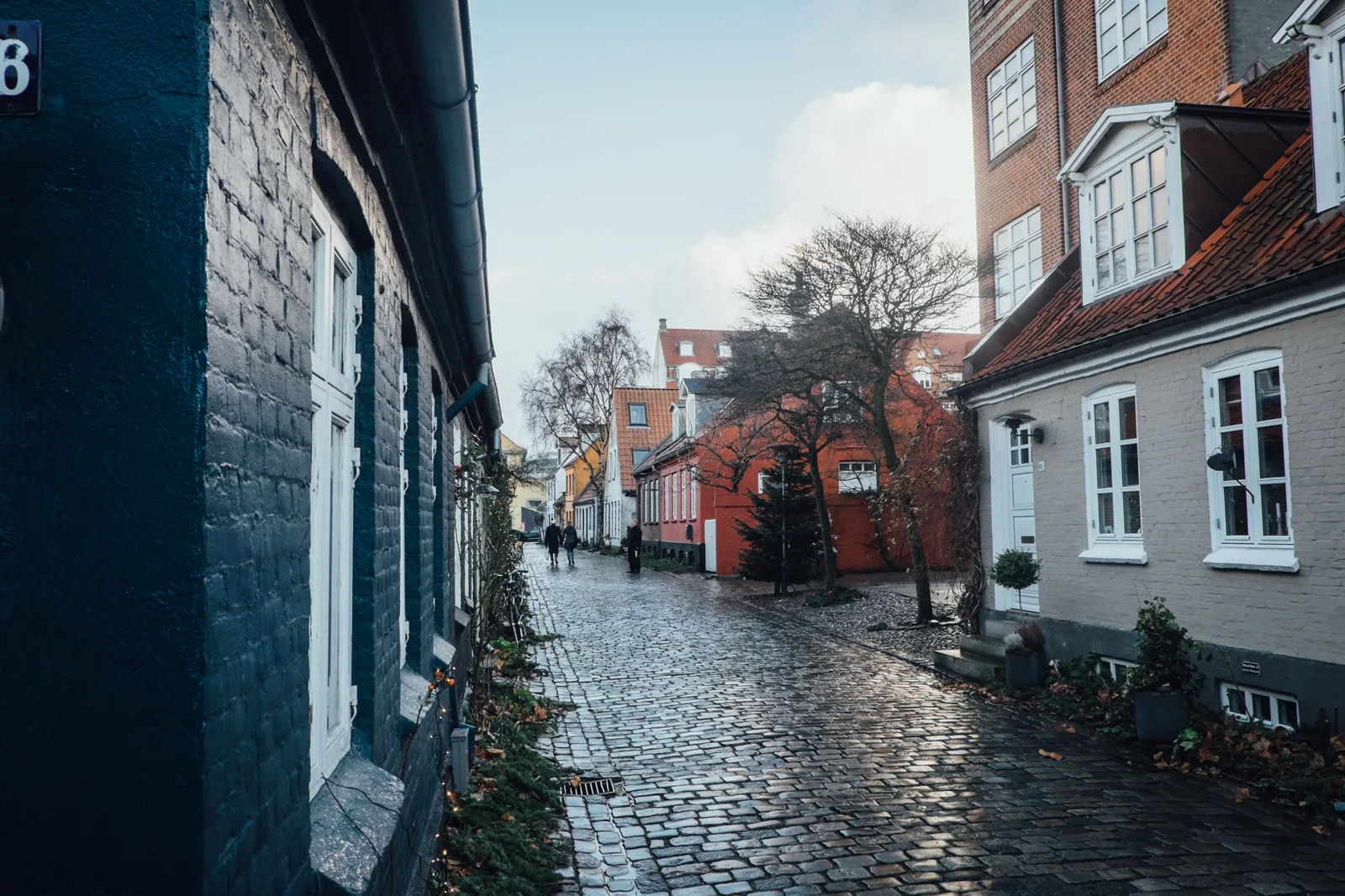
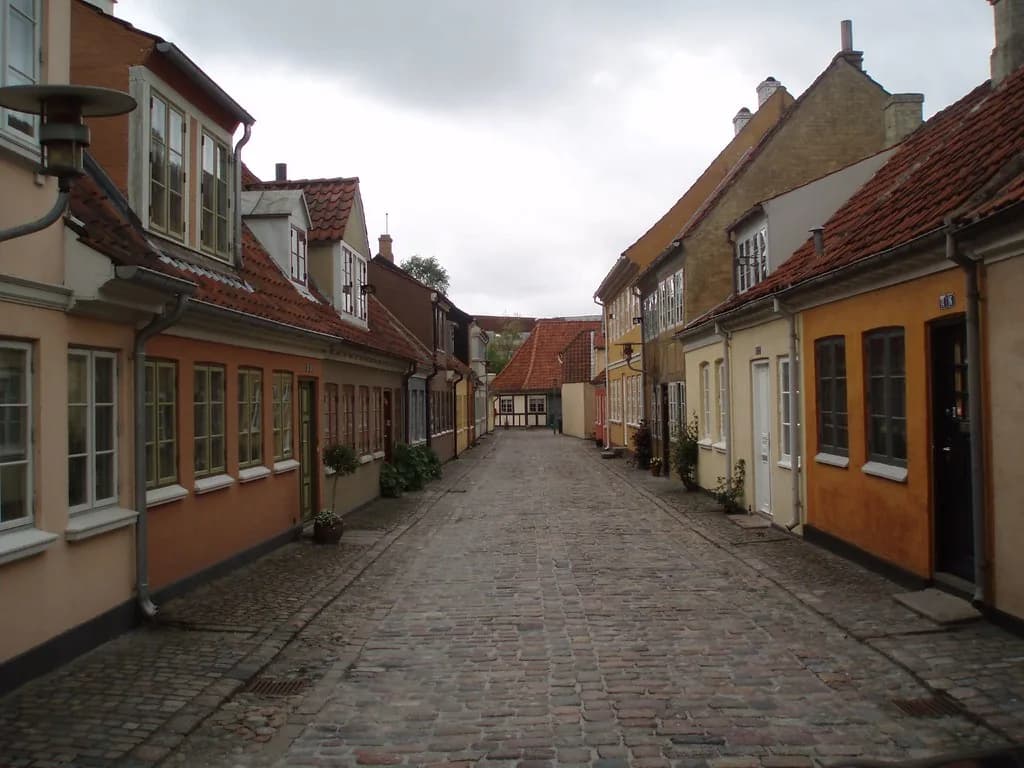
Two blocks south, Møllestien is often called the most photogenic street in Denmark. The short lane is lined with low, brightly painted houses and hollyhocks that bloom from June through August. Arrive before 10:00 for the best light and to avoid the Instagram crowds that build up by mid-morning — direct morning sun hits the north-facing facades between 09:15 and 10:00, giving you a warm, shadow-free shot.
Hidden beneath a Salling department store on Store Torv lies the Viking Museum (Vikingemuseet). It costs 30 DKK and takes around 20 minutes to walk through. The museum sits on the exact site where Norse settlers founded the city over a millennium ago — the preserved timber foundations visible under glass are genuine excavation finds, not replicas.
Part 2: Midday at Den Gamle By (The Old Town) (11:30–14:30)
Head west toward Den Gamle By for a journey through 300 years of Danish history. This open-air museum contains over 75 historic buildings relocated from across the country, reassembled into living neighborhoods you can walk through. Tickets cost between 165 and 195 DKK in 2026 depending on the season; buy online to skip the entrance queue.

The museum spans four distinct eras: an 1800s market town, a 1920s neighbourhood, a 1970s suburb, and a 2014 urban block. The 1970s section is a personal favourite — you can step inside a vintage electronics shop or a fully furnished period apartment complete with original wallpaper. Arrive at opening (10:00) or visit the 1920s quarter first; the 1800s section attracts the most school groups from around noon.
Pick up a traditional Danish pastry at the onsite bakery before you leave. The museum is open daily until 17:00, so plan to exit no later than 14:30 to leave enough time for ARoS. Den Gamle By is the right choice on a warm, sunny day; ARoS wins when the weather turns cold or rainy — keep that in mind if the forecast is uncertain.
Part 3: Afternoon at ARoS Aarhus Kunstmuseum (14:30–17:30)
A 12-minute walk east brings you to ARoS Aarhus Kunstmuseum, one of Scandinavia's most visited art museums. The building's exterior is understated red brick; the real drama is inside. Head straight to the roof for Olafur Eliasson's "Your Rainbow Panorama," a 150-metre circular glass walkway tinted in every spectrum colour. The 360-degree views of Aarhus shift from amber to violet as you walk the loop, and on a clear afternoon the view stretches across the bay to Jutland's rolling terrain.
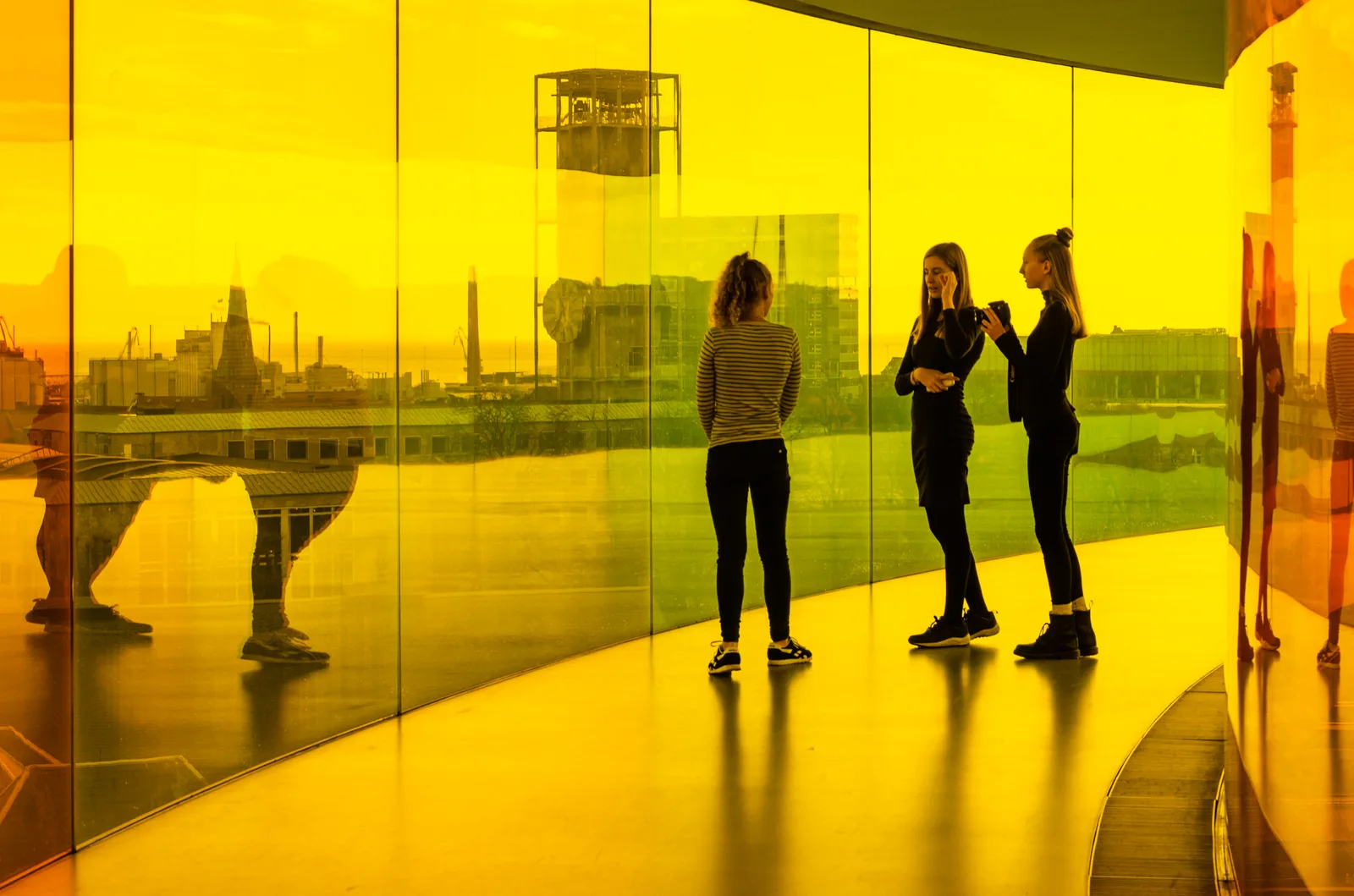
Standard admission in 2026 is 180 DKK for adults. Children under 18 enter free, which makes this an excellent stop for families. The museum is open until 21:00 on weekdays, giving you flexibility if you run late at Den Gamle By. One critical note: ARoS is closed on Mondays from September through May. If your visit falls on a Monday outside of summer, build Den Gamle By or Moesgaard into that slot instead — this trips up many first-timers who assume museum hours are consistent year-round.
After the rooftop, descend to the lower floors for the hyperrealistic "Boy" sculpture by Ron Mueck — a crouching child several metres tall that provokes a genuinely unsettling reaction at close range. Allow at least two hours for both the permanent and any temporary exhibitions. The museum shop on the ground floor carries well-designed Danish homeware that is hard to find in the tourist district.
Part 4: Evening at Aarhus Street Food (17:30–19:30)
From ARoS, walk 10 minutes northeast to Aarhus Street Food, the city's central dining hall in a converted warehouse near the harbour. Around 30 vendors operate here, covering everything from Danish smørrebrød open sandwiches to Korean barbecue, wood-fired pizza, and craft beer from local Jutland breweries. Prices are reasonable by Danish standards — most mains run 80–140 DKK in 2026.
The hall opens at 11:00 and typically stays busy until 22:00 on weekdays. Arrive before 18:30 for a table without waiting; the post-work crowd fills up quickly between 18:00 and 19:00. If the hall is packed, the outdoor seating area along the dock side often has space even when the interior is full.
This is also a good moment to evaluate your energy levels. If you still have stamina, the harbour waterfront is a 5-minute walk from the food hall. If you have an early train back to Copenhagen, you can wrap up dinner here and walk directly to the station in under 15 minutes.
Part 5: Sunset at the Aarhus Harbour and Dokk1 (19:30–21:00)
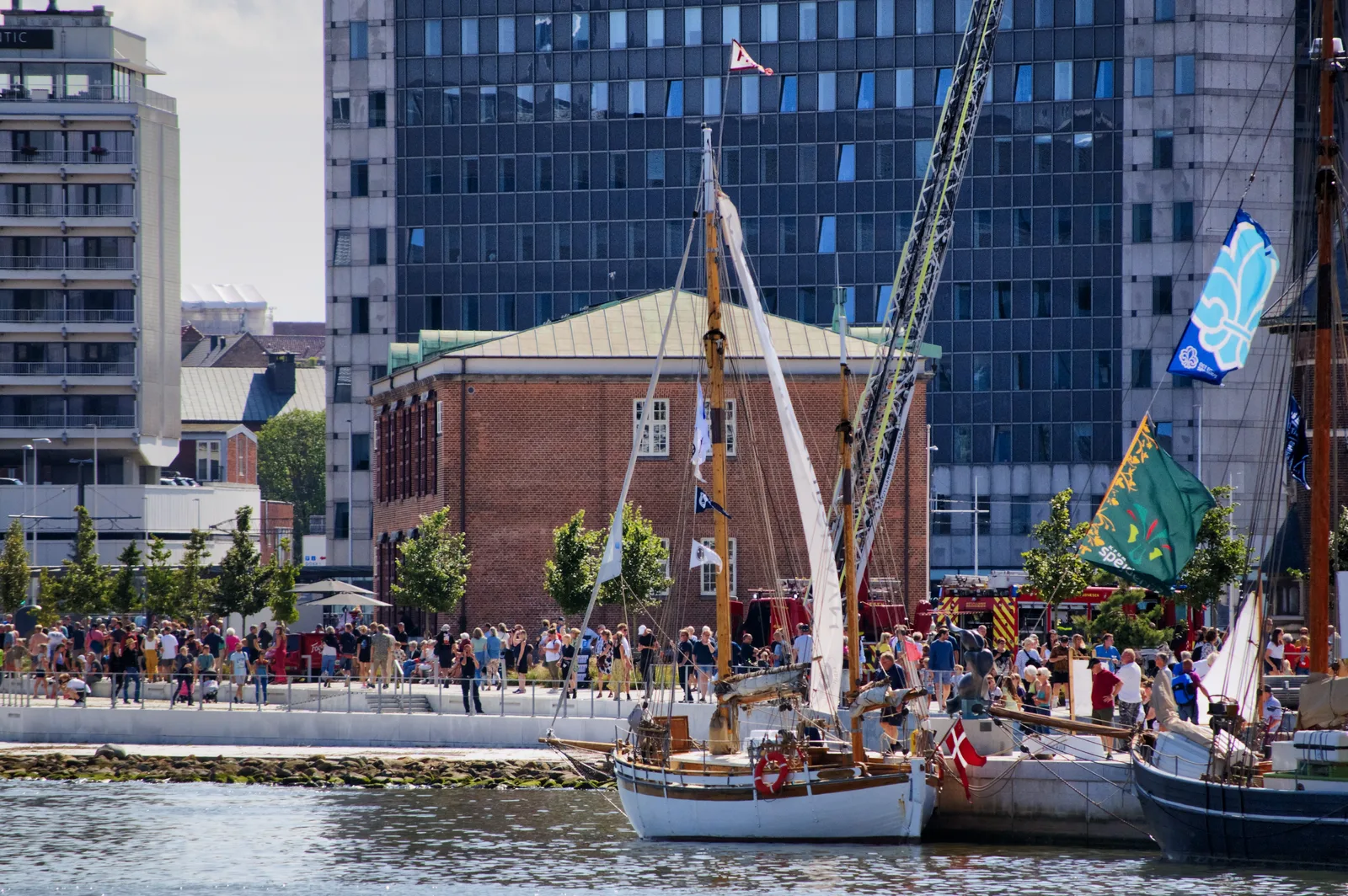
The waterfront walk from Aarhus Street Food to Dokk1 is the best free activity in the city. Along the way you pass the Endless Connection fountain, open-air saunas, a sea swimming pool, and several large harbour murals that are worth photographing. The contrast between the 19th-century customs house (Toldboden) and the ultra-modern Lighthouse tower — Denmark's tallest building at 142 metres — makes for a dramatic evening skyline.

Dokk1 itself is a striking angular library building right on the waterfront. Admission is free and it is open until 22:00 on weekdays. Step inside to see the cavernous interior atrium and the harbour-facing reading rooms. Even if you are not there for books, the architecture alone justifies the detour; it regularly appears on lists of Scandinavia's best contemporary public buildings.
If you want a panoramic city view and didn't go to the ARoS rooftop, you can take the elevator to the 44th-floor observation deck of the Lighthouse (Aarhus Øje) for 149 DKK. The view is excellent but largely duplicates what you already saw at ARoS — most one-day visitors skip it. The sunset from ground level along the dock is free and equally atmospheric.
What You Will Miss With Only One Day
Being transparent here helps you set the right expectations. Moesgaard Museum, 10 kilometres south of the centre, is a world-class prehistory museum housed in a building with a sloped grass roof you can walk on. The Grauballe Man — one of the best-preserved Iron Age bog bodies in Europe — lives there. Getting there by bus 18 takes 25 minutes each way, and the museum deserves at least three hours. It does not fit a single central-city day.
Marselisborg Deer Park is free to enter and lets you hand-feed free-roaming sika and fallow deer, but it requires bus 18 or a bike and a half-day to pair with the coast. The Infinite Bridge, a circular wooden pier on the southern shoreline, is only installed from May through October and takes around 40 minutes from the city centre by bus.
If any of these appeal to you, the honest answer shifts to two days. One day gives you Aarhus's cultural core; two days gives you its natural and prehistoric depth.
Best Base: Where to Stay for a Short Trip
Staying within five minutes of Aarhus Central Station is the most practical choice for day-trippers arriving by train from Copenhagen. This area gives you immediate access to the airport bus, regional trains, and the entire central itinerary on foot. Mid-range hotels cluster around Banegårdspladsen square at the front of the station.
| Neighbourhood | Distance from Station | Best for | Vibe |
|---|---|---|---|
| Station Square | 0 minutes (on-site) | Efficiency, day-trippers | Modern, business-focused |
| Latin Quarter | 1 tram stop (~5 min) | Atmosphere, cafes, cathedral | Historic, charming, walkable |
| Aarhus Ø Harbour | 1.5 km (~15 min light rail) | Architecture, waterfront views | Contemporary, design-forward |
The Latin Quarter offers charming boutique options one tram stop from the station. You will be steps from the best cafes and the cathedral. Note that cobblestone streets echo on weekend nights, so light sleepers should request a courtyard-facing room.
Aarhus Ø, the modern harbour district, is ideal for architecture enthusiasts who want to be near the Iceberg building and the waterfront. It sits about 1.5 kilometres east of the station and is well connected by the Letbane light rail.
Transport Logistics from Copenhagen to Aarhus
The InterCity train from Copenhagen Central Station (København H) reaches Aarhus in approximately three hours. Trains depart once or twice per hour. A flexible one-way ticket costs around 400 DKK, but DSB's "Orange" advance tickets can drop to 99–199 DKK if booked 10 or more days ahead via the DSB app. This single tip can save you over 200 DKK per person each way.
The Kombardo Expressen bus uses the Odden–Aarhus ferry crossing and takes about three and a half hours door to door. The sea crossing adds a scenic element; advance tickets can be as low as 100 DKK. It is a good budget option if the DSB Orange tickets are already sold out.
Once in Aarhus, the city centre is entirely walkable for this itinerary. The Letbane light rail connects the station to Aarhus Ø and the university campus if you venture further. Visit the Denmark travel guide for more regional transit tips, including connections to Viborg and Silkeborg if you are extending your Jutland trip.
Essential Local Tips for 24 Hours in Aarhus
Buy ARoS tickets online in advance, especially in July and August when the queue at the door can add 30–45 minutes. Den Gamle By rarely sells out, but online tickets still save time at the gate. If you are visiting on a Monday between September and May, build your afternoon around Den Gamle By only — ARoS is closed.
Walking distances between the main stops on this itinerary are short: the Latin Quarter to Den Gamle By is about 900 metres (12 minutes on foot); Den Gamle By to ARoS is about 700 metres (9 minutes); ARoS to Aarhus Street Food is about 800 metres (10 minutes); and Aarhus Street Food to Dokk1 is about 400 metres (5 minutes). You will not need a bus or tram for any of these legs.
Carry some Danish krone cash for the Viking Museum and smaller cafes in the Latin Quarter. Most places accept card, but the Viking Museum's ticket booth occasionally has card reader issues. The Rejsekort travel card works on all Aarhus buses and the Letbane if you do decide to take public transport to the harbour or beyond.
Frequently Asked Questions
Is Aarhus walkable for a one-day trip?
Yes, Aarhus is very walkable. Most major attractions like ARoS and the Latin Quarter are within a 15-minute walk of each other. You won't need public transport for the city center.
What is the best way to get to Aarhus from Copenhagen?
The train is the fastest and most comfortable option. It takes about three hours. For a cheaper alternative, consider the Kombardo Expressen bus which uses the ferry.
Are museums in Aarhus closed on Mondays?
Many museums, including ARoS and Den Gamle By, remain open on Mondays during peak summer. However, always check official sites during the winter season as hours may change.
Aarhus proves that a single day can be packed with culture, history, and great food. While you will miss the outer museums and the coast, the city centre delivers a complete Danish experience in under 24 hours. Start early to catch Møllestien before the crowds arrive and the day flows naturally from there.
Whether you are drawn by the Rainbow Panorama or the Viking foundations under Store Torv, Aarhus rarely disappoints. Enjoy your 24 hours in Denmark's happiest city.
See also our Aarhus Itinerary 2 Days guide.
You might also like


Continue reading
More guides you'll find useful