Copenhagen to Odense Train: 2026 Travel Guide & Tips
Plan your trip from Copenhagen to Odense by train. Get details on tickets, schedules, and costs for a smooth Danish rail journey. Book your tickets now!
On this page
How to Take the Copenhagen to Odense Train in 2026
Traveling from the Danish capital to the birthplace of Hans Christian Andersen takes less than two hours by rail. The Copenhagen to Odense train crosses the iconic Great Belt Fixed Link, delivering one of the most scenic short-haul journeys in Scandinavia. Trains run every 20 to 30 minutes throughout the day, so you rarely need to plan far in advance. This guide covers schedules, fares, booking tips, and what to expect at both ends of the line.
At a glance
- Duration: 1 hour 25 minutes (ICL express) to 1 hour 45 minutes (IC standard)
- Frequency: Every 20–30 minutes throughout the day
- Cost: Orange ticket from 99 DKK; Flex ticket 299–329 DKK (2nd class)
- Getting there: Direct trains from Copenhagen Central or Copenhagen Airport
- Best time: Weekday mornings for fewer crowds; book ahead Friday/Sunday
Journey Time and Schedule
DSB operates two main service types on this route: InterCityLyn (ICL) express trains and standard InterCity (IC) trains. ICL trains reach Odense in approximately 1 hour and 25 minutes. Standard IC services take around 1 hour and 45 minutes, stopping at a few extra stations along the way. Both types are comfortable and run throughout the day.
| Train Type | Journey Time | Stops | Comfort Level | Best For |
|---|---|---|---|---|
| InterCityLyn (ICL) | 1 hr 25 min | Minimal | Modern, fast, Wi-Fi + power | Direct trips, time-conscious travelers |
| InterCity (IC) | 1 hr 45 min | Several | Standard, comfortable | Budget travelers, scenic views |
The first trains leave Copenhagen Central Station (København H) before 06:00, and the last departures are around 23:30. During daytime hours, expect a combined frequency of one to two trains every 20 minutes. The route is equally busy in the return direction, so if you are planning an Odense from Copenhagen day trip, you will have no trouble finding a late afternoon or evening train back.
Real-time departure boards at København H show the platform about 10 minutes before each departure. If you prefer planning ahead, the Rejseplanen app (iOS and Android, free) gives live timetables, track numbers, and delay alerts for every Danish train. The DSB website at dsb.dk carries the same data and lets you search by specific travel times.
Departing from Copenhagen Airport
If you are flying into Copenhagen Airport (CPH, also called Kastrup), you do not need to travel into the city centre first. Direct InterCity and InterCityLyn trains stop at Copenhagen Airport Station — located directly beneath Terminal 3 — and run to Odense several times per hour. The total journey from the airport to Odense is roughly 1 hour and 40 minutes on an ICL service.
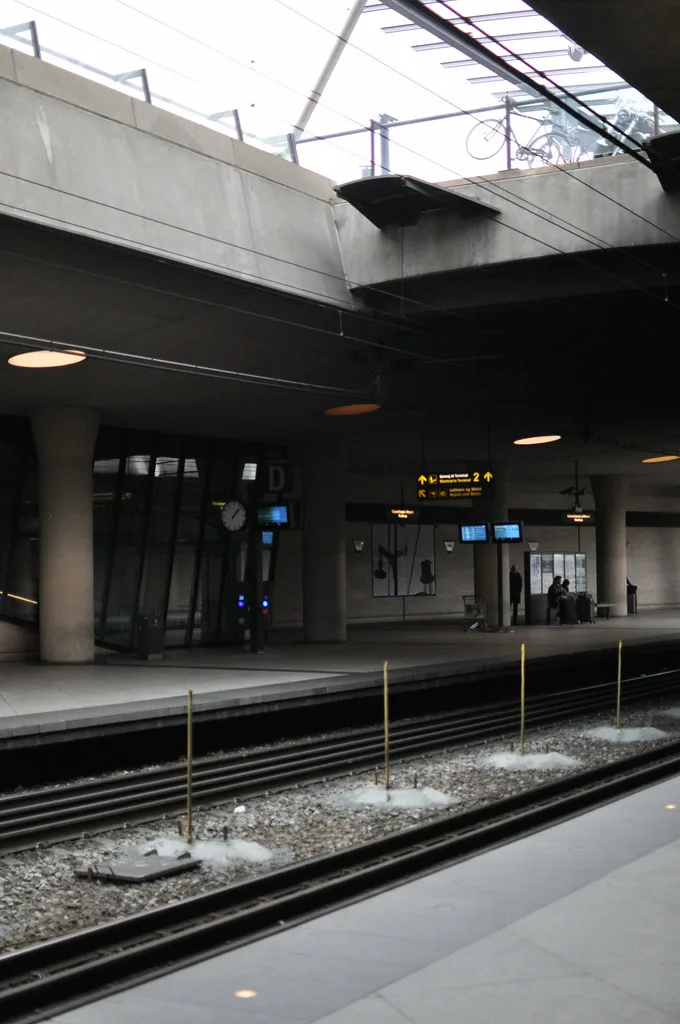
Tickets bought from the airport include the train across the Øresund Bridge, so there is no separate fare to pay. Simply walk from the arrivals hall, follow the green rail signs to the underground station, and board the next Odense-bound train. The airport station has automated DSB ticket machines on the platform level if you have not yet booked online.
One practical note: airport trains operate under the same DSB timetable and pricing structure as trains from København H. An Orange ticket purchased for the airport departure is valid only for that specific booked train, so do not miss it if your flight is delayed — see the ticket-type details below.
Ticket Prices and Booking
DSB sells three main fare types for this route in 2026. The standard Flex ticket costs around 299–329 DKK for second class and about 449 DKK for first class (DSB 1'). Flex tickets can be exchanged or refunded before departure with a small fee, and they are valid on any train on the day of travel. The discounted Orange ticket starts from 99 DKK and is the cheapest option, but it is fixed to a specific train and is non-exchangeable and non-refundable if you miss the service.
A seat reservation on top of your ticket costs 30 DKK and is optional but worth buying on Friday afternoons and Sunday evenings when trains fill quickly. Without a reservation you may need to stand for part of the journey if the train is crowded. First-class DSB 1' carriages include a complimentary hot drink and snacks, plus quieter seating and more legroom.
You can buy tickets on the DSB app, at dsb.dk, at automated red ticket machines in every station, or at staffed service desks inside København H. The Rejsekort contactless travel card is another option for frequent visitors: tap in and out at the yellow card readers and pay a discounted per-km fare automatically. A Rejsekort requires a 200 DKK deposit and is most cost-effective if you plan multiple journeys across Denmark during your stay.
The Orange Ticket Rule Most Travellers Miss
Orange tickets (Orangebilletter) are train-specific. If DSB cancels your booked train or you simply miss it, an Orange ticket does not automatically transfer to the next service. You must board the exact departure shown on the ticket, or you will need to buy a new fare. In the event of a DSB-caused cancellation, you are entitled to a full refund, but you cannot use the cancelled-train ticket to ride any other service free of charge.
This is different from how most European rail systems handle cheap advance tickets, and it catches a lot of first-time visitors off guard. The safest strategy if your schedule is uncertain — or if you are connecting from a flight — is to book a Flex ticket instead. The extra 100–150 DKK gives you the freedom to board any train that day without stress.
If you do hold an Orange ticket and your train is cancelled, go immediately to a staffed DSB counter or use the DSB app to log the disruption and request a refund. Refunds are processed to the original payment card within five to ten business days. Keep your booking confirmation email; DSB staff will ask for the booking reference number.
Navigating Copenhagen Central and Odense Stations
København H is the largest train station in Denmark and a busy transit hub. Arrive at least 10 minutes before your departure to locate the right platform — electronic departure boards update in real time and display both the track number and the train type (IC or ICL). The station has cafés, a 7-Eleven, a Føtex food market, and luggage lockers if you need to store bags before your journey.
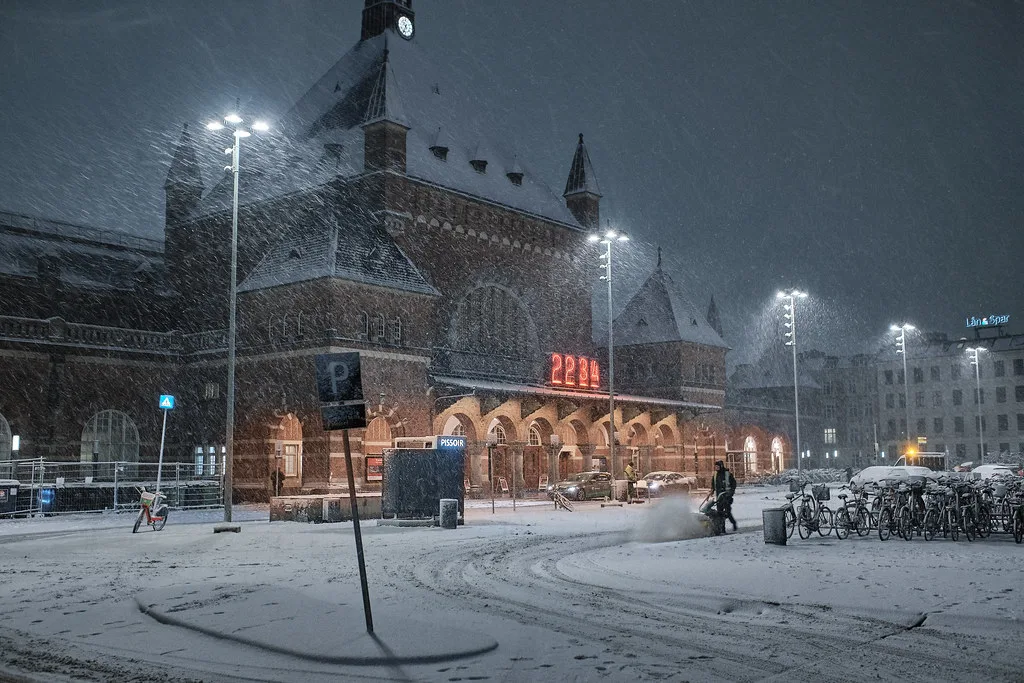
Odense Station sits right in the heart of the city. The Hans Christian Andersen Museum is a 12-minute walk from the main exit, and the old town (Brandts Klædefabrik cultural quarter) is 15 minutes on foot. Local buses depart from the bus terminal directly outside the station, and the Odense light rail (Letbanen) stops nearby for connections to the university and southern districts. This central position makes the station an ideal base for a full guide on how to get to Odense by every transport method.
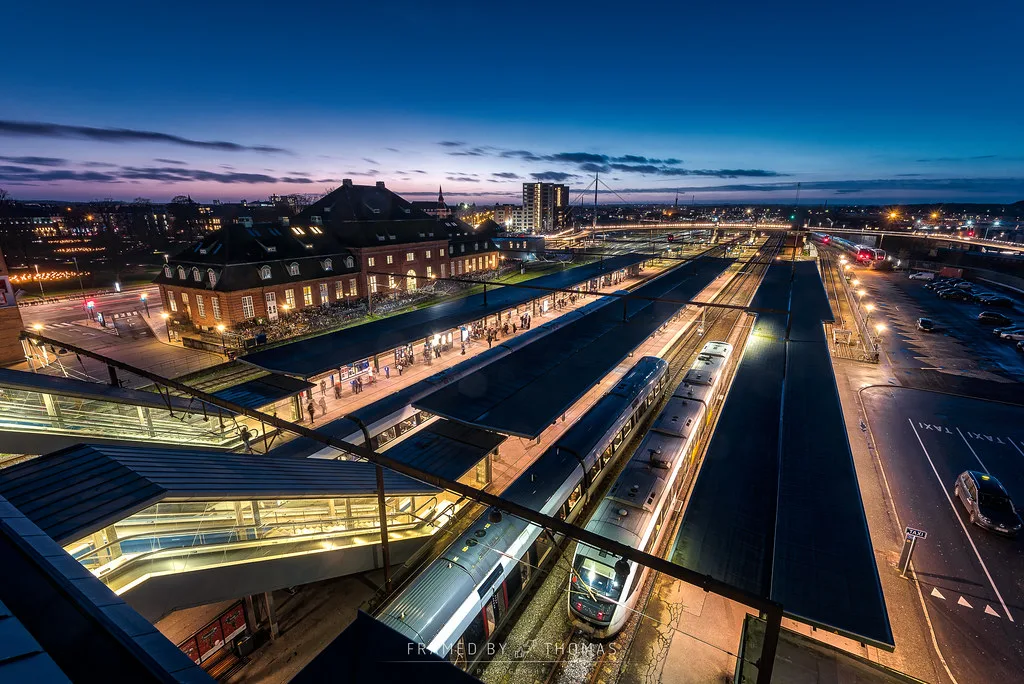
Luggage lockers at Odense Station accept credit and debit cards and are located near the main entrance hall. Sizes range from small (around 25 DKK per day) to large enough for a full suitcase (around 50 DKK per day). This is useful if your accommodation check-in is after midday and you want to explore the city centre unencumbered.
Onboard Experience and the Great Belt Crossing
Modern DSB trains on this route are double-deck InterCity carriages. Every seat has a power outlet and USB socket, and free Wi-Fi is available throughout the journey. Large panoramic windows make it easy to enjoy the landscape. Bicycle spaces are available at the end of each carriage; a bike reservation costs 50 DKK and must be booked in advance through the DSB app.

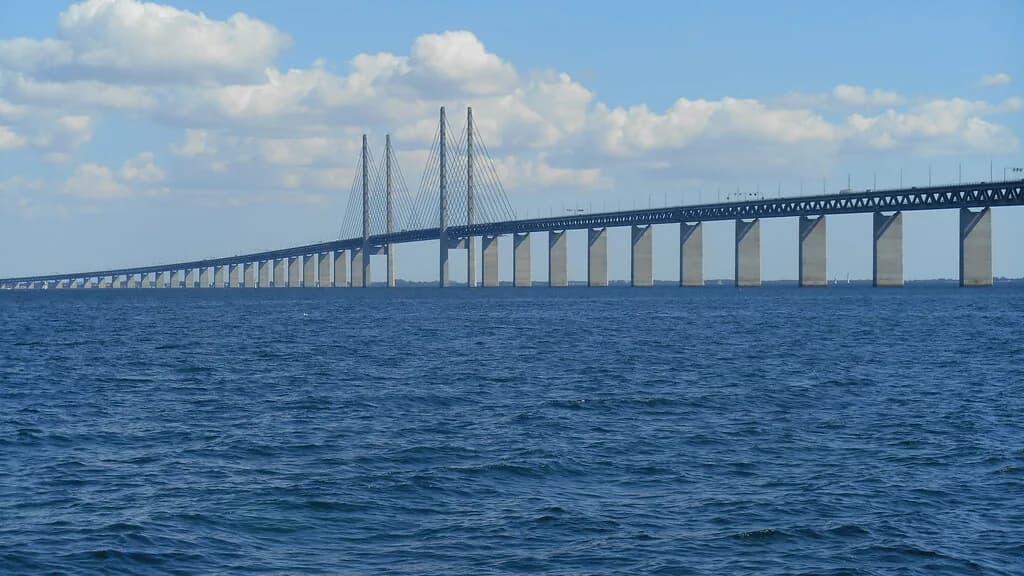
The Great Belt Fixed Link (Storebæltsforbindelsen) is the highlight of the trip. About 40 minutes after leaving Copenhagen, the train exits a short tunnel and emerges onto the East Bridge — a suspension bridge spanning 6.8 km across the Great Belt strait. The towers rise 254 metres above sea level, and on a clear day you can see across to the island of Funen on one side and back toward Zealand on the other. Keep a camera ready; the crossing lasts roughly four minutes.
After the bridge, the train enters the West Bridge and then crosses the remaining stretch to Funen. The countryside opens up into flat agricultural land dotted with red-roofed farmhouses. The final approach into Odense passes through the outskirts of the city before arriving at the central station, giving you a glimpse of the suburban Denmark that tourist brochures rarely show.
Frequently Asked Questions
How long does the train from Copenhagen to Odense take?
The journey typically takes about 90 minutes on the InterCityLyn express trains. Some standard InterCity services might take slightly longer, reaching Odense in roughly 1 hour and 45 minutes. Frequent departures ensure you never have to wait long for the next connection.
Where can I buy tickets for the Copenhagen to Odense train?
You can purchase tickets online through the DSB website or the official DSB mobile application. Tickets are also available at red automated kiosks and staffed service counters at Copenhagen Central Station. Buying in advance is the best way to secure lower prices.
Is there a direct train from Copenhagen Airport to Odense?
Yes, there are direct trains that run from Copenhagen Airport (CPH) to Odense several times each hour. This allows travelers to skip the city center and head straight to Funen after landing. The travel time from the airport is approximately 1 hour and 40 minutes.
Do I need to book a seat reservation for this route?
Seat reservations are not mandatory on most Danish trains but are highly recommended for comfort. During peak hours or weekends, trains can become very crowded with commuters and tourists. A reservation costs 30 DKK and ensures you have a guaranteed seat for the entire trip.
The Copenhagen to Odense train is one of the easiest intercity journeys in Denmark. Book an Orange ticket early for the best price, but choose a Flex ticket if your plans are flexible or you are connecting from a flight. Allow yourself time to watch the Great Belt crossing — it is one of the most striking moments on any Scandinavian rail journey. Odense repays the effort: a compact, walkable city with world-class museums and some of the best Danish pastries you will find outside the capital.
You might also like

Continue reading
More guides you'll find useful