12 Best Hidden Gems in Copenhagen (2026)
Discover the 12 best hidden gems in Copenhagen. From secret star fortresses to wild sheep, explore the city off the beaten path with local tips.
On this page
12 Best Hidden Gems in Copenhagen
During my fourth visit to the Danish capital last summer, I finally ventured beyond the postcard-perfect Nyhavn to find the city's true soul. While the famous colorful houses are beautiful, the real magic happens in the quiet courtyards and industrial corners that most tourists overlook. Copenhagen rewards those who trade the main squares for a rented bike and a sense of curiosity.
This guide covers the spots I keep coming back to — places where locals actually spend their weekends, not the same café terraces you see on every travel Instagram. Many of these locations are free or cost under 200 DKK. All are reachable by bike, metro, or harbor bus without any special planning.
Exploring these things to do in Copenhagen will give you a much deeper appreciation for Danish design and local life. You will find that the city's best experiences often cost very little or are entirely free to enjoy. Prepare to see a side of Denmark that feels raw, creative, and wonderfully authentic.
Kastellet: The Star Fortress Nobody Stops At
Most visitors walk right past Kastellet on their way to see the Little Mermaid statue, which sits a few hundred metres further along the waterfront. That is a genuine mistake. This 17th-century star fortress is one of the best-preserved of its kind in Northern Europe, and the interior ramparts offer a completely peaceful walking loop past a working windmill and rows of bright red barracks.
Entry is free and the grounds are open daily from 06:00 to 22:00. Early mornings are best — you will share the moat bridges only with herons and the occasional jogger. The small museum inside focuses on Copenhagen's military history and is worth 30 minutes of your time. Getting here is straightforward: take the Metro or train to Østerport, then walk five minutes, or take the yellow Harbor Bus to Nordre Toldbod.
After your circuit of the fortress, the walk back south along the waterfront passes the Gefion Fountain — a dramatic Norse sculpture that almost no one photographs without a crowd because they are all queuing for the Mermaid. Time it right and you will have the fountain entirely to yourself.
The Botanical Garden and the Palm House
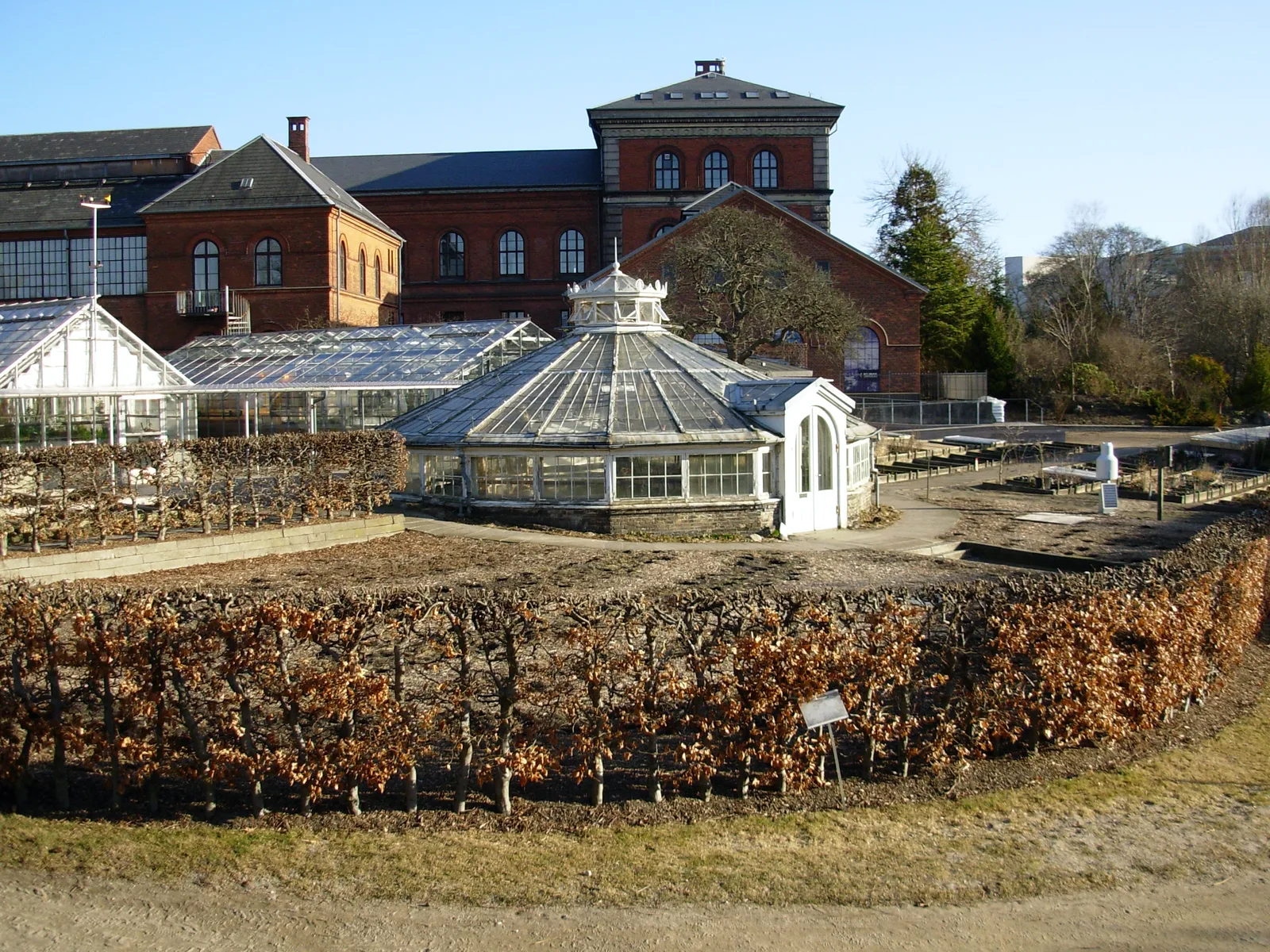
The garden itself is free to enter and open daily from 08:30 to 18:00 in summer (shorter hours in winter). Admission to the Palm House is 50 DKK for adults, but the glasshouse offers free entry every Tuesday — a detail that most guides and all five of the main competitors ranking for this keyword manage to omit entirely. If you visit on a Tuesday in 2026, you can walk straight in without paying.
The rocky hill inside the garden is another underused spot. It offers a small elevated view over the surrounding rooftops and is popular with locals who bring a thermos and a book on weekday afternoons. Combine this visit with the nearby Rosenborg Castle gardens, which are also free, for a full half-day in the greenest part of the city center.
The Yellow Houses of Nyboder
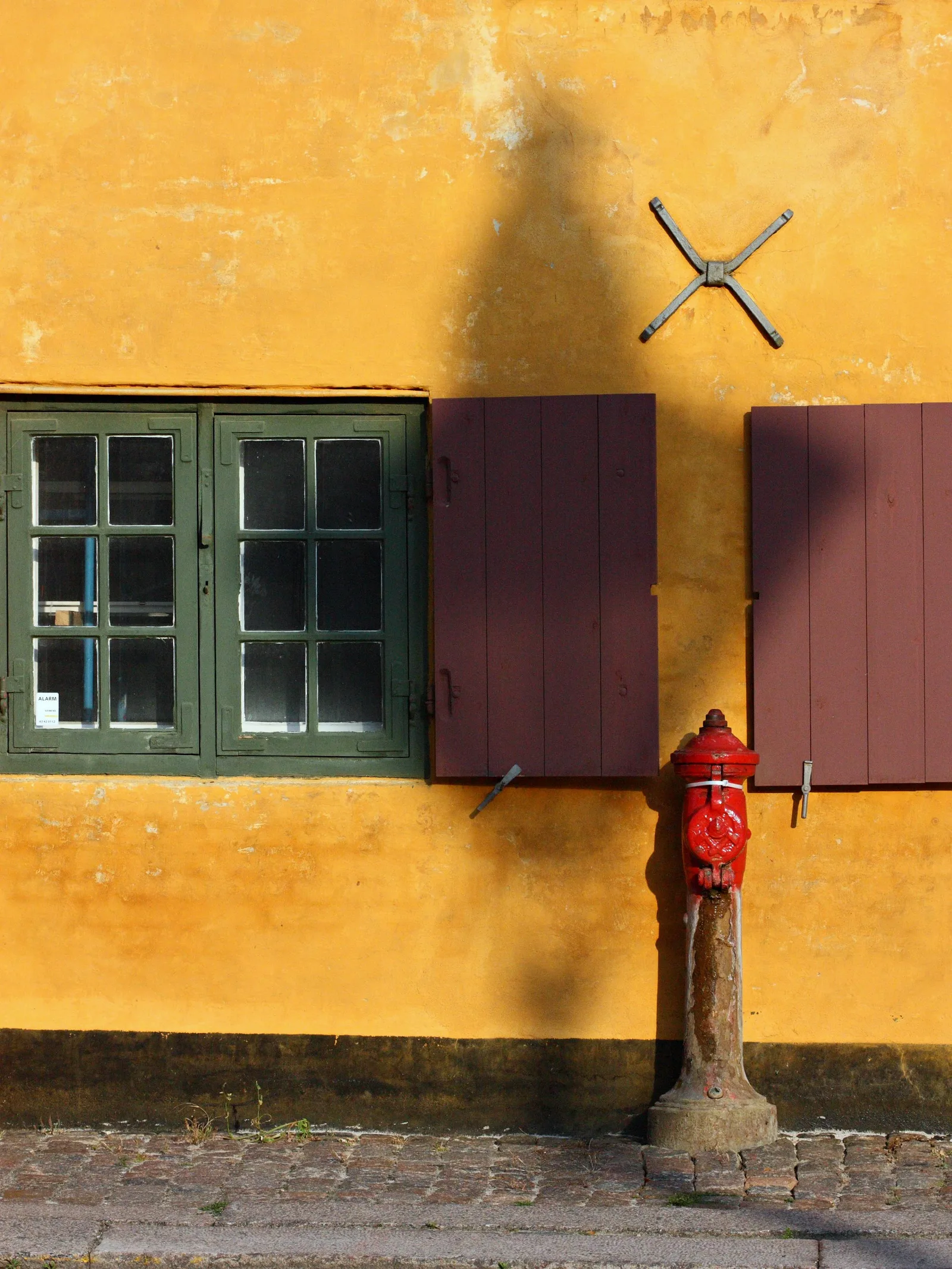
Walking the grid of narrow streets takes about 20 minutes and costs nothing. The most photogenic section runs along Sankt Pauls Gade. Look for the small statue of Christian IV near the main entrance to the district, and check the small information boards that explain the barracks layout. Nyboder is a 10-minute walk from Østerport Station and sits just north of the city center.
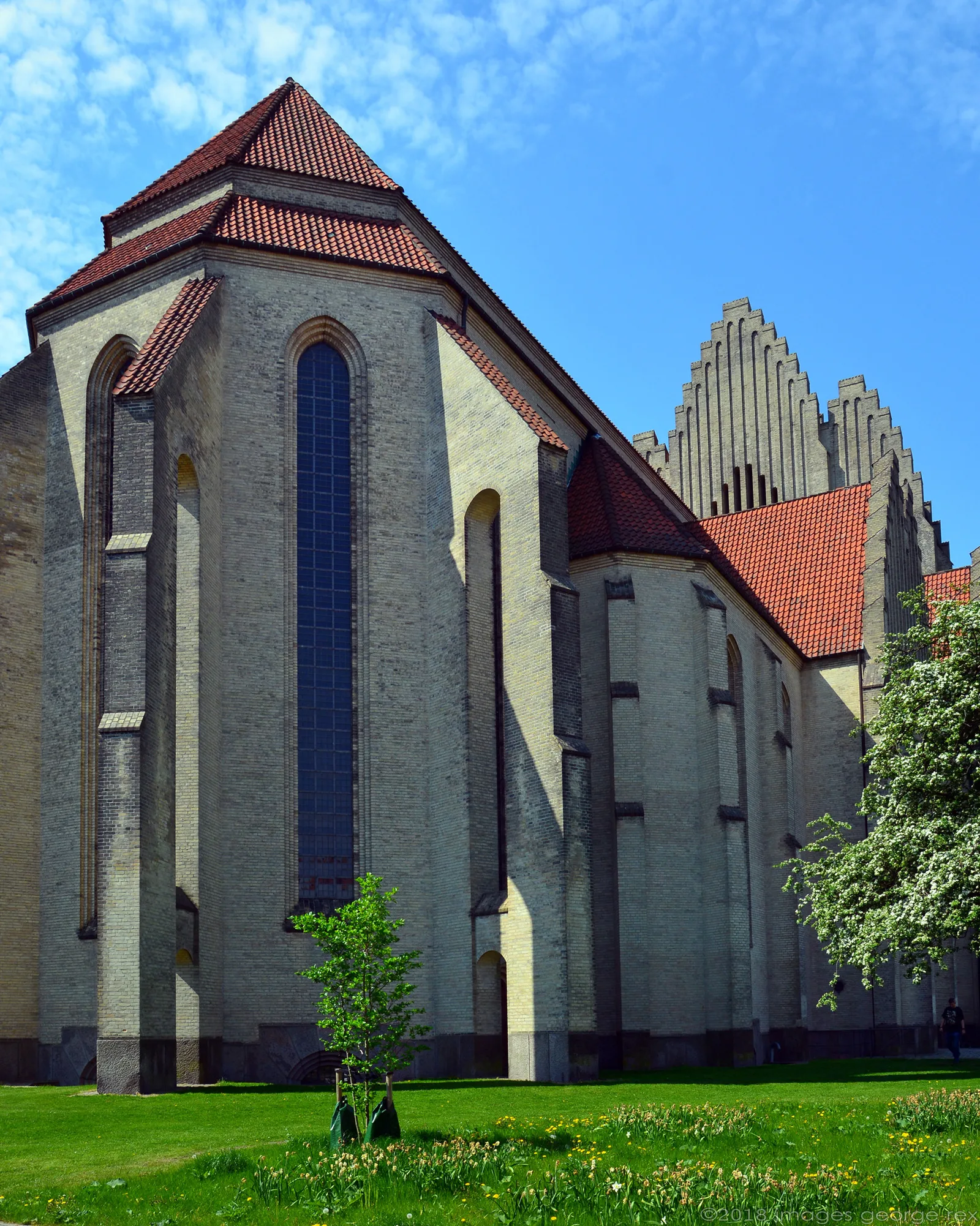
Grundtvig's Church in Bispebjerg
Most European capitals have ornate baroque cathedrals. Copenhagen has Grundtvig's Church — a building that looks like a colossal pipe organ constructed entirely from yellow Danish brick. Completed in 1940, it is one of the purest examples of expressionist religious architecture in the world, and it sits in the Bispebjerg district far enough from the tourist corridor that almost no package tourists ever visit.
The interior is deliberately austere: soaring white walls, no gilding, and minimal decoration beyond the brick patterning itself. That contrast with the monumental exterior is exactly what makes it worth the journey. Entry is free. The church is generally open Tuesday through Sunday from 09:00 to 16:00, though hours can vary around Danish public holidays.
Getting here from the city center takes about 20 minutes on the 6A bus, departing from close to Rådhuspladsen. The surrounding residential streets in Bispebjerg are also worth a short wander — this is a working-class neighborhood that most visitors never see, and it feels completely different from the design-forward districts closer to the harbor.
Copenhill: Skiing on a Waste-to-Energy Plant
Copenhill is a waste-to-energy incinerator with a year-round ski slope and hiking trail built on its roof. That sentence alone explains why it appears on every "unusual things to do in Copenhagen" list. The views from the top across the city and toward the Øresund Bridge are genuinely excellent, and hiking the roof trail is free to do without booking.
Skiing or snowboarding on the artificial slope costs roughly 175–250 DKK per hour depending on equipment rental. The slope uses a plastic bristle surface (not real snow), and there is one important warning that most guides skip: if you fall on the green turf at speed, the abrasive synthetic grass will tear through thin sportswear. Wear full-length trousers and a windproof jacket, not shorts or leggings. The café on the roof terrace is worth a stop regardless of whether you ski.
Copenhill is located in Refshaleøen. Take bus 9A from central Copenhagen or the harbor ferry (lines 991/992) for a scenic approach across the water. The building itself is a landmark worth seeing from the outside even if you skip the slope entirely.
Reffen Street Food Market
Reffen is Copenhagen's main outdoor street food market and sits on the industrial waterfront of Refshaleøen, the same island as Copenhill. Around 50 food stalls line the dockside, covering everything from Peruvian ceviche and Japanese ramen to Danish smørrebrød and excellent soft-serve ice cream. The industrial setting — reclaimed warehouses, rusted cranes, and wooden pallets repurposed as seating — is as much a draw as the food itself.
Entry is free and most dishes cost 120–175 DKK. The market runs from late April through October; it is closed during winter months. Weekday lunchtimes are the least crowded; weekend afternoons draw large local crowds. You can find more advice on navigating the city in our guide for top 10 things to see in Copenhagen.
Reaching Reffen by harbor ferry is the recommended approach. Lines 991 and 992 stop directly at Refshaleøen and use standard public transport tickets or the Copenhagen Card. The ferry ride from Nyhavn takes about 12 minutes and gives you a view of the Opera House that rivals any paid boat tour.
Sydhavnstippen: Wild Sheep Inside the City
Sydhavnstippen is a former industrial dumping ground on the southwestern tip of Copenhagen that has been allowed to rewild. Sheep and alpacas roam freely in the fenced grazing areas, the paths are unpaved and muddy after rain, and the atmosphere feels entirely unlike any other green space in the city. There is no entrance fee, no café, no signage — just rough coastal scrubland with the city skyline visible across the water.
Getting here became significantly easier in 2024 when the M4 Metro line opened Mozarts Plads station in Sydhavn. From Mozarts Plads, Sydhavnstippen is 15–20 minutes on foot heading southwest along the waterfront. Before 2024, most guides recommended cycling here because the bus stop required a long walk; now the Metro route makes it accessible to anyone without a bike. This transit upgrade is something the competing guides have not yet updated their directions to reflect.
Bring sturdy waterproof shoes — the terrain is rough and the paths have no maintained surface. The sheep are accustomed to visitors but should not be fed. The nearby Valbyparken is worth combining with this trip if you have extra time; it is a large, quiet park about 20 minutes' walk to the north.
Assistens Kirkegaard in Nørrebro
Assistens Kirkegaard in Nørrebro is one of those Copenhagen paradoxes: a functioning cemetery that doubles as one of the most pleasant parks in the city. Locals use it for walking, reading, and picnicking in the sections away from the historic graves. Hans Christian Andersen and Søren Kierkegaard are both buried here, their graves clearly marked on the site map available at the entrance.
The grounds are free to enter and open daily from 07:00 to 19:00 in summer and until 17:00 in winter. The Nørrebros Runddel Metro stop puts you almost at the cemetery gate. After your visit, the street Jægersborggade — one block east — is the best independent shopping street in Copenhagen, lined with ceramics studios, wine shops, and a couple of the city's better coffee spots.
The cemetery covers a large area, and the western sections feel genuinely wild, with trees that have grown untended for decades and an almost forest-like quality on a quiet Tuesday morning. Most tourists who do find the cemetery spend 20 minutes at the famous graves and leave; give yourself an hour to explore the full grounds.
Designmuseum Danmark
Housed in a former 18th-century hospital in the Frederiksstaden district, Designmuseum Danmark traces the history of Danish and international design from craft furniture to industrial objects to digital interfaces. The building itself is worth visiting for its courtyard garden — a calm, fountain-centred space tucked behind the main façade that almost no one sitting in the main gallery seems to discover.
Admission is 145 DKK for adults; the museum is open Tuesday to Sunday from 10:00 to 18:00. The permanent chair collection is the standout exhibit: every major Scandinavian designer from Arne Jacobsen to Hans Wegner is represented with original pieces, and the room is arranged so you can sit in many of the chairs yourself. Copenhagen Card holders enter for free.
The museum shop is one of the better options in the city for design books and small objects that are not available at airport gift shops. The Frederiksstaden neighborhood surrounding the museum — all matching Rococo palaces and wide cobbled streets — rewards a slow walk after your visit.
Copenhagen Contemporary in Refshaleøen
Copenhagen Contemporary occupies a former industrial welding hall on Refshaleøen and specializes in large-scale installations that require the building's scale to function. Previous exhibitions have included works that fill the entire 7,000-square-metre floor space. The program changes several times a year, so it is worth checking the current exhibition before visiting.
Admission is around 145 DKK for adults. The museum is generally open Wednesday through Sunday from 11:00 to 18:00. The industrial aesthetic of the building — exposed steel beams, rough concrete, high clerestory windows — provides a backdrop that commercial gallery spaces cannot replicate. Combine this visit with Reffen across the road for a full afternoon in Refshaleøen.
Local Brunch at Mad & Kaffe
Mad & Kaffe in Vesterbro runs a tapas-style brunch where you choose 3, 5, or 7 small dishes from a menu of 15–20 options. This format confuses first-time visitors who expect a standard brunch plate. The process: sit down, review the printed menu listing items like avocado toast, soft-boiled eggs, porridge, and pastries, then circle your selections. Your dishes arrive as they're ready rather than together, which is the point — it is designed for a slow, two-hour morning.
A 5-dish selection costs around 175 DKK. The café is open daily from 08:30 to 16:00 and does not take reservations for groups under six. On weekends, arrive before 09:30 or expect a 20–30 minute wait outside. The Vesterbrogade location is the original and busiest; there are newer branches in Frederiksberg and Østerbro if you prefer a shorter queue.
Mad & Kaffe is a few minutes' walk from Enghave Plads Metro station. It sits in the quieter, residential section of Vesterbro rather than the Meatpacking District — that contrast between the neighborhood's gritty industrial past and its current café culture is part of what makes the area interesting.
The Lakes (Søerne)
The three rectangular lakes — Sortedams Sø, Peblinge Sø, and Sankt Jørgens Sø — form a long linear park between the city center and the inner residential neighborhoods. They were originally part of Copenhagen's medieval fortifications and later served as the city's main freshwater reservoir. Today they are the primary social commons for Copenhageners: people run the 6.5-kilometre perimeter path, cycle the lanes, and gather on the grass embankments with takeaway coffee.
The paths are free and open 24 hours. In summer, swan-shaped pedal boats are available for hire close to Dronning Louises Bro on Peblinge Sø — a slightly absurd and entirely local experience. The surrounding streets are lined with cafés and bakeries that represent the city's café culture far better than anything near the tourist corridor around Nyhavn. You can find more advice on free activities in our guide to free things to do in Copenhagen.
The best entry point for visitors is Dronning Louises Bro, the broad bridge at the northern end of Peblinge Sø that also marks the boundary between the Latin Quarter and Nørrebro. On warm evenings, the bridge itself becomes a social gathering spot — locals sit on the railings, drink canned beer, and watch the light change over the water. It costs nothing and it is as authentically Copenhagen as anything in the city.
What to Skip Instead
The Little Mermaid statue is the single most common disappointment in Copenhagen. It is small, the viewing area is crowded, and there is a constant queue for unobstructed photographs. Kastellet is a two-minute walk away and offers everything the Mermaid does not: space, quiet, history, and a genuinely scenic walking loop. Substitute one for the other without hesitation.
The restaurants along Nyhavn canal are notoriously overpriced and tourist-focused. Take your photographs from the canal side in the morning when crowds are thin, then walk 10 minutes in any direction for food that costs half as much and tastes twice as good. The streets east of Kongens Nytorv — particularly in Christianshavn — have several excellent local options.
Strøget, the main pedestrian shopping street, functions as any global high street. Unless you are looking for Royal Copenhagen or Georg Jensen, the side streets of the Latin Quarter and the independent boutiques of Nørrebro offer far more interesting shopping and a much better atmosphere for wandering.
Practical Tips for Local Exploration
Denmark operates almost entirely cashless. Every street food stall, flea market, and museum accepts Dankort, Visa, or mobile payment. You will rarely need physical Danish Krone for anything on this list. The Copenhagen Card covers all public transport plus free entry to Designmuseum Danmark, Copenhagen Contemporary, and Ny Carlsberg Glyptotek — it pays for itself if you visit two or more paid sites in a day.
Most of these spots require no advance booking. The exceptions: Mad & Kaffe fills quickly on weekend mornings (arrive early rather than reserve), and Copenhill skiing can be busy on weekday afternoons in summer. For museums, buying tickets online via their official sites saves queuing time but rarely offers a price discount.
If you are traveling with family, you might want to check our specific tips for Copenhagen with kids to find the most stroller-friendly routes to these spots. Finally, the best way to find a hidden gem in any city is to give yourself unscheduled time. Copenhagen is one of the safest urban environments in Europe, and every neighborhood has its own character. Turn down a courtyard that looks inviting — in this city, the courtyard almost always delivers.
| Attraction | Location | Admission | Hours (Summer) | Best For |
|---|---|---|---|---|
| Kastellet | Northeast waterfront | Free | 06:00–22:00 daily | Walking loop, star fortress history |
| Botanical Garden & Palm House | Indre By | Free / 50 DKK (free Tuesdays) | 08:30–18:00 daily | Tropical plants, quiet green space |
| Designmuseum Danmark | Frederiksstaden | 145 DKK | 10:00–18:00 Tue–Sun | Chair design, Scandinavian heritage |
| Copenhagen Contemporary | Refshaleøen | 145 DKK | 11:00–18:00 Wed–Sun | Large-scale modern art installations |
Frequently Asked Questions
What are the best non-touristy neighborhoods in Copenhagen?
Nørrebro and Vesterbro are the top choices for local vibes. Nørrebro offers diverse food and independent shops, while Vesterbro features the trendy Meatpacking District and quiet residential parks. Both are easily reached by bike or metro.
Is the Copenhagen Card worth it for hidden gems?
It is worth it if you plan to visit several paid sites like the Designmuseum and Copenhagen Contemporary. The card also covers all public transport, including the harbor buses. For free outdoor gems, it may not be necessary.
How do I find the wild sheep at Sydhavnstippen?
Cycle south to the Sydhavnen district and follow the paths toward the water. The sheep roam freely in the fenced natural area at the very tip of the peninsula. There is no entrance fee, but keep a respectful distance from the animals.
Exploring the hidden gems in Copenhagen allows you to see the city through the eyes of the people who live there. Whether you are skiing on a power plant or walking through a star-shaped fortress, these experiences create lasting memories. The Danish capital is much more than just its famous harbor, and I hope this guide inspires you to find its secret corners.
Remember to pack a good pair of walking shoes and a sense of adventure for your 2026 trip. For more inspiration on planning your visit, check out our latest Denmark travel blog posts. Copenhagen is waiting to surprise you with its blend of history, innovation, and undeniable charm.
You might also like


Continue reading
More guides you'll find useful