Copenhagen to Aarhus Train: Tickets, Timetables, and Guide
Planning a trip from Copenhagen to Aarhus by train? Learn about DSB Orange tickets, InterCityLyn speeds, station guides, and how to book the cheapest fares.
On this page
Copenhagen to Aarhus Train: Tickets, Timetables, and Travel Guide
Traveling from the capital to the vibrant city of Aarhus is a classic Danish experience. The Copenhagen to Aarhus train runs throughout the day, crossing the Great Belt Bridge in one of Europe's most scenic rail journeys. This guide covers everything you need for 2026: ticket prices, timetables, how to book DSB Orange deals, and what to expect at both stations.
Quick Answer: The InterCityLyn is the fastest option, taking around 3 hours and 36 minutes and costing from 99 DKK / ~$14 with a DSB Orange ticket. Standard fares run around 399–499 DKK / ~$58–72. Trains depart approximately every 30–60 minutes throughout the day from Copenhagen Central Station (København H).
At a glance
- Journey time: 3 hours 36–41 minutes (InterCityLyn is fastest)
- Frequency: ~22 trains per day, typically one every 30–60 minutes
- Cost range: 99 DKK (~$14) for DSB Orange early-book; 399–499 DKK (~$58–72) standard fares
- Best value: Book 3–4 weeks ahead on midweek departures (Tue–Thu)
- Scenic highlight: Great Belt Bridge crossing at ~55–65 minutes into the journey
Copenhagen to Aarhus Train Journey Overview
The rail connection between Denmark's two largest cities is operated entirely by DSB (Danske Statsbaner), the national rail operator. Most services run direct with no changes required — you board at København H and step off at Aarhus H roughly three and a half hours later. The route covers approximately 156 km as measured by track distance, crossing two islands via the Lillebælt Bridge and the Great Belt Bridge before reaching the Jutland peninsula. Understanding your how to get to Aarhus options helps you choose the best balance of cost, speed, and comfort.
DSB runs two distinct long-distance train types on this corridor: the InterCity (IC) and the faster InterCityLyn (Lyn). Both types are modern, air-conditioned, and well-maintained. The IC stops at more intermediate stations including Odense and Fredericia, while the Lyn skips several stops and is the default choice for city-to-city travelers. In 2026, around 22 trains operate daily on this route, giving you a departure roughly every 30 to 60 minutes during daytime hours.
Comparing transport modes is worth doing once before you book. The train is the dominant choice — it is faster than the bus and more comfortable than driving on a busy Friday. The ferry offers a scenic alternative for those with a car or extra time. Private drivers pay around 275 DKK / ~$40 in Great Belt Bridge tolls on top of fuel, which tips the economics firmly toward the train for solo and paired travelers.
Copenhagen to Aarhus Train Timetable and Frequency
Trains on this route depart Copenhagen Central Station (København H) from as early as 00:29 and the last departure leaves around 21:49. During peak daytime hours — roughly 07:00 to 19:00 — you will find a train at least every hour, and often every 30 minutes. The total number of daily services sits around 22, with around 18 of these being direct trains requiring no transfer.
A typical weekday pattern sends InterCity trains at :02 past each hour and InterCityLyn trains at :02 past alternate hours. Journey times vary slightly: services running in the 07:00–10:00 morning peak typically take 3 hours 41 minutes, while midday and afternoon departures can run as fast as 3 hours 36 minutes due to different stopping patterns. The quickest confirmed departure time from Trainline's live data for June 2026 was 3 hours 36 minutes.
Weekend and public holiday schedules differ slightly. Some early-morning Saturday departures run 10–15 minutes later than their weekday equivalents, and the overall frequency can drop on Sunday mornings before picking up by mid-morning. If you are traveling during major Danish public holidays — Easter, Constitution Day (5 June), or Christmas — check the DSB app the day before for any engineering work notices, which DSB publishes under "Driftsinformation."
- First departure from Copenhagen H: approximately 00:29
- Last departure from Copenhagen H: approximately 21:49
- Frequency: around 22 trains per day, 18 direct
- Fastest journey: 3 hours 36 minutes (InterCityLyn midday)
- Typical journey: 3 hours 36–41 minutes depending on service
How to Book Cheap Tickets and DSB Orange Deals
DSB uses a tiered pricing system that rewards early booking. The cheapest fares sit under the "Orange" category and are released up to 60 days ahead of departure. Standard open tickets — called "Flex" in the DSB system — cost around 399–499 DKK / ~$58–72 and can be bought right up until the train departs. Orange tickets start at 99 DKK / ~$14 and rise as the train fills, so booking three to four weeks out typically lands you in the 149–199 DKK / ~$21–29 range.
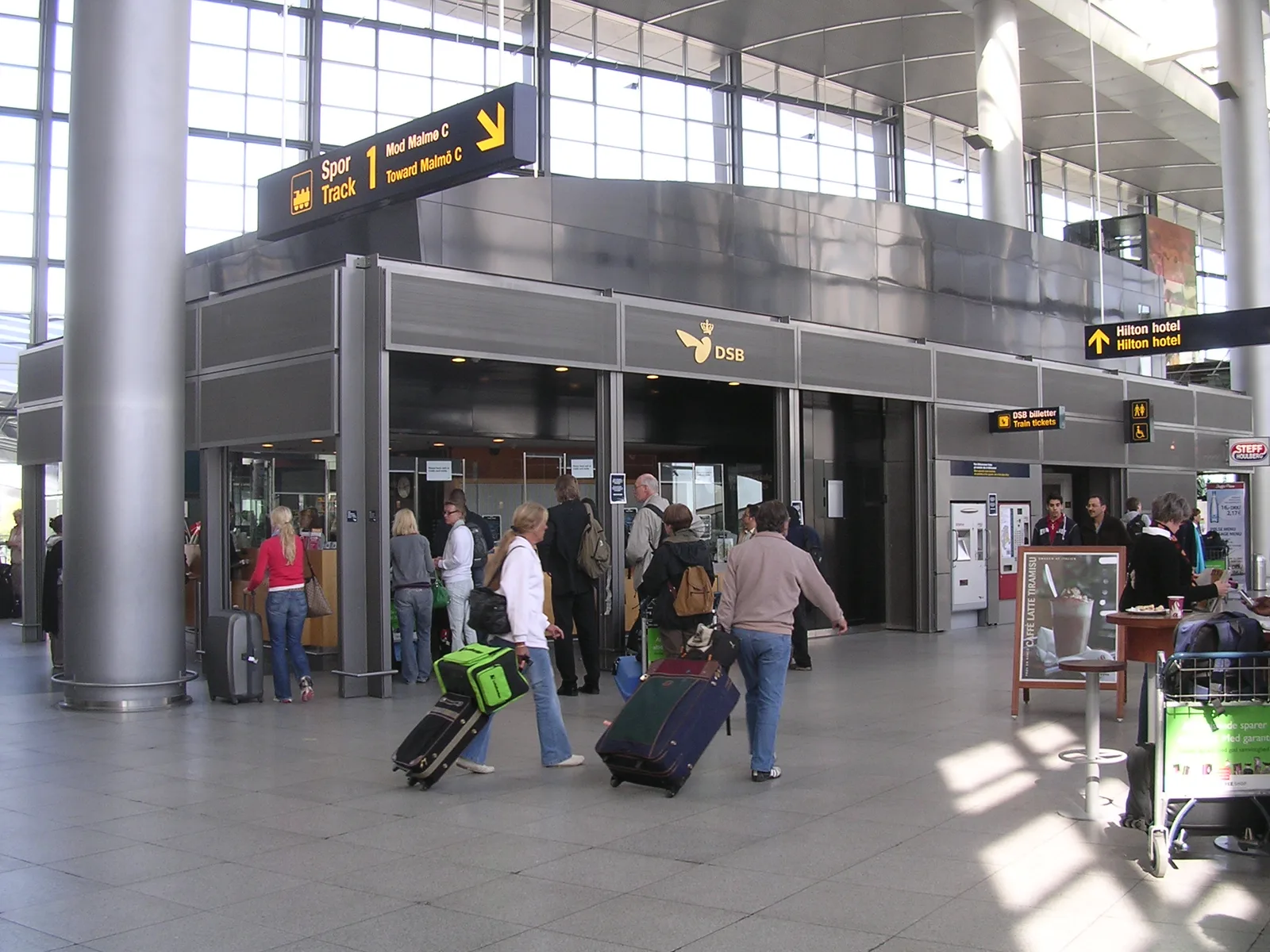
There are two DSB Orange tiers worth knowing about, and most competitors oversimplify this. The standard "Orange" ticket is non-refundable and tied to a specific departure — if you miss your train, the ticket has no value. "Orange Fri" (Orange Free) is a slightly more expensive discounted tier that offers a modest refund window of up to 15 minutes before departure. For travelers with any uncertainty in their schedule, the extra 50–80 DKK for an Orange Free ticket is usually worth it. If your connecting flight to the Copenhagen airport to Aarhus route is running late, a standard Orange ticket gives you no safety net at all.
The DSB app is the best tool for booking. It shows real-time Orange availability with a color-coded calendar view that lets you quickly spot the cheapest days in any given week. All major international credit cards are accepted. Digital tickets with a QR code are stored directly in the app, and the same QR code works for inspections throughout the journey. If you prefer a desktop, the DSB website at dsb.dk replicates the same functionality with a slightly larger seat-map interface for choosing your exact seat.
For the lowest price on this route in 2026, target midweek departures (Tuesday to Thursday) outside the 07:00–09:00 and 16:00–18:00 peak windows. Friday afternoon trains to Aarhus fill fast — Orange tickets for that timeslot often sell out within the first week of going on sale. Book on a Monday morning for the following month and you will almost always find the 99 DKK entry price still available.
Understanding Train Types: InterCity vs. InterCityLyn
The InterCity (IC) is the standard long-distance service on this route. It stops at major stations including Roskilde, Odense, Fredericia, Vejle, Horsens, and Skanderborg before pulling into Aarhus H. Travel time is around 3 hours 41 minutes. IC trains are a good choice if you need to reach one of those intermediate towns, or if you prefer a more relaxed departure schedule with guaranteed seating even without a reservation.
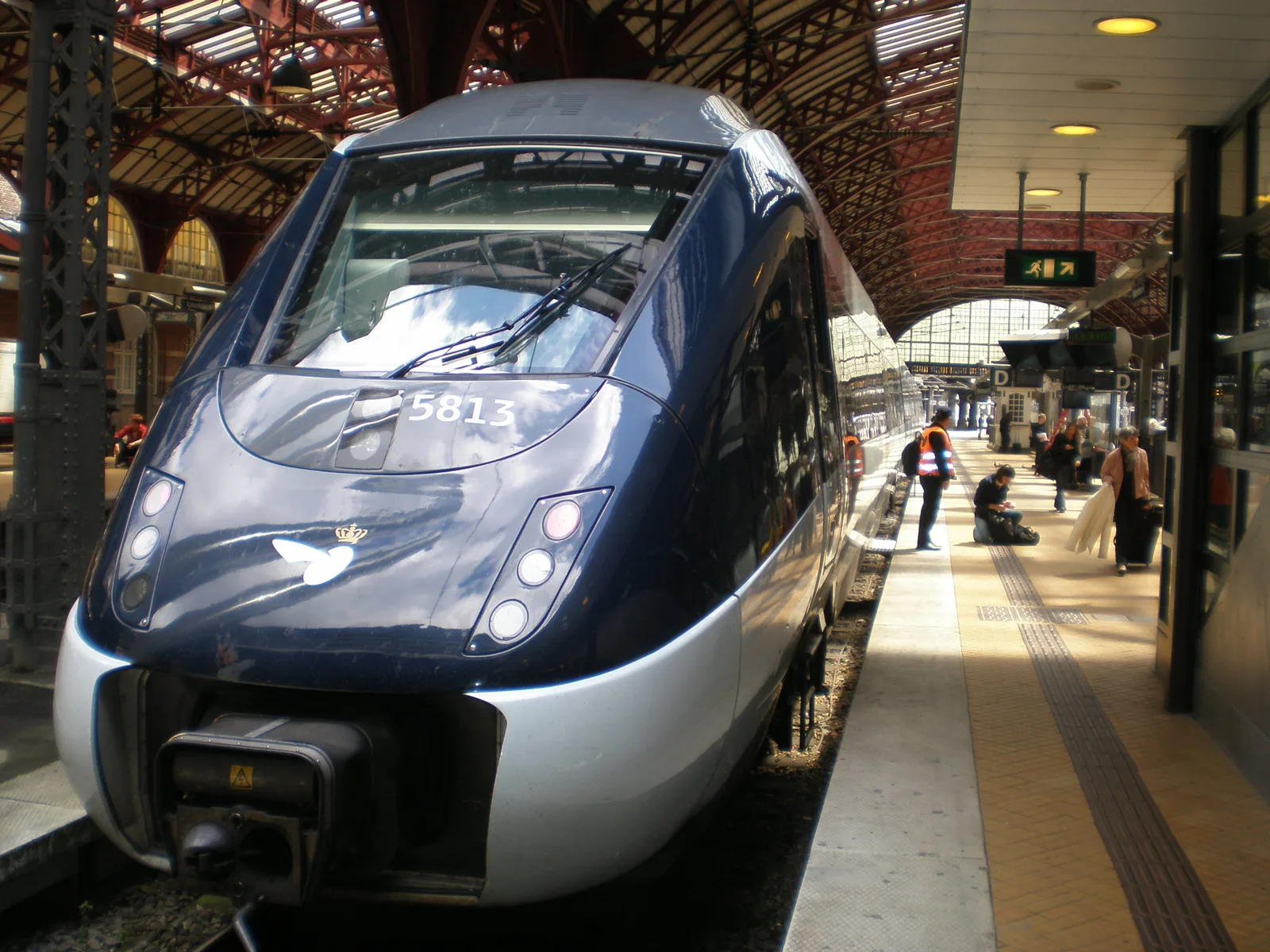
The InterCityLyn (Lyn, meaning "lightning") is the express counterpart. It skips several stops and completes the Copenhagen–Aarhus journey in around 3 hours 36 minutes. On the face of it, those five minutes are barely meaningful — but in practice the Lyn tends to be less crowded mid-journey because it serves fewer boarding points. For a direct city-to-city trip, the Lyn is the default recommendation.
| Aspect | InterCity (IC) | InterCityLyn (Lyn) |
|---|---|---|
| Journey time | ~3 hours 41 min | ~3 hours 36 min |
| Intermediate stops | Roskilde, Odense, Fredericia, Vejle, Horsens, Skanderborg | Fewer stops; direct service focus |
| Best for | Travelers exiting at regional towns | Direct Copenhagen–Aarhus travelers |
| Crowding | More crowded mid-journey | Less crowded; fewer boarding points |
| Pricing | Same DSB Orange/Flex tiers | Same DSB Orange/Flex tiers |
| Amenities | Free Wi-Fi, power outlets, quiet zones | Free Wi-Fi, power outlets, quiet zones |
One practical point that no competitor covers clearly: the ongoing Danish rail electrification project affects services north of Aarhus toward Aalborg. If you are continuing your journey beyond Aarhus in 2026, you may need to change to a regional diesel train at Aarhus H, as electrification of the northern Jutland line was still in progress and not all IC services run through without a change of traction. This is not an issue for the Copenhagen–Aarhus leg itself, but matters for onward connections. Check Rejseplanen's journey planner for your full routing before you travel.
- Choose InterCityLyn for the fastest direct trip: ~3 hours 36 minutes, fewer intermediate stops.
- Choose InterCity if you are stopping at Odense, Vejle, or other regional towns en route.
- Both train types offer quiet zones (Stillezone), power outlets at seats, and free Wi-Fi.
- Both share the same DSB pricing tiers — there is no premium surcharge for traveling on the Lyn.
Onboard Experience and the Great Belt Bridge
The interior of DSB long-distance trains is clean, quiet, and purposefully functional. Free Wi-Fi is available throughout the journey, though speeds drop when the train passes through the tunnel section at the Great Belt. Power outlets are at almost every seat — standard European two-pin sockets. Most trains on this route use DSB's MF-class rolling stock, which has a dedicated "Stillezon" (quiet zone) in specific carriages where phone calls and loud conversations are genuinely discouraged. Danish commuters take this seriously.
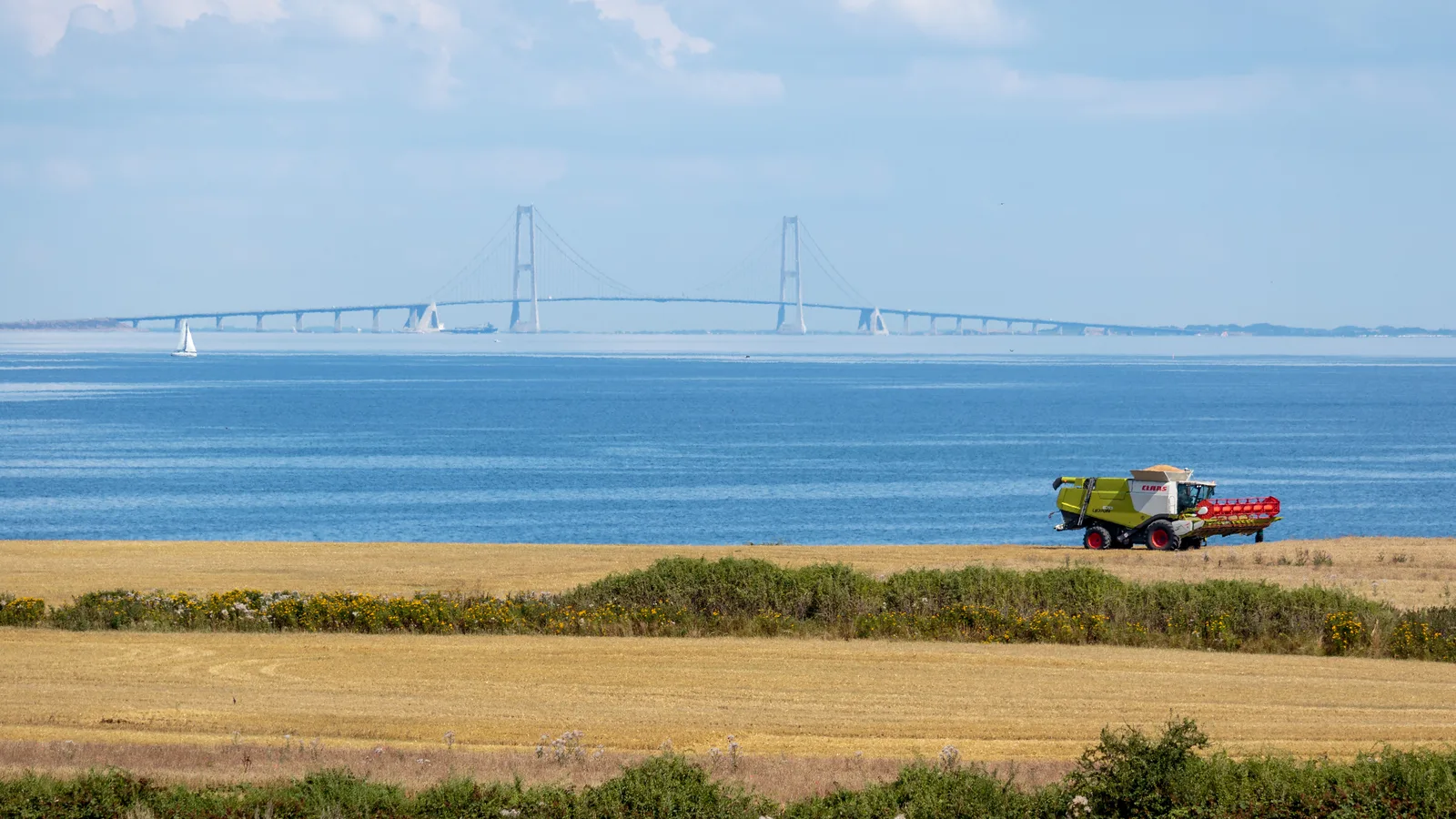
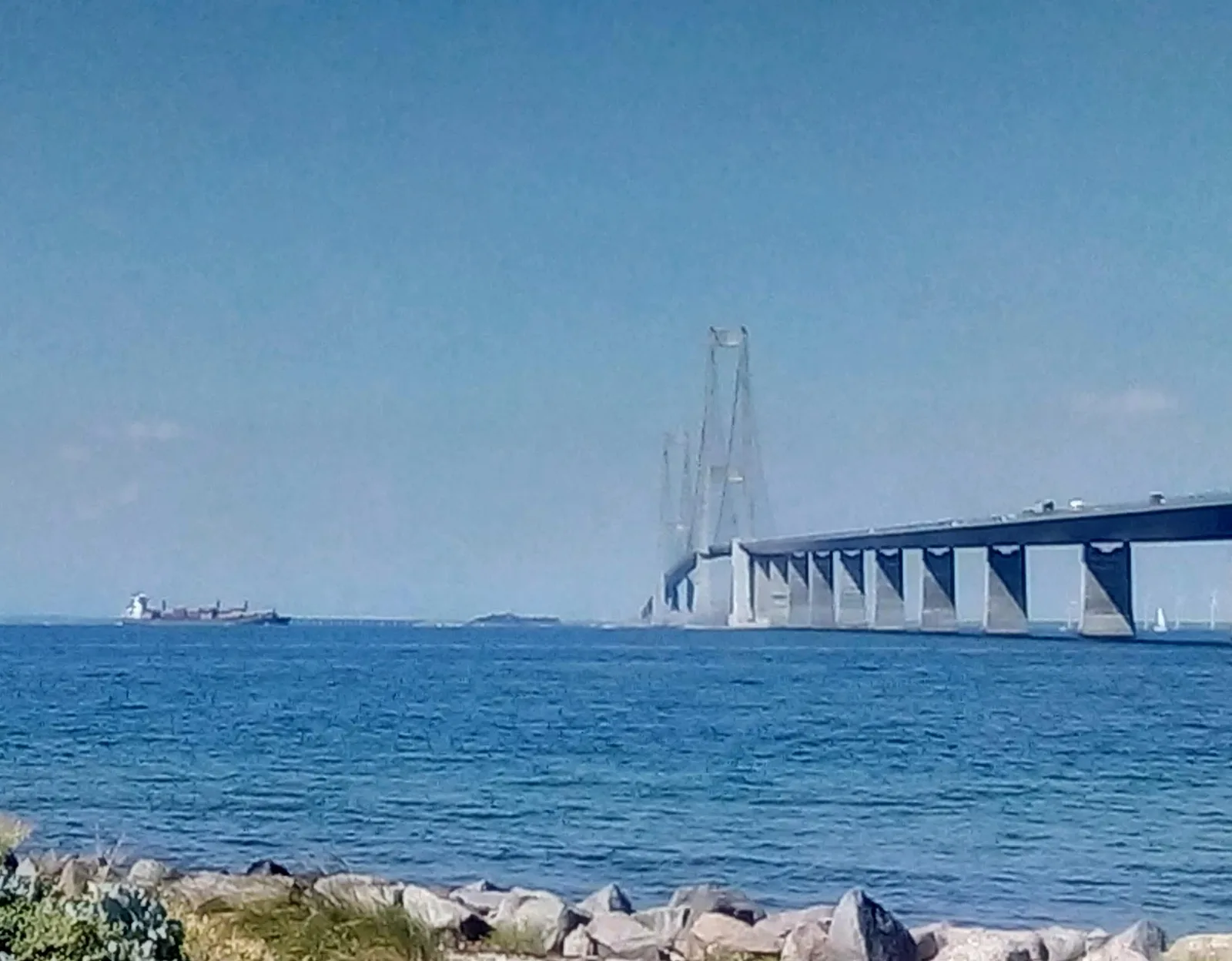
The Great Belt Bridge crossing is the scenic centerpiece of the journey. About 55 to 65 minutes after leaving Copenhagen, the train reaches the 18-kilometre Storebæltsbroen (Great Belt Fixed Link), which connects the island of Zealand to Funen. The train runs on the lower deck of the combined rail and road bridge, giving you an eye-level view of the Kattegat. The suspension section towers rise 254 metres above the water. Have your camera ready on the right-hand side of the train (facing the direction of travel, looking north toward the sea channel).
A small bistro area or trolley service operates on most long-distance DSB trains. Coffee runs around 35–45 DKK / ~$5–6 and hot food options like sandwiches or wraps typically cost 60–80 DKK / ~$9–12. Bringing your own snacks and drinks is completely acceptable and common among Danish commuters. The journey is comfortable enough that most travelers arrive feeling relaxed rather than drained.
Station Guide: Copenhagen Central and Aarhus Central
Copenhagen Central Station — Københavns Hovedbanegård, universally shortened to "København H" — is the largest rail hub in Denmark. It sits at the edge of the city center on Bernstorffsgade, roughly a 15-minute walk from Tivoli Gardens and a short Metro ride from the airport (take the M2 to Vanløse direction, changing at Kongens Nytorv, or use the direct Flytoget service to the central station area). The DSB departure boards are the large overhead screens in the main hall — look for "Spor" (Track) numbers, which are assigned 10–15 minutes before departure and can change. Long-distance trains to Aarhus typically depart from Tracks 5–10 on the lower platform level. The Visit Copenhagen tourist guide has maps of the station area and tips for first-time visitors.
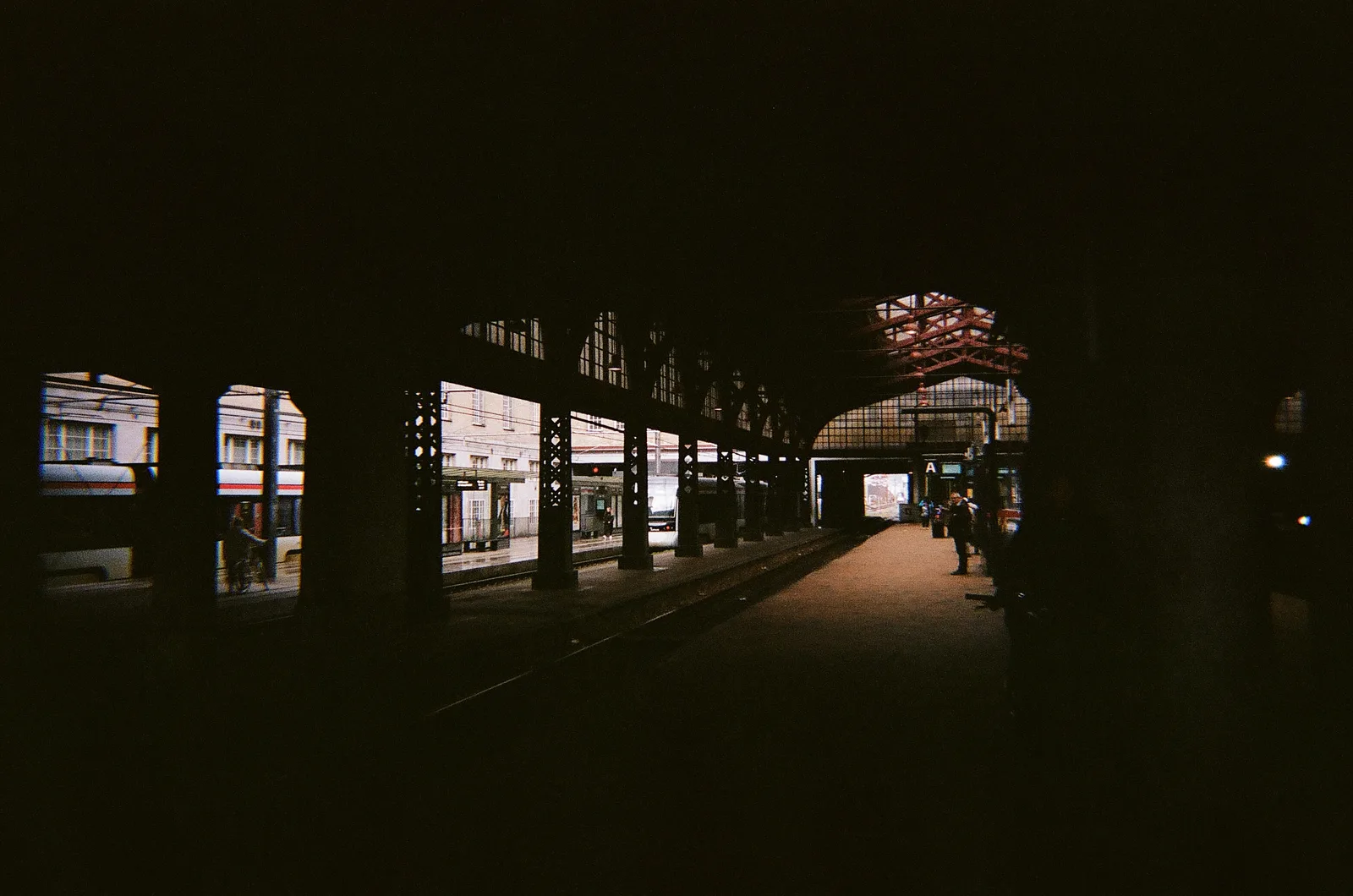
For first-time visitors to København H, the layout is straightforward once you understand the split between the upper street-level concourse (with shops, DSB ticket office, and lockers) and the lower platform level accessed by escalators. The DSB service center is in the main hall near the south entrance and is staffed with English-speaking agents until around 21:00 on weekdays. Left-luggage lockers are available 24 hours and cost around 30–60 DKK / ~$4–9 per 24-hour period depending on locker size.
Aarhus Central Station — Aarhus H — is significantly smaller and much easier to navigate. It opens directly onto the pedestrianized shopping street (Ryesgade and Søndergade), placing you in the heart of the city center within seconds of stepping off the train. The station has a small DSB ticket desk, a 7-Eleven convenience store, and left-luggage lockers on the ground floor. Taxis queue immediately outside the main entrance. If you are heading to the harbor area or ARoS art museum, both are within a 15-minute walk. Bus connections to outer Aarhus neighborhoods depart from the stop directly in front of the station on Park Allé.
Alternative Travel: Bus and Ferry Options
The Kombardo Expressen is the main coach service on the Copenhagen–Aarhus corridor, operated by Molslinjen. Buses depart from central Copenhagen (typically near the bus terminal at Ingerslevsgade, close to Central Station) and arrive at Aarhus Bus Terminal adjacent to the central station. Journey time is around 3 hours to 3 hours 30 minutes. Prices range from 49 DKK / ~$7 for very early advance bookings up to around 180 DKK / ~$26 at short notice — making it the cheapest land option if you book several weeks ahead. The Molslinjen website (molslinjen.dk) has an English-language booking option, though some pages default to Danish and benefit from a browser translation plugin.
The Molslinjen ferry is the second alternative, and it is genuinely appealing if you are traveling with a car or simply want a different experience. The ferry crosses the Kattegat between Sjællands Odde (on the northwest tip of Zealand, reachable by bus from Copenhagen) and Ebeltoft or Aarhus directly. The crossing takes around 65–80 minutes on the fast-ferry catamarans. Total door-to-door time for a foot passenger from central Copenhagen is roughly 3 hours, comparable to the train. Fares for foot passengers range from 199 DKK / ~$29 to 599 DKK / ~$87 depending on season and route. The ferry has a cafeteria with hot food, and the sea crossing itself is a highlight — particularly on calm summer days with views across the Kattegat.
For most travelers the train wins on simplicity: it departs from the city center, arrives at the city center, and offers more predictable timing. The bus is the right call only if you are extremely budget-conscious and have a flexible schedule. The ferry is worth considering if you are traveling between June and August, have a car, or want a day-trip maritime detour rather than purely a transport leg.
What to Do Upon Arrival in Aarhus
Aarhus H deposits you directly on the edge of the compact city center, which means you can reach most major attractions on foot within 20 minutes. The most visited cultural landmark is ARoS Aarhus Art Museum, a 10-minute walk northwest of the station along Vester Allé — its rooftop rainbow panorama walkway is one of the most photographed spots in Jutland. Den Gamle By, the open-air museum of Danish urban history, is a 15-minute walk north through the Botanical Gardens and is worth at least half a day. Check VisitAarhus for a complete calendar of attractions and events in the region.
The Aarhus Cathedral (Aarhus Domkirke) is the tallest church in Denmark at 96 metres and sits about 11 minutes on foot from the station. It is free to enter. The harbor area is 15 minutes by foot to the east and has become the architectural showpiece of the city — the Iceberg Building apartment complex and the Dokk1 public library and cultural center are both striking examples of contemporary Danish design. The Havnebadet (harbor baths) are open from late May to early September and are free to use.
If you are arriving on a tight schedule and need to drop luggage before exploring, use the lockers at Aarhus H rather than attempting to check in early. Most Aarhus hotels have a 15:00 check-in but are happy to store bags from early morning. The city's main pedestrian shopping street, Strøget (Søndergade), starts right outside the station and is useful for picking up supplies or grabbing a coffee before you set out.
Frequently Asked Questions
How long is the train ride from Copenhagen to Aarhus?
The journey typically takes between 3 hours 36 minutes and 3 hours 41 minutes. InterCityLyn services are the fastest option available. Total travel time depends on the number of intermediate stops.
How much does a train ticket from Copenhagen to Aarhus cost?
Standard fares cost around 399–499 DKK / ~$58–72 for a one-way trip. You can find DSB Orange tickets for as low as 99 DKK / ~$14. Booking early is essential for these discounts.
Do I need to reserve a seat on the train to Aarhus?
Reservations are not mandatory but are highly recommended for weekend travel. A seat costs about 30 DKK / ~$4 and guarantees comfort. Busy trains often have standing room only.
Taking the train from Copenhagen to Aarhus is the fastest, most comfortable way to travel between Denmark's two largest cities in 2026. With around 22 daily departures, frequent direct services, and DSB Orange tickets starting at just 99 DKK, there is a realistic option for every budget and schedule.
Book your DSB Orange or Orange Fri ticket at least three weeks out for the best price, check the DSB app for platform updates on the day, and have your camera ready for the Great Belt Bridge crossing about an hour into the journey. Once you arrive at Aarhus H, the city center is right outside the door.
You might also like


Continue reading
More guides you'll find useful