16 Best Day Trips From Copenhagen: A Local's Guide (2026)
Discover the 16 best day trips from Copenhagen. Includes train logistics for Sweden, castle guides, and hidden Danish villages for the perfect getaway.
On this page
16 Best Day Trips From Copenhagen
After living in the Danish capital for several years, I have found that the city's greatest strength is its accessibility to the surrounding region. The efficient rail network makes it remarkably easy to swap the bustling city center for quiet fishing villages or grand royal palaces. This guide covers 16 day trips I have personally made, ranging from the white cliffs of the south to the historic streets of southern Sweden.
Every destination on this list is manageable within a single day from Copenhagen Central Station. We updated this guide in 2026 to reflect the latest DSB train schedules, updated entry fees, and the discontinuation of the DOT app in December 2025. You can find more seasonal context in our best day trips from Copenhagen 2026 overview for event-specific timing.
The list spans three categories: history and castles, international excursions into Sweden, and nature. I have noted the dominant appeal of each destination so you can build an itinerary that matches your travel style. Use the Rejseplanen journey planner for real-time timetables — it covers both DSB trains and regional buses in a single search.
Key Takeaways
- Quick Pick (Best Overall): Roskilde for its unique mix of Viking history and the stunning Royal Cathedral.
- Quick Pick (Best for Families): Dyrehaven Deer Park and the Bakken amusement park for outdoor fun.
- Quick Pick (Best Rainy Day): The Louisiana Museum of Modern Art for its extensive indoor galleries and coastal views.
- Quick Pick (Best Free Trip): Dragør village for a peaceful walk through historic streets without any entry fees.
At a glance
- Duration: 1 day each (30 minutes to 1.5 hours travel)
- Best time: May–September for castles and beaches; year-round for museums
- Transport cost: 36–140 DKK per destination via Rejsekort or DSB
- Getting there: Trains every 20 minutes from Copenhagen Central Station
- Total destinations: 16 curated day trips covering castles, villages, nature, and Sweden
Transport and Tickets: How to Get Around
The backbone of regional travel from Copenhagen is DSB, the Danish State Railways. Trains run at 20-minute intervals on most major routes and reach places like Helsingør, Roskilde, and Hillerød in under an hour. For cross-border trips into Sweden, Skånetrafiken operates the trains beyond the Øresund Bridge — you buy their tickets separately through the Skånetrafiken app (iOS and Android). The DOT app was discontinued as of 16 December 2025, so do not rely on it.
A useful planning tool is the Rejsekort — a rechargeable contactless card accepted on all DSB trains, the Metro, and most regional buses. You tap in and tap out, and the system automatically calculates the cheapest zone-based fare. For most individual day trips within the Danish capital region, the Rejsekort is the most cost-effective option and avoids the need to queue for single tickets at the station.
For visitors planning several paid attractions in a single day, the the Copenhagen Card bundles transport and entry fees. It covers over 80 attractions and all public transport within the Danish capital region, including trains to Roskilde, Helsingør, and Hillerød. However, the card does not cover travel into Sweden — you still need a Skånetrafiken ticket for Malmö or Lund. Always buy the 'Discover' version for regional day trips; the 'Hop' version is restricted to the city center.
Copenhagen Card vs. Rejsekort: Which Saves More Money
| Option | Cost | Covers | Best For |
|---|---|---|---|
| Copenhagen Card (24h) | 599 DKK | Transport + 80+ attractions (castles, museums, ferries within Danish region) | 2+ paid attractions in one day (e.g., Kronborg + Louisiana = 135 + 175 = 310 DKK, train costs 150 DKK; card breaks even) |
| Rejsekort (pay-per-use) | 36–170 DKK per journey | DSB trains + Metro + regional buses (zone-based) | Single free destination (Dragør, Dyrehaven, Møns Klint) or low-cost days under 200 DKK total |
| Skånetrafiken Day Pass | 140 SEK (~95 DKK) | Unlimited travel in Skåne region (Malmö, Lund, Hyllie) | Sweden-only days combining Malmö + Lund; cheaper than two single tickets |
The Copenhagen Card costs approximately 599 DKK for a 24-hour adult pass in 2026. A single return DSB journey to Helsingør runs around 150–170 DKK, and entry to Kronborg Castle adds another 135 DKK. Add one more paid museum and the card pays for itself in a single day — this is the scenario where it wins decisively. The card also covers the ferry from Helsingør to Helsingborg in Sweden (a 20-minute crossing for a glimpse of the Swedish coast), which is a bonus many visitors overlook.
The Rejsekort makes more sense for low-volume days. If you are heading to a free destination like Dragør, the entire Dyrehaven deer park, or the cliffs at Møns Klint, the card's transport savings alone rarely justify its price. A Rejsekort journey to Dragør (bus 250S from the city) costs roughly 36–42 DKK each way depending on zone transitions. Over a relaxed, single-destination day, individual fares on the Rejsekort will cost less than 200 DKK total — well below any card tier.
A practical rule: if your day includes two or more paid attractions reachable by Danish regional rail, buy the card. If your day is one free or low-cost destination, use the Rejsekort. For Sweden-only days, neither Danish product covers the whole journey — buy a Skånetrafiken day pass (around 140 SEK) which covers unlimited travel within the Skåne region and is a better value than single tickets when visiting both Malmö and Lund.
Dragør: The Quintessential Danish Fishing Village
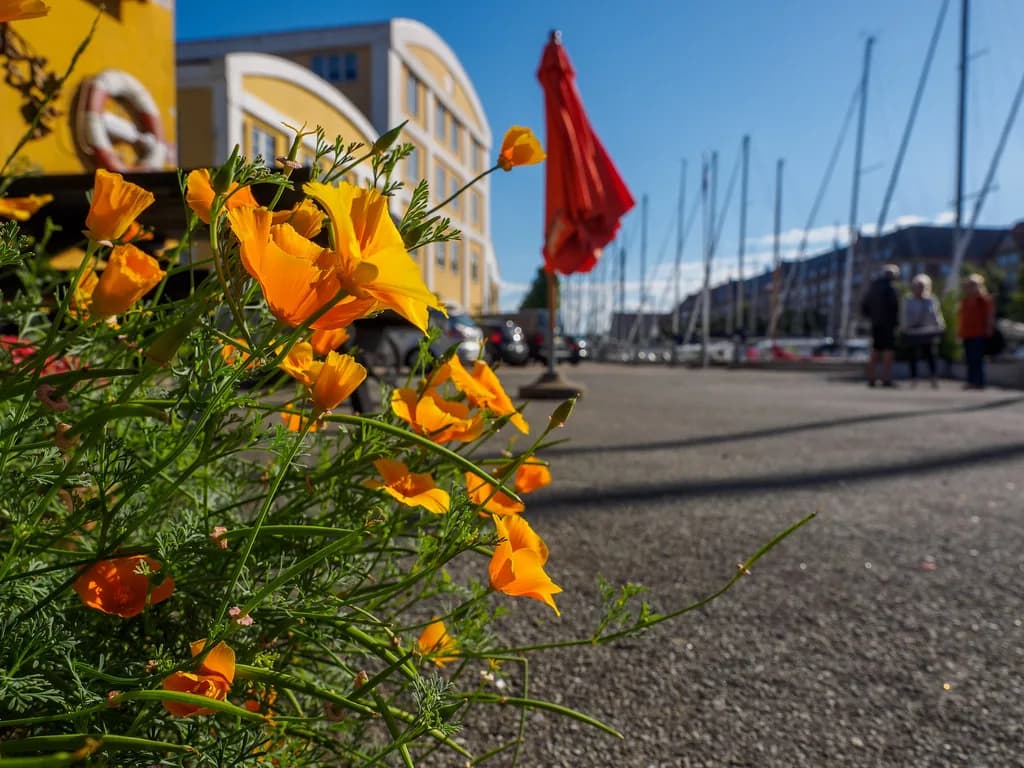
Dragør is 12 kilometers south of the city center and one of the best-preserved fishing villages in Denmark. The streets are lined with yellow-washed houses dating to the 18th century, and there are no entry fees anywhere in the historic core. It is a rare place where you can genuinely feel the maritime character of old Denmark without competing with tour buses.
The best food stop is Dragør Røgeri, the local smokehouse near the harbor. They serve fresh smoked fish — herring, eel, and salmon — sourced directly from the boats that dock a few meters away. In summer, lines form by 11:30, so arrive early or visit after 14:00 when the morning crowd thins. Finish with an ice cream from Dragør Is before the walk back to the bus stop.
How to get there: Take bus 250S from Copenhagen Central Station or the Airport (bus 35 from Terminal 3); the journey takes 35–45 minutes. Alternatively, cycling the coastal path from Amager takes about 50 minutes along well-maintained bike lanes.
Malmö, Sweden: Crossing the Øresund Bridge
Malmö is Sweden's third-largest city and the most popular international day trip from Copenhagen. The crossing on the Øresund Bridge is dramatic — the train emerges from a tunnel, runs across a low causeway, then climbs the cable-stayed bridge section with wide views over the strait and the offshore wind farms. The whole ride from Copenhagen Central takes 35–40 minutes.
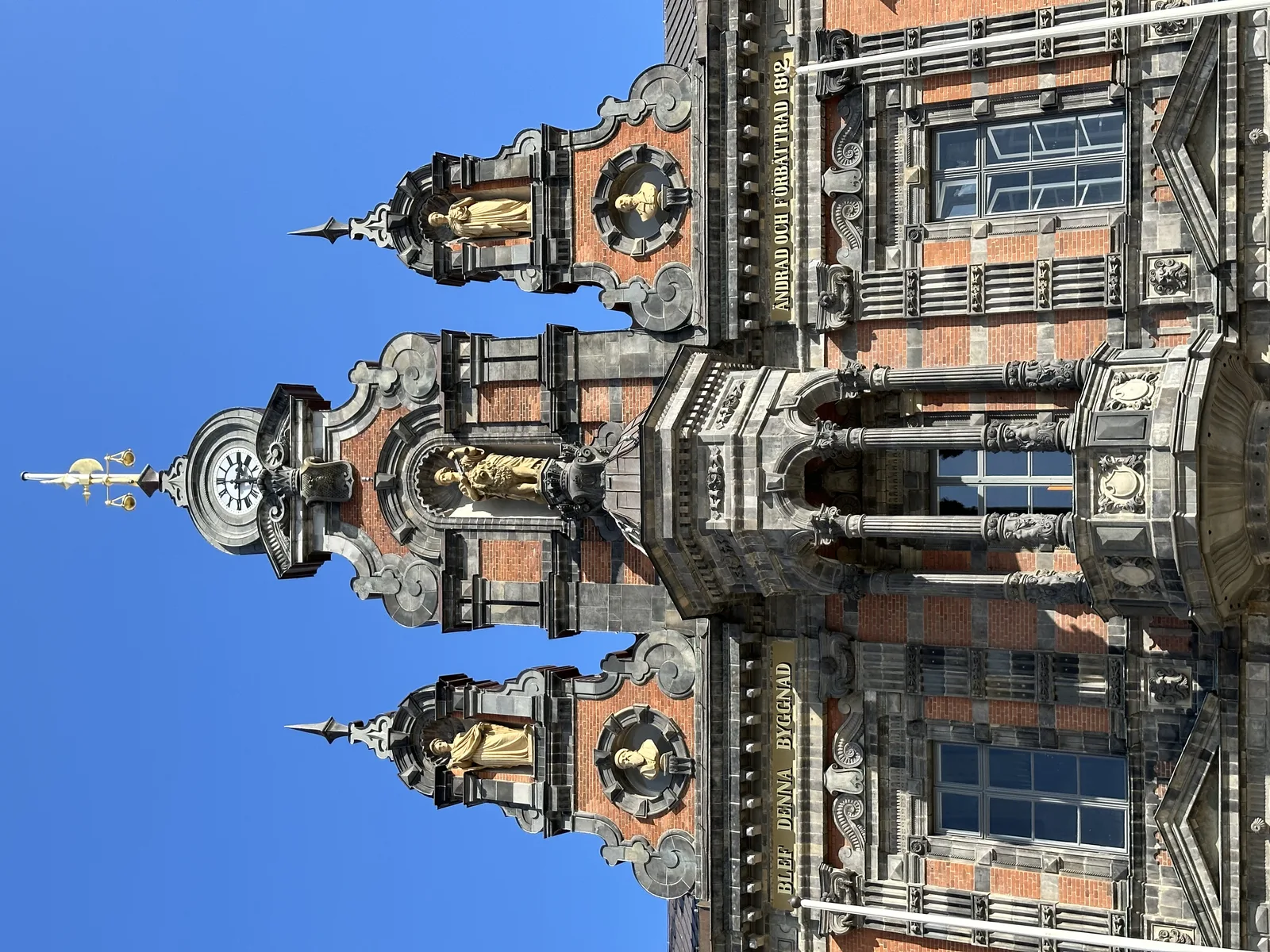
In Malmö, the Turning Torso dominates the skyline but the medieval old town around Stortorget and Lilla Torg is where most visitors spend their time. Malmöhus Castle, the oldest surviving Renaissance castle in Scandinavia, sits a short walk from the center and houses several museums under one roof. The Ribersborg beach is walkable from downtown and popular in summer — the open-air bathhouse (Ribersborgs Kallbadhus) charges around 80 SEK for access to the sauna and cold-plunge sections.
Note that Sweden uses Swedish Kronor (SEK), not Danish Krone, and the country is almost entirely cashless. Bring your passport — Swedish authorities conduct identity checks on trains arriving from Denmark, and you can be denied entry without valid ID. If you want a guided introduction, check out the full-day trip from Copenhagen to Malmö by train which includes a local guide and skip-the-line access.
How to get there: Buy tickets through the Skånetrafiken app. Trains depart Copenhagen Central every 20 minutes; no advance booking required. A one-way adult ticket costs approximately 110–130 SEK (around 100–115 DKK).
Helsingør: Hamlet's Kronborg Castle and Maritime History
Kronborg Castle is listed as a UNESCO World Heritage Site and is the fortress William Shakespeare used as the setting for Hamlet. It guards the narrowest point of the Øresund, barely 4 kilometers from Sweden, and the strategic logic of its location is immediately apparent when you stand on the ramparts. The dark casemates beneath the castle, where the statue of Holger Danske is said to sleep until Denmark is threatened, are the most atmospheric part of the tour.
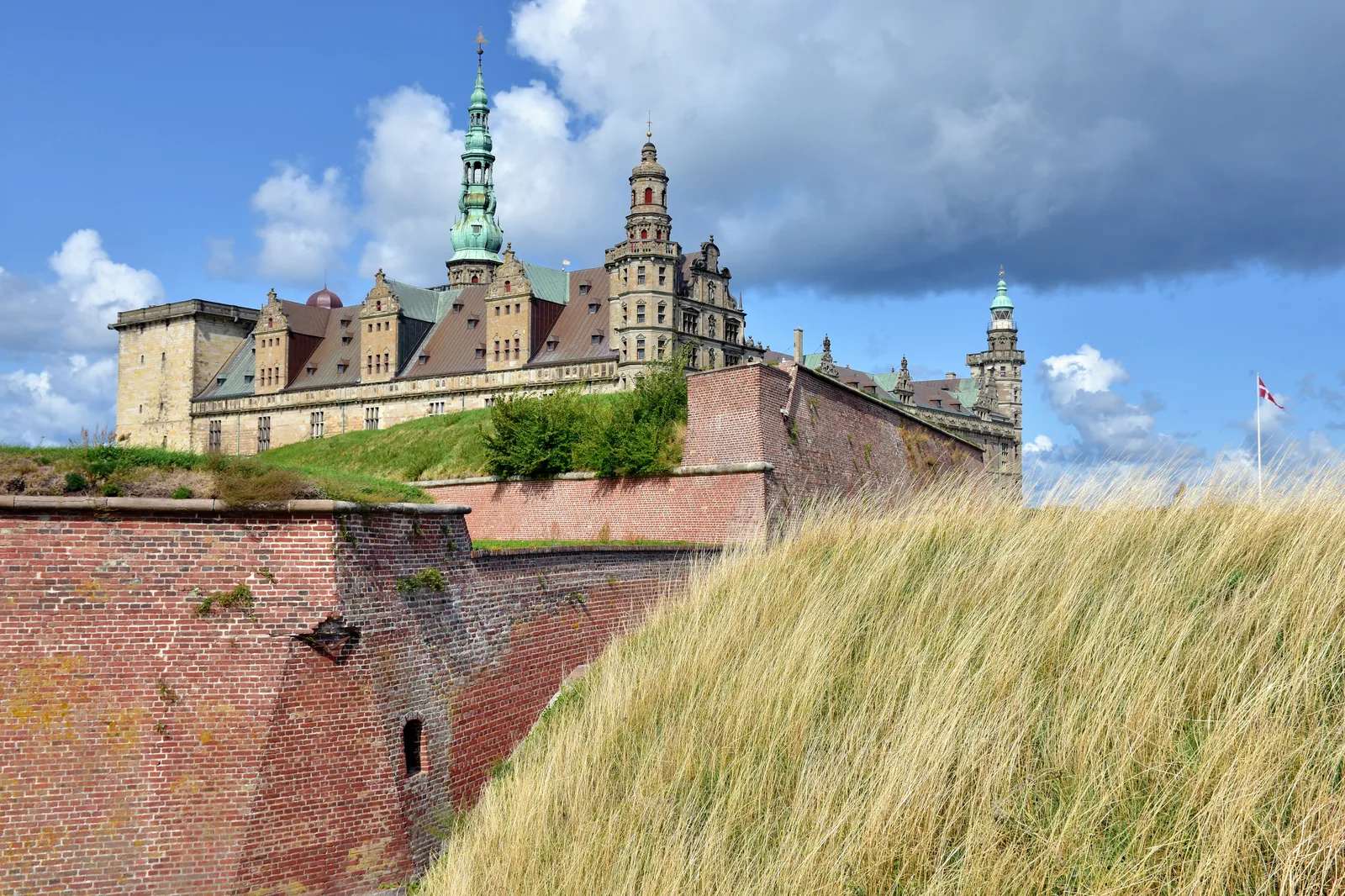
Helsingør town itself is worth two hours of exploration beyond the castle. The Maritime Museum of Denmark (M/S Museet for Søfart) is built inside the old dry dock and is architecturally one of the most innovative museums in the country. Adult entry runs around 160 DKK. The town also connects by direct 20-minute ferry to Helsingborg in Sweden, adding an easy cross-border element if you have extra time.
Read our full kronborg castle day trip guide for platform numbers and the best train connections, including the scenic coastal route from Copenhagen that tracks along the North Zeeland shoreline the entire way.
How to get there: Direct DSB train from Copenhagen Central, 50 minutes. Covered by the Copenhagen Card. Buy tickets via the DSB app if not using the card.
Frederiksborg Slot: Renaissance Splendor in Hillerød
Frederiksborg Slot is consistently described as the most beautiful palace in Denmark, and it earns that reputation. Built for Christian IV in the Dutch-Flemish Renaissance style with red brick and stepped gables, it sits on three small islands in a lake north of Hillerød. The Museum of National History inside holds one of the largest collections of Danish portrait painting anywhere, and the chapel — which survived the 1859 fire that gutted most of the building — retains its original 17th-century organ and gilded decor.
The Baroque gardens descending toward the lake are free to enter and beautifully maintained. In summer, a small ferry crosses the moat, giving you a perspective of the facades that most visitors miss by walking straight from the gatehouse. Adult entry to the palace interior is approximately 115 DKK; the gardens are always free. Tickets for the castle are included in the Copenhagen Card.
How to get there: S-Train line A to Hillerød (40 minutes), then a 15-minute walk through the town center. Well signposted from the station.
Roskilde: Viking Ships and Royal Cathedrals
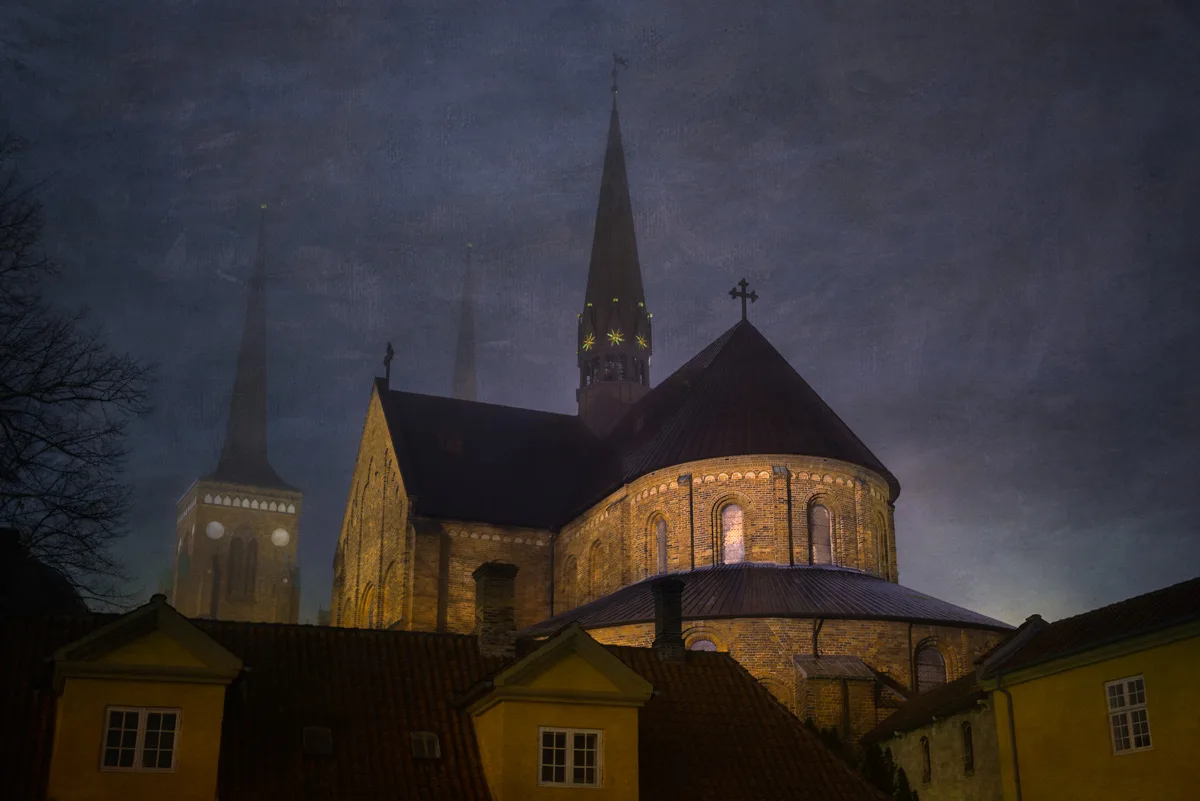
Roskilde served as the Danish capital for centuries and remains the most historically layered day trip in the region. The cathedral — a UNESCO World Heritage Site — is the burial church for Danish royalty and holds the tombs of 39 monarchs. Its interior layers Romanesque, Gothic, and Baroque additions that accumulated over 800 years, making it one of the most architecturally complex churches in Scandinavia.
The Viking Ship Museum on the fjord holds five original vessels recovered from the seabed of Roskilde Fjord, where they were deliberately sunk in the 11th century to block a navigation channel. Entry costs approximately 165 DKK. During summer months (June–August), you can join a rowing crew on a full-scale replica and sail a short stretch of the fjord — one of the most tangible Viking experiences in Denmark. Children can also try rope-making and boat-building in the museum's outdoor workshop area.
The Fjordstien (Fjord Path) hiking route starts from the harbor and runs through wetlands and forested sections for as far as you want to walk. It is a useful way to decompress after the museums, and the route is straightforward with no significant elevation.
How to get there: Several trains per hour from Copenhagen Central; journey time is approximately 30 minutes. No advance booking needed.
Lund, Sweden: Medieval Charm and Botanical Gardens
Lund is the archetypal Scandinavian university city — cobblestone streets, a 12th-century Romanesque cathedral, and a student population that keeps the café culture alive year-round. The cathedral is free to enter and features an astronomical clock that performs a mechanical show at 12:00 and 15:00 daily, with miniature figures parading across a carved facade. It is the most-visited church in Sweden and worth planning your morning around.
The Botanical Garden covers 7 hectares and includes a Victorian glasshouse with tropical species. Kulturen, the open-air museum, reconstructs farm buildings and townhouses from across medieval Sweden and is one of the better ways to understand pre-industrial Scandinavian life. For food, Mannz Bageri on Adelgatan street is the local recommendation — the cinnamon buns are notably better than the tourist-facing bakeries near the cathedral.
Lund is 20 minutes past Malmö by train, making it an easy pairing with a Malmö afternoon. See the Sweden Loop section below for a full itinerary combining both cities.
How to get there: Take the train to Malmö (35 minutes) then a regional train to Lund (15 minutes). Buy all Swedish legs through the Skånetrafiken app. Total journey from Copenhagen: approximately 55 minutes.
Møns Klint: Denmark's Dramatic White Chalk Cliffs
Møns Klint is Denmark's most dramatic natural landmark — 128-meter chalk cliffs dropping vertically into the Baltic Sea, formed from the compressed remains of microscopic sea creatures over 70 million years ago. The clifftop forest path offers views across to the Swedish coast on clear days. To reach the beach itself, you descend around 500 uneven steps, which takes 20 minutes and requires reasonable mobility — the ascent is harder. Fossil hunting on the pebble beach is free and popular with children.
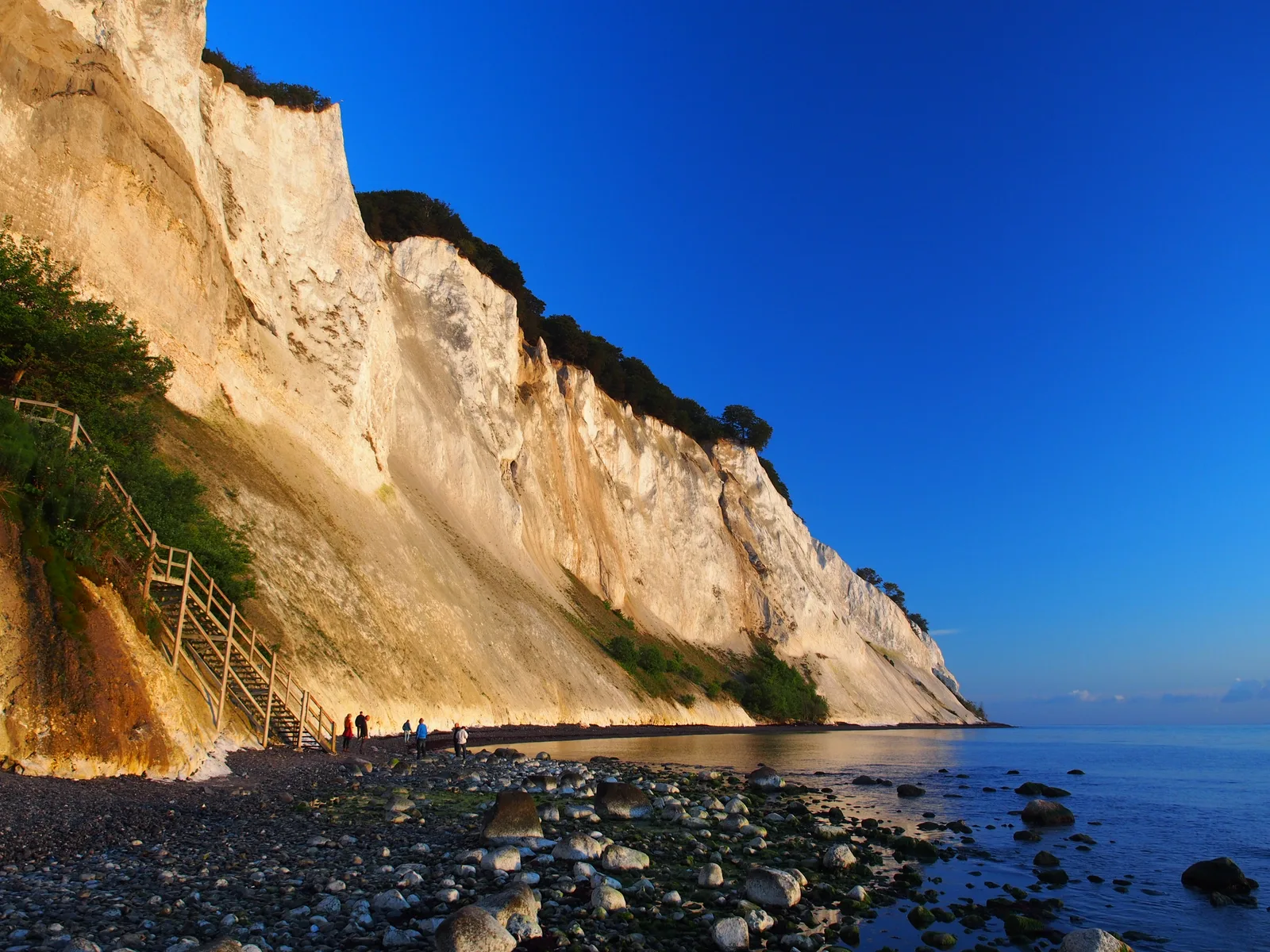
The GeoCenter Møns Klint museum at the clifftop explains the geological history and the asteroid impact at the Cretaceous–Paleogene boundary, which is visible in the rock strata here and at Stevns Klint. Entry costs around 150 DKK for adults. The museum also covers the Dark Sky designation of the island of Møn, which has some of the least light-polluted skies in Denmark.
A differentiator that most day-trippers miss: the Skovtårnet (Forest Tower) on the island of Møn, approximately 8 kilometers from the cliffs. Designed by the architectural practice EFFEKT and completed in 2017, this 45-meter tower spirals up through the forest canopy and emerges above the treetops with a panoramic view of the island's landscape. Entry is free. It pairs naturally with a Møns Klint visit and adds a contemporary architectural counterpoint to the prehistoric geology of the cliffs. The Møns Klint & Forest Tower Day Tour from Copenhagen includes both in a single guided trip.
How to get there: Møns Klint is difficult to reach without a car — the nearest train station is Vordingborg, and local bus services are infrequent. The guided tour is the most practical option for visitors without a rental car. Driving from Copenhagen takes approximately 1 hour 45 minutes.
Stevns Klint: UNESCO Coastal Geology and Fossil Hunting
Stevns Klint is a UNESCO World Heritage Site where the geological boundary between the Cretaceous and Paleogene periods is exposed in the cliff face — the thin dark layer of iridium-rich clay that marks the Chicxulub asteroid impact 66 million years ago. It is one of only a handful of places globally where this boundary is directly accessible to visitors, and it is free to walk along.
The Old Church of Højerup perches on the cliff edge with the sea directly below — part of the graveyard has already fallen into the water over the centuries. The Cold War Museum Stevnsfort is built into the cliffs themselves and requires a paid guided tour (approximately 120 DKK). The bunker complex was active until 2000 and demonstrates how Denmark's geography made this coastline strategically critical.
Stevns Klint is about 75 minutes from Copenhagen by car and is more feasibly done by car than by public transport. Consider pairing it with a Køge stop on the way home — the two destinations share the same southbound route from the capital.
How to get there: By car is strongly recommended. By train, take the E-line to Køge and then a local bus; the total journey exceeds 90 minutes.
Louisiana Museum of Modern Art: World-Class Coastal Culture
Louisiana is the most visited art museum in Denmark and consistently ranks among the world's most architecturally beautiful. The original 1958 villa was extended through a series of low pavilions that wind through gardens above the Øresund coast, with the sea visible from most gallery windows. The integration of the building, landscape, and art collection into a single experience is what separates Louisiana from any other museum in the region.
Permanent works include pieces by Giacometti, Calder, and Dubuffet in the sculpture park, and the museum hosts major international touring exhibitions throughout the year. Entry costs approximately 175 DKK for adults in 2026. On most weekdays the museum stays open until 22:00, making it excellent for an evening visit when the crowds thin and the sunset lights up the strait. The café has outdoor seating overlooking the water and is worth the premium price for the setting alone.
How to get there: Regional train toward Helsingør; exit at Humlebæk station. A well-signed 10-minute walk through the village leads directly to the museum entrance.
Dyrehaven: Royal History and Nature at the Deer Park
Dyrehaven is a former royal hunting ground turned public park, 20 minutes from the city center by train. Over 2,000 fallow and red deer roam freely here, and the animals are accustomed to people — encounters at close range are common. The park is free to enter at all times and covers 11 square kilometers of forest, meadow, and oak trees that date back several centuries.
Bakken, the world's oldest operating amusement park (founded 1583), sits inside the park perimeter near the Klampenborg entrance. It is free to enter and individual rides are pay-per-use. The Hermitage Palace at the center of the park offers guided tours of its royal hunting banquet rooms in summer. The design by Laurids de Thurah (1736) is more restrained than the larger royal palaces, but the setting in the middle of a deer park is unique.
How to get there: S-Train C-line to Klampenborg. The park entrance is directly outside the station — follow the crowds through the red wooden gates. Covered by the Copenhagen Card.
Odense: The Fairytale Birthplace of Hans Christian Andersen
Odense is Denmark's third-largest city and the birthplace of Hans Christian Andersen in 1805. The new H.C. Andersen House, opened in 2021 and designed by Kengo Kuma, is built over the site of the author's childhood home and uses an immersive narrative format rather than a conventional display format — entry costs approximately 185 DKK. The author's actual birth house, a few blocks away in the old quarter, is smaller and separate.
Odense has a new tram network as of 2023, which makes getting from the station to the main museums straightforward without walking. The harbor area has been redeveloped into a modern leisure district with good restaurants. Train tickets from Copenhagen should be booked in advance through DSB — orange-price tickets start at 99 DKK and can be significantly cheaper than walk-up fares on the same train.
How to get there: Direct DSB train from Copenhagen Central; journey is approximately 1 hour 20 minutes. Book in advance via the DSB app for the best prices. Seat reservations (pladsbillet) are required on InterCity trains.
Gilleleje: A Charming North Zealand Seaside Escape
Gilleleje is the northernmost town on Zealand and remains an active working fishing port rather than a tourist reconstruction. The harbor is lined with wholesale fish stalls and the town's restaurants source their menus daily from the boats. Adamsens Fisk is the local benchmark for fried fish — unpretentious, very good, and cheaper than the harbor restaurants in Helsingør. Gilleleje is best visited in summer; many seasonal businesses close from September onward.
The church above the town contains a memorial room dedicated to the Jewish citizens of the region who were sheltered here during October 1943 and ferried to Sweden before the German deportation order could be enforced. It is a small but genuinely affecting space and provides historical context that most coastal day trips miss entirely.
How to get there: Train to Hillerød (S-Train line A), then the 950R regional train to Gilleleje. Total journey time approximately 75 minutes. By car from Copenhagen: about 65 minutes via the E47.
Køge: Historic Market Town and Medieval Architecture
Køge has one of the best-preserved medieval town centers in Denmark. The main square contains the oldest dated timber-framed house in the country (built 1527, with the date carved into the beam), and the narrow side streets retain a density of 16th and 17th-century merchants' houses that larger cities have lost to fire and redevelopment. Walking the center takes about 90 minutes at a relaxed pace.
The harbor has been revitalized in recent years with restaurants and a kayak rental station. Wednesday and Saturday markets fill the square and are the best days to visit if you want the town at full energy. Køge Museum covers the town's role in several major naval battles fought in Køge Bay and charges around 90 DKK entry. Avoid visiting on Sunday when many shops close.
How to get there: E-line S-Train directly from Copenhagen Central Station; journey is 40 minutes with trains every 20 minutes. Covered by the Copenhagen Card.
Fredensborg Palace: The Royal Family's Spring Residence
Fredensborg Palace is the Danish Royal Family's spring and autumn residence and one of the grandest Baroque palaces in Scandinavia. The public garden surrounding the palace is open year-round and free to enter — the formal garden with its long axial avenues is modeled on Versailles, though on a more human scale. The private garden and the orangery are accessible only in July, and guided tours of the palace interior run in July and August for approximately 110 DKK.
Fredensborg sits between Helsingør and Hillerød on the Lille Nord train line, which makes it naturally compatible with a double-castle day. Pair it with a morning at Frederiksborg in Hillerød, then take the Lille Nord line to Fredensborg, and continue to Helsingør for the late afternoon at Kronborg.
How to get there: S-Train to Hillerød, then Lille Nord line toward Helsingør; exit at Fredensborg Station (40-minute total journey). Alternatively, take the S-Train to Humlebæk and the 370R bus to Fredensborg.
Skanör-Falsterbo: Sweden's Iconic White Sand Beaches
These twin towns at the southwestern tip of Sweden occupy a narrow peninsula flanked by the Baltic and the Øresund. The beaches here — fine white sand with shallow water — are qualitatively different from the pebbly shores on the Danish side, which is why Skanör-Falsterbo draws a disproportionate share of the region's summer beach traffic. The area is also one of the best birdwatching sites in Scandinavia, particularly during autumn migration, with gannets, terns, and waders passing through the Falsterbo headland.
The Falsterbo Lighthouse dates to the 18th century and marks the turning point of the historic shipping lane. Fiskhuset in Skanör serves fresh local seafood at reasonable prices. There are no entry fees anywhere in the area.
How to get there: Train to Hyllie Station (first stop in Sweden after the bridge), then bus 300 to Falsterbo Strandbad — journey approximately 60 minutes total from Copenhagen. By car, the drive takes about 50 minutes via the Øresund Bridge (toll applies: approximately 400 DKK each way).
Furesø: Nature Trails and Denmark's Deepest Lake
Furesø is the deepest lake in Denmark at 37.8 meters and is encircled by a 21-kilometer hiking trail through mixed forest, wetland, and lakeside suburbs. The full loop takes around six to seven hours at a moderate pace and is suitable for most fitness levels — there are no significant inclines. Shorter sections are accessible for those wanting a two to three hour walk instead. The AllTrails app lists the route as "Furesø Loop" with GPS tracking.
The lake is a Site of Community Importance under EU habitat law due to its clean water and diverse fish populations. Kayak and paddleboard rental is available at the Farum shore in summer. In winter the daylight window is short — plan to start before 10:00 if you want to complete the full loop before dark.
How to get there: S-Train B-line directly to Farum Station (30–40 minutes). The northern shore of the lake (Fiskebæk Naturskole) is a 30-minute walk from the station — type the name into Google Maps for accurate directions.
Choosing Between Kronborg and Frederiksborg Castles
Many travelers struggle to decide between the two major castles of North Zealand, as both offer unique historical perspectives. Kronborg is a rugged coastal fortress designed for defense and taxation, characterized by its military architecture and dark casemates. In contrast, Frederiksborg is a lavish Renaissance palace built for display, featuring gold-leaf ceilings and a world-class portrait gallery. If you prefer military history and the 'Hamlet' connection, Helsingør should be your primary choice for the day.
Frederiksborg Slot is better suited for those who appreciate art, architecture, and meticulously manicured gardens. The palace chapel is particularly breathtaking, having survived the great fire of 1859 with its original decor intact. I personally find the garden walk at Frederiksborg to be one of the most relaxing experiences in the entire region. The small ferry across the moat provides a view of the facade that is worth the modest extra cost.
It is possible to visit both in a single day if you start early and use the Lille Nord train between Hillerød and Helsingør. Begin at Frederiksborg in the morning and finish at Kronborg in the late afternoon. This route allows you to enjoy the coastal views of Helsingør as the sun begins to lower over the Øresund. Check the kronborg castle day trip guide for specific train times and castle closing hours that align with this loop.
The Sweden Loop: Combining Malmö and Lund in One Day
A common mistake is visiting only Malmö when the medieval university city of Lund is just 15 minutes further down the same rail line. I suggest starting your morning in Lund to experience the quiet streets and the cathedral before the midday crowds arrive. The Botanical Gardens and the astronomical clock show are best in the soft morning light. Lund's university atmosphere creates a scholarly, unhurried environment that contrasts sharply with the more urban energy of Malmö.
After lunch at Mannz Bageri or one of the medieval square cafés, take the 15-minute regional train to Malmö for the afternoon. Spend two hours at the Turning Torso viewing area, Lilla Torg, and the Ribersborg beach. The copenhagen to malmo train schedule makes the return easy — trains from Malmö Central depart every 20 minutes. You can spend the afternoon wandering or catch the open-air bathhouse if you want a cold-plunge experience (closes at 18:00, arrive by 16:00 to do a full session).
Buy a Skånetrafiken day pass (approximately 140 SEK) on arrival at Malmö Central Station — it covers unlimited travel between Lund, Malmö, and Hyllie for the entire day. This is cheaper than buying individual legs. The total travel time for the loop is under two hours, leaving six or more hours for sightseeing. Remember that Sweden is cashless — pay by card everywhere.
Frequently Asked Questions
Can I visit Sweden from Copenhagen without a passport?
While there are no permanent border gates, you must carry a valid passport or national ID card. Swedish authorities frequently conduct random checks on trains crossing the Øresund Bridge. Failure to provide ID can result in being denied entry or fined.
Is the Copenhagen Card valid for the train to Malmö?
No, the Copenhagen Card only covers transport within the Danish capital region. To travel to Malmö, you must purchase a separate ticket from Skånetrafiken or DSB. These tickets cost approximately $15–$20 for a one-way journey across the bridge.
What is the best day trip for families with children?
Roskilde is the best choice for families due to the interactive Viking Ship Museum and the large parks. Children can participate in boat building, rope making, and even sailing on the fjord during summer. The town is also very stroller-friendly and easy to navigate.
The region surrounding Copenhagen is a treasure trove of history, culture, and natural beauty that many tourists unfortunately overlook. By venturing just an hour outside the city, you can stand in the halls of Hamlet's castle or walk along ancient chalk cliffs. The efficiency of the Danish and Swedish transport systems makes these excursions stress-free and highly rewarding for any traveler.
Whether you choose the royal grandeur of Frederiksborg or the quiet charm of Dragør, these trips will enrich your Scandinavian experience. I encourage you to pick at least two destinations from this list to truly understand the diversity of the Øresund region. Safe travels, and enjoy discovering the hidden gems that lie just beyond the cobblestones of Copenhagen.
Explore More Copenhagen Guides
Deep-dive guides for planning a Copenhagen trip — what to do, where to eat, day trips, and seasonal highlights.
You might also like


Continue reading
More guides you'll find useful