What to Do in Copenhagen for a Day: 24-Hour Guide
Maximize your 24 hours with this perfect what to do in copenhagen for a day itinerary. Includes time-stamped stops, the best bakeries, and canal tours.
On this page
One Day in Copenhagen Itinerary: The Perfect 24-Hour Guide
Copenhagen rewards visitors who move with a plan. The royal palaces, colorful canal waterfront, food halls, and medieval towers are compact enough to cover on foot in a single day. This guide builds a time-stamped route through the city center that minimizes backtracking and maximizes what you actually see. Updated for 2026, every price and opening time has been verified.
The itinerary runs from breakfast at 08:30 to dinner at 20:00. It covers Nyhavn, a canal boat tour, Amalienborg Palace, the Marble Church, Andersen & Maillard pastries, Torvehallerne food hall, the Round Tower, and Rosenborg Castle. The how many days in Copenhagen guide covers extended stays if you decide to stay longer.
One Day in Copenhagen Itinerary Overview
The classic one-day loop starts near the waterfront and works inward through royal Copenhagen before finishing in the old city center. Nearly every stop on this list sits within a 20-minute walk of the previous one. You can do the whole route on foot, but renting a city bike saves about 45 minutes of transit.
Here is the full day at a glance. Morning is spent at the water: Nyhavn, a canal boat tour, and the guard change at Amalienborg Palace. Early afternoon moves inland to Andersen & Maillard for pastries and Torvehallerne for lunch. The late afternoon covers the Round Tower and Rosenborg Castle. Evening is dinner in the city center or the Meatpacking District.
At a glance
- Duration: 08:30 to 20:00 (11.5 hours of scheduled stops)
- Typical cost: 460–800 DKK (60–110 EUR) with attractions; 200–300 DKK (27–40 EUR) for walking only
- Best time: June–August for long daylight; avoid Mondays when many museums close
- Getting there: Land at Copenhagen Airport; 25 min on metro to city center (Kongens Nytorv)
- Transport: City bike (25 DKK unlock + 3 DKK/min) or 24-hour City Pass (100 DKK)
- 08:30 — Breakfast at Studio x Kitchen
- 09:45 — Walk Nyhavn waterfront
- 10:15 — Canal boat tour (approx. 60 minutes)
- 11:50 — Changing of the Guard at Amalienborg Palace
- 12:30 — Marble Church (Frederiks Kirke) dome climb
- 13:30 — Cardamom bun at Andersen & Maillard
- 14:00 — Lunch at Torvehallerne food hall
- 15:15 — Round Tower (Rundetaarn)
- 16:30 — Rosenborg Castle and the King's Garden
- 18:30 — Dinner and drinks in the city center
08:30 — Breakfast at Studio x Kitchen
Studio x Kitchen is a small cafe near Gammel Strand that does breakfast until around 12:00. The kitchen is famous for folded eggs with nduja — a spicy Calabrian pork paste served on thick sourdough. It is one of the most talked-about breakfast dishes in Copenhagen in 2026 and orders sell out on busy weekends. The cafe does not take reservations, so arriving by 08:30 is the safest way to get a table without waiting.
The cafe opens at 08:00 on weekdays and 09:00 on weekends. Budget about 120–160 DKK (roughly 16–22 EUR) for the folded egg dish with coffee. Seating is small and fills up fast by 09:30. If the folded eggs are gone, the avocado toast with pickled cucumber is the next best option.
Rainy day note: Studio x Kitchen is fully indoors, so rain does not affect this stop at all. Use the extra warmth inside as a reason to linger and let the first shower pass.
09:45 — Explore Nyhavn and the Waterfront
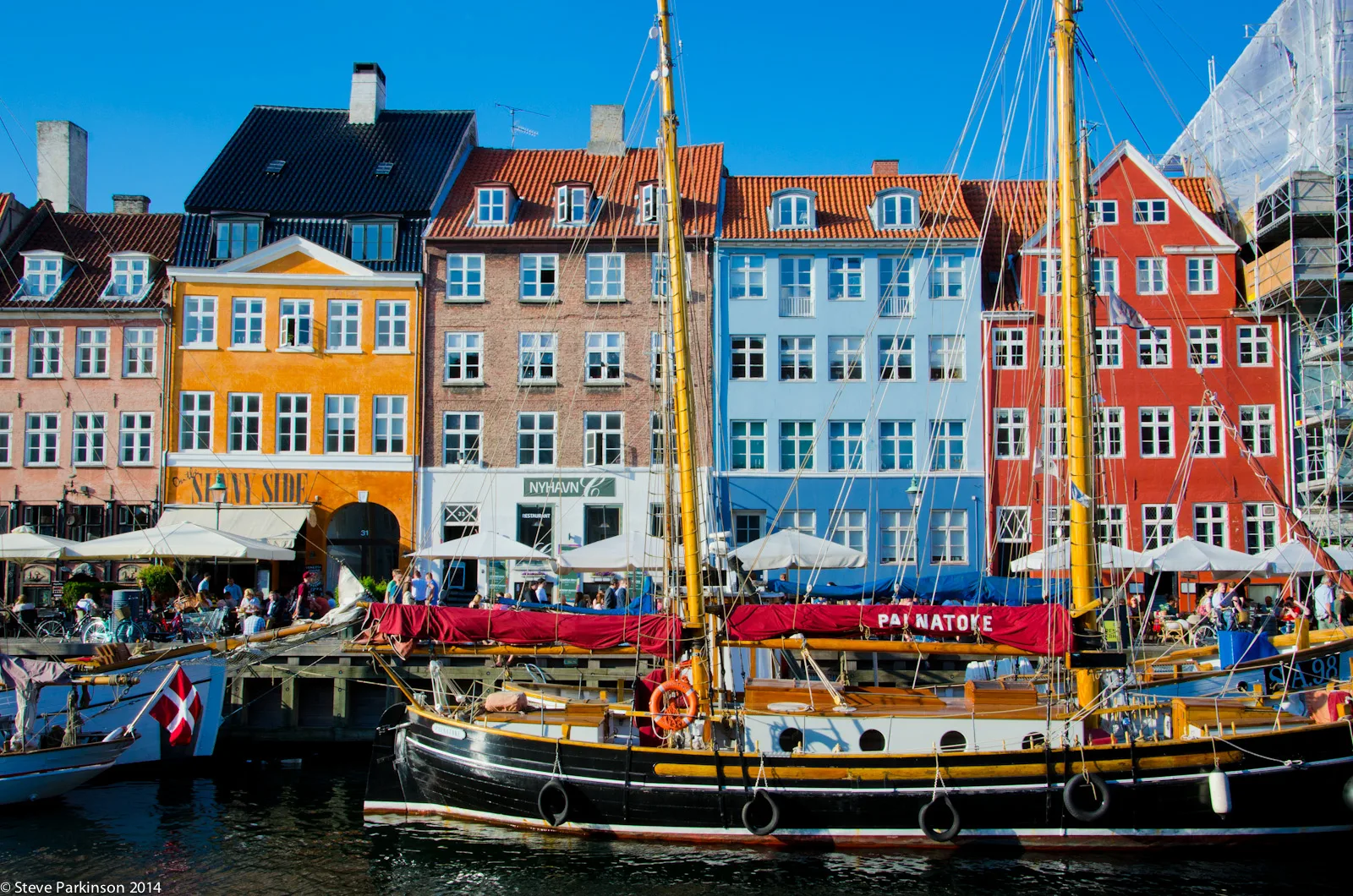
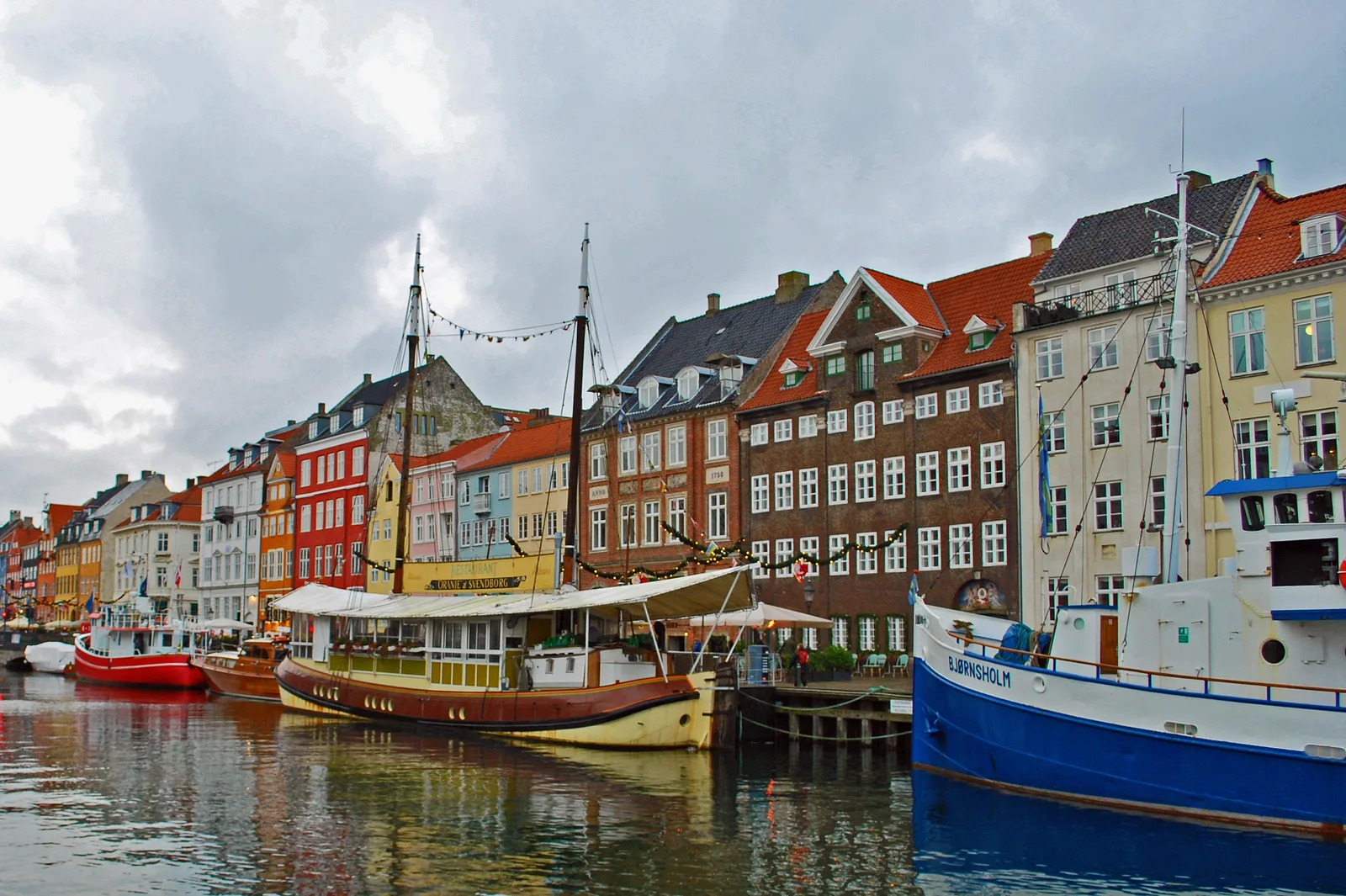
Nyhavn is the most photographed street in Copenhagen. The 17th-century canal is lined on one side by narrow townhouses painted in ochre, red, and blue. Early morning is the best window for clean photos. By 10:30, tour groups arrive and the cobblestones become crowded. Walk the full length of the canal on the south side where the buildings are tallest and most colorful.
The restaurants along the canal are overpriced and aimed at tourists. Skip eating here and save your appetite for Torvehallerne later. Instead, grab a takeaway coffee from one of the small kiosks and walk to the end of the pier for a view back toward the city. Hans Christian Andersen lived at number 20 Nyhavn for almost two decades — there is a small plaque on the building.
Rainy day note: Nyhavn still looks striking in the rain. If it is pouring, cut the walk short and go directly to the canal boat tour boarding point at Ved Stranden.
10:15 — Take a Canal Boat Tour
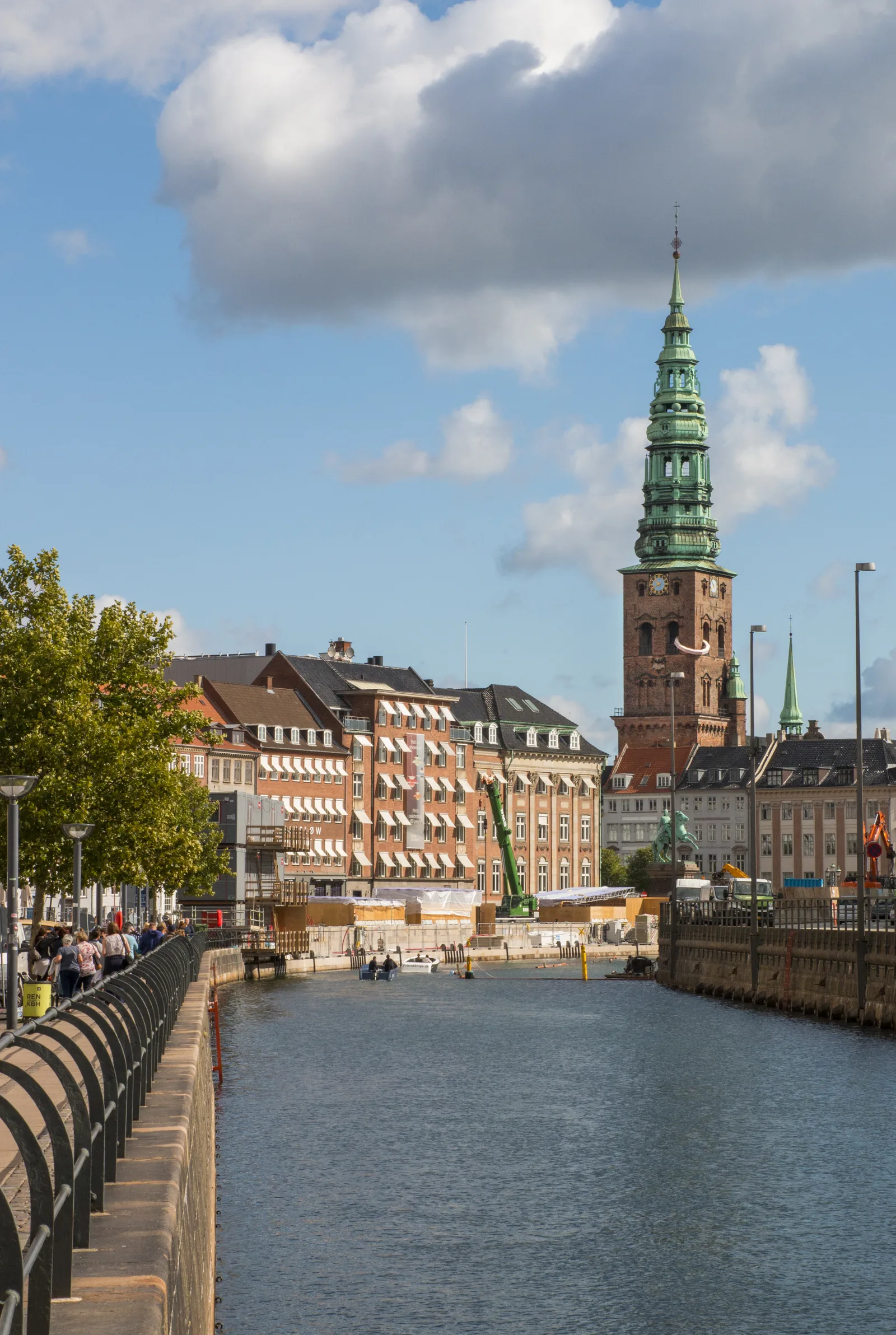
A canal boat tour gives you a 60-minute overview of the city from the water. You pass the Opera House, Christianshavn, the old shipyard at Holmen, and the Little Mermaid statue — which is genuinely easier to see from a boat than on foot. Large commercial tours depart from Nyhavn and from Ved Stranden. Stromma's classic tour is included with the Copenhagen Card and costs about 120 DKK (16 EUR) independently.
Smaller social-sailing tours with 8–12 passengers run from the same piers. They cost around 150–180 DKK (20–24 EUR) and feel far less crowded. The guide on these boats tends to tell stories about specific buildings rather than reading from a script. If the timing aligns, the smaller boat is the better experience. Book online the night before to secure a seat.
Rainy day note: Most canal boats have covered sections. A light rain actually keeps bigger boats emptier, which means more space and better photos. Only cancel if there is a storm warning.
11:50 — Changing of the Guard at Amalienborg Palace
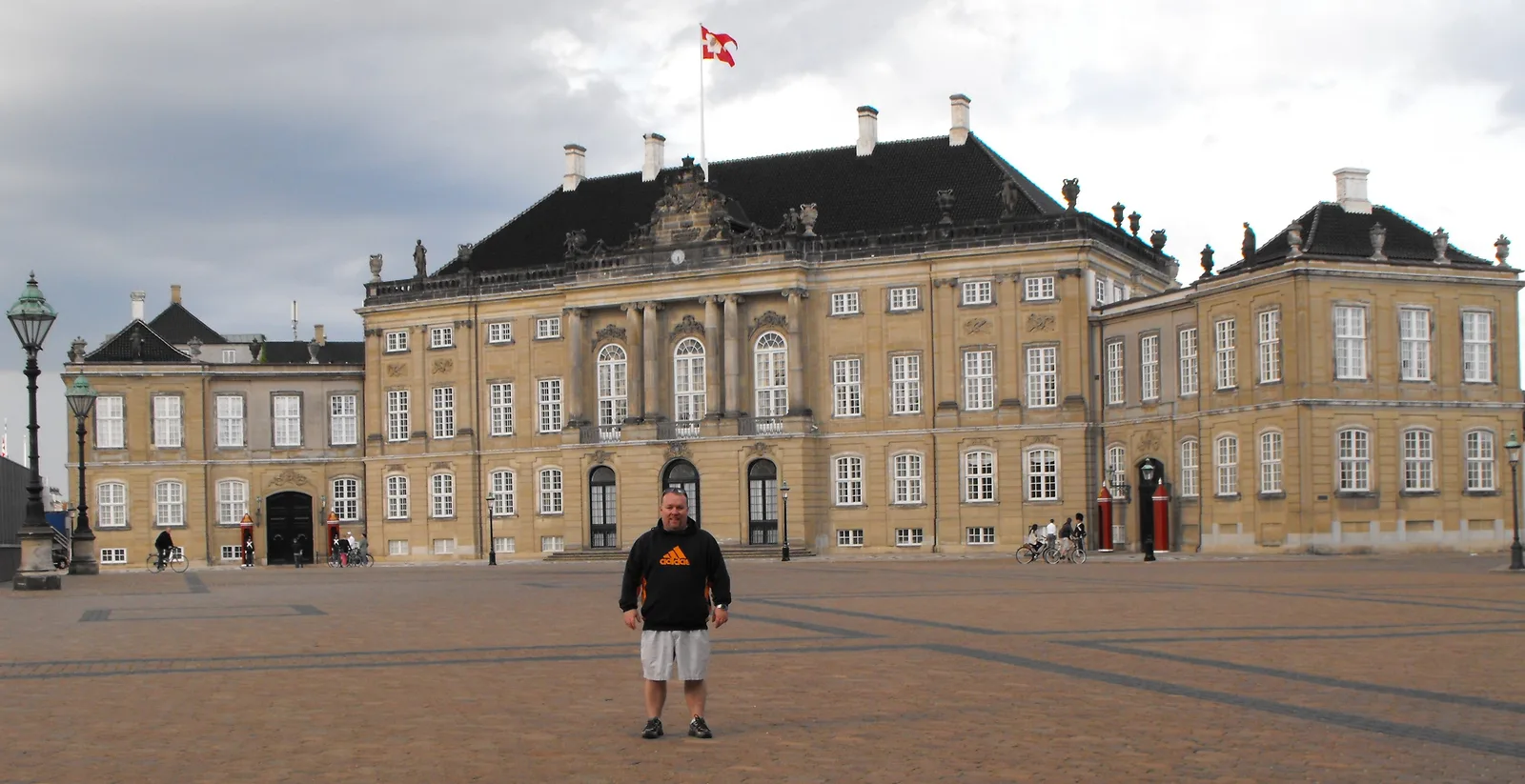
The royal guard marches from their barracks at Rosenborg Castle to Amalienborg Palace every day at 12:00 when the monarch is in residence. The procession takes about 25 minutes. The ceremony in the palace square is free to watch and typically finishes by 12:20. Position yourself on the cobblestone square facing the four identical palace buildings for the best view of the full formation.
The palace complex is an 8-minute walk from the Nyhavn boat landing. Walk north along Bredgade and turn right toward the harbor. Entry into the palace museum costs 95 DKK (13 EUR) and is worth it if you have extra time, but the itinerary does not require a paid visit to stay on schedule. The fountains in the center of the square make a good photo backdrop before the crowd forms around noon.
12:30 — Visit the Marble Church (Frederiks Kirke)
Frederiks Kirke, known as the Marble Church, sits two minutes from Amalienborg Palace along Frederiksgade. Entry to the main hall is free and the interior dome is one of the largest in Scandinavia. The church opens at 10:00 daily. Guided dome tours run at set times and cost about 60 DKK (8 EUR) for the climb to the top. The view over the palace rooftops is genuinely good for the price.
Dome tours run at 13:00 and 15:00 on weekdays in summer. If the 13:00 tour is too close to your arrival, walk through the nave at ground level and continue toward Andersen & Maillard. The dome experience adds roughly 35 minutes — skip it if you are running behind schedule.
13:30 — A Break for Pastries at Andersen & Maillard
Andersen & Maillard sits on Nørrebrogade and is a short metro ride or 15-minute walk from the Marble Church. The bakery's cardamom bun has become a flashpoint in Copenhagen's ongoing debate about Danish pastry identity. Traditional bakers argue the spiced, knotted Swedish-style kanelbulle has displaced the flakier native wienerbrød. Andersen & Maillard's version — darker, more fragrant, stickier — sits firmly in the cardamom camp. Order it warm.
A bun costs about 35–45 DKK (5–6 EUR). Skt. Peders Bageri in the Latin Quarter is the more famous old-school option and is better placed on this itinerary (on the way to Torvehallerne) if you prefer the classic style. Andersen & Maillard is worth the detour for anyone prioritizing the cardamom bun specifically. You do not need both stops — pick one based on location and what you feel like eating.
14:00 — Lunch at Torvehallerne Food Hall
Torvehallerne is a covered market at Israels Plads with about 60 stalls split across two glass halls. It opens at 10:00 daily and gets busy between 12:00 and 14:00. Arriving just after 14:00 means slightly shorter queues. Budget 80–140 DKK (11–19 EUR) for a full lunch depending on what you order.
Decision paralysis is real in here. These three stalls are the fastest route to a good lunch. Hallernes Smørrebrød does the best traditional open-faced rye bread sandwiches with pickled herring or roast beef. Grød serves Danish porridge with toppings that sound odd and taste excellent. Hest does small plates and natural wine if you want something lighter and more modern. All three have limited seating at the counter, so grab your food and head to the outdoor benches if the weather permits.
Rainy day note: Torvehallerne is covered, so this stop works perfectly in the rain. Add 20 minutes to your time here and use the break to check the forecast before heading to the Round Tower.
15:15 — Climb the Round Tower (Rundetaarn)
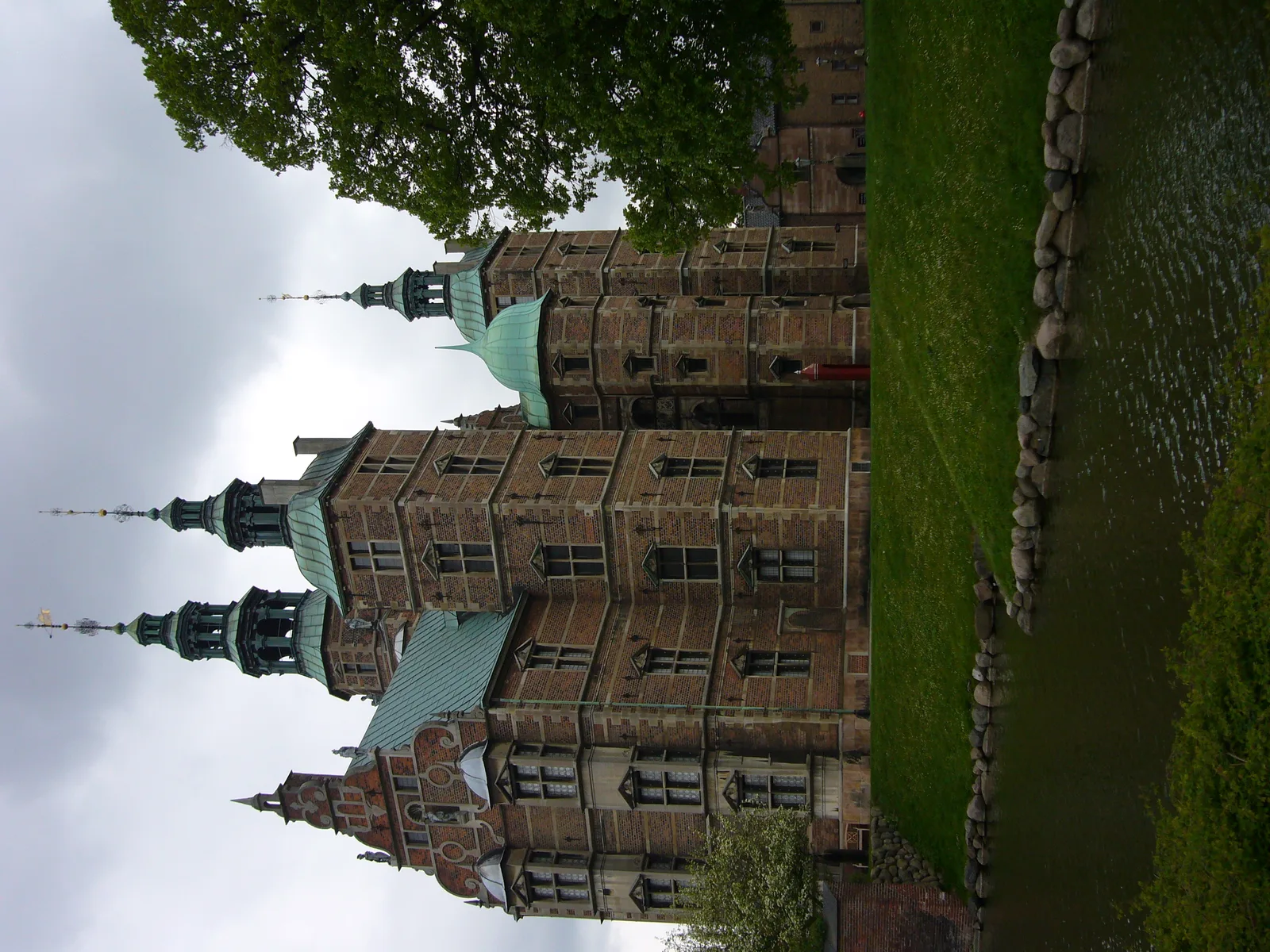
Rundetaarn is a 17th-century observatory tower in the Latin Quarter. The climb is a 7.5-turn cobbled spiral ramp rather than stairs, so it is accessible to most visitors including those with moderate mobility issues. Entry costs 40 DKK (5 EUR) for adults and the tower is open daily until 20:00 in summer. The view covers the city center and stretches to the sea on a clear day.
A quick comparison: the Church of Our Saviour in Christianshavn offers a more dramatic 360-degree view from an outdoor spiral staircase on the spire itself. That climb is steeper and not suitable for anyone with a fear of heights. If you only have energy for one elevated view today, the Round Tower wins on accessibility and central location. The Church of Our Saviour is better saved for a second day.
Rainy day note: The tower platform is exposed. In heavy rain, the view is obscured anyway — swap this for a 30-minute browse through the Designmuseum Danmark nearby (140 DKK / 19 EUR entry) and rejoin the itinerary at Rosenborg Castle.
16:30 — Rosenborg Castle and the King's Garden
Rosenborg Castle was built by King Christian IV in 1606 and holds the Danish crown jewels. Entry costs 140 DKK (19 EUR) for adults and includes the Great Hall and the treasury where the regalia are displayed. Timed entry tickets are available online and worth booking at least two days in advance during summer. Walk-in tickets sell out by mid-morning on busy days.
The King's Garden surrounding the castle is free and one of the nicest parks in the city center. If you are short on time or money, skip the castle interior and spend 30 minutes in the garden instead. The garden is particularly pleasant on summer evenings when locals picnic on the lawns between the rose hedges. The rose garden at the north end blooms through late June and is a worthwhile short detour.
Rainy day note: The castle interior is the ideal rainy-day version of this stop. The treasury is underground and fully covered. Consider skipping the garden walk and going directly inside.
18:30 — Dinner and Drinks in the City Center
Where you eat tonight depends on your energy level. If you are still moving well and want a lively atmosphere, the Meatpacking District (Kødbyen) in Vesterbro is the best choice. Walk or take the metro to Dybbølsbro. The area has warehouse-style restaurants and bars that stay busy until late. Try Kødbyens Fiskebar for excellent seafood or Mother for Neapolitan-style pizza at a more reasonable price point (150–220 DKK / 20–30 EUR per main).
If you want to stay closer to the city center after a long day on foot, the streets around Strøget and Grønnegade have quieter options. Ravelinen on the small island in Christianshavn does traditional Danish food in a setting that most tourists never find. For a quick and cheaper option, grab a smørrebrød at any of the old-school lunch restaurants along Kultorvet — many stay open until 21:00.
Should You Buy the Copenhagen Card?
The 24-hour Copenhagen Card costs 679 DKK (approximately 91 EUR) in 2026. It covers free entry to over 80 attractions and unlimited public transport across all zones including the airport metro. Here is what this specific itinerary costs individually without the card:
- Canal boat tour (Stromma Classic): 120 DKK
- Marble Church dome tour: 60 DKK
- Round Tower entry: 40 DKK
- Rosenborg Castle: 140 DKK
- 24-hour City Pass (public transport): 100 DKK
- Total paid individually: 460 DKK
At 460 DKK paid separately versus 679 DKK for the card, this itinerary alone does not break even. The card makes financial sense if you add one more paid museum — the Designmuseum Danmark (140 DKK), the Ny Carlsberg Glyptotek (125 DKK), or the National Museum (free on Sundays, 130 DKK other days). Adding any one of those pushes your individual costs past 600 DKK and the card becomes good value. If you are visiting with a child (card covers under-10s for free), the math tips in your favor even faster.
The card is not worth it if you plan to walk everywhere, skip the canal tour, and only enter one or two sites. In that case, pay as you go. Check the official Copenhagen Card pricing before you buy, as the 2026 rate may differ slightly from the figure above.
How to Get Around Copenhagen in a Day
Copenhagen is one of the most bike-friendly cities in Europe. About 62 percent of residents commute by bike year-round. For a visitor on a one-day itinerary, cycling cuts transit time and lets you cover the gap between the Round Tower and Rosenborg in three minutes instead of 12. Lime bikes are available across the city via their app and cost around 25 DKK to unlock plus 3 DKK per minute. Traditional rental shops near Nyhavn charge about 150–200 DKK for a full day.
If you cycle, follow a few rules that most competitor guides skip. Always use the designated red bike lanes — they run parallel to car lanes and pedestrian pavements as a separate track. Signals at intersections include a bike-specific light that turns green five seconds before the car signal. Hand signals are still standard: left arm out for left, right arm out for right. Walking your bike on the pavement is technically illegal and will earn you a sharp look from locals. Ride on the right side of the bike lane and overtake on the left.
The metro is the fastest alternative if you prefer not to cycle. A 24-hour City Pass costs 100 DKK (14 EUR) and covers all buses, metro, and S-tog trains within the city center. The M1 and M2 metro lines connect the main tourist areas. Kongens Nytorv station is the most central stop for this itinerary, one minute from Nyhavn.
Where to Stay for a Short Visit
Indre By (the city center island) is the best area for a one-day visit. You step out of your hotel into the same neighborhood as Nyhavn, Strøget, and the Round Tower. Hotels here are expensive — expect 1,200–2,200 DKK (160–300 EUR) per night in summer 2026. The tradeoff is zero transit overhead. Brands like 71 Nyhavn Hotel and Hotel Sanders are consistently well-reviewed for location.
Vesterbro is the best alternative for a more local atmosphere. The neighborhood sits directly behind the Central Station and gives easy access to the Meatpacking District for dinner. Most hotels in Vesterbro are 20–30 percent cheaper than Indre By and many include bike rental. The walk from Vesterbro to Nyhavn takes about 20 minutes or one metro stop. Avoid staying in Ørestad (the new southern district) for short trips — the metro connection is fine but you lose 30 minutes each morning before you start exploring.
Copenhagen with Kids: Quick Adjustments
The standard one-day itinerary works reasonably well with children over 8. The canal boat tour is a natural fit — kids generally enjoy boats and the pace is slow enough to keep everyone comfortable. The Round Tower ramp is the highlight for younger visitors: the cobbled spiral with no stairs is exciting rather than exhausting. Allow extra time at the King's Garden, where children can run on the lawns while adults rest.
Swap the Marble Church dome climb for extra time at Tivoli Gardens if you are traveling with kids under 10. Tivoli sits next to the Central Station and is open from 11:00 most days. Entry costs 165 DKK (22 EUR) for adults and 85 DKK (11 EUR) for children under 8. Rides are paid separately unless you buy the unlimited rides pass. The vintage wooden roller coaster from 1914 is genuinely thrilling and suitable for most children old enough to meet the height requirement.
Skip the Meatpacking District for dinner when traveling with kids and head instead to Reffen Street Food Market in Refshaleøen (open May–September). It is an outdoor waterfront food market with wide spaces, picnic tables, and casual vendors. The atmosphere is relaxed and there is no pressure to sit down for a formal meal.
Tips for Visiting Copenhagen in 2026
Most museums in Copenhagen close on Mondays. If your one-day visit falls on a Monday, reorganize the afternoon around the Round Tower, the King's Garden, and a longer canal walk rather than relying on museum entry. Rosenborg Castle stays open on Mondays in summer (June–August) from 10:00 to 17:00, which is the one exception worth knowing.
Hygge — the Danish concept of cozy, present-moment enjoyment — is visible in small ways throughout a Copenhagen day. Cafes light candles even at midday. Restaurant pacing is slow by design. Do not rush through Torvehallerne or treat it as a 10-minute pit stop. Sitting at the outdoor benches with a coffee and a smørrebrød for 30 minutes is as much a part of the Copenhagen experience as any landmark on this list.
Book Rosenborg Castle tickets online at least two days before you arrive. The timed-entry system means walk-in queues can add an hour during peak summer. For the Marble Church dome tour, no booking is needed — just arrive 10 minutes before the 13:00 slot. Carry a light waterproof layer throughout the day; Danish summer weather changes quickly and a rain shower lasting 20 minutes can otherwise disrupt an outdoor afternoon.
Frequently Asked Questions
Is one day enough to see Copenhagen?
One day is enough to see the city center and main royal sites. You will need to move quickly and skip some museums. Focus on Nyhavn and Rosenborg Castle for the best experience.
Should I buy the Copenhagen Card for just one day?
The card is worth it if you visit at least three paid attractions. It also covers your airport train and city metro rides. For a walking-only day, it is better to pay as you go.
Copenhagen is a wonderful city that rewards even the shortest visits. By following this plan, you will see the best royal and modern sights. I hope you enjoy the pastries and the beautiful canal views. Safe travels on your quick 24-hour adventure in the Danish capital!
Have a little more time? See also our 3-Day Copenhagen Itinerary and Copenhagen in 2 Days guides.
You might also like

Continue reading
More guides you'll find useful