12 Best Odense Museums: A Complete Visitor's Guide (2026)
Discover the best Odense museums, from the immersive H.C. Andersen House to Viking villages and Cold War bunkers. Plan your trip with local tips and ticket advice.
On this page
12 Best Odense Museums for Your Next Trip
Odense holds a distinction that surprises most visitors: it has more museums per capita than any other Danish city outside Copenhagen. The cobblestone streets that Hans Christian Andersen once walked now connect a dense cluster of world-class institutions covering everything from Iron Age settlements to Cold War bunkers. This guide was refreshed in 2026 to reflect the latest pricing and seasonal opening hours.
Most travelers arrive for the fairy tale legacy, but the city's cultural range goes far deeper. You will find contemporary photography galleries, hands-on 20th-century fashion museums, and a fully intact nuclear shelter beneath a local school. Understanding the layout of things to do in Odense will help you build a realistic itinerary across a day or two.
Nine of these twelve museums sit within a single walkable corridor in the city centre. The three outlying sites require a short bus ride or the Odense Light Rail (Letbanen) but reward the extra effort with more expansive, open-air experiences. Whether you have a single afternoon or a full weekend, the plan below works for both.
How to Navigate Odense's Museum District
The city-centre museums follow a single walking spine that takes about 15 minutes end to end. Starting from Hans Jensens Stræde near the Cathedral, you walk east through Overgade and into Brandts Passage, passing the H.C. Andersen House, the Childhood Home, TID Museum, Tidens Samling, and Art Museum Brandts in sequence. The Danish Railway Museum sits just north of the train station, a five-minute detour from the same corridor. Kramboden, Carl Nielsen Museum, and the Funen Military History Museum fill in the gaps along this same route.
The three outlying museums — The Funen Village, Odin's Odense, and the Bunker Museum — require transport. Bus 42 from the city centre reaches The Funen Village in about 15 minutes. Odin's Odense sits further south near Hollufgård and is easiest by bike or car. The Odense Bunker Museum is in the Holluf Pile district and can be combined with Odin's Odense in one afternoon trip.
Most city-centre venues open at 10:00 and close at 17:00 Tuesday through Sunday; they are typically closed on Mondays. The outlying sites keep more seasonal hours and some reduce operations in winter. Always check current hours on the official Visit Denmark site before heading out, as 2026 has brought schedule adjustments at several venues.
Hans Christian Andersen House
The H.C. Andersen House is the centrepiece of the entire Odense museum scene and the single most important stop on the island of Funen. Designed by Japanese architect Kengo Kuma and opened in 2021, the building is built around the original modest house where Andersen was born. Underground galleries, immersive sound installations, and circular timber structures re-create the mood of his fairy tales rather than cataloguing his personal effects.
The experience takes around two to three hours at a comfortable pace. Adult tickets cost 165 DKK and the museum opens daily from 10:00 to 17:00 with extended hours in peak summer. Book your entry slot online — morning sessions on weekdays sell out several days in advance during July and August. Children under 18 enter free, which makes this a natural family anchor for the day.
One detail most visitors miss: the exhibition is designed to speak "like Andersen, not about him." You will not find display cases of his old shoes or writing desk. Instead, the curators invited contemporary children's authors and artists from around the world to respond to his work. This approach makes the museum feel alive rather than archival, and it is why repeat visits still reward you differently each time.
Hans Christian Andersen's Childhood Home
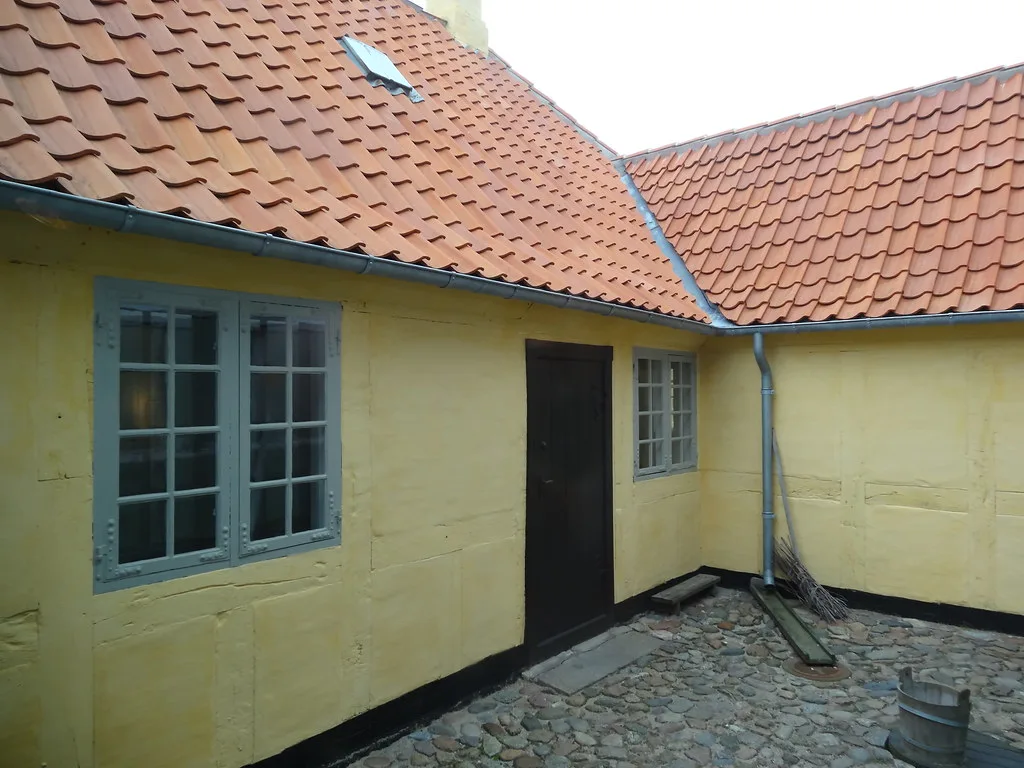
At Munkemøllestræde 3, a short walk from the Cathedral, stands the small yellow half-timbered house where Andersen lived with his family from age two to fourteen. This is one of the oldest poet museums in the world and a genuinely different experience from the main H.C. Andersen House. Where the new museum is architectural and immersive, the Childhood Home is intimate and spare — two rooms that show how tight quarters shaped the young writer's imagination.

Tickets are 60 DKK for adults and the site is typically open from 11:00 to 16:00 daily. Arrive right at opening to avoid the cramped feeling when tour groups pile in after 12:00. The Fairy Tale Garden next door is free to enter and contains sculptures of characters from his stories, including The Little Mermaid and The Wild Swans. It connects naturally into a stroll down to Munkemose Park along the river.
TID City Museum
TID (which means "time" in Danish) occupies a cluster of buildings in the old town, some dating to the 16th century. The museum traces Odense's cultural and civic history through objects, environments, and personal stories from the medieval period to the present day. The courtyards between the buildings are as much a part of the experience as the indoor galleries — bring a coffee and sit in the quiet garden between exhibits.
An adult ticket costs 85 DKK and the museum is open Tuesday through Sunday from 10:00 to 16:00. VisitDenmark's own guide singles out TID as the natural complement to the H.C. Andersen House visit, and the two are less than a five-minute walk apart. This pairing makes a natural half-day sequence: start at the Childhood Home at 11:00, move to TID by 12:30, and reach the main H.C. Andersen House by 14:00 with tickets pre-booked for that slot.
Art Museum Brandts
Housed in a converted 19th-century textile factory, Art Museum Brandts focuses on international photography and contemporary visual art. The industrial bones of the building — exposed brick, factory skylights, loading-dock staircases — provide a compelling backdrop for rotating exhibitions that regularly bring in work from European and North American artists. The permanent collection leans toward Danish modernism and Nordic photography.
Adult admission is 125 DKK and the museum sits inside the Brandts Klædefabrik complex, which also holds Tidens Samling on the floor above and several independent design shops and cafés in the surrounding courtyards. A single visit to this complex can account for two museums and lunch. The museum shop stocks some of the best design books and limited-edition prints in the city — worth a browse even if you skip the exhibitions.
Tidens Samling: Hands-On Museum
Tidens Samling occupies the third floor of the Brandts factory building and recreates living rooms, kitchens, and wardrobes from every decade of the 20th century. Unlike nearly every other museum in Denmark, you are actively encouraged to sit on the furniture, open the drawers, and try on the clothes. Vintage magazines are left out for browsing. The whole premise is that history should be touched, not protected behind glass.
Entry is 75 DKK and the combination ticket with Art Museum Brandts saves around 30 DKK. The fashion racks from the 1950s and 1960s are particularly popular for photographs. Families with teenagers tend to spend longer here than expected because the interactive format keeps engagement high. The museum runs a permanent exhibition alongside rotating special exhibitions that change roughly twice per year.
The Danish Railway Museum
Located in a large roundhouse adjacent to Odense Central Station, the Danish Railway Museum holds the national collection of historic locomotives, royal carriages, and railway equipment. The roundhouse format means dozens of engines are displayed in a spoke pattern around a central turntable, which is visually striking and gives children room to run without getting lost. A working miniature railway circles part of the complex during summer.
Tickets cost 110 DKK for adults and the museum is open daily from 10:00 to 16:00. This is the strongest family option in the city centre: the layout is stroller-friendly, the interactive play areas are age-graded, and there is a dedicated children's section with replica controls and dress-up. Check the museum's schedule before visiting — steam train operation days are announced monthly and sell out among local families. Admission is free for under-18s.
The Funen Village: Open-Air Museum
Den Fynske Landsby sits on the southern edge of the city and reconstructs a complete 19th-century Funen village using authentic buildings relocated from across the island. Thatched farmhouses, a water mill, a forge, a school, and a vicarage are arranged around a working farm where animals roam freely. The museum has increasingly focused its programming on sustainability — showing how the circular farming practices of the past can inform the present.
Adult tickets are 145 DKK and the site is best in summer when reenactors demonstrate traditional crafts including weaving, coopering, and bread-baking in wood-fired ovens. Winter hours are reduced and some activities stop entirely after October. Bus 42 from the city centre takes about 15 minutes. Bring sturdy shoes: the paths are compacted gravel and grass, and they get soft after rain. Allow at least two hours; three if you have children who want to interact with every animal.
Odin's Odense: Iron Age and Viking Age
Odin's Odense reconstructs an Iron Age and early Viking settlement at Hollufgård on the city's southern outskirts. The site covers roughly 2,000 years of history through reconstructed longhouses, forges, and a working experimental farm. Visitors can try their hand at bow-and-arrow shooting, grinding grain, and weaving on a warp-weighted loom. This is a living history site in the full sense — staff in period dress explain every activity as they perform it.
Admission is 80 DKK and the site operates mainly in summer from 10:00 to 16:00. It is one of the most overlooked stops in Odense because most itineraries are built around the H.C. Andersen narrative, but the Iron Age angle provides a genuinely different day out. It pairs naturally with the Odense Bunker Museum nearby for a full afternoon outside the city centre. A bicycle is the most practical way to reach both in one trip.
Odense Bunker Museum
Beneath a school in the Holluf Pile district lies a 450 m² Cold War bunker built in the 1950s to serve as the city's emergency command centre in the event of nuclear attack. Every piece of original equipment — radio transmitters, decontamination showers, canned-food stores, and paper maps pinned to plywood boards — is still in place. The preservation is extraordinary because the bunker was sealed and essentially forgotten until local historians began cataloguing it in the 1990s.
Entry is 75 DKK and the museum opens on weekends and school holidays only. The temperature underground stays at around 12°C year-round, so a light jacket is essential even in July. Tours are guided and run for approximately 45 minutes; the guide's anecdotes about what city officials were expected to do in the event of a nuclear strike are equal parts sobering and darkly comic. Book ahead during school holidays as the group cap is strict.
The Funen Military History Museum
Housed in a historic barracks building near the city centre, the Funen Military History Museum covers 300 years of local military history from the wars of the 1700s through the 20th century. The collection focuses specifically on Funen soldiers, the Funen regiment's campaigns, the island's resistance movement during the German occupation, and the post-war Home Guard. It is run by knowledgeable volunteer staff who can explain the provenance of individual medals and sidearms in considerable detail.
Tickets are a modest 50 DKK and the museum is typically open on Sundays and select weekdays. Ask at the door about the rotating special displays — in recent years these have covered the 1864 war against Prussia (a defining moment for Danish national identity) and the experiences of Funen women during the occupation. The uniforms from the Napoleonic era are particularly well-preserved and rarely seen in other Danish collections.
Carl Nielsen Museum
Carl Nielsen is Denmark's most celebrated composer and was born in a village just outside Odense in 1865. His museum is located within the city's main concert hall and chronicles his life from his rural Funen upbringing through his bold symphonies and the folk songs that became part of Danish national identity. The exhibits are modest in size but carefully curated, and the audio stations let you hear original recordings alongside his hand-written scores.
Entry is free of charge, which makes this an easy add-on to a city-centre museum day. Hours fluctuate with the concert hall's performance schedule, so check ahead. Nielsen is less famous internationally than H.C. Andersen but arguably just as significant to Danish culture. Visitors who spend time here often find it reframes how they hear Danish music for the rest of the trip.
Kramboden: The Old Store
Kramboden occupies a 16th-century timber-framed building in the historic quarter and operates simultaneously as a museum and a functioning shop selling traditional Danish goods. Barrels of salt liquorice, bundles of dried herbs, hand-forged copper kitchenware, and reproduction Viking-age jewellery line the original oak shelving. The building itself is the exhibit — the low ceilings, the worn floorboards, and the smell of spices and aged wood make it unlike anything else in the city.
There is no entry fee to browse the shop. The staff are volunteers from the local historical society and are happy to explain the provenance of specific items if you ask. This stop works well as a 20-minute break between the larger museums rather than as a dedicated visit, but many visitors end up spending far longer once they start talking to the people behind the counter. The salt liquorice sold by weight from wooden bins is the most characteristically Danish souvenir you can buy in Odense.
Is the Odense City Pass Worth It?
The Odense City Pass bundles admission to the H.C. Andersen sites, several partner museums, and unlimited public transport including the Odense Light Rail. A 24-hour adult pass costs around 245 DKK. Visiting the H.C. Andersen House (165 DKK), the Funen Village (145 DKK), and the Railway Museum (110 DKK) individually costs 420 DKK — the pass saves you 175 DKK on that combination alone.
The transport inclusion matters most if you are heading to the outlying museums. Bus fares add up for groups and the Light Rail to the southern sites costs around 25 DKK each way per person. For a solo traveler sticking to the city-centre walking corridor, the pass is borderline. For a family of four planning to hit two or more outlying sites, it pays for itself easily.
The pass is digital and purchased via a smartphone app. Ensure your phone is charged, as you scan the QR code at every entrance. Note that the Carl Nielsen Museum and Kramboden are free regardless of whether you have the pass. Check the Odense travel guide for any seasonal promotions that sometimes reduce the pass price during shoulder season.
| Museum | Location | Ticket Price (Adult) | Time Needed | Best For |
|---|---|---|---|---|
| H.C. Andersen House | City Centre (Brandts) | 165 DKK | 2–3 hours | Immersive experience, families |
| Childhood Home | City Centre (Cathedral area) | 60 DKK | 30–45 min | Intimate, quiet history |
| TID City Museum | City Centre (Old Town) | 85 DKK | 1–2 hours | Odense cultural history |
| Art Museum Brandts | City Centre (Brandts) | 125 DKK | 1–1.5 hours | Photography, contemporary art |
| Tidens Samling | City Centre (Brandts) | 75 DKK | 1–2 hours | Hands-on, 20th-century fashion |
| Danish Railway Museum | City Centre (Station) | 110 DKK | 2–3 hours | Families, train enthusiasts |
| The Funen Village | South (Bus 42, 15 min) | 145 DKK | 2–3 hours | Open-air, rural history |
| Odin's Odense | South (Hollufgård, bike/car) | 80 DKK | 2–3 hours | Living history, Iron Age |
| Odense Bunker Museum | South (Holluf Pile) | 75 DKK | 45 min (guided) | Cold War history, unique |
| Funen Military History Museum | City Centre (Barracks) | 50 DKK | 1–1.5 hours | Military history specialists |
| Carl Nielsen Museum | City Centre (Concert Hall) | Free | 45 min | Music, composers, free |
| Kramboden | City Centre (Historic Quarter) | Free | 20–45 min | Shopping, browsing, free |
Planning Day Trips to the Outlying Museums
The three museums outside the city centre — The Funen Village, Odin's Odense, and the Bunker Museum — each warrant a half-day. None of them can be comfortably rushed. The Funen Village alone needs two to three hours to walk properly; adding Odin's Odense and the Bunker Museum makes a full southern day trip that works well by bicycle in good weather.
For visitors with limited time, prioritize The Funen Village if you have children or an interest in rural history. Prioritize Odin's Odense if you came from a Viking-history destination like Jelling or Ribe and want a comparative hands-on experience. The Bunker Museum is the specialist choice — extraordinary for those interested in Cold War history, less essential for general tourists. All three are included in the Odense attractions overview if you want the broader context.
One practical note: the Odense Light Rail (Letbanen) connects the city centre to several southern districts and is a faster option than the bus for reaching The Funen Village area. A single-journey ticket is 25 DKK. Weekly visitors can load a ten-trip card, which cuts the per-journey cost by about 20 percent.
Frequently Asked Questions
Which Odense museums are best for families?
The Danish Railway Museum and The Funen Village are the top choices for families. Both offer interactive play areas, outdoor space, and hands-on activities that keep children engaged for several hours. Most sites offer free entry for those under 18.
How much does the Odense City Pass cost?
The 24-hour Odense City Pass typically costs around 245 DKK for adults. It covers admission to the main H.C. Andersen sites and includes free public transport. This pass is a great value if you visit three or more major museums.
Can you visit all H.C. Andersen sites in one day?
Yes, you can visit the House, the Childhood Home, and the TID museum in one day. These sites are located within a 10-minute walk of each other in the historic quarter. Start early to avoid the afternoon crowds.
Odense's museum density is its defining travel asset — nowhere else in Denmark outside Copenhagen packs this variety into such a compact geography. From the immersive H.C. Andersen House to the sealed Cold War bunker beneath a school playground, the city rewards both the curious day-tripper and the dedicated cultural traveler. The 15-minute walking corridor through the historic centre means you can realistically see five museums in a single afternoon if you plan the sequence well.
Book the H.C. Andersen House slot in advance, buy the City Pass if you plan to leave the centre, and bring a jacket for the bunker. The rest looks after itself. Safe travels through Funen.
You might also like


Continue reading
More guides you'll find useful