Odense Old Town Travel Guide
Plan odense old town with top picks, neighborhood context, timing tips, and practical booking advice for a smoother trip.
On this page
Odense Old Town
Odense Old Town is the historic heart of Denmark's third-largest city, built around crooked cobblestone lanes, half-timbered houses, and the birthplace of Hans Christian Andersen.
The district is compact and almost entirely pedestrianized, meaning a full morning on foot covers the main sites without any transport at all.
In 2026 the city blends literary history with a genuinely contemporary cultural scene — new museum architecture, a redesigned harbor, and a street food hall all sit within the same walkable core.
At a glance
- Best time: April to October for gardens and outdoor activities
- Duration: 1–2 days for the old town and main attractions
- Getting there: Direct trains from Copenhagen Central (75 minutes)
- Walking distance: Old town is fully pedestrianized; most sites within 10–15 minutes on foot
- Budget tip: Free attractions include Fairy Tale Garden, Munke Mose park, and harbor bath
Walking Through Historic Odense
The old town clusters tightly around a few key streets that reward slow wandering. Paaskestræde and Vintapperstræde are the most photogenic — narrow, car-free lanes with crooked facades that lean slightly toward each other at the rooflines. Hans Jensens Stræde, just outside the H.C. Andersen House entrance, gives a strong sense of how the district looked in the 19th century.
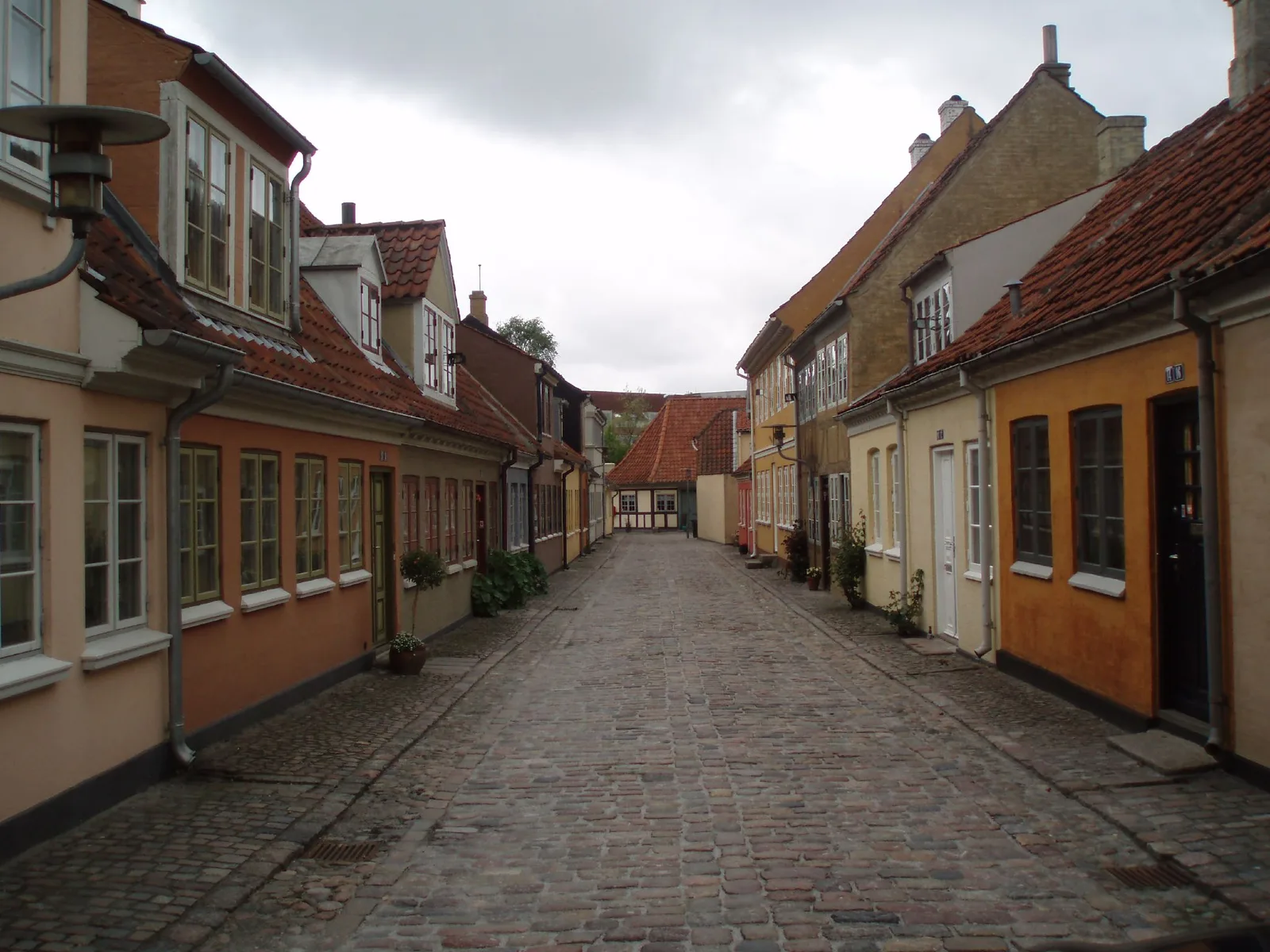
Sortebrødre Torv is a quiet square that hosts a small market most weekends and is a good place to sit with a coffee between attractions. Overgade, running parallel to the main pedestrian shopping zone, has the best independent cafés and a more local feel than the main Vestergade strip. The two streets are only three minutes apart but feel noticeably different in atmosphere.
St. Canute's Cathedral anchors the northeastern corner of the old town. The Gothic red-brick structure houses the remains of King Canute IV, Denmark's patron saint, and the carved altarpiece is one of the finest examples of late-medieval woodwork in the country. Entry is free and the interior is worth ten minutes even for visitors without a strong interest in religious architecture.
Odense Castle (Odense Slot), a French-style manor dating to the 13th century, is a short detour west of the cathedral. It is used by the regional council and closed to the public inside, but the exterior and the adjacent Kongens Have park are open and pleasant in warmer months.
H.C. Andersen and the Fairytale Heart of Odense
The H.C. Andersen House is the centerpiece of any visit to the old town and one of the most architecturally striking museums in Denmark. The building submerges partly underground, and the experience inside uses soundscapes, immersive light design, and narrated sequences to tell Andersen's life story. Plan at least 90 minutes; rushing through misses the point. Adult entry in 2026 is 165 DKK, and the ticket includes the Childhood Home.
Families traveling with children should note Ville Vau, the creative play universe built into the museum complex. It is designed specifically for younger visitors and lets them step into Andersen's stories through role play and hands-on activities. It runs as part of the main museum visit and requires no separate booking.
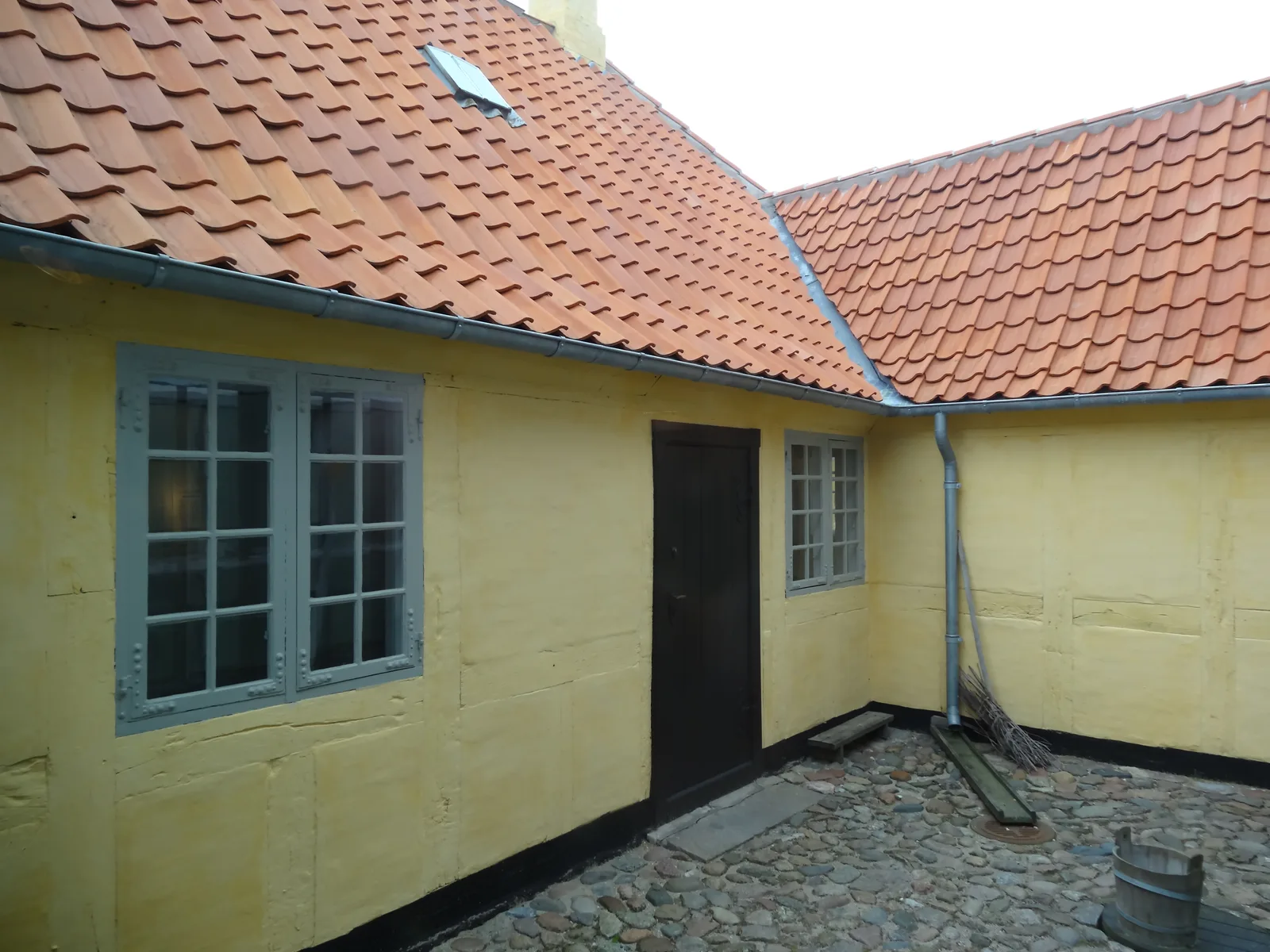
The H.C. Andersen Childhood Home is a ten-minute walk from the main museum. The small yellow house on Munkemøllestræde has just three rooms and a small garden, preserved to show how a working-class family lived in Odense in the early 1800s. The contrast with the grand new museum is striking and gives the visit more depth. Because the Childhood Home ticket is bundled, it is worth stopping by even briefly.
The city has also placed Andersen character statues at several points along the old town streets — Thumbelina, the Steadfast Tin Soldier, and others. Following them forms a loose self-guided walking trail that connects the museum zone with Munke Mose park. You can find this trail and more in our full guide to things to do in Odense.
The Fairy Tale Garden and Munke Mose
Eventyrhaven — the Fairy Tale Garden — runs directly alongside Odense River just behind St. Canute's Cathedral. The garden is landscaped around Andersen's story characters, with sculptures placed along curving paths between trees and flower beds. It is free to enter and open year-round. Spring and early summer bring the most color, but the garden works well as a quiet midday break in any season.
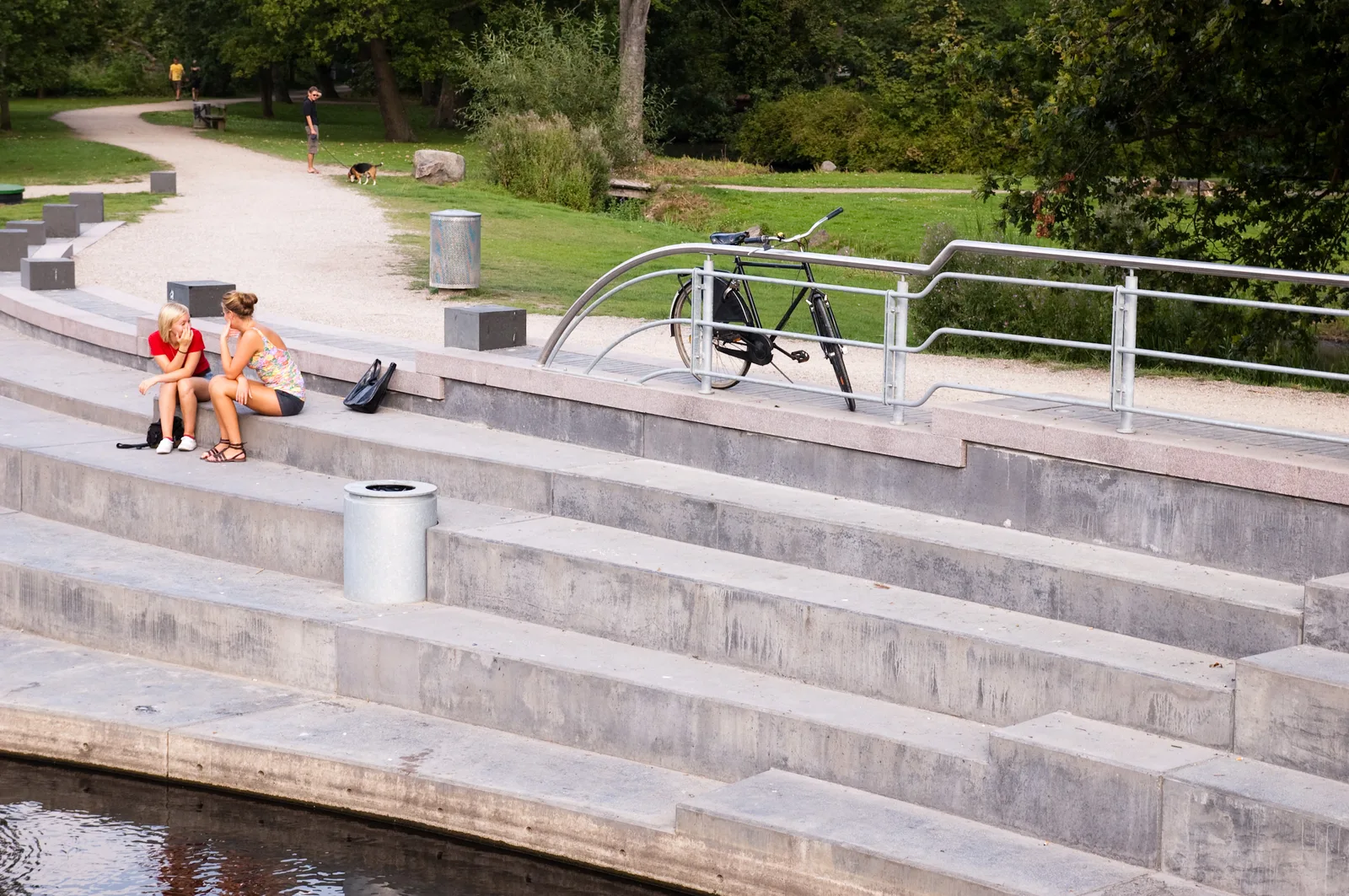
From Eventyrhaven, follow the river south and you reach Munke Mose within about five minutes on foot. This is the city's main park and has a more spacious, open feel than the garden. Pedal boats are available to rent on the river from late spring through summer, and Odense Aafart runs guided riverboat tours that continue south toward the zoo. The boat is a relaxed way to cover ground if you have already done the walking route.
The riverbank path between the Fairy Tale Garden and Munke Mose is also one of the best free cycling routes in the center. Odense has an extensive bike-sharing network, and picking up a bike here to loop back through the old town takes under 30 minutes.
| Option | Cost (2026) | Walking Time from City Center | Best For |
|---|---|---|---|
| Fairy Tale Garden (Eventyrhaven) | Free | 10 min | Families, photographers, relaxation |
| Munke Mose Park | Free | 15 min | Picnics, cycling, quiet walks |
| Pedal Boats (spring–summer) | ~120 DKK/hour | 15 min | Active visitors, water views |
| Odense Aafart River Tours | ~100–150 DKK | 15 min | Guided experience, zoo access |
Museums, Art, and Culture in Odense
The city's Odense museums cover an unusually broad range of topics for a city this size. Art Museum Brandts is the strongest contemporary offering — housed in a former textile factory near the city center, it brings together contemporary art, photography, and media installations under one roof. Exhibitions change regularly, and the complex includes a cinema and design bookshop. Allow 90 minutes minimum.
The Danish Railway Museum sits directly beside the main train station, making it an easy first or last stop if you arrive by rail from Copenhagen. The collection spans over 50 historic locomotives and carriages and traces how the Danish royal family traveled and how train ferry routes connected the islands. Admission is 140 DKK; open daily 10:00–16:00, with earlier opening at 09:00 on Saturdays, Sundays, and Wednesdays.
Møntergården — the city history museum on Overgade — is frequently overlooked by first-time visitors but holds the most detailed archaeological collection on Odense and Funen. The exhibits cover everything from Iron Age settlements to medieval merchant life, displayed across a cluster of well-preserved 17th-century merchant houses. Admission is modest and the courtyard alone is worth a look.
Odense Harbour and Port Area
Port of Odense surprises most first-time visitors who do not expect a harbor this far inland. Odense built a canal in the early 19th century to connect the city to Odense Fjord and onward to the Kattegat Sea, originally for coal imports and shipbuilding. The old industrial port has been transformed into a modern waterfront district with new apartment buildings, public art, and open promenades.
The centerpiece is Odense Havnebad, a free outdoor harbor pool with a sauna, open year-round including winter. The pool structure is designed to resemble a ship hull from the outside, marked with a red and white striped funnel at the entrance. It is popular with locals year-round and particularly busy on summer evenings after 18:00. Arriving before midday means more space and shorter waits for the sauna.
Nordatlantisk Hus, the North Atlantic cultural center, sits on the harbor edge and has a restaurant with good water views. The walk from the main train station to the harbor takes about 25–30 minutes through the city center, or under 15 minutes from Odeon Parking if you arrive by car.
Beyond the Centre: Funen Village and Odense Zoo
The Funen Village (Den Fynske Landsby) is an open-air museum about 15 minutes south of the center by bus. Working craftspeople and farmsteads recreate everyday rural life in 19th-century Funen, with live demonstrations of traditional trades across the summer season. It is particularly good for families and visitors who prefer outdoor, experiential history over indoor exhibits. The site becomes a major attraction during the Christmas season when it runs a traditional market.
Odense Zoo is consistently ranked among the top zoological gardens in Europe, known for its immersive habitats and animal welfare standards. The penguin enclosure — designed to replicate an Antarctic environment — draws most of the attention, but the zoo covers a wide range of habitats across its grounds. You can reach it by bus, by the Odense Aafart riverboat (about 20 minutes from the city center), or by walking the river path in about 35–40 minutes.
| Day Trip Option | Distance from Center | Duration (typical) | Cost | Best For |
|---|---|---|---|---|
| Odense Zoo | 3 km (bus or walk) | 3–4 hours | Adult ticket ~180 DKK | Families, penguin enthusiasts |
| Funen Village (Den Fynske Landsby) | 15 km (bus) | 2–3 hours | ~120 DKK | Living history, craftspeople |
| Egeskov Castle | 30 km (car/bus) | 4–5 hours | Adult ~265 DKK | Castles, gardens, families |
| Viking Museum Ladby | 20 km (car) | 1–2 hours | Modest admission | History enthusiasts, quiet experience |
Both sites sit in the same southward direction from the city center, making it practical to combine them into one half-day excursion. Families with children tend to prioritize the zoo; those with an interest in local history usually prefer the Funen Village. Doing both in a single day is possible but rushed.
Egeskov Castle
Visiting Egeskov Castle is the most popular day trip from Odense and a genuine highlight for the Funen region. The Renaissance water castle, surrounded by a moat and framed by award-winning gardens, is located about 30 minutes south of Odense by car or public bus. It is widely regarded as one of the best-preserved castles of its type in Europe.
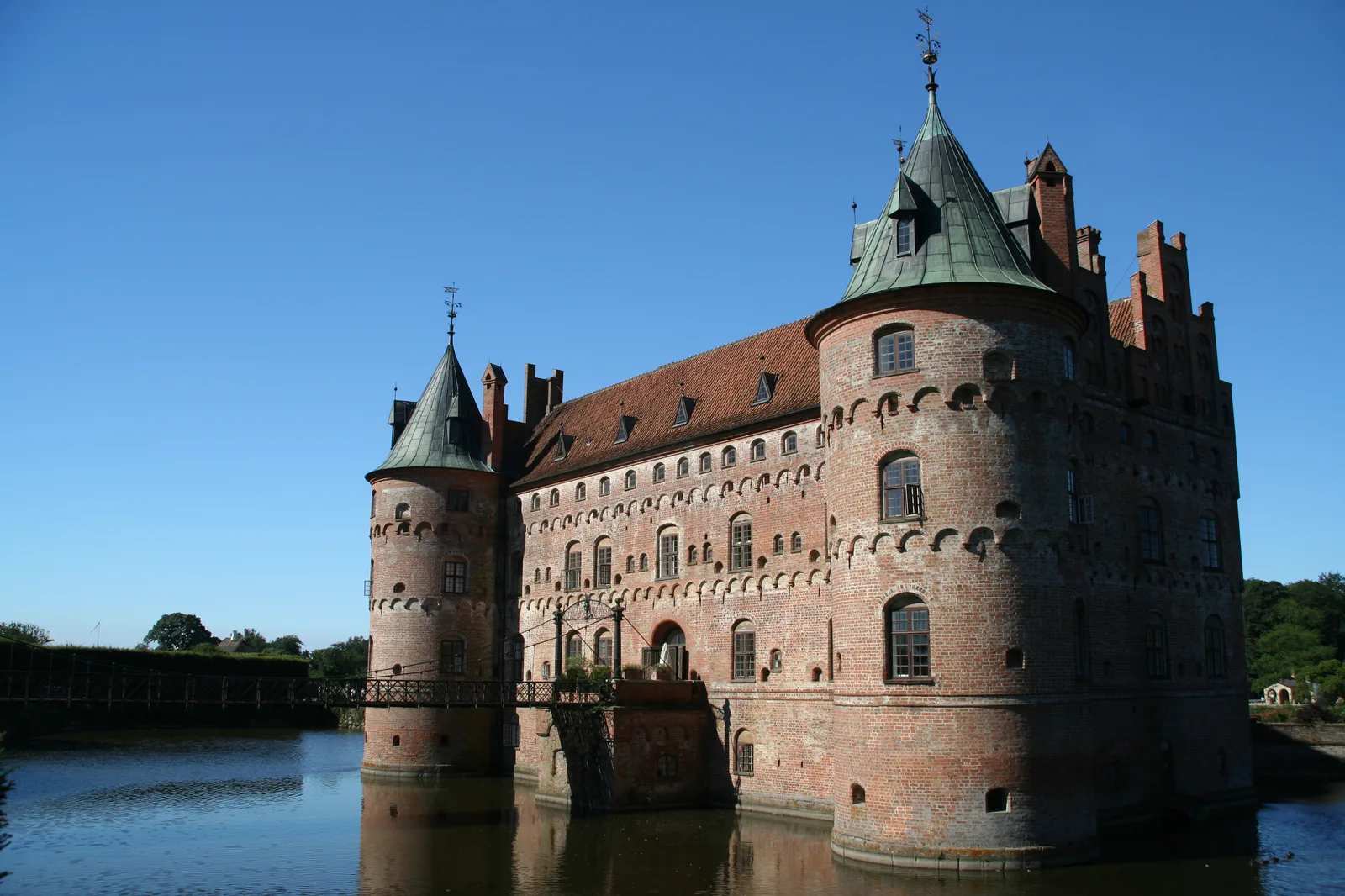
The ticket price in 2026 is 265 DKK per adult, which is steep by Danish standards but covers far more than the castle itself. The grounds include a 40,000 m² Play Forest with treetop walks, cable cars, and a large maze, a Classics Museum with vintage cars, aircraft, and motorcycles, plus guided interior tours of the castle rooms. Most visitors end up spending four to five hours without planning to.
The gardens are the main draw in spring and early summer. Parts of the grounds are sometimes restricted for renovation in late summer, so check the official site before going. If you are visiting in a group with mixed interests — adults wanting castle history and children wanting the playground — Egeskov works well because there is genuinely something for everyone and the areas are spread across a large site.
An alternative day trip worth considering is Viking Museum Ladby, under 20 kilometers northeast of Odense. This is the only preserved burial mound in Denmark where a Viking chieftain was interred inside his warship. It is a quieter, more niche experience than Egeskov but compelling for anyone with an interest in Viking history. Opening hours are 10:00–17:00; check ahead as closures do occur.
Storms Pakhus Street Food Market
Storms Pakhus is a converted industrial warehouse near the main train station and the most convenient option for a casual evening meal after a day of sightseeing. The hall holds around 30 food stalls covering Thai, Mexican, Greek, Indian, and traditional Danish options, with communal seating and a relaxed atmosphere that works for solo travelers, families, and groups equally.
Opening hours are 11:00–23:00 daily. Friday and Saturday evenings are the busiest — locals turn out in numbers for drinks and live music, and the noise level climbs significantly after 19:00. If you want a quieter dinner with space to talk, arrive before 18:00 or visit on a weekday. Prices are noticeably lower than sit-down restaurants in the old town center. The location is directly adjacent to the train station, so it fits naturally as a last stop before catching a train back to Copenhagen.
Getting To and Around Odense
Odense is one of the easiest Danish cities to reach by rail. Direct trains from Copenhagen Central run roughly every 20–30 minutes and take approximately 1 hour 15 minutes. The main station sits directly beside the old town, which means you can be walking the cobblestones of the historic center within five minutes of stepping off the train. The Danish Railway Museum is also immediately beside the station if you want to begin your day there. For detailed Odense travel planning and event calendars, check the official tourism board.
Within the city center, walking covers everything in the old town without difficulty. The free pink City Buses — recognizable by their bright color and fairytale-themed design — run through central Odense and are a good option for crossing from one end of the center to the other without effort. For the zoo and Funen Village, use the regular city bus network or the Odense Aafart riverboat.
Driving to Odense from Copenhagen takes around two hours and involves crossing the Great Belt Bridge, which charges a toll. Once in the city, several Q-Park facilities operate near the center — Odeon Center Q-Park is the most convenient for the museum zone. Street parking has time limits and payment requirements, so using a structured car park avoids fines. Having a car gives real flexibility for reaching Egeskov Castle and Viking Museum Ladby, both of which are awkward without one.
Family-Friendly and Budget-Friendly Options
Several of the best experiences in Odense cost nothing or very little. The Fairy Tale Garden (Eventyrhaven), Munke Mose park, and the old town walking route are all free. The Odense Harbour Bath entry is also free year-round. For families, the Andersen character statue trail through the old town keeps younger children engaged without spending anything.
The free pink City Buses reduce transport costs significantly for visitors without a car. They cover the main tourist zones and run frequently enough to be genuinely useful rather than a novelty. You can find detailed stop maps at the main tourist information point in the city center.
The Odense Zoo requires more budget, but its reputation across Europe is strong enough that families with children tend to find the admission worthwhile. If your trip spans two days, spreading the paid attractions across both days — H.C. Andersen House on day one, Egeskov Castle or the zoo on day two — keeps daily spending manageable. You can find more Odense attractions listed by cost and access type to help plan your itinerary.
Frequently Asked Questions
Which odense old town options fit first-time visitors?
First-time visitors should prioritize the Walking Street Quarter and the Hans Christian Andersen House. These locations offer the best introduction to the city's history and charm. You can find more tips in our Odense guide to help plan your first trip.
How much time should you plan for odense old town?
You should plan for at least one full day to see the main historic sites comfortably. If you want to include a trip to Egeskov Castle, two days are much better. This allows you to explore at a relaxed pace without rushing through the museums.
What should travelers avoid when planning odense old town?
Avoid visiting on Mondays when many museums and local attractions are closed to the public. You should also try to book your accommodation early during the peak summer months. Planning ahead ensures you get the best prices and availability for your stay in the city.
Odense Old Town is a destination that captures the imagination of every traveler who visits.
The city offers a unique mix of historic charm and modern Danish culture that is hard to find.
You can find even more travel inspiration on the Denmark Wander blog for your next trip. For broader Denmark travel guides, the national tourism authority has comprehensive resources.
Make sure to bring your walking shoes and a camera to capture the magic of this fairytale city.
For the bigger picture, see our complete Things To Do In Odense guide. See also our 12 Best Odense Attractions and Odense Castle guides.
You might also like


Continue reading
More guides you'll find useful