Odense Castle Travel Guide
Plan odense castle with top picks, neighborhood context, timing tips, and practical booking advice for a smoother trip.
On this page
Odense Castle
When visitors search for "Odense castle," they are usually looking for one of two very different places. The first is Odense Slot, the white neoclassical building in the city center that now serves as a regional government office — free to walk past, exterior only. The second is Egeskov Castle, a Renaissance water castle 30 minutes south of Odense that charges 265 DKK admission and rewards you with a full day of museums, gardens, and historical interiors. Knowing which one you mean before you set off saves a lot of confusion.
At a glance
- Time needed: 1 hour (city center) or 4-5 hours (full Egeskov experience)
- Cost: Odense Slot free; Egeskov Castle 265 DKK (all museums included)
- Best time to visit: Mid-April through September for gardens in bloom; weekdays to avoid crowds
- Getting there: Train from Copenhagen (90 min); Odense Slot is walkable from station; car or taxi needed for Egeskov (30 min drive south on Road 9)
- Highlights: Odense Slot exterior and Kongens Have park; Egeskov Castle interior, Titania's Palace, Classics Museum, gardens, tree-top walkway
This guide covers both, starting with the city center sights around Odense Slot and then moving to Egeskov Castle as the main event. Most travelers with a full day in the Funen region treat the city castle as a quick photo stop and Egeskov as the anchor attraction. Explore the full range of Odense attractions to build your itinerary around both sites.
Two Castles, One Decision: Odense Slot vs. Egeskov
Odense Slot sits in the middle of the city, a short walk from the train station and the Hans Christian Andersen Museum. The white facade is photogenic and the surrounding Kongens Have park is open daily at no charge. The interior is closed to the public because it functions as an administrative building, so budget no more than 20–30 minutes here unless you plan to linger in the park.
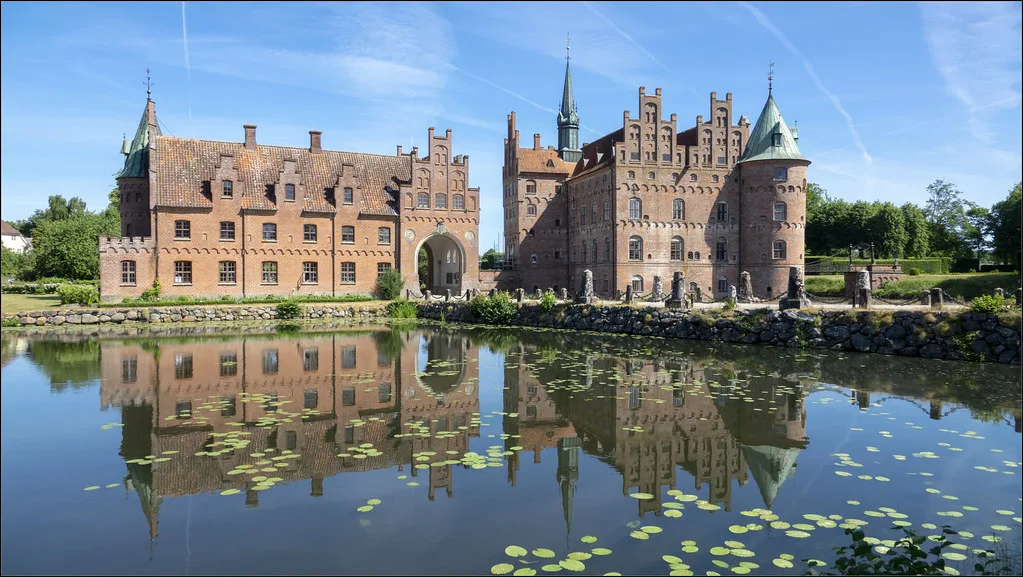
Egeskov Castle, located near Kværndrup, is a 30-minute drive south on Road 9. It is one of Europe's best-preserved Renaissance moat castles, built in 1554 by Frands Brockenhuus. The standard adult ticket in 2026 costs 265 DKK, which feels steep until you realize it covers not just the castle interior but a cluster of museums, themed gardens, a tree-top walkway, and a maze. Budget a minimum of four hours; most visitors spend closer to five.
The simplest rule: if you have two hours or less, stay in Odense city center. If you have a full day, drive to Egeskov and treat the city castle as a brief stop on the way back. Parking at Egeskov is free and the lot is large enough that even summer weekends rarely fill it.
Must-See Odense Attractions
The city offers a compact cluster of historic sights that can be covered on foot in half a day. Odense Slot and Kongens Have anchor the route, but the Hans Christian Andersen Museum is the primary draw for international visitors. The museum was fully renovated in recent years and provides an immersive retelling of Andersen's life through themed rooms and sensory exhibits. It sits just minutes from the castle grounds.
The Odense old town district connects the castle to the museum via cobblestone streets lined with half-timbered houses. Walking this stretch in the morning, before tour groups arrive, gives you the best experience. Many visitors also stop at the Funen Village open-air museum on the eastern edge of the city, where relocated historic buildings show rural Danish life from the 18th and 19th centuries.
For a structured day in the city, begin at Odense Slot for photographs around 09:00, walk south to the Andersen museum by 10:00, break for lunch in the old town by 12:30, and leave for Egeskov no later than 13:30 to give yourself enough time at the castle before it closes at 17:00.
Museums, Art, and Culture in Odense
The cultural scene in Odense is directly tied to two figures: Hans Christian Andersen and the aristocratic heritage of the Funen manor houses. The Odense museums cluster near the city center and cover everything from fairy-tale literature to Viking-age archaeology. The H.C. Andersen Hus is the flagship, but the Brandts complex — a former textile factory turned art and media center — is equally worth an afternoon visit.
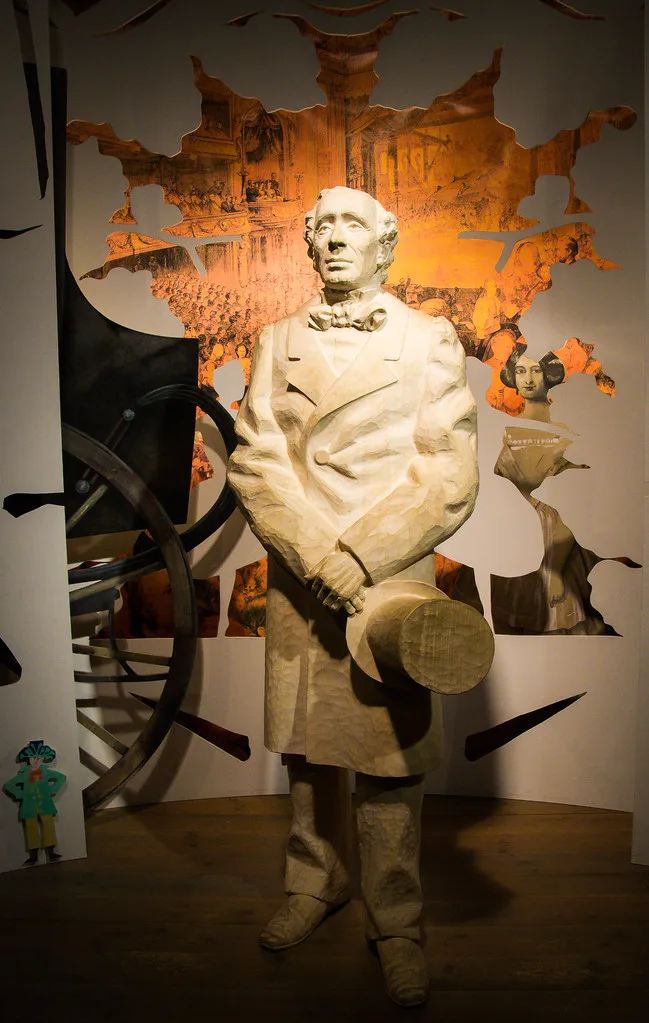
For academic context on Andersen's life and work, the Hans Christian Andersen Centre at the University of Southern Denmark publishes scholarly research and maintains a detailed archive of his correspondence. This correspondence is also how historians know which Funen castles Andersen visited: he documented nearly every trip in letters to friends. Egeskov was among them — Andersen visited twice, both times connected to stays at nearby Glorup Manor.
The museums at Egeskov Castle expand this cultural picture considerably. Inside the castle walls, Titania's Palace — a 3,000-piece miniature palace built by British officer Sir Nevile Wilkinson over 15 years — now holds a permanent place on the second floor. It was acquired by the LEGO Foundation in the 1970s and moved to Egeskov in 2007. Beside it, a small display of H.C. Andersen's intricate paper cut-outs makes the connection between Funen's castles and Denmark's literary heritage tangible.
Parks, Gardens, and Outdoor Spots in Odense
Kongens Have, the park surrounding Odense Slot, is the city's best free outdoor space. Formal flower beds, wide gravel paths, and old chestnut trees fill the grounds. The layout dates to the 18th century and still follows the symmetry preferred by Danish royalty. It connects directly to the central train station, making it easy to incorporate at the start or end of any city walk.
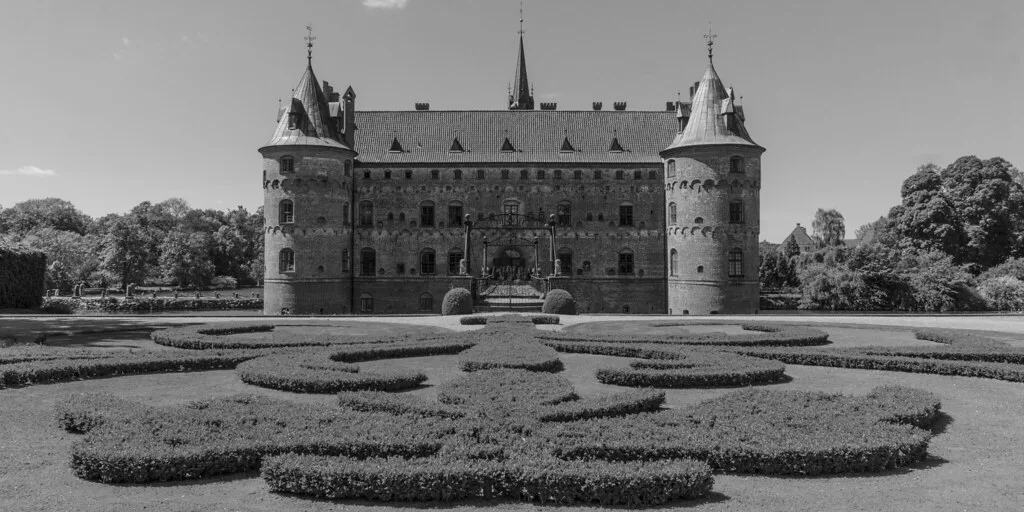
Egeskov's 17 themed gardens are the most extensive outdoor attraction in the Funen region. The Garden of Life, framed by ancient beech hedges, is one of the first areas you reach after entering. The Renaissance Garden links to the main castle, and the eastern bridge that connects them was under repair in late 2025 — worth checking current access before your visit. Late spring and early summer deliver peak bloom; September visits still offer greenery but fewer flowers.
Beyond the gardens, Egeskov includes a tree-top walkway, a hedge maze, and a children's adventure trail. These elements make it one of the top things to do in Odense for families. Outdoor concerts occasionally run in the castle grounds during July and August — check the Egeskov website calendar in advance.
Family-Friendly and Budget-Friendly Options in Odense
The Egeskov ticket at 265 DKK is significant but covers an unusually broad range of attractions for one price. Children's tickets are cheaper and the maze, playground, and treetop walkway are strong draws for younger visitors. If budget is the primary constraint, the city center offers a full half-day for free: Kongens Have, the Andersen outdoor statues, and the old town streetscape cost nothing to walk through.
The Hans Christian Andersen Odense area has a scavenger-hunt quality that works well with children — Andersen figures and fairy-tale references are embedded throughout the city, and finding them feels like a game. Pack a picnic from a local supermarket to save on lunch costs; the castle park at Egeskov has ample picnic space near the entrance gardens.
Off-season visits to Egeskov (November through mid-April) are cheaper but the castle interior and gardens are closed. The museums and parts of the grounds remain open during shoulder season. For a full experience, mid-April through September gives you everything. Visiting on a weekday avoids the largest crowds, particularly in July when summer school holidays bring Danish families out in force.
How to Plan a Smooth Odense Attractions Day
The train from Copenhagen takes roughly 90 minutes and deposits you near the city center. From Odense train station to Egeskov Castle, driving takes 30 minutes via Road 9. There is no direct public bus to Egeskov, so a car or taxi is required for that leg. Car rental can be arranged at Odense station; comparing rental car prices in advance saves money, particularly in summer peak season.
Plan to reach Odense city center by 09:00, spend the morning on Odense Slot, the old town, and the Andersen museum, then drive to Egeskov for 13:00. The castle grounds open at 10:00 and the castle interior opens at 11:00; both close at 17:00. Arriving after 14:30 leaves too little time for the museums. Consult a Lonely Planet Denmark guide for regional transit options if you are not renting a car.
Book Egeskov tickets online where possible — the website lists exactly what is open on any given date, which is useful for shoulder-season visits. English is widely spoken across both sites. Credit cards are accepted everywhere. Wear comfortable shoes: the Egeskov grounds span considerable distance and the cobblestone sections of Odense city are uneven underfoot.
Touring Egeskov Castle's Interior
The ground floor of the castle is partially private — the current owners still live here — so only select rooms are open to the public. The Hunting Room on the ground floor displays weapons and trophies gathered by Count Gregers during travels through Africa and Asia. From there, a staircase leads to the Banquet Hall on the first floor, a large ceremonial room now used for events. A free digital guide is available on your phone as you explore each room.
The highlight of the interior is on the second floor: Titania's Palace occupies a full room adjacent to the Banquet Hall. The miniature palace took Sir Nevile Wilkinson 15 years to complete and contains 3,000 individually crafted parts and artifacts. Information panels in front of each section explain the story and the craftsmanship. Most visitors spend 15–20 minutes here alone.
The uppermost floor holds the castle's attic, which is the focus of the Egeskov's Attic exhibit. Plan at least three hours for the full interior tour if you move at a comfortable pace through all floors.
Egeskov's Attic
The castle attic is one of the most overlooked sections of the tour, yet it rewards patience. A glass-enclosed collection of toys from the 1900s lines the walls, including some of the earliest LEGO sets — an unexpected detail given that the LEGO Foundation also owns Titania's Palace downstairs. The mezzanine level leading up to the attic contains displays on the castle's history of dueling, adding a darker note to the otherwise decorative upper floors.
The timber frame supporting the attic roof dates to the 1554 construction and gives a clear sense of the building techniques used in 16th-century Renaissance Denmark. The massive oak beams are original. Access to the attic can be restricted on certain days for preservation reasons, so check the daily schedule posted at the entrance before heading up.
One piece of local legend makes this section memorable: a carved wooden man is kept here, and tradition holds that the castle will sink into its moat if the figure is ever removed from its place. He is visible through a glass partition. It is the kind of detail that stays with visitors long after they have forgotten the ticket price.
Classic Cars and Airplanes
The Egeskov Classics Museum is housed in a converted thatched barn and contains around 100 vintage vehicles during the main season, though the exact number varies because many cars are on loan from private collectors. The prize exhibit is a restored 1933 Cadillac that once belonged to King Christian X. The collection spans from early steam-powered vehicles through mid-century European sports cars. Suspended above the cars, historic aircraft — including a Swedish Saab F-35 Draken model — hang from the ceiling alongside a helicopter, creating a dramatic overhead spectacle.
Motorcycles occupy their own section, with bikes displayed on ceiling rails as well as at ground level. The sheer quantity of machinery across the barn can be overwhelming, so pace yourself. Photography is actively encouraged and the lighting is designed to catch the lines of each vehicle. Allow at least one hour for the combined vehicles section.
A second, dustier attic space above the main barn holds additional classic cars — less curated than the main hall but atmospheric in its own right. Visitors who wander in here often feel as if they have stumbled into a private collector's storage rather than a tourist attraction, which is part of the appeal.
Falck Museum
The Falck Museum is dedicated to Denmark's national emergency response service, which operates ambulances, fire response, and rescue boats across the country. The hall is compact but densely packed with vehicles from different decades, from early hand-pumped fire carts to modern ambulances. The bright red rescue trucks are the most immediately striking, but the historical progression of the fleet — showing how emergency response capability grew across the 20th century — is the real educational draw.
Many of the vehicles are kept in working condition and are brought out for special events and parades. Display cases alongside the vehicles hold uniforms, equipment, and photographs of rescue workers in action. This section sits in a separate building on the castle grounds, a short walk from the main barn.
The museum is educational for all age groups and takes about 20–30 minutes at a comfortable pace. Children respond strongly to the size of the vehicles and the hands-on information panels. It is included in the standard Egeskov admission and requires no additional booking.
Camping Outdoor Museum
The Camping Outdoor Museum traces Danish holiday culture from the 1930s to the present day. Vintage tents, early caravans, and period camping gear are arranged chronologically, showing how the concept of 'friluftsliv' — the Danish outdoor life philosophy — evolved through the 20th century. The collection includes items that are genuinely rare, with some tent designs and caravan models that no longer survive anywhere else in Europe.
Interactive sections let you step inside some of the vintage caravans and see the interior layouts of how Danish families camped in different decades. The museum is located near the forest section of the grounds, which creates an appropriate atmosphere. It is included in the standard castle ticket and takes about 30–45 minutes to explore properly.
By the time most visitors reach this section, they have already spent several hours on the grounds. That tiredness is worth pushing through. The Camping Museum consistently surprises visitors who expected it to be thin, and for anyone interested in social history or Scandinavian design, it is one of the more substantive exhibits in the complex.
Man and Mechanics
The Man and Mechanics exhibit occupies a large half-timbered house on the castle grounds and covers the industrial machinery that transformed Danish farming and manufacturing in the 19th century. Horse-drawn carriages, steam engines, early motorcycles, and cannons share the open barn-like space. The contrast between the elegant castle architecture outside and the heavy iron machinery inside is deliberately striking.
Beyond the machines themselves, the exhibit addresses the human dimension of industrialization — the tools workers used, the physical conditions of early factory labor, and the speed of technological change during Denmark's agricultural revolution. Display panels provide straightforward context without overloading the visitor. Plan 30–40 minutes here before moving on to the vehicle museums.
This section rounds out a coherent narrative across the Egeskov grounds: from the aristocratic castle interior and period fashion exhibits, through the industrial machinery of Man and Mechanics, to the 20th-century vehicles of the Classic Cars hall. Together they tell the story of how Funen moved from a feudal estate economy to a modern one. More about the broader region appears on the Egeskov grounds themselves and in regional guides — you can also find additional material shared by travelers via Tumblr.
Frequently Asked Questions
Which odense castle options fit first-time visitors?
First-time visitors should prioritize the city-center Odense Slot for its architecture and the nearby H.C. Andersen museum. If you have a full day, Egeskov Castle offers a more immersive experience with its gardens and museums. Both provide a great introduction to Danish history. Check Denmark Wander for more tips.
How much time should you plan for odense castle?
Plan for about one hour to explore the grounds of the city castle and its gardens. If you are visiting Egeskov Castle, you will need at least four to five hours. This allows enough time to see the interior, the car museum, and the gardens. Arrive early to maximize your day.
What should travelers avoid when planning odense castle?
Avoid visiting on Mondays when some interior museum sections may be closed to the public. Do not confuse the administrative city castle with the tourist-heavy Egeskov Castle located further south. Skipping the gardens would be a mistake, as they are a highlight of the visit. Always check official hours before traveling.
Is odense castle worth including on a short itinerary?
Yes, the city castle is worth a quick stop because of its central location near the train station. It takes very little time to see the exterior and walk through the park. It provides a beautiful and free way to see Danish royal history. It fits perfectly into even a half-day city tour.
Odense Castle and its surrounding attractions offer a rich tapestry of Danish history and culture. Whether you explore the urban palace or the rural estate, the experience is truly memorable. The combination of royal architecture, world-class museums, and lush gardens makes this a top destination. Travelers of all ages will find something to inspire them in this corner of Funen.
Remember to check the latest opening hours and event schedules before you depart. Consider visiting other nearby sites like the Den Voigtske Gaard to extend your journey. Taking the time to slow down and enjoy the local atmosphere will enhance your trip. Denmark's fairy-tale city is waiting to be discovered by you in 2026.
For the bigger picture, see our complete Things To Do In Odense guide. See also our 12 Best Odense Attractions and Odense Old Town guides.
You might also like



Continue reading
More guides you'll find useful