10 Best Tips for a Skagen Day Trip From Aalborg
Plan the perfect Skagen day trip from Aalborg with our 10 best tips, covering train logistics, the meeting of two seas at Grenen, and the best art museums.
On this page
1-Day Skagen Day Trip From Aalborg: 10 Best Tips
This Skagen day trip from Aalborg guide helps you see the best of Denmark's northern tip in a single day. The plan works for first-time visitors who want a mix of art, history, and wild coastal nature. Train travel is easy and scenic, and the whole town is compact enough to cover on foot. Last refreshed for summer 2026.
Skagen sits at the very tip of Jutland, where two seas meet at a sandbar called Grenen. The yellow-painted houses, the extraordinary northern light, and a remarkable cluster of art museums make it one of the top day trips from Aalborg. For a comprehensive overview, see the Wikipedia entry on Skagen for cultural and historical context. The train ride takes roughly 95 minutes each way, giving you five to six solid hours on the ground.
Must-See Skagen Attractions
Grenen is the non-negotiable first stop. This narrow sandbar is the northernmost point of Denmark, where the Skagerrak and Kattegat seas collide in opposing wave fronts. You can stand with one foot in each sea on a clear day, and if you are lucky you will spot grey seals resting on the sand nearby. Learn more about this unique geographic phenomenon via the Grenen Wikipedia article. The walk from Skagen town takes about 40 minutes along the beach, passing WWII bunkers half-buried in the dunes.
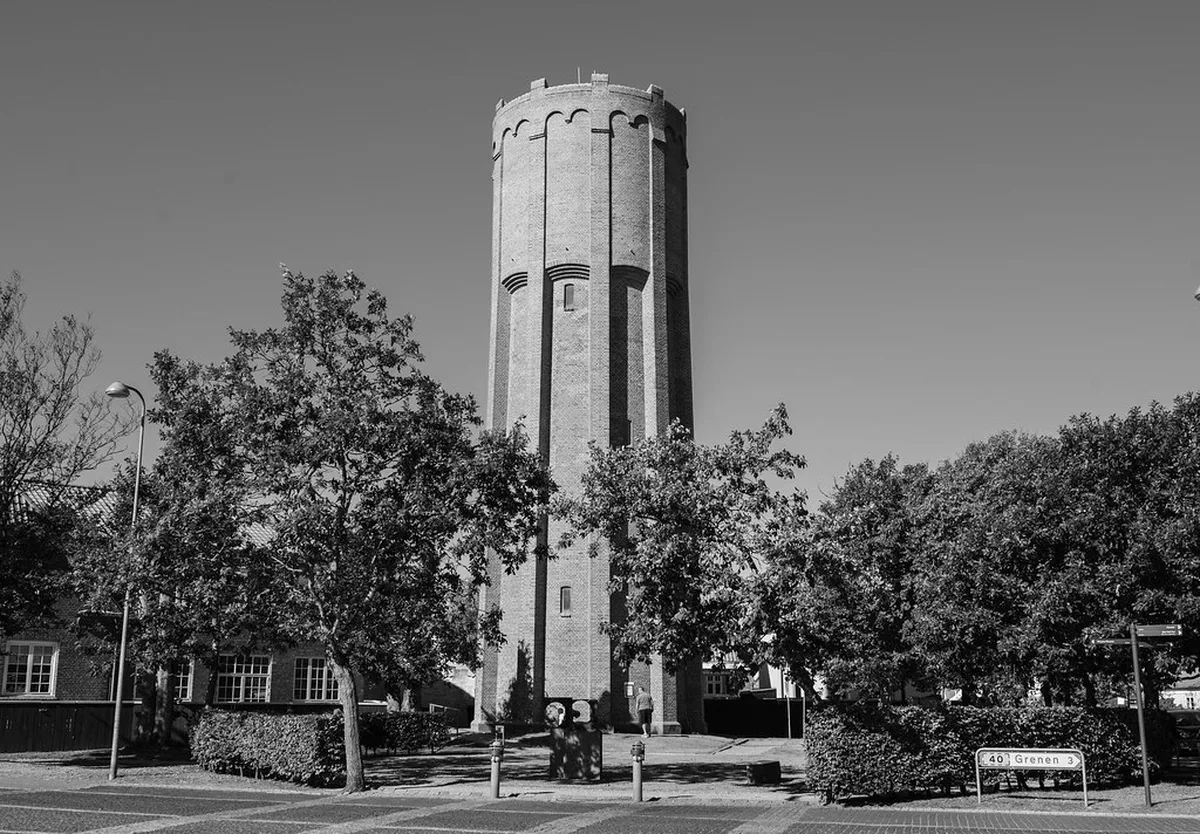
Den Tilsandede Kirke, the Buried Church, sits south of town and is one of the most photogenic spots in North Jutland. Only the whitewashed tower remains above the shifting dunes after the medieval church was gradually consumed by sand from the 16th century onward. Entry to climb the tower costs around 25 DKK. The surrounding nature reserve is peaceful and easy to combine with a short walk.
Det Grå Fyr, the Grey Lighthouse, is the tallest lighthouse in Denmark at 46 metres and stands 4 km northeast of Skagen town near Grenen. It has been open to the public year-round since 1858 and houses a birdwatching centre dedicated to the migratory species that pass through this corridor each spring and autumn. Climbing it gives the best panoramic view of the tip of the peninsula.
Skagen's Vippefyr is a smaller but very rewarding detour on the walk to Grenen. The historic bascule light from 1747 stands on a high dune and gives a sweeping view over Skagen rooftops on one side and the open coastline on the other. Most visitors skip it entirely, which means you often have the viewpoint to yourself.
Museums, Art, and Culture in Skagen
Skagens Museum is the anchor of the town's cultural scene and the most visited gallery in North Jutland. The collection centres on the Skagen Painters, a group of Scandinavian artists who settled here in the late 19th century, drawn by the exceptional quality of northern light. If you only visit one museum on this day trip, make it this one. Adult admission runs around 110 DKK and the museum is generally open 10:00–17:00 daily, with reduced hours and partial closures in January and February.
The Kystmuseet Skagen (Coastal Museum) is a strong second choice and pairs well with the Skagens Museum if you have time for both. It is a local history museum from 1927 covering fishing, daily life, the rescue service of Kandestederne, and a thatched windmill. Admission is roughly 80 to 100 DKK for adults. The museum sits south of town, close to the nature reserve trail that leads to the Buried Church.
Anchers Hus is the former home of painters Anna and Michael Ancher, two of the most celebrated Skagen artists. The house museum shows how the couple lived and includes original works and personal belongings. Note that it closes during winter months, so check seasonal hours before including it in your day. Galerie Wolfsen in the town centre offers a free-to-browse contemporary counterpart, open most afternoons from 13:00 to 17:00.
History visitors should also stop at the Bunker Museum near the Grenen parking area. It occupies a German Regelbau 638 infirmary bunker from WWII and displays uniforms, weapons, and Atlantic Wall documentation. It is closed in winter months, so confirm hours before planning it as a stop.
Parks, Gardens, and Outdoor Spots in Skagen
Råbjerg Mile is Denmark's famous migrating dune and a legitimate half-day excursion in its own right. The dune measures roughly 1 km by 1 km and stands about 40 metres high, shifting an average of 15 metres northeast toward Skagen every year. Walking across it genuinely feels like stepping into a Saharan landscape. It is located about 16 km south of Skagen and is best reached by car or by alighting at Bunken Station on the Aalborg–Skagen line and following the 10.3 km AllTrails route from there.
The nature reserve around Den Tilsandede Kirke offers two distinct walking options. The shorter loop crosses forest and emerges at the Flagbakken viewpoint, then returns via the Stokmilen dune, a high ridge with an extraordinary three-way panorama of Skagen town, the coast, and the reserve. A second loop heads straight to the Kystmuseet, making the coastal museum a natural endpoint after the walk.
For a dedicated coastal hike, the Skagens Vippe Fyr – Grenen route on AllTrails covers 11.6 km and connects the Vippefyr viewpoint with Grenen along the beach, past WWII bunkers, then loops back through the dune reserve. It is a full morning on foot, but one of the finest coastal walks in North Jutland.
Family-Friendly and Budget-Friendly Options in Skagen
The Skagen Bamsemuseum (Teddy Bear Museum) is a small but genuinely fun stop for families with young children. Founded in 1998, it displays old and unique teddy bears arranged in themed settings — travel scenes, historical tableaux, beach vignettes. Admission is modest and the museum is accessible by appointment or through the Iscafeen. Children tend to spend more time here than adults expect.
Grenen itself is free to access and the main beach walk costs nothing. The Buried Church tower entry at 25 DKK is one of the cheapest views in Denmark. Strolling the yellow streets of Skagen and browsing the many galleries, including Galerie Wolfsen, costs nothing. A lunch of Skagen shrimp at the harbour red warehouses runs 150 to 250 DKK per person, which is reasonable for a waterfront meal.
Families with older children who enjoy history will get good value from a combined Skagens Museum and Kystmuseet ticket if available. The Coastal Museum's windmill and outdoor rescue station are tactile and accessible for children who may not engage with purely painterly collections. Both museums are a manageable walk from the train station and from each other.
How to Plan a Smooth Skagen Attractions Day
Leave Aalborg on the 08:00 or 09:00 Nordjyske Jernbaner train to arrive in Skagen by 10:00. Most museums open at 10:00, and an early arrival means you reach Grenen before the midday crowd. A practical day runs: morning at Grenen and the lighthouse (9:30–12:00), lunch at the harbour (12:00–13:30), Skagens Museum in the afternoon (13:30–15:30), then a walk through the yellow streets before catching a train back by 18:00.
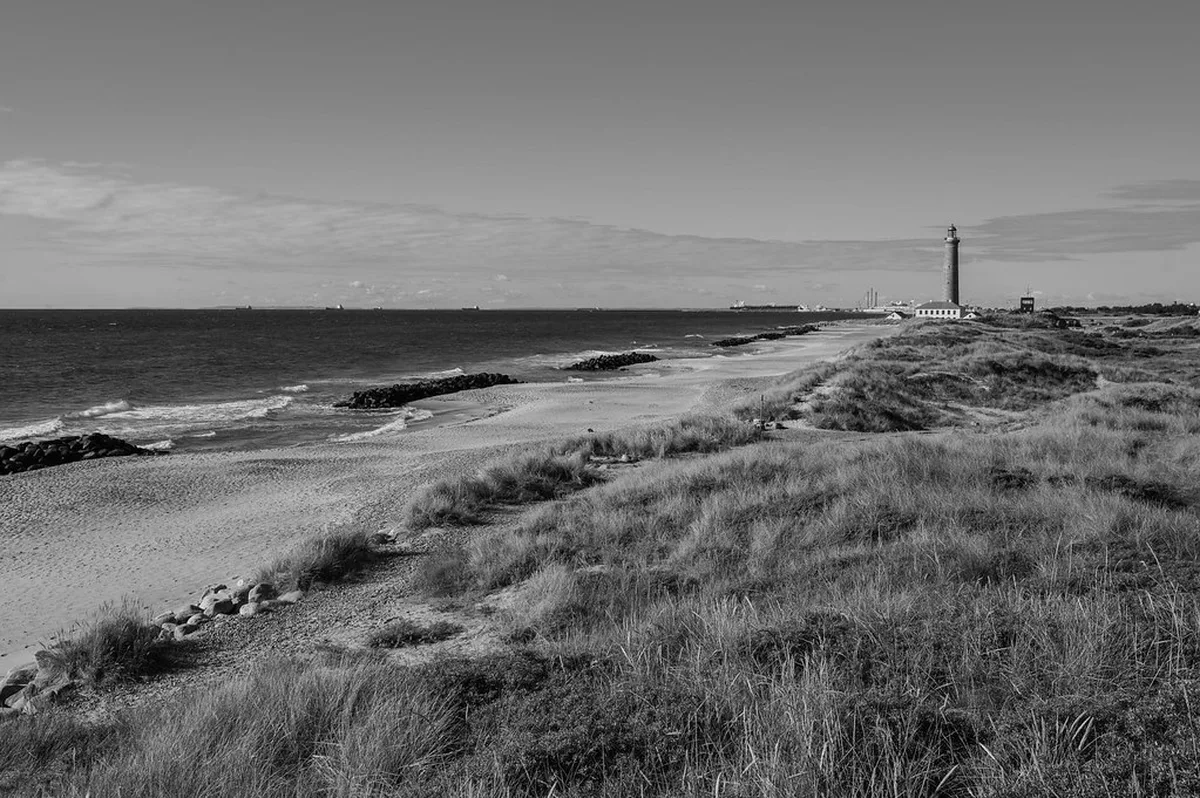
Catch the 08:00 or 09:00 Nordjyske Jernbaner train from Aalborg to maximize daylight hours at Grenen and ensure museums are open when you arrive.
July is the peak month and the town fills quickly. Restaurant queues at the harbour can run 30 to 45 minutes without a reservation. Book lunch one day in advance if you travel in July or August. The shoulder seasons of May–June and September are excellent — lighter crowds, full museum hours, and the northern light is at its most painterly in June.
The best time to visit for uncrowded sightseeing is outside July. Late May and early September both offer good weather windows and far fewer visitors. The Skagen Painters were here in summer specifically because of the light quality, so any sunny day between late April and mid-October will give you what drew them north.
Check the best time to visit Aalborg to align your trip with the most favourable weather window for the whole region. A clear day transforms Grenen from a pleasant walk into an unforgettable one.
Train and Transport From Aalborg to Skagen
The Nordjyske Jernbaner train is the most practical way to make this day trip. You can board at Aalborg st. (the main station) or at Aalborg Vestby st., which is about two minutes further and useful if you are staying near the harbour or the Vestbyen waterfront district. The journey to Skagen st. takes approximately 95 minutes and costs around 110 DKK one way, or about 200 to 240 DKK return. Buy tickets via the DSB app or at station kiosks. Use the Rejseplanen app for live departure times.
Driving takes about one hour via the E45 motorway, but parking in Skagen town is genuinely difficult in July and August. The Grenen parking area at the northern end fills early on summer days and charges a fee. If you drive, aim to arrive before 09:00 in peak season or use the town centre parking and walk. The train removes all of this friction and drops you 10 minutes on foot from the main museums.
The Sandormen is a small tractor-pulled trailer that runs between the Grenen parking lot and the tip of the sandbar, covering the final 700 metres where walking on the loose sand is slow. It costs 25 DKK per person and runs from April to October, roughly 10:00 to 17:00 in summer. Outside those months, or if it is not operating on a given day, the walk to the tip takes about 15 minutes and is easy. Do not let the Sandormen schedule govern your planning — the walk to the very tip is a pleasure in itself.
The Sandormen tractor runs April to October from 10:00 to 17:00; reserve it in advance during peak season (July–August) or plan to walk the final 700 metres on loose sand, which takes about 15 minutes.
The Most Beautiful Walks From Skagen
The Skagen–Grenen beach walk is the town's signature route. Starting at the Vippefyr lookout, you follow the beach north through the dune landscape, past half-buried WWII bunkers, to the tip of Denmark at Grenen. The full out-and-back from town covers about 8 km. Most visitors turn around at Grenen, but the AllTrails loop continues around the reserve for a total of 11.6 km and returns you to the same starting point.
South of Skagen, the Buried Church nature reserve walk passes through pine forest and opens onto the Stokmilen dune, which gives one of the best panoramic views in North Jutland. You can follow the route to the Flagbakken viewpoint and then descend to the Kystmuseet, using the coastal museum as a comfortable end-point with a café for a hot drink. This walk is quieter than the Grenen route and surprisingly uncrowded even in summer.
If you have a second day or an early start, the hike to Råbjerg Mile from Bunken Station is the most dramatic walk in the region. The 10.3 km route crosses heath and forest before depositing you on a bare moving dune with no crowds and a 360-degree sky. It is the kind of walk that stays with you long after you leave Denmark.
Why Skagen Is Magical
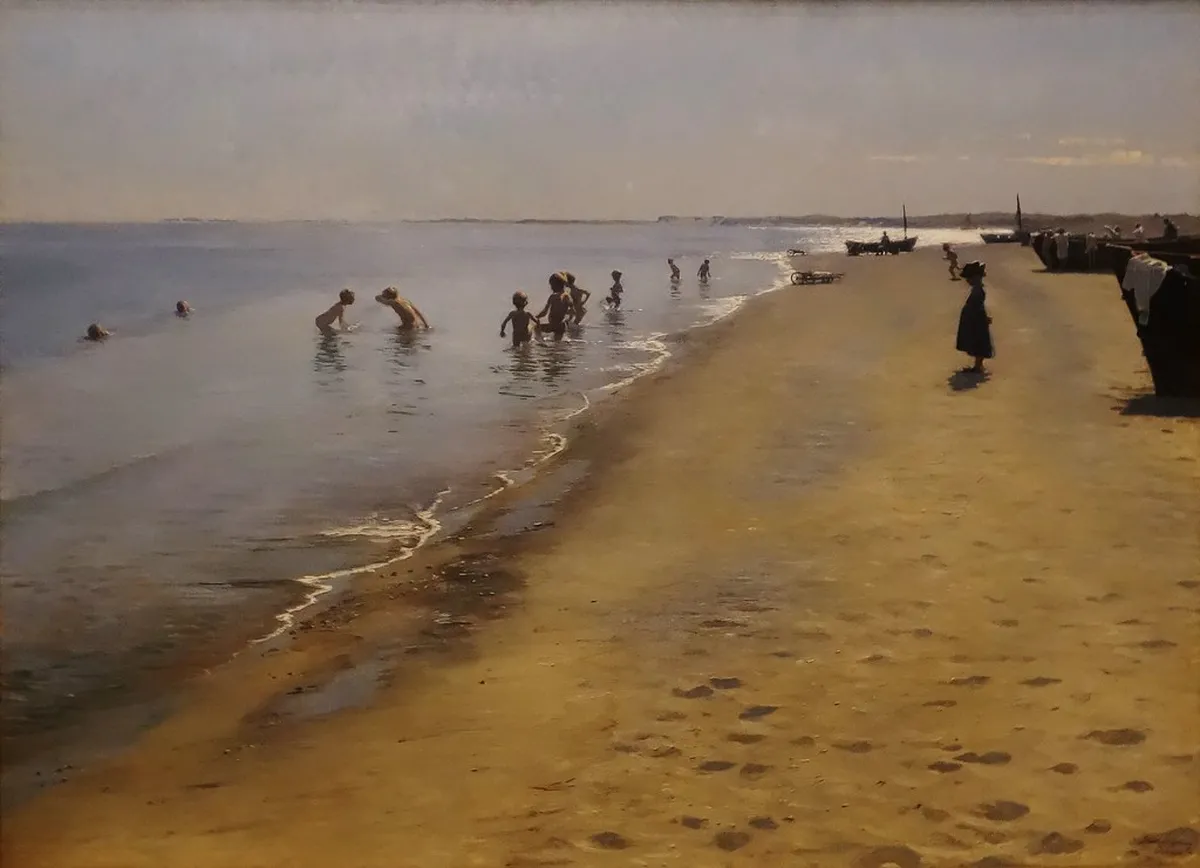
Skagen became a magnet for artists in the 1870s and 1880s because of something that is still hard to pin down: the quality of light. The peninsula juts into open sea on three sides, and the low angle of the northern sun creates a diffused luminosity that painters found irresistible. P.S. Krøyer, Anna Ancher, Michael Ancher, and dozens of others settled here and produced the body of work that now defines Scandinavian Impressionism.
The town has kept its visual identity despite becoming one of Denmark's most visited destinations. The yellow-ochre houses with red roofs, the lobster-pot harbours, the galleries tucked into side streets — it all coheres into something that feels genuinely lived-in rather than curated for tourism. Walking here on a sunny evening, with the light low over the water, gives you a direct understanding of why the painters never left.
The end-of-the-world feeling at Grenen amplifies this. Standing at the tip of Jutland, watching two seas push against each other with no land visible in any direction, is one of those rare travel moments that needs no photograph to remember. Come early, walk the beach, and let the place work on you slowly. That is how the artists did it, and it still holds.
Skagen Packing List: What to Bring
A windproof jacket is the single most important item. The tip of Denmark funnels strong winds off both seas, and even a warm summer day at Grenen can feel much colder than the temperature suggests. Layering works better than a single heavy coat. Comfortable walking shoes with grip are essential for the sandy and dune paths around Grenen and the Buried Church.
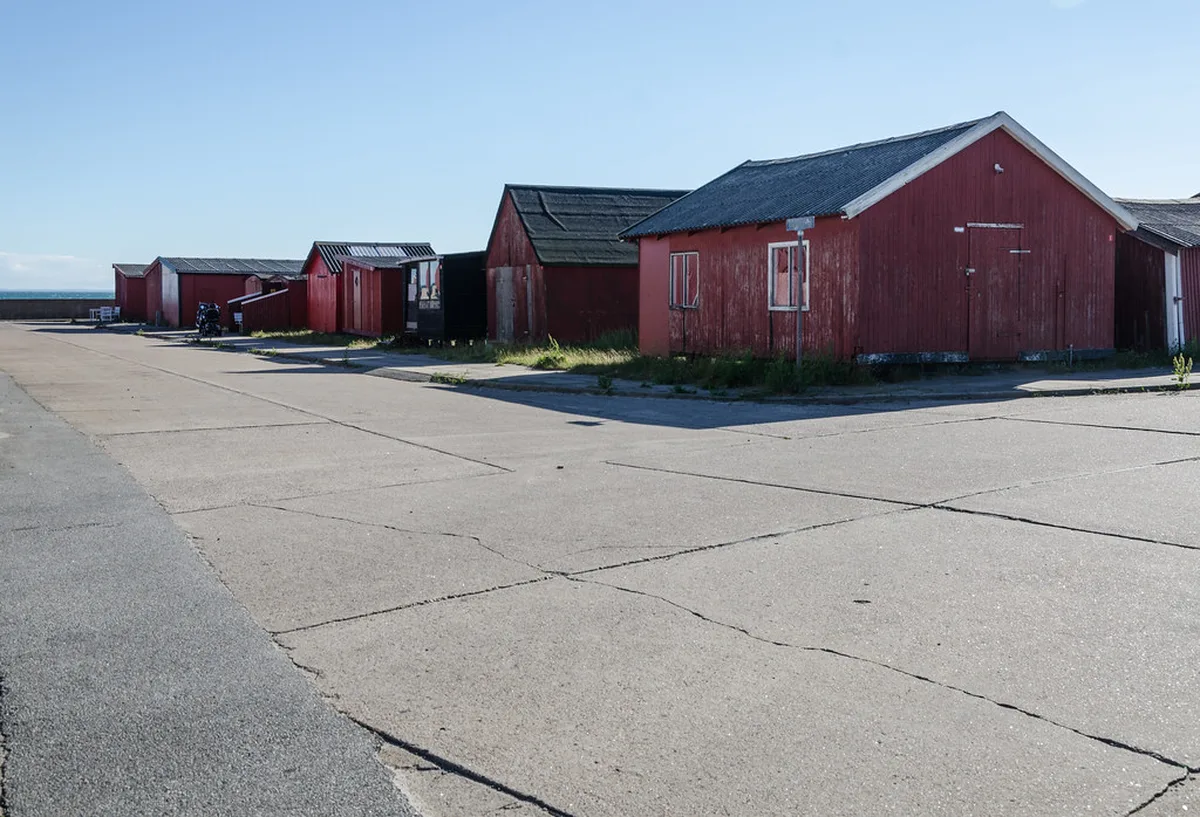
Sunscreen is necessary year-round near the water. White sand reflects light from below as well as above, and burns happen faster than expected. Bring a reusable water bottle — public fountains are available near the museum area. A small daypack is useful for an extra layer, souvenirs from the harbour shops, or food for the beach.
Most Skagen shops close by 17:30 on weekdays. If you want to buy local knitwear or specialty ceramics, plan your shopping for mid-afternoon rather than after the museums. The harbour red-warehouse restaurants stay open into the evening, so dinner before the return train is a comfortable option.
Frequently Asked Questions
How do you get to Skagen from Aalborg?
You can take a direct train from Aalborg st. operated by Nordjyske Jernbaner. The trip takes about 95 minutes and costs roughly 110 DKK one way. Driving is also an option and takes about one hour via the E45 motorway.
What is Grenen?
Grenen is the northernmost point of Denmark where two seas meet. You can stand with one foot in the Skagerrak and the other in the Kattegat. It is a beautiful sandbar reachable by foot or the Sandormen tractor.
Where to stay in Skagen?
Skagen offers many charming hotels and seaside guest houses for overnight stays. For a day trip, however, I recommend staying at a hotel in Aalborg. This allows you to explore the city base while visiting the coast.
A Skagen day trip from Aalborg is a highlight of any Danish vacation. You will enjoy a perfect mix of wild nature and refined culture. I hope these tips help you plan a memorable coastal adventure. For more inspiration, check the things to do in Aalborg guide for regional ideas before you travel.
Remember to check the weather forecast before you depart for the day. The northern coast is most beautiful when the sun hits the water. Safe travels as you explore the very top of the European continent.
You might also like


Continue reading
More guides you'll find useful