10 Best Day Trips From Aalborg: North Jutland Travel Guide (2026)
Discover the 10 best day trips from Aalborg, from Viking ruins at Lindholm Høje to Skagen's beaches. Includes transport tips, costs, and local secrets for 2026.
On this page
10 Best Day Trips From Aalborg (2026)
Aalborg sits at the narrowest crossing of the Limfjord, which makes it an ideal launchpad for North Jutland. Within 90 minutes in any direction you can reach prehistoric burial grounds, shifting coastal dunes, Denmark's tip, and one of Scandinavia's best theme parks. This guide covers the ten best excursions — with transport options, entry costs, and honest notes on which season each trip actually rewards.
A few of these destinations sit inside or on the edge of the city itself. The brief explains the distinction clearly: in-city stops like Kunsten Museum and Salling Rooftop take half a day, while out-of-city trips like Skagen or Thy National Park consume a full one. Plan your itinerary around that difference and you will avoid the most common time-management mistake visitors make here. Planning a few things to do in Aalborg on arrival day sets the right pace before you venture out.
All transport times and admission prices below reflect 2026 schedules. Danish museum prices have risen modestly year on year, so always check the official site before you arrive. The Rejseplanen app gives real-time bus and train departures for every destination on this list that has public transport access.
Lindholm Høje: Viking History Just Minutes Away
Lindholm Høje is the most visited archaeological site near Aalborg and the most logical first excursion for any history-minded traveler. The burial ground holds nearly 700 graves spanning the late Iron Age (around 400 CE) through the Viking Age (ending around 1000 CE). What makes it visually striking is the variation in grave forms: older mounds from the Iron Age sit alongside Viking-era stone settings shaped like ships, some stretching six metres from bow to stern.
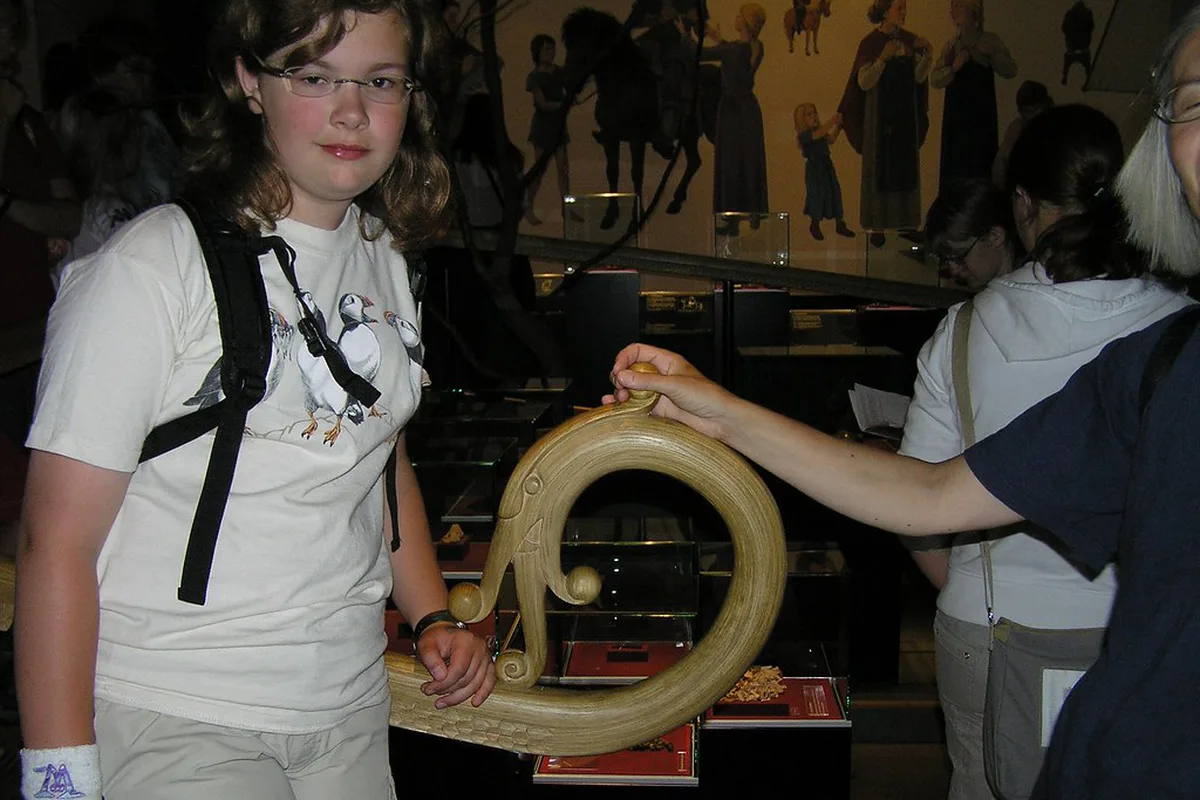
The adjacent Vikingemuseet Lindholm Høje interprets the site through finds excavated from the sand that paradoxically preserved everything. Entry costs roughly 80–90 DKK for adults (about 12 EUR). The museum opens Tuesday through Sunday, 10:00–17:00; it is closed on Mondays, which catches many visitors off guard. The burial ground itself is open daily and free to walk at any hour.
Getting there takes 15 minutes on bus 13 from Aalborg central station. By car it is a 5-minute drive north across the Limfjord bridge into Nørresundby. This trip works in any season — the stone settings look especially dramatic in low winter light when the grass has turned amber. Best for: history enthusiasts, families with curious children, Viking Age fans.
The museum closes Mondays, so plan your visit for Tuesday through Sunday between 10:00–17:00. The open-air burial ground is free and accessible 24/7, making it perfect for a sunset visit on a Monday evening.
Egholm Island: A Rural Escape via the Limfjord Ferry
Egholm sits barely 500 metres off the Aalborg waterfront, but the five-minute ferry crossing puts you in a different world entirely. The island has no cars, a population of under 100 permanent residents, and a road network made for cyclists and walkers. The return ferry ticket costs roughly 25–30 DKK (about 3–4 EUR) for a foot passenger, running every half hour from Færgehavnen near Musikkens Hus.
The yellow-marked trail loops the island in about 90 minutes and passes through a mix of meadows, wetland, and a short stretch of Limfjord shoreline. There is a small café on the island that serves open sandwiches and coffee; it operates in summer only (May through September) and does not take advance bookings, so arrive hungry on weekdays when it is quieter. On weekends in July the café fills by noon.
Egholm is Aalborg's best-kept slow-travel secret. No competitor page covers the hiking trail layout or the ferry frequency in useful detail, yet it is one of the most accessible natural escapes from any Danish city of this size. Best for: solo walkers, couples wanting a quiet half-day, families with young children who want to tire out their legs without driving.
Skagen: A Full-Day Journey to the Top of Denmark
Skagen is the headline excursion from Aalborg and the one destination that genuinely earns the label "bucket list." The town sits at Denmark's northernmost tip where the Skagerrak and Kattegat seas collide in visible competing wave patterns. You watch them from the Grenen sandbar, which you reach via the Sandormen tractor-bus from the car park — a three-minute ride that has become something of a ritual for first-timers.
The drive takes 90 minutes via the E45 and Route 40. By train you change at Frederikshavn and the total journey is around two hours each way, which means you need an early start (first train from Aalborg departs around 06:30). Return train tickets cost roughly 200–230 DKK per adult. Admission to the Skagens Museum is around 120 DKK; the sandbar at Grenen is free. Budget at least five hours on the ground to cover the museum, the old town, and Grenen itself. Read our dedicated Skagen day trip from Aalborg guide for the complete itinerary.
Skagen is a summer-only recommendation. The town swells to several times its winter population between June and mid-August; beaches feel authentically Danish rather than overrun. Outside those months the restaurants thin out, some museums run reduced hours, and the coastal walks become genuinely bleak. If you are visiting Aalborg in autumn or winter, swap Skagen for Lindholm Høje or Rebild Bakker instead. Best for: couples, photographers, beach walkers in summer.
The Sandormen tractor-bus departs every 15 minutes and takes three minutes to reach Grenen sandbar where the two seas meet. Arrive at the car park by 10:00 during peak summer to secure parking and avoid queues on the narrow sandbar itself.
Rebild Bakker: Exploring the Heather-Covered Hills
Rebild Bakker is Denmark's only heathland national park and sits 30 kilometres south of Aalborg. The landscape is glacially sculpted — shallow valleys, rolling moorland, and stands of birch and pine that thin out toward the hilltops. In late August the heather blooms purple across the ridges and turns the whole park into something resembling a Scottish moor. Entry is free at all times. The park is managed by Nature Agency Denmark, which maintains trail maps and seasonal access information.
The main car park near the Rebild Hills Visitor Center serves as the trailhead for the five-kilometre loop that offers the best panoramic valley views. By public transport, take the train from Aalborg to Skørping (about 25 minutes, roughly 60–70 DKK each way) and walk or cycle the two kilometres to the park entrance. A rental bike from Skørping station makes the connection easy in summer.
Unlike Skagen, Rebild Bakker works in every season. Spring brings new green and birdsong; autumn turns the ferns gold; winter is quiet but the short days and frost create a stark, photogenic mood. This is the pick for travelers who want a true Danish countryside experience without spending much money. Best for: hikers, nature lovers, families, budget travelers.
Fårup Sommerland: North Jutland's Premier Theme Park
Fårup Sommerland opened in 1975 near Blokhus on the west coast and remains one of the most popular family attractions in northern Denmark. The park combines traditional roller coasters — including the Falken wooden coaster and the newer steel Lynet — with an extensive waterpark section that operates in summer. It sits about 45 minutes west of Aalborg by car.
Full-day tickets in 2026 typically run 350–400 DKK per person (roughly 47–54 EUR) and cover all rides and the waterpark. The park opens at 10:00 most days during the main season from late May through the end of September. A handful of autumn weekends also operate with rides-only access. There is no practical public transport option; a rental car or a shared taxi is the only realistic way to arrive independently.
Arriving by 09:45 and heading immediately to the wooden coaster avoids the queue that builds by 11:00. Bring your own food — the park allows picnics in designated areas and the price difference versus on-site catering adds up fast for a family of four. Best for: families with children aged 5–14, groups wanting a high-energy full day out.
Rubjerg Knude: Witnessing the Moving Lighthouse
Rubjerg Knude Fyr stands on a 60-metre sand cliff on the North Sea coast, one hour north of Aalborg near Lønstrup. The lighthouse itself was moved 70 metres inland in 2019 to save it from the eroding cliff edge — a feat of engineering that took a single day and drew crowds of thousands. The lighthouse is still expected to fall into the sea within a few decades as the cliffs continue to retreat, which gives the visit an unusual edge of impermanence.
Access to the site is free year-round, though the parking area (about 10 DKK per hour) fills on sunny summer weekends by mid-morning. There is no public transport to the lighthouse itself; a rental car is essential. The walk from the car park to the lighthouse across the dunes takes about 20 minutes one way and includes a steep sandy climb. Wear shoes that can handle loose sand.
The best light for photography is late afternoon when the sun is low and the shadows stretch across the dune ridges. The surrounding landscape — bare sand cliffs dropping to a wild North Sea — is unlike anything else in Denmark. Best for: photographers, couples, anyone who appreciates dramatic coastal landscapes.
Thy National Park: Denmark's First National Park
Thy National Park, established in 2008 as Denmark's first national park, covers the western coast of the Jutland peninsula roughly 90 minutes southwest of Aalborg by car. The park is defined by its wide dune heathlands, shallow lakes, and a North Sea coastline that produces the most consistent surf in Scandinavia. The village of Klitmøller earned the nickname "Cold Hawaii" from international surf culture in the 1990s and the name has stuck.
Entry to the national park is free. Hiking trails range from short one-kilometre loops around Nors Lake to a 16-kilometre coastal walk between Klitmøller and Hanstholm. Birdwatching is particularly rewarding around Fiilsø and Ove Sø in spring and autumn. A rental car is necessary; the drive from Aalborg follows the E11 toward Thisted before branching west toward Klitmøller.
In summer the surf school in Klitmøller runs beginner lessons for around 400–500 DKK per half-day session. Even non-surfers find the beach worth visiting — the waves are large enough to be visually dramatic without requiring you to get wet. Best for: surfers, birdwatchers, hikers, travelers who want pure wilderness without crowds.
Kunsten Museum and Kildeparken: Art and Singing Trees
The Kunsten Museum of Modern Art is ten minutes on foot from the city center, which makes it easy to pair with a morning in the old town. The building itself is the main reason serious architecture visitors come to Aalborg: it was designed by the Finnish modernist Alvar Aalto in collaboration with Jean-Jacques Baruël and completed in 1972. The white marble and travertine exterior, the low horizontal profile, and the way natural light enters the galleries through skylights are the real exhibits here, alongside the collection of nearly 4,000 works spanning Danish modernism and post-WWII international art.
Admission runs roughly 130–150 DKK for adults. The museum opens Tuesday through Sunday, 10:00–17:00, with late opening until 21:00 on Tuesdays. Allow three to four hours if you want to do the building justice rather than rush the collection. The permanent collection focuses heavily on Danish artists working between 1930 and 1980, with rotating temporary shows that bring international work.
The adjacent Kildeparken contains a genuinely unusual installation: a series of tall painted wooden poles called the Singing Trees. Each pole has a button at the base. Press it and a short musical composition plays through a speaker embedded in the structure. Children find them compulsive; adults are usually charmed within thirty seconds. It is free, always open, and no competitor article covers it with any practical detail. Best for: art and architecture enthusiasts, families, anyone who prefers culture over nature.
Aalborg Zoo and Vestre Fjordpark: Family-Friendly Adventures
Aalborg Zoo in Mølleparken is one of Denmark's most respected conservation-focused zoological gardens. Polar bears, red pandas, African wild dogs, and big cats are among the headline animals. Adult tickets cost approximately 175–200 DKK (roughly 23–27 EUR) in 2026; children aged 3–11 pay around 100–120 DKK. The zoo opens daily at 10:00 year-round, with closing times varying seasonally between 16:00 in winter and 18:00 in summer. Bus 11 connects from the city center. Visit the official Aalborg Zoo site for current feeding show schedules before you go.
Vestre Fjordpark sits three kilometres west of the city center along the Limfjord shoreline and is best thought of as Aalborg's outdoor living room. In summer, residents swim directly in the fjord from a wooden bathing platform, kayak the sheltered bay, and barbecue on the grass. Entry is free at all times. The park connects to the city via a cycle path that runs the full length of the waterfront, making it an easy bike ride from most central hotels.
Combining the zoo in the morning with an afternoon at Vestre Fjordpark makes a very full and affordable family day. The zoo covers roughly three hours; the park can absorb as much time as you want. This combination also works well as a fallback when coastal day trips get rained out. Best for: families with young children, budget-conscious travelers, summer visitors who want outdoor swimming.
Salling Rooftop and the Waterfront: Urban Views and Architecture
The Salling Rooftop is a 1,400 square metre terrace on top of Aalborg's main department store with free admission year-round. The Skywalk — a glass-floored extension that cantilevers 30 metres above the street — is the most photographed spot in the city center. Hours follow the store (roughly 10:00–20:00 on weekdays; check the Salling website for current times). The rooftop café serves coffee and light meals with a full view over the Limfjord. Parking in Salling P-Hus costs around 13 DKK per hour and is the most convenient paid option in the city center.
From the Salling car park it is 500 metres to the waterfront, which forms a continuous cultural strip running east from the Utzon Center to Østre Havn. The Utzon Center (named for Jørn Utzon, designer of the Sydney Opera House) houses architecture and design exhibitions; admission is 110 DKK, open Tuesday through Sunday, 10:00–17:00, closed Mondays. Immediately east sits Musikkens Hus (the House of Music), an angular performance venue that is worth seeing from the outside even if you do not have concert tickets. The former Nordkraft power plant further east is now a cultural center with free access to its ground-floor spaces.
This waterfront section represents one of the most dramatic urban regeneration stories in northern Denmark. The shift from heavy industry to a cultural quarter happened quickly between 2005 and 2015, and you can still see the contrast between restored industrial facades and fresh contemporary architecture within a single short walk. Best for: architecture fans, first-time visitors who want to understand modern Aalborg, afternoon strollers.
When to Go: A Seasonal Guide to Each Trip
Most travel articles about Aalborg tell you the city is best in summer and leave it at that. The more useful question is which specific day trips reward which season. Skagen is genuinely summer-only: restaurants thin out in September, Grenen sandbar is windy and deserted outside July and August, and the two-hour train connection from Aalborg feels hard to justify for grey skies and a closed museum café. Plan Skagen between June 15 and August 20 if you want the full experience.
Lindholm Høje and Rebild Bakker work year-round. The burial stones at Lindholm Høje photograph better in low winter light than in harsh summer midday sun; the heather at Rebild peaks in late August but the valley walks are pleasant through October. Rubjerg Knude lighthouse is a year-round destination where winter actually adds drama — the sand cliffs look more severe and the North Sea is visibly violent. Thy National Park and Fårup Sommerland are both closed or curtailed outside May through September; plan both as summer-only trips.
Egholm Island ferry runs year-round but the island café is summer-only. Kunsten Museum, Aalborg Zoo, and the Salling Rooftop are indoor or weather-resistant options that suit any month. If you are visiting in November or December, the Christmas market on Gammeltorv square is small but genuinely cozy; combine it with Kunsten and the old town for a solid winter day. Knowing this seasonal logic before you book your trip saves you from arriving in October expecting a Skagen beach day.
Transport: Getting Around North Jutland
A rental car is the most efficient way to reach remote sites like Rubjerg Knude, Thy National Park, and Fårup Sommerland. Driving in Denmark is generally easy: roads are well-maintained, signage is clear, and the motorway E45 runs the length of Jutland. Major rental agencies operate from Aalborg Airport and the central station area. For Skagen and Rebild, public transport is a genuine alternative. Train from Aalborg to Frederikshavn takes around 75 minutes; a second train continues to Skagen in 35 minutes. The total single fare runs 100–130 DKK. Train to Skørping (Rebild) takes 25 minutes at around 60–70 DKK each way. Always use a Rejsekort transit card — it saves 20–30% over paper tickets on every journey.
Cycling is underrated for the closer options. Egholm Island, Lindholm Høje, and Vestre Fjordpark are all reachable from the city center on a bike in under 30 minutes using dedicated cycle lanes. Most central hotels offer rentals, or use the city's bike-sharing scheme for short hops. For longer trips the Rejseplanen app provides real-time departures and always accounts for the connection at Frederikshavn that many first-time Skagen travelers miss.
Frequently Asked Questions
How many days do you need for Aalborg?
Most travelers find that three days is the ideal length for a visit. This allows one full day for city sights and two days for excursions like Skagen or Rebild Bakker. You can find more details in our Aalborg itinerary guide.
Is Aalborg or Aarhus better for tourists?
Aarhus is larger and has more museums, but Aalborg offers a more relaxed and authentic coastal vibe. Aalborg is better if you want to explore the rugged nature of North Jutland. Both cities are excellent, but Aalborg feels more manageable for a short break.
Where should I stay in Aalborg for day trips?
Staying near the central station or the waterfront is best for easy access to transport. This area puts you within walking distance of buses and trains heading out of the city. Check our guide on where to stay in Aalborg for hotel recommendations.
Aalborg serves as a gateway to some of the most dramatic and historic landscapes in Northern Europe. From the ancient stones of the Vikings to the shifting sands of the coast, these day trips reveal the true character of Denmark. Use the seasonal guidance above to match each destination to the right time of year, and you will avoid the most common disappointment in North Jutland: arriving somewhere off-season and finding it closed or underwhelming.
Whether you choose the thrill of a roller coaster or the silence of a heather-covered hill, there is something memorable within reach of the city. Plan your journeys with 2026 schedules in mind and always leave room for a spontaneous coastal detour. Enjoy your time in the capital of North Jutland and its beautiful surroundings.
You might also like


Continue reading
More guides you'll find useful