Hans Christian Andersen Odense Travel Guide
Plan hans christian andersen odense with top picks, neighborhood context, timing tips, and practical booking advice for a smoother trip.
On this page
Hans Christian Andersen Odense
Odense is the birthplace of Hans Christian Andersen, the man behind The Little Mermaid, The Ugly Duckling, and over 150 other fairy tales that have been translated into more than 125 languages. Born here in 1805, Andersen grew up in poverty before leaving for Copenhagen at fourteen to pursue a career in the arts. The city has spent decades transforming his story into one of Europe's most coherent literary heritage experiences. A focused visitor can cover the essential Andersen sites in a single day, though two days allows for a much more relaxed pace.
At a glance
- Duration: 1–2 days
- Main site: H.C. Andersen House (3 hours, book timed entry in advance)
- Cost: Adult entry 165–195 DKK; children under 18 free
- Best time: August for H.C. Andersen Festival (500+ free events)
- Getting there: 75 minutes by train from Copenhagen; city light rail to centre
Exploring Hans Christian Andersen's Odense means following genuine footprints: the small houses he lived in, the cathedral where he was confirmed, the streets where his neighbors dumped their wastewater, and the parks where local sculptors have placed characters from his stories. This guide covers the main attractions, the self-guided trail, family options, the H.C. Andersen Festivals, and practical logistics for planning a smooth visit in 2026.
Where to Meet Andersen in Odense
The new Hans Christian Andersen House opened in 2021 and is the centrepiece of the Andersen quarter. Designed by Japanese architect Kengo Kuma, it sits on the site of the author's birthplace on Hans Jensens Stræde and features underground galleries, immersive sound and light installations, and a lush garden above. Adult tickets cost 165–195 DKK in 2026, and you should book online in advance because timed entry slots fill up during summer. Plan at least three hours here.
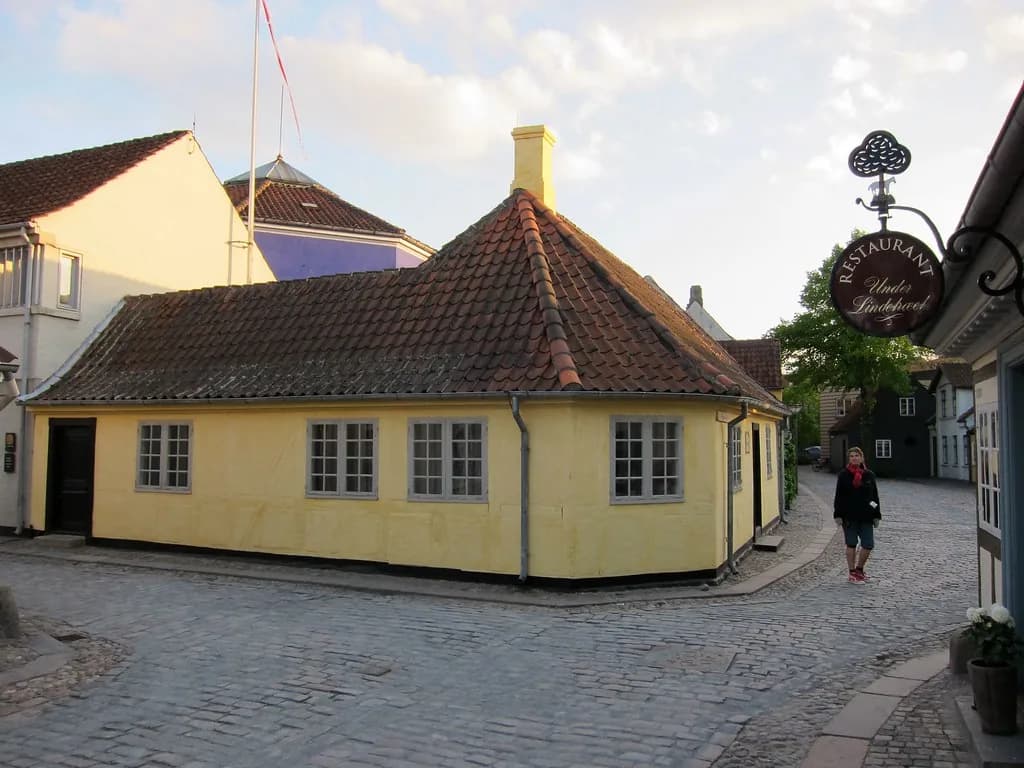
The H.C. Andersen Childhood Home (Barndomshjem) on Munkemøllestræde is a separate, smaller site a short walk away. Andersen lived here from age two until he left Odense. The interior is minimal but atmospheric: low ceilings, a single room for the whole family, and a few original-era objects that make the poverty of his background tangible. Entry is included in the main museum ticket.
Andersen's original gravestone is a lesser-visited but worthwhile stop. The stone was replaced at his burial site but the original marker ended up in Odense, and it gives a quieter, more personal moment than the busy museum. You can find details about its location through the museum reception desk or the official VisitOdense website.
Following Andersen's Traces Across the City
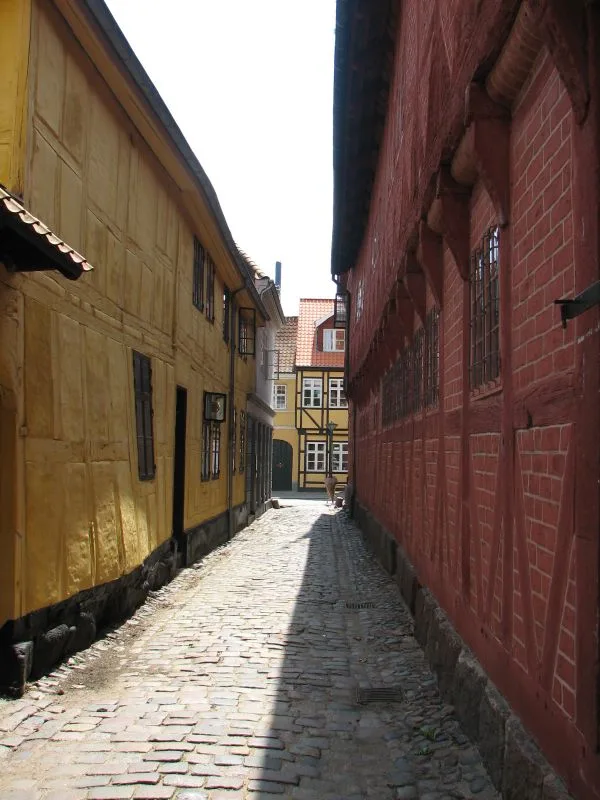
Many of the buildings and places connected to Andersen's Odense childhood are still standing and can be visited on a self-guided walk. The official route is marked by footprints on the pavement leading between key locations. The walk covers the Vaskepladsen ved Odense Å, a riverside washing place where Andersen's mother worked as a washerwoman. Seeing this spot adds real context to the social circumstances described in his autobiography.
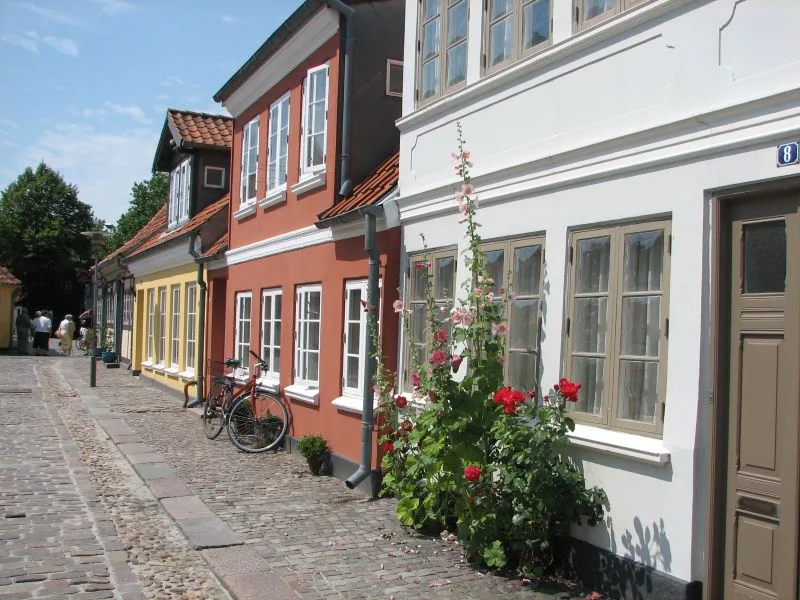
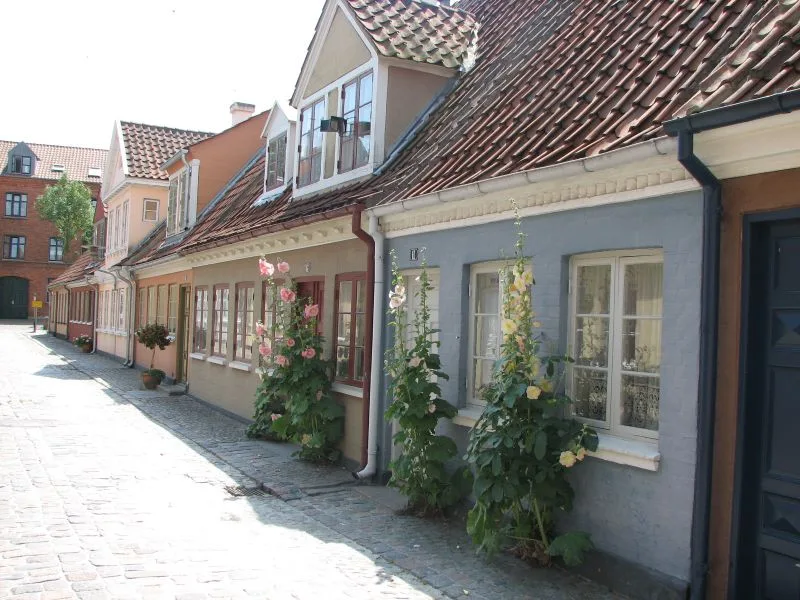
Throughout the city centre you will encounter fairy tale sculptures installed in unexpected places. Characters from Thumbelina, The Steadfast Tin Soldier, and The Snow Queen appear on street corners and in small squares. The official count changes as new works are added, so keep an eye out rather than relying on a fixed map. Vintapperstræde, a cobblestone pedestrian lane hung with colourful lanterns, is the most photogenic stretch of the historic quarter and connects several of these sculpture spots.
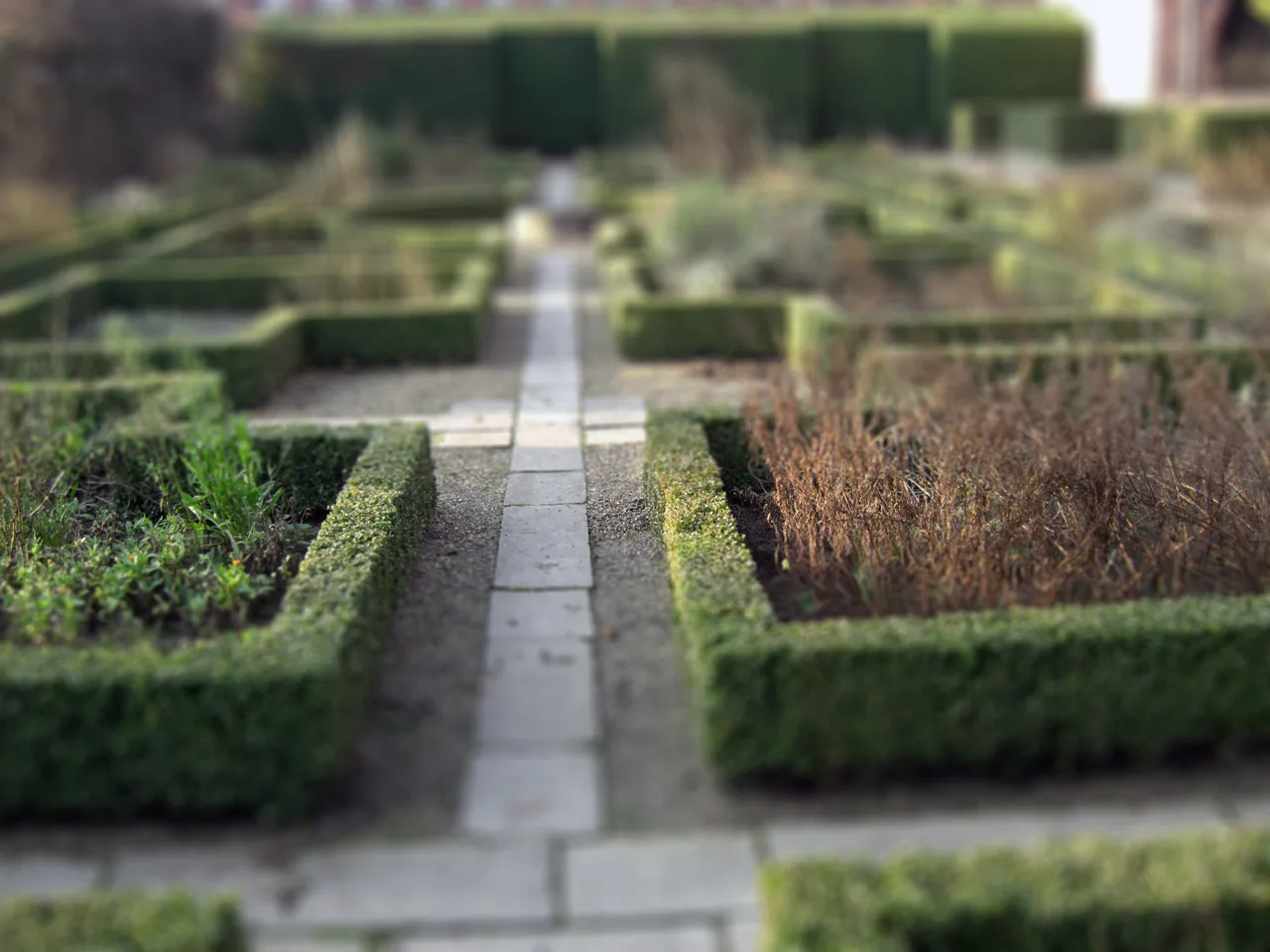
The H.C. Andersen Quarter around the museum also includes Lotzes Have, a small formal garden that serves as a transition space between the modern museum building and the older town fabric. It is free to enter and hosts outdoor theatre performances on summer evenings. Check the museum's event calendar before your visit to see if a performance coincides with your stay.
Museums, Art, and Culture in Odense
Beyond the Andersen sites, Odense has a broader cultural offer worth fitting into an itinerary. The Odense Cathedral (St. Canute's Cathedral) is where Andersen was confirmed as a young man. He described the experience in his memoirs, making it a genuine biographical site rather than just a standard church visit. The cathedral is an excellent example of Brick Gothic architecture, houses the remains of King Canute IV in the crypt, and entry is free.
The Tinderbox Cultural Center (Fyrtøjet) provides interactive exhibits specifically aimed at younger visitors. Children can dress in costumes, engage with story-based installations, and participate in creative activities tied to Andersen's tales. It is a useful complement to the main museum if you are travelling with kids who find the underground galleries too intense or abstract.
Møntergården is the city museum of Odense and covers the full sweep of the city's history from Viking settlement to the present day. It sits in the old town and takes about ninety minutes to visit properly. For visitors who want context beyond Andersen's biography, this is the right place to understand how Odense developed from a Norse religious centre into Denmark's third-largest city.
Parks, Gardens, and Outdoor Odense
The Eventyrhaven, or Fairy Tale Garden, sits immediately below Odense Cathedral on the bank of the river. It features a large seated statue of Andersen installed in 1949, designed by garden architects Carl Theodor Sørensen and Bent Helweg-Møller. The oval island park with its walking path and manicured planting is one of the quietest spots in the city centre. This is also one of the best things to do in Odense for a relaxed afternoon.
Munke Mose is a larger riverside park a short walk south of the city centre. The land was purchased from Munke Mølle, the longest continuously operating company in Denmark. The park is popular with local families for picnics, running, and paddle-boating. If the museum visits feel intense, an hour in Munke Mose resets the pace and is free.
The King's Garden (Kongens Have) in front of Odense Castle provides another green space in the northern part of the centre. The castle itself originated as a fifteenth-century monastery and is now an administrative building. The garden is popular on warm days and offers a contrast to the tighter streets of the Andersen quarter. Both spaces are free to access at any time.
H.C. Andersen Festivals: The Most Underused Planning Hook
Every August, Odense runs the H.C. Andersen Festivals across roughly ten days. In 2025 the festival ran 14–23 August and offered over 500 cultural events, the vast majority of them free. Events include outdoor fairy tale theatre, street performances, storytelling walks, and children's activities spread across parks, squares, and the museum grounds. The scale is considerable for a city of Odense's size.
Most visitors planning a trip around Andersen do not know this festival exists, because no standard travel guide covers it prominently. If you can align your trip with the August dates, you get a layer of live programming on top of the permanent sites. Check the official VisitOdense website for 2026 dates, which are typically announced in early spring. Accommodation books up faster during festival week, so securing a place to stay early is important.
Family-Friendly and Budget-Friendly Options
Children under eighteen enter the H.C. Andersen House for free, which significantly reduces the cost for families. The self-guided footprint trail through the historic quarter is entirely free and keeps children engaged with a clear navigation task. The Vaskepladsen riverside area and the fairy tale sculptures scattered around the centre add further free stops to the walk. A full family morning covering the trail and outdoor sculptures costs nothing beyond museum admission for adults.
Budget travellers can structure the day around the free outdoor offer and spend their admission budget on a single museum. The main H.C. Andersen House is the stronger of the two paid options because the immersive design justifies the ticket price better than a straightforward historic interior. Packing a picnic for Munke Mose or the Eventyrhaven removes the need for a sit-down lunch and keeps costs low.
For planning logistics, the Odense attractions guide covers the wider city offer. All the Andersen sites are within fifteen minutes' walk of each other, so a car is unnecessary. The light rail connects the train station to the city centre in a few minutes if you arrive by train from Copenhagen or Aarhus.
How to Plan Your Andersen Day
Book the H.C. Andersen House timed entry slot as soon as you confirm your travel dates. Summer slots, especially on weekends, sell out several weeks ahead. Arriving at the museum when it opens avoids the peak mid-morning crowds that arrive with coach tours. The museum café is a reasonable option for a late breakfast before the tour groups arrive.
One day is enough for the main Andersen sites if you are focused. Start at the H.C. Andersen House, walk to the Childhood Home, then follow the footprint trail past the Vaskepladsen to the Cathedral and Eventyrhaven. Add Munke Mose in the afternoon. Two days is the right pace if you want to visit Møntergården or Den Fynske Landsby, the open-air museum of Funen village life located on the southern edge of the city.
Consider purchasing an Odense City Pass if you plan to visit three or more paid attractions. The pass covers museum entry and public transport, which simplifies logistics. You can find more travel tips on the Denmark Wander blog for planning the rest of your Danish itinerary. Odense works well as a day trip from Copenhagen (seventy-five minutes by train) or as a stop on a longer journey from Copenhagen to Aarhus.
Frequently Asked Questions
Which hans christian andersen odense options fit first-time visitors?
First-time visitors should prioritize the H.C. Andersen House and the author's birthplace in the old town. These sites provide the most comprehensive overview of his life and creative legacy. You can find more details in our guide to Odense attractions for planning.
How much time should you plan for hans christian andersen odense?
You should plan for at least one full day to see the major sites without rushing. This allows for three hours at the main museum and time for a walking tour. Many travelers prefer two days to explore the local parks and nearby cultural centers comfortably.
Is hans christian andersen odense worth including on a short itinerary?
Yes, it is definitely worth a visit even if you only have a few hours. The central location of the museums makes it easy to see the highlights quickly. It is an essential stop for anyone interested in world literature or Danish culture during their trip.
Odense delivers a coherent, well-maintained Andersen heritage experience that is easy to navigate in a day. The combination of the immersive modern museum, the preserved childhood homes, the self-guided footprint trail, and the free parks makes it accessible across budgets and age groups. If your dates align with the August festival, you get a city-wide programming bonus on top of the permanent offer. Book the museum in advance, wear comfortable shoes, and let the cobblestones do the rest.
For the bigger picture, see our complete Things To Do In Odense guide. See also our 12 Best Odense Attractions and 12 Best Odense Museums guides.
You might also like


Continue reading
More guides you'll find useful