Weekend in Aalborg: The Ultimate 3-Day Travel Itinerary
Plan your weekend in Aalborg with our 3-day itinerary. Discover Viking history, modern architecture, and Nordic cuisine in Denmark's cultural capital.
On this page
A Perfect 3-Day Weekend in Aalborg
Aalborg is the cultural capital of North Jutland and one of Denmark's most underrated city-break destinations. Over a thousand years old, with a Viking burial ground across the fjord and a futuristic concert hall on the waterfront, the city manages to cover a remarkable range of experiences in a compact, very walkable center. This 3-day itinerary is built for first-time visitors who want history, design, and good food without the crowds you'd find in Copenhagen.
The city has spent the last two decades reinventing itself. Former industrial sites now house cultural centers, street-art murals cover entire building facades, and a string of serious restaurants has turned the waterfront into a genuine dining destination. The result is a place that feels both easygoing and surprisingly sophisticated. Check the latest travel updates before your departure.
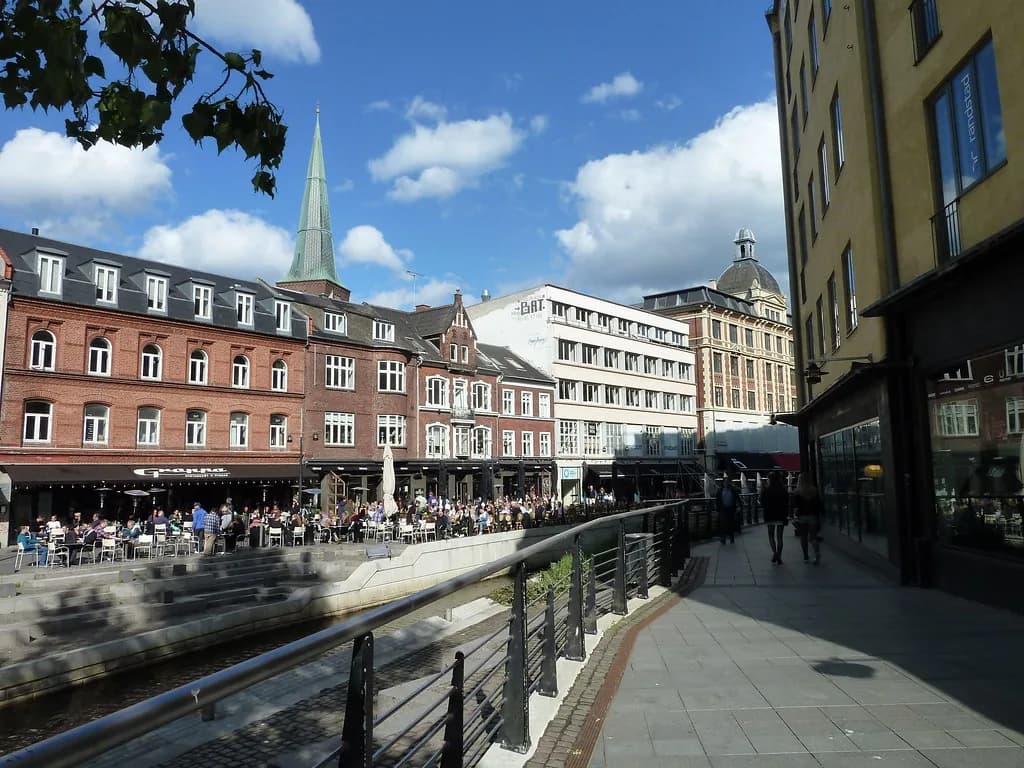
Aalborg sits at the narrowest point of the Limfjord, which means water views are never far away. Most major sights are within a 20-minute walk of each other, and the city's compact size makes it easy to mix landmarks with spontaneous detours into old courtyards and colorful side streets. Start planning with this quick summary, then read the full day-by-day breakdown below.
Aalborg: The Cultural Capital of North Jutland
Aalborg's name first appeared on coins in 1040, and the city was granted formal rights in 1342. It grew through medieval trade and later became one of Denmark's main industrial centers — cement production, distilleries, and a busy working harbor defined its identity well into the twentieth century. When those industries declined, the city made a deliberate choice to reinvent itself around culture and education, and that transformation is visible everywhere you look today.
The population sits at around 122,000, making Aalborg Denmark's fourth-largest city. It has two universities and a large student population, which gives the nightlife and café scene a youthful energy that you don't always find in smaller Danish towns. Jomfru Ane Gade, the famous pedestrian strip lined with bars and restaurants, is routinely named one of the liveliest streets in the country.
The Aalborg Historical Museum on Algade is the best single starting point for understanding how the city evolved from medieval trading post to industrial hub to cultural capital. The collection covers everything from a 1534 mass grave excavated in the city center to local paintings and objects that illustrate daily life across the centuries. Admission is free on Wednesdays. Nearby, Jens Bang's Stenhus — a 1624 Renaissance merchant's house built in Dutch style with intricate gable decorations — stands as the most photogenic reminder of the city's trading wealth. Look closely at the facade and you'll spot a small carved face sticking out its tongue: Jens Bang's reported contempt for the city council, immortalized in stone.
The Aalborg Rådhus (Town Hall), a bright yellow building on Gammeltorv square dating from 1762, and the white Gothic Budolfi Cathedral on the same square complete the old town's main ensemble. Both are best appreciated from the outside; neither requires a ticket.
Essential Planning: How to Get to and Around Aalborg
Aalborg Airport sits 6 km northwest of the center. A taxi takes about 15 minutes and costs roughly 200 DKK; local bus routes connect to the city center for under 30 DKK. Trains from Aarhus run directly and take approximately 90 minutes; from Copenhagen the journey is just under three hours with a change at Fredericia. You can find more detail in our how to get to Aalborg guide.
Driving is a good option if you plan to visit North Jutland's coast or day-trip to Skagen. In the city center, parking is managed by a digital system — the Salling P-Hus garage next to the Salling department store is the most convenient option near the waterfront. At the time of writing, the hourly rate is 13 DKK. Enter your license plate number at any payment terminal when you leave. For longer stays, look for the green parking zones on the periphery of the center, which offer lower daily rates than the central garages.
Within the city, walking covers almost everything. The Aalborg City bike rental scheme operates stands across the center and is a good option for reaching the Kunsten Museum (about 2 km south of the harbor) without waiting for a bus. For Lindholm Høje across the fjord, take bus 1A from Nytorv; the journey is around 15 minutes. A 24-hour transit pass costs approximately 80 DKK and covers all city bus routes.
Day 1: Waterfront Architecture and Gourmet Dining
Begin the morning at the Utzon Center, the final project of Jørn Utzon — the Danish architect who designed the Sydney Opera House. Utzon grew up in Aalborg, and the center celebrates his work through a permanent exhibition and rotating architecture and design shows. The building itself is worth the admission: its ship-like silhouette sits directly on the Limfjord and is best photographed from the waterfront promenade on a clear morning. Adult admission is 110 DKK; the center is open Tuesday through Sunday, 10:00–17:00. Note that it is closed on Mondays — plan accordingly.
After the Utzon Center, walk east along the waterfront toward Musikkens Hus (House of Music). This angular concert hall is one of the most visually striking buildings in North Jutland, and the exterior alone justifies the detour — the interplay of glass and steel gives photographers an almost infinite range of angles. If there is a concert or public event scheduled, an evening ticket here is a worthwhile addition to day one. Check their calendar online before your trip.
Continue east toward Østre Havn, the former industrial harbor that has been converted into a mixed-use district. The transformation is still ongoing, which gives the area an interesting contrast between old crane infrastructure and new residential buildings. It is a genuine glimpse of how Aalborg is still evolving rather than a polished tourist zone.
For dinner, Restaurant Mortens Kro on Mølleå is the city's most celebrated fine-dining address. The kitchen focuses on seasonal Danish produce with a classic French technique, and the wine list is serious. Book at least two weeks ahead for Friday and Saturday evenings — walk-ins are rarely possible on weekends. A three-course dinner runs approximately 600–800 DKK per person. If Mortens Kro is beyond the budget, the waterfront strip has several good mid-range options serving Nordic-inflected menus at around 300–400 DKK for two courses.
Day 2: Modern Art, Street Art, and the Salling Skywalk
Start the morning at the Kunsten Museum of Modern Art Aalborg, located in a striking low-slung building designed by Alvar Aalto and Elissa Aalto about 2 km south of the waterfront in Kildeparken. The collection spans nearly 4,000 works of Danish modernist art alongside international pieces from before and after World War II. Allow two hours minimum — the sculpture park surrounding the building is worth a slow walk in itself. Opening hours are 10:00–17:00 Tuesday through Sunday; adult admission is approximately 125 DKK.
After the museum, head into the center on foot or by city bike to explore Aalborg's street art. The city has over 80 large-scale murals scattered across its neighborhoods, the result of the Out in the Open project that brought internationally recognized artists to repaint industrial walls and gable ends. Pick up a free Street Art City Map from the tourist information office (or download the PDF from the Enjoy Nordjylland website) and follow one of the suggested routes. The murals are concentrated around Vesterbro and the area south of the train station. Summer is significantly better for this than winter — the low winter sun makes photographing the murals difficult before 10:00 and they are often in shadow by 15:00.
Visit the street art murals between May and September for the best daylight and photography conditions. Winter light in Jutland is too low-angle before 10:00 and murals fall into shadow by 15:00.
In the afternoon, walk to Nordkraft, the former power plant from 1947 that the municipality converted into a cultural center from 2005 onwards. Theater, cinema, fitness, and a climbing wall all share the repurposed industrial space. It is free to walk through, making it a good rainy-day option. Directly afterward, swing through the Salling department store to the rooftop — the Salling Rooftop is a 1,400 m² terrace with a café and a glass Skywalk extending 30 meters above the street. The views over the old town rooflines and the Limfjord are the best free vantage point in the city. This pairing of Nordkraft and the Salling Skywalk — two blocks apart, covering the city's industrial reinvention from ground level and from above — is a half-afternoon that no guided tour covers as a single sequence.
Evening is the right moment to experience Jomfru Ane Gade. This pedestrian street is lined end-to-end with bars and restaurants and becomes lively from around 20:00 onwards. It is the most concentrated nightlife strip in Jutland. For a craft-beer focused evening rather than the full party atmosphere, the independent bars around Vesterbro offer a quieter alternative with a rotating selection of Danish microbrewery taps.
Day 3: Lindholm Høje, Submarines, and Street Food
Cross the Limfjord early to reach Lindholm Høje, one of the best-preserved Viking Age and Iron Age burial sites in Scandinavia. The cemetery was in active use from around 400 to 1000 CE, and contains nearly 700 graves — ranging from simple mounds of the Iron Age to the distinctive stone-ship outlines of the Viking period. The site was preserved by windblown sand that covered and protected it for centuries before excavations began. The museum on-site provides essential context for what the stones represent, so visit the museum before walking the grounds rather than the reverse.
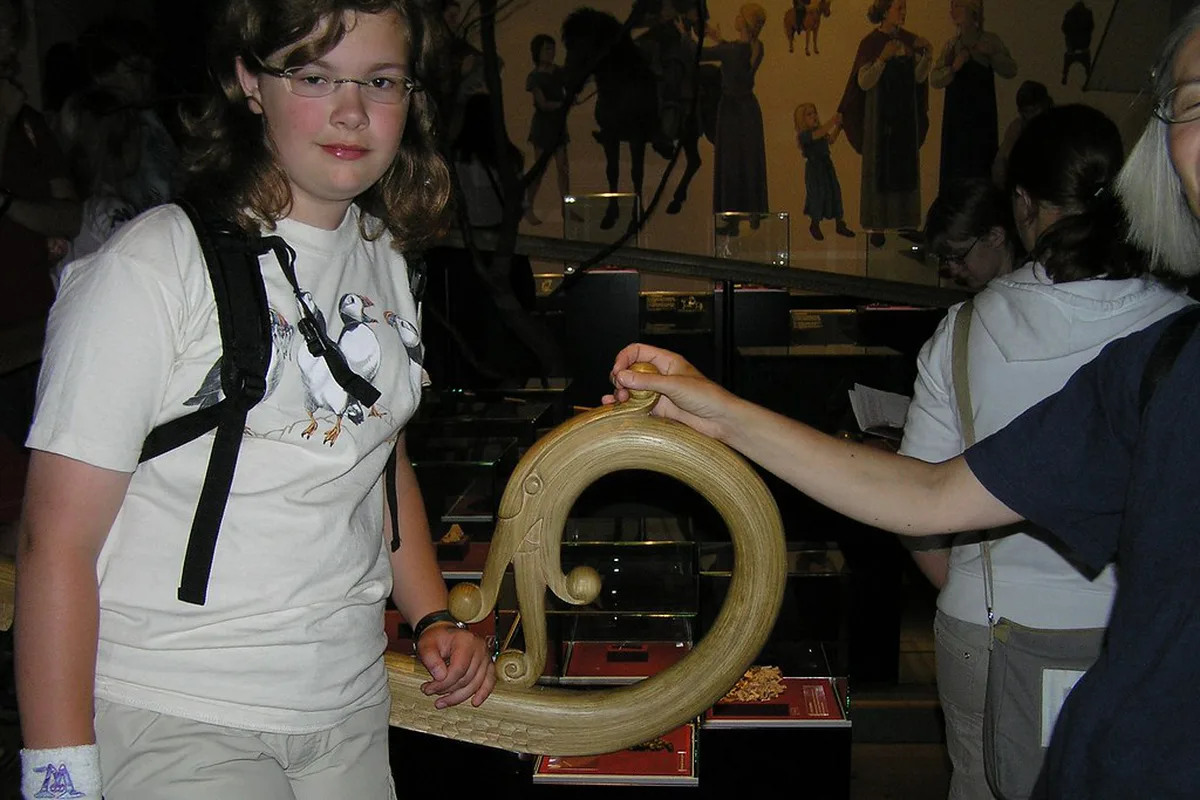
For Lindholm Høje logistics: take bus 1A from Nytorv toward Nørresundby; the journey is about 15 minutes and drops you a short walk from the entrance. If you are driving, the site has its own car park off Vendilavej. The museum is open Tuesday through Sunday, 10:00–17:00 (closed Mondays). The best time for photography is between 09:30 and 11:00 on a clear morning, when low-angle light emphasizes the stone settings against the grass without the harsh midday flatness. Summer weekday mornings also avoid the weekend tour-group peak. Adult admission to the museum is 75 DKK; the outdoor burial ground is free to walk at any hour.
After Lindholm Høje, return to the city and visit Springeren, the maritime experience center built around a real Cold War submarine moored at the harbor. It covers North Jutland's shipping and naval history with interactive exhibits, and the experience of stepping inside the submarine itself makes it a memorable stop, especially for families. The Aalborg Defence and Garrison Museum nearby occupies a genuine World War II hangar and explains why Aalborg's airport was strategically significant during the occupation. Note that the Defence Museum is closed in winter months — check opening dates before visiting in late October through March.
One practical note for day three: if you want to visit Håndværkerhuset Aalborg — the center for traditional North Jutland craftsmanship with working blacksmith, clockmaker, and metalworking workshops — it is open on Wednesdays only, 09:00–15:00. Every competitor recommends it, but almost none flags that this is the only day it operates. If your weekend falls over a Wednesday, rearrange your schedule to fit it in; if not, the exterior courtyard is still worth a brief stop.
Håndværkerhuset Aalborg opens only on Wednesdays (09:00–15:00). If your weekend trip includes a Wednesday, prioritize this morning visit before exploring other day-three attractions. Most guides recommend it without flagging this constraint.
Where to Stay: Best Bases in Aalborg
Staying in the city center or the waterfront area places you within walking distance of almost everything in this itinerary. Pier 5 on the harbor is the most design-forward option, with rooms overlooking the Limfjord and direct access to the waterfront promenade. It suits travelers who want modern Scandinavian interiors and a central position. Find more options in our guide on where to stay in Aalborg.
Hotel Chagall near the old town is the established boutique choice, located close to the main shopping streets and a short walk from the cathedral. It is well-regarded for its personal service and local character. For a budget-friendly alternative, Cabinn Aalborg near the train station is clean, functional, and competitively priced — a good base if you plan to arrive by train and do not need a premium location.
Budget travelers willing to stay a little outside the center can use the campsites in the Aalborg area. Several sites offer both tent pitches and cabin rentals, and bus routes connect them to the center frequently. This works best for travelers arriving by car who want a base for exploring both the city and the surrounding North Jutland coast.
Aalborg vs. Aarhus: Which City Fits Your Travel Style?
Both cities are in Jutland and both have world-class museums, a strong food scene, and good transport links. The choice comes down to what kind of experience you want rather than one city being objectively better than the other.
Aalborg is smaller and feels more like a large town than a city. Its center is easier to cover on foot, the pace is slower, and accommodation and dining tend to be more affordable. The Viking history at Lindholm Høje is a unique asset that Aarhus cannot match. Aalborg is the better choice for a relaxed long-weekend trip, first-time visitors to Jutland, and anyone primarily interested in the region's industrial-to-cultural reinvention story. Read our full Aalborg itinerary for a detailed comparison of specific activities.
Aarhus is larger, livelier, and has a wider range of shopping and nightlife. The ARoS Art Museum with its famous rainbow panorama walkway is a genuine landmark that draws visitors from across Europe. Aarhus also has more direct flight connections and a wider hotel range. If you want a metropolitan buzz, more restaurant variety, and more big-ticket cultural events, Aarhus edges ahead. For travelers who can only visit one Jutland city and are torn: Aalborg if you want quiet, old streets and Viking graves; Aarhus if you want energy and a bigger city feel.
Seasonal Highlights: The Aalborg Christmas Market and Events
Aalborg's Christmas market runs from late November on Gammeltorv square, the same cobbled space flanked by the yellow Town Hall and the white cathedral. It is small by European standards — a few dozen stalls selling handmade decorations, gløgg, and æbleskiver — but the setting is genuinely atmospheric, particularly in the early evening when the square is lit and the cathedral is illuminated. The compact size actually works in its favor: you can browse it completely in an hour and move on to the warm bars and cafés that spread the Christmas spirit across the surrounding streets.
The trade-off to know before you book a December visit: the street art tours are significantly better in summer. The mural routes that make day two of this itinerary so rewarding require decent daylight and ideally direct sun — conditions that are rare in a Jutland December. If your priority is the outdoor murals and the Salling Rooftop terrace, come between May and September. If the cozy Christmas atmosphere is the draw, late November and early December are the right window.
Beyond Christmas, the city hosts the Aalborg Carnival in May (one of the largest carnival events in Scandinavia, drawing over 100,000 participants and spectators) and a range of summer outdoor concerts in the Kildeparken park near Kunsten. The Nordkraft cultural center runs a year-round program of theater, film, and live music that makes a rainy evening easily recoverable regardless of season.
Beyond the Center: Day Trips from Aalborg
North Jutland's most visited day trip is Skagen, the fishing town at the very tip of Denmark where the North Sea and the Kattegat visibly meet. The train from Aalborg takes about 90 minutes and drops you in the center of town. The buried Tilsandede Kirke (the church partially swallowed by sand dunes) and the Grenen headland where the two seas collide are the main attractions. Allow a full day and book accommodation in Skagen separately if you want to stay overnight during peak summer months.
Families with children have a strong option in Fårup Sommerland, a large theme park about 30 minutes north of Aalborg by car. The park has roller coasters and a substantial water park area, and operates from late April through mid-September. Check the best time to visit Aalborg for current park hours and seasonal opening dates.
For a dramatic coastal detour, the Rubjerg Knude Lighthouse on the North Sea coast is about 55 minutes by car. The lighthouse became famous because it was physically moved inland in 2019 to save it from coastal erosion — a remarkable engineering project that is itself part of the story. The surrounding migrating dunes and the cliff views make this one of the most visually memorable spots in the whole of Jutland. There is no direct public transport to the lighthouse from Aalborg, so a rental car or a tour is the practical option.
Frequently Asked Questions
How many days do you need for Aalborg?
A three-day weekend is the ideal amount of time for Aalborg. This allows you to see the main museums, enjoy the waterfront, and visit the Viking sites. You can even fit in a short day trip to the coast.
When is the best time to visit Aalborg?
Summer offers the best weather for outdoor activities and street art tours. However, the Christmas markets in December are incredibly cozy and festive. Spring and autumn are great for avoiding large crowds.
Is Aalborg better than Aarhus for a weekend?
Aalborg is better if you prefer a smaller, more walkable city with a relaxed vibe. Aarhus is better for those who want a larger metropolitan experience with more shopping. Both cities offer excellent culture and food.
Aalborg rewards travelers who take their time with it. The Viking graves at Lindholm Høje, the industrial-to-cultural transformation at Nordkraft, and the rooftop views from the Salling Skywalk tell three completely different chapters of the city's long history in the space of a single day. Come with comfortable shoes, a flexible schedule, and an appetite for both Nordic cuisine and dark Danish history.
Be sure to pack layers — Jutland weather changes quickly, especially near the Limfjord. If your trip falls mid-week, do not miss the Håndværkerhuset on Wednesday morning before the rest of the city wakes up. Aalborg has a way of turning what you expected to be a stopover into the highlight of a Danish trip. Enjoy your weekend in the north.
You might also like

Continue reading
More guides you'll find useful