8-Step Odense Day Trip Itinerary 2026
Plan the perfect 8-step Odense day trip itinerary for 2026. Includes H.C. Andersen sites, Storms Pakhus food tips, and 2026 travel costs.
On this page
8-Step Odense Day Trip Itinerary 2026
Odense offers a peaceful escape from the bustling streets of Copenhagen. I built this odense day trip itinerary 2026 after my third visit to Funen. This guide is perfect for first-timers wanting to see the best of Denmark. You will find everything from fairytale history to modern street food here.
Last refreshed after my summer visit, this plan reflects the latest 2026 updates. The city has transformed its central core into a pedestrian-friendly haven recently. Travelers can now walk seamlessly from the station to the historic district. I recommend this trip for anyone seeking a slower pace of travel.
Is a single day enough to see this charming Danish city? While you could stay longer, how many days in Odense you need depends on your pace. One day covers the major museums and the scenic old town perfectly. Let us dive into the best way to spend your time.
Why Odense is a Top 2026 Denmark Destination
Odense is Denmark's third-largest city and sits squarely in the middle of Funen island — roughly equidistant between Copenhagen and Jutland. Most visitors arrive as a side trip from the capital and leave surprised at how much ground they covered in a single day. The city is genuinely compact: the train station, the H.C. Andersen Museum, Storms Pakhus, and the old town are all within fifteen minutes on foot of each other.
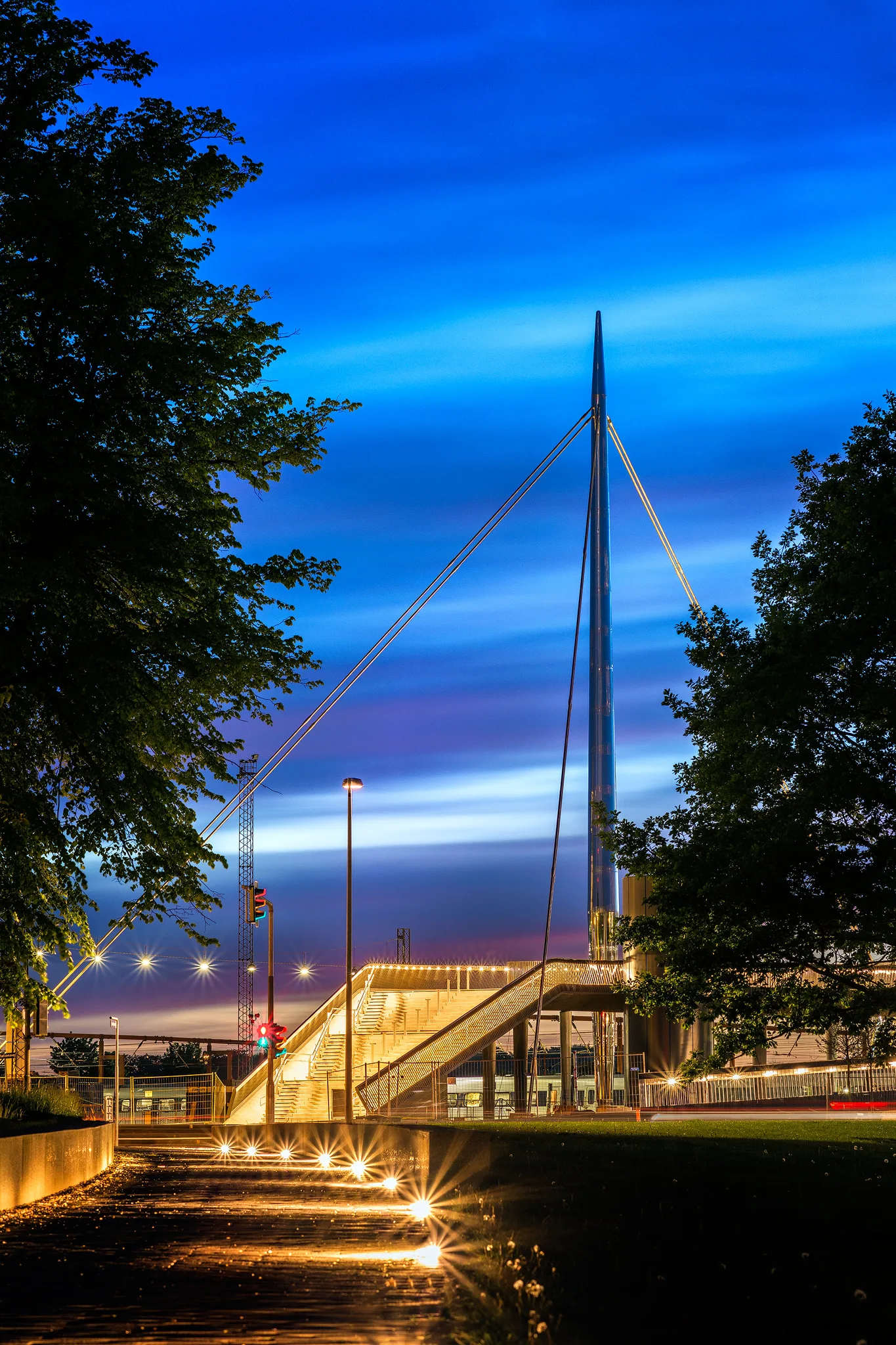
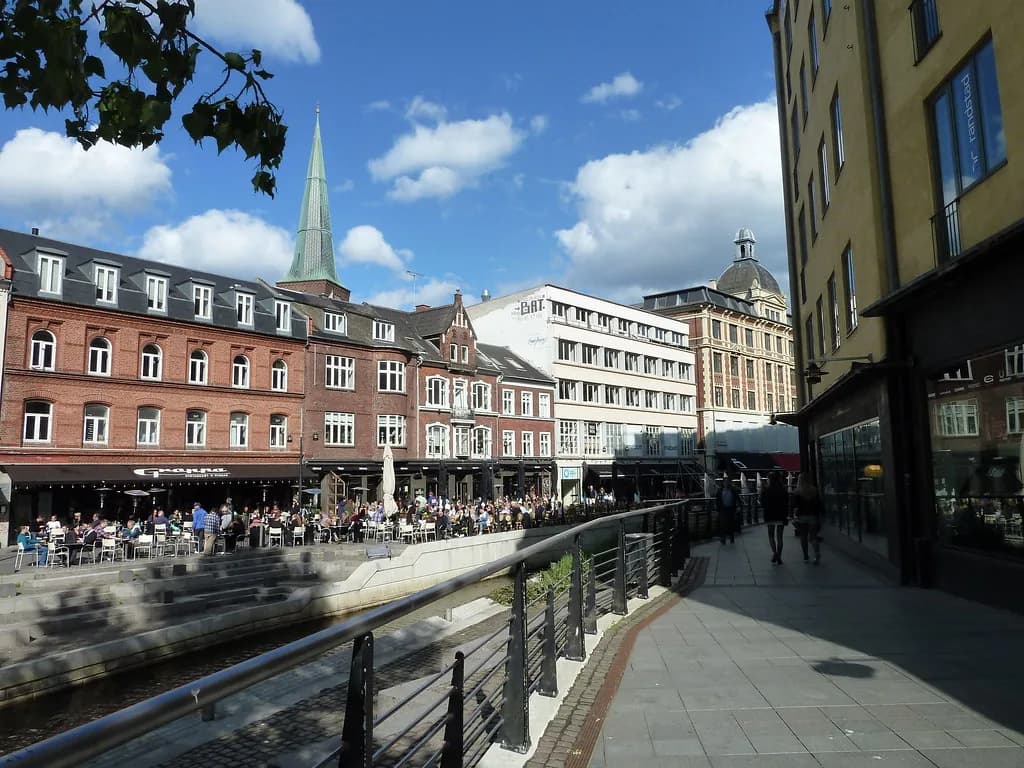
What makes Odense work as a day trip in 2026 is precisely what it is not. There is no pressure to rush between neighborhoods, no metro to decipher, and almost no queue culture outside the main museum. The pedestrian zones around Vestergade and Overgade create a natural circuit that takes you past cobblestone lanes, sculpted fairy-tale characters embedded in pavements, and red-brick medieval churches. Many travelers describe the city as the ideal "exhale" between Copenhagen's intensity and longer Jutland adventures.
The city also carries genuine literary heritage. Hans Christian Andersen was born here in 1805, and the investment in telling his story properly — through the architecturally stunning museum complex that opened in 2021 — makes Odense a culturally serious destination, not just a nostalgia stop. The appeal for 2026 visitors extends beyond the museum: the harbor district has matured into a lively waterfront, and the street food scene at Storms Pakhus rivals anything in Aarhus.
At a Glance: 1-Day Odense Itinerary 2026
This quick summary helps you visualize your day before diving into details. Odense is very walkable, so you won't need much public transport. I suggest wearing comfortable shoes for the cobblestone streets. The city feels like a living storybook in every corner.
- 09:00 — Arrive at Odense Central Station; walk to H.C. Andersen's House (10 min)
- 09:30–12:00 — H.C. Andersen's House and Childhood Home (pre-booked timed entry)
- 12:00–12:45 — Wander the old town cobblestones: Overgade, St. Canute's Cathedral, Eventyrhaven
- 13:00–14:30 — Lunch at Storms Pakhus street food market
- 14:30–16:00 — Afternoon choice: Danish Railway Museum or Brandts creative quarter
- 16:00–17:30 — Munke Mose park and Odense River walk
- 17:30–19:00 — Odense Havn harbor district and Anarkist Brewery
- 19:00 — Train back to Copenhagen
Logistics: Getting from Copenhagen to Odense
Most visitors arrive from Copenhagen via the DSB national rail network. The journey takes about 75 to 90 minutes on an IC3 intercity train; some laidback-trip sources quote closer to 70 minutes on the fastest services. Expect to pay between 200 and 400 DKK (roughly €27–€54) for a standard return ticket depending on how far in advance you book. Trains run at least twice per hour throughout the day, with peak departures from Copenhagen H at 08:02, 09:02, and 10:02 in summer 2026.
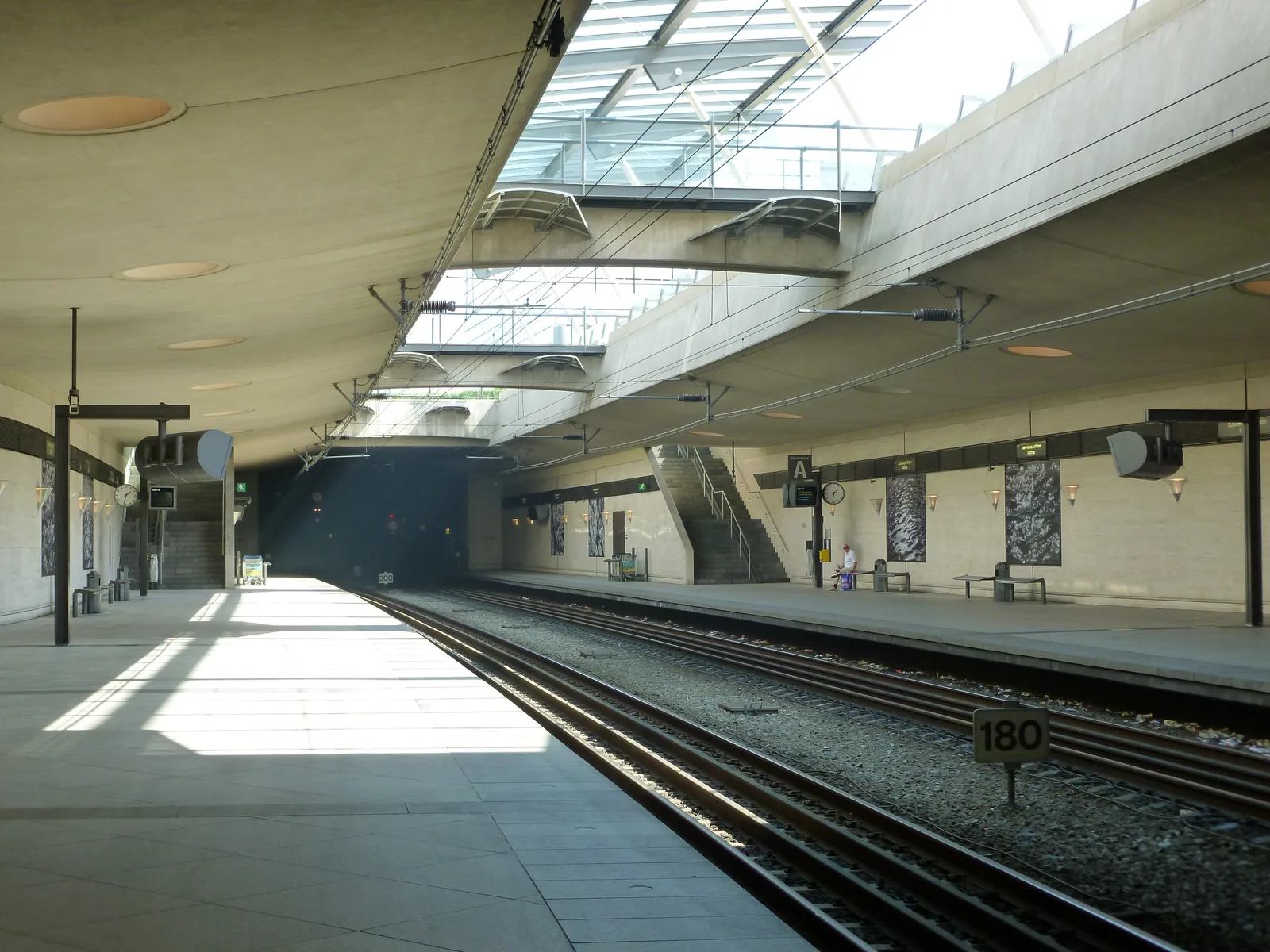
I recommend booking a seat reservation during July and August. The ride crosses the Great Belt Bridge — a 18-kilometre fixed link over open sea — and the views from the right-hand side of the train heading west are worth staying awake for. Keep your camera out around the 60-minute mark.
If you prefer driving, the trip takes roughly two hours from central Copenhagen. The bridge toll costs approximately 250 DKK (€34) each way. Parking in Odense city center is manageable: Q-Parks at Grønnegade and the Odeon Center charge around 15–20 DKK per hour. The train remains the most stress-free option for a day trip, especially since every attraction in the city center is walkable from the station.
Morning: H.C. Andersen's House and the Old Town
Start at H.C. Andersen's House (H.C. Andersens Hus) for the 09:30 timed-entry slot. The museum opened in its current architectural form in 2021 and is genuinely one of the most immersive cultural experiences in Scandinavia. You navigate the exhibits via wireless headphones, moving through underground galleries that blend Andersen's childhood, his writing process, and the fairy tale universe he created. Allow 90 minutes for the full experience; most visitors need at least that. Admission is 165 DKK (around €22) per adult. Pre-book online at least a week ahead in summer.
The ticket includes entry to H.C. Andersen's Childhood Home, a five-minute walk away on Bangs Boder. This is the modest two-room house where Andersen grew up in poverty — the contrast with the grand museum is deliberate and moving. The rooms are preserved to look as they did in the early 1800s, and the small fairy-tale garden behind the house is where, according to local tradition, Andersen first began imagining the stories that would make him famous. It is not a must-see in isolation, but as an extension of the main museum ticket it is worth 30 minutes.
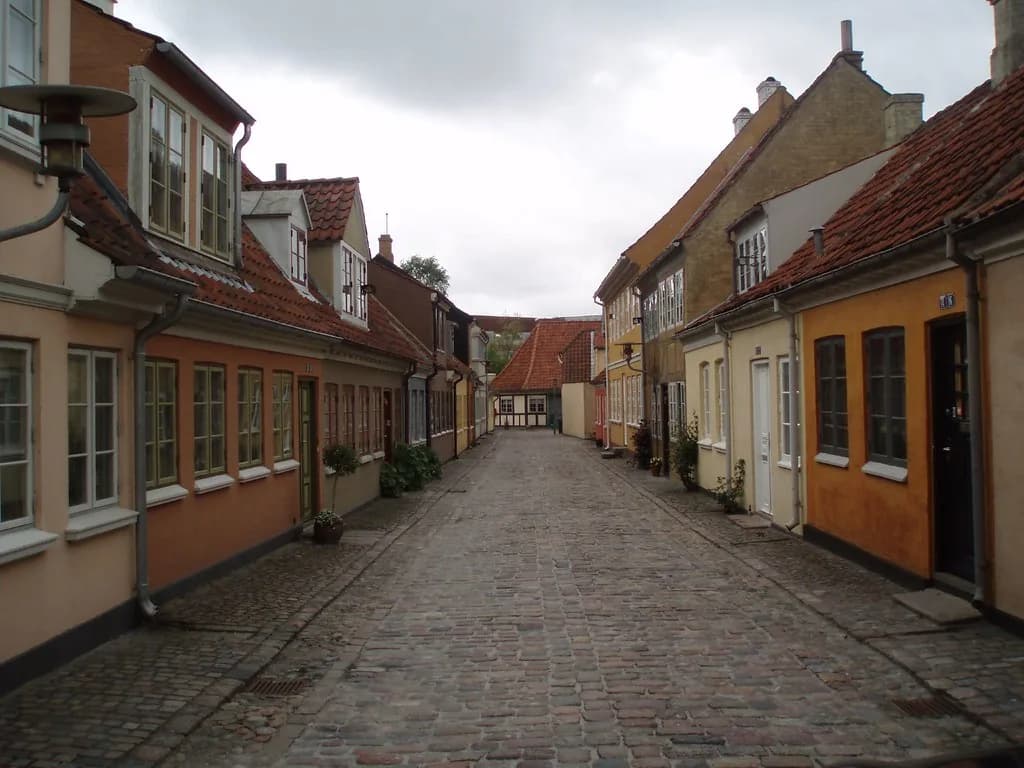
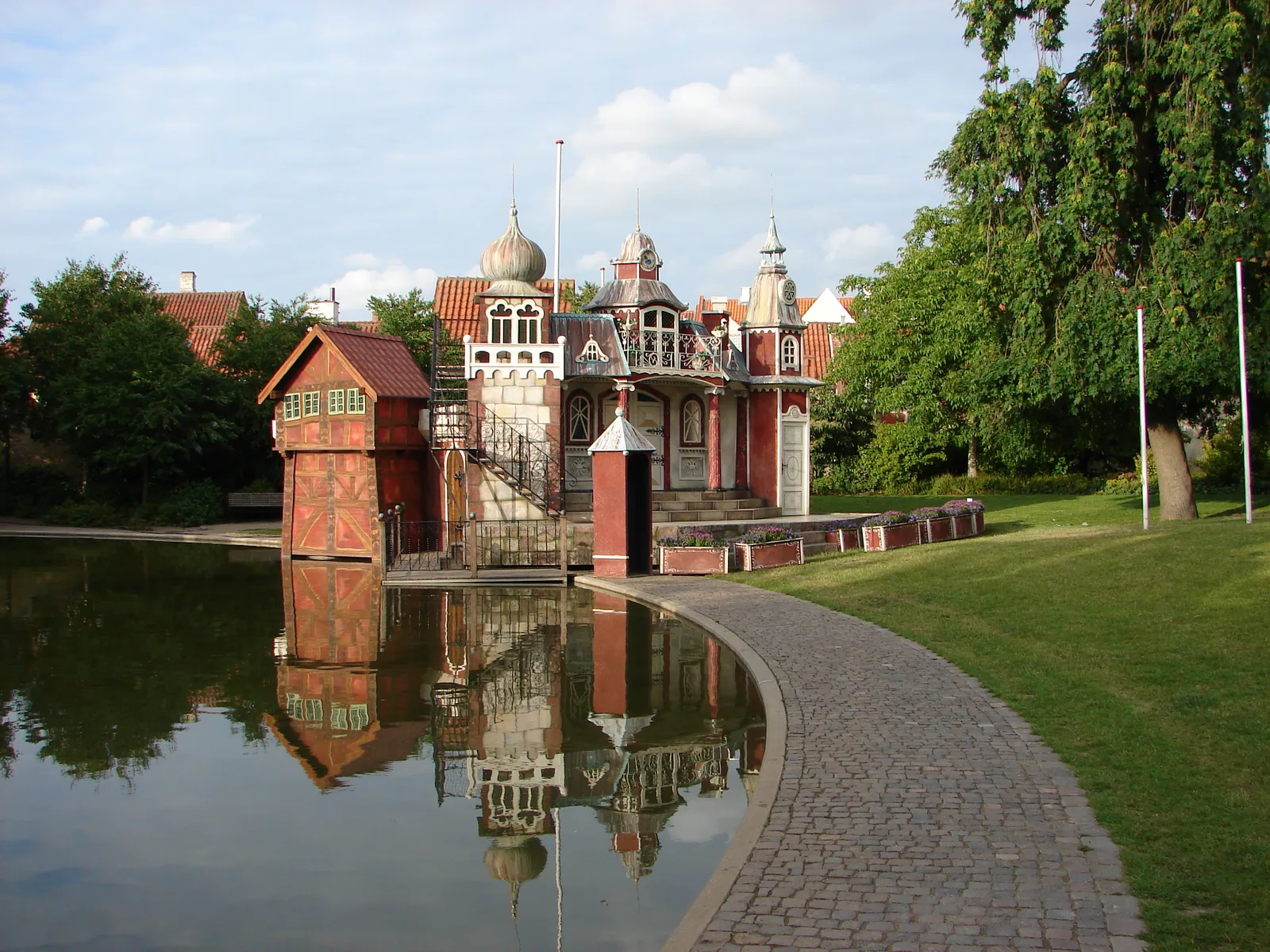
After both museum sites, spend 45 minutes walking the old town. The natural loop runs from the Childhood Home south along Overgade — one of the prettiest pedestrian streets in Denmark — past sculpted fairy-tale figures embedded in the pavement, then into the square in front of St. Canute's Cathedral. The cathedral holds the remains of King Canute IV and the interior woodwork is genuinely impressive. A left turn from the cathedral brings you to Eventyrhaven (the Fairy Tale Garden) along the Odense River, a small landscaped park that marks the eastern edge of the historic core.
Lunch: Street Food at Storms Pakhus
Storms Pakhus is a converted warehouse just a few minutes' walk from the central station, open daily from 11:00 to 23:00. Around thirty vendors operate from the indoor hall, covering Thai, Mexican, Indian, Greek, and classic Danish smørrebrød. The atmosphere is informal and lively even on weekdays. Budget around 80–130 DKK (€11–€18) for a full meal with a drink. No reservation needed.
Before you leave the old town, pick up a slice of Brunsviger at a local bakery. This is a Funen specialty you will not easily find in Copenhagen: a thick, dimpled yeast cake soaked in a dark caramel-butter topping. Wendorff Bageri on Vestergade is the most consistent option in the city center. A slice costs around 30 DKK and pairs well with a takeaway coffee for the walk to Storms Pakhus. Many first-time visitors skip it — do not.
The building itself is worth exploring briefly. The warehouse dates from the early twentieth century and the exposed brick and steel structure gives it a very different atmosphere from the polished food halls you find in Copenhagen. On warm days the outdoor courtyard fills with locals eating at picnic tables. It is a genuinely good use of an hour and reflects Odense's investment in unpretentious, quality food culture.
Afternoon: Railway Museum, Brandts, or Den Fynske Landsby
After lunch, you face a genuine three-way fork. The Danish Railway Museum (Danmarks Jernbanemuseum) sits directly next to the central station — ideal if you arrive by train and want to swing through before anything else, or return to it after lunch. It houses over 50 locomotives and royal train carriages, with interactive displays that work for all ages. Admission is 140 DKK (€19). Open 10:00–16:00 daily, with 09:00 openings on Wednesdays and weekends. It is the easiest option logistically and takes about 90 minutes.
Brandts is the alternative for travelers who prefer contemporary art and creative culture. The former textile factory on Brandts Passage houses rotating exhibitions, the Photographic Art Museum, and several good cafés. The surrounding district has developed into Odense's most interesting neighborhood for design shops and independent bookstores. Allow 60–90 minutes. It is a ten-minute walk from Storms Pakhus.
The third option — Den Fynske Landsby, the Funen Village open-air museum — is underused by day-trippers but genuinely distinctive. Located about 3 kilometres south of the center (reachable by bus 41 in 10 minutes), it assembles authentic 18th and 19th-century farmhouses, a windmill, a school, and a vicarage from across Funen onto a single site. Craftspeople demonstrate traditional skills in season. It creates the impression of stepping into rural Denmark without leaving Odense. For travelers who find the Railway Museum too niche and Brandts too white-cube, Den Fynske Landsby is the most memorable option. Admission is 100 DKK (€14). Open 10:00–17:00, closed Mondays.
| Museum | Best For | Time Needed | Admission | Notes |
|---|---|---|---|---|
| Danish Railway Museum | Train enthusiasts, families with kids | 90 mins | 140 DKK (€19) | Next to station, interactive displays, 50+ locomotives |
| Brandts | Art lovers, design shoppers | 60–90 mins | varies by exhibition | Contemporary art, photography, good cafés, walkable district |
| Den Fynske Landsby | History buffs, rural culture fans | 90–120 mins | 100 DKK (€14) | Open-air museum, traditional crafts, bus 41 from center (10 min) |
Late Afternoon: Munke Mose and Odense River
By around 16:00, head for Munke Mose, the green riverside park that runs along the Odense River just southwest of the city center. It takes about ten minutes to walk there from Brandts or the Railway Museum. The park is where Odense residents actually spend their afternoons: families with pushchairs, runners, students lying on the grass with coffee. There is nothing performatively tourist about it, which is exactly why it is worth 45 minutes of your day.
From Munke Mose you can pick up a seasonal riverboat with Odense Aafart. The boats run a 45-minute circuit from the park toward the harbor district and back, passing under low bridges and through sections of the river that are invisible from the streets above. Tickets are approximately 75 DKK (€10) for adults. The service runs from May through September and departs on the hour from the park landing stage. If you are traveling in shoulder season, the walk along the riverbank toward the harbor is a solid substitute and takes about 20 minutes on foot.
Eventyrhaven (Fairy Tale Garden), which you may have passed earlier in the morning, connects directly to Munke Mose via the riverside path. The loop from the old town through the garden, along the river to Munke Mose, and back toward the harbor is one of the better urban walks in Denmark — flat, car-free for most of its length, and genuinely pretty on a clear afternoon.
Evening: Odense Harbor and Local Microbreweries
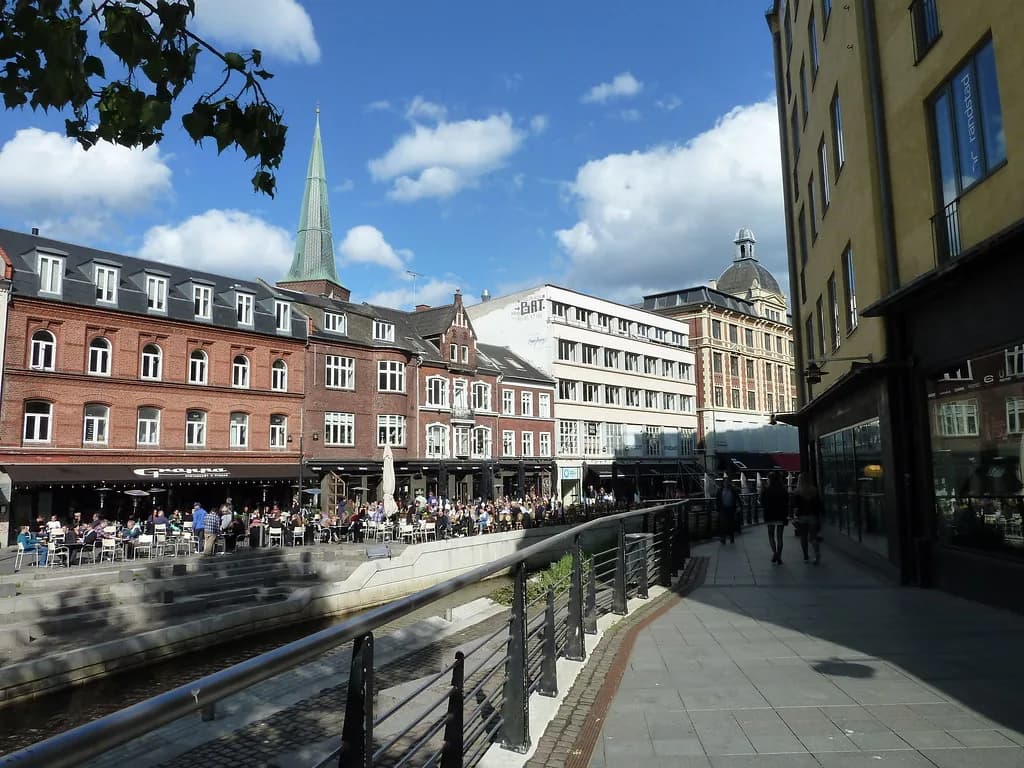
The harbor district (Odense Havn) is a 20-minute walk or a short bus ride from Munke Mose. Odense built a canal in the early 1800s to connect the city to Odense Fjord and the wider Baltic trade routes. The old industrial port has been converted into a residential and cultural waterfront over the past decade. It has a quieter, more local energy than Copenhagen's Nyhavn — which is a good thing. Nordatlantisk Hus on the harbor front hosts a restaurant with Nordic food and water views.
The standout evening stop is Anarkist Beer & Food, a craft brewery and kitchen operating out of a converted warehouse on the harbor. The brewery focuses on unfiltered lager, wheat beers, and experimental seasonal releases. A pint runs around 60–85 DKK (€8–€11). The kitchen serves small plates until around 21:00. It fills up on Thursday through Saturday evenings but rarely requires a reservation on weekdays. It is the most natural endpoint for the day before walking back to the station to catch a return train to Copenhagen.
Trains back to Copenhagen run until approximately 23:00 from Odense Central Station, with services at roughly 30-minute intervals after 19:00. The last direct IC3 service on most weekdays departs around 22:27. Check visitodense.com for any 2026 event-specific schedule changes, as the summer H.C. Andersen Festival in late July draws extra rail capacity.
Book in Advance: Essential 2026 Reservations
Odense has become increasingly popular with international tourists lately. The H.C. Andersen House requires timed entry tickets for all visitors. I suggest booking at least 14 days before your arrival in July and August. Admission is 165 DKK (€22) per adult and includes the Childhood Home.
If you plan to eat at sit-down restaurants beyond Storms Pakhus, book ahead. Restaurant Pasfall, known for New Nordic tasting menus, fills up weeks in advance. Street food at Storms Pakhus needs no reservation. Check visitodense.com for exact H.C. Andersen Festival dates — in 2026 the festival runs in late July and the city becomes noticeably busier, with outdoor performances around the museum and in Eventyrhaven.
The Danish Railway Museum and Brandts typically have capacity available at the door, though online pre-purchase saves time at busy periods. Den Fynske Landsby is rarely crowded except on summer Sundays. DSB train tickets are cheapest booked online well in advance — "Orange" fare tickets can be as low as 99 DKK (€13) each way from Copenhagen, compared to the full walk-up fare of 200+ DKK.
2026 Travel Essentials: Costs, Safety, and Timing
A realistic budget for a single day in Odense in 2026, excluding the train from Copenhagen, runs to approximately 500–700 DKK (€67–€94) per person. That breaks down as: H.C. Andersen's House 165 DKK, one afternoon museum 100–140 DKK, lunch at Storms Pakhus 120 DKK, Brunsviger and coffee 50 DKK, riverboat or bus 75–30 DKK, two drinks at Anarkist 120–170 DKK. If you skip one museum and stick to the park walk, the day comes in closer to 450 DKK.
Odense is one of the safest cities in Denmark for solo travelers and families alike. The city center is compact enough that the risk of getting lost or stranded is minimal. Petty theft is rare by European standards. The city is also fully accessible: the main pedestrian circuit between the station, the museum, and the old town has smooth surfaces throughout, and H.C. Andersen's House is fully step-free, with audio guides available in eight languages.
Timing matters more in Odense than in larger cities. Most museums are closed on Mondays from October through April. The best months for a day trip are May, June, and September — temperatures sit between 15–20°C, crowds are lower than July–August, and daylight extends past 21:00. The H.C. Andersen Festival in late July is worth planning around if you can: it fills the cobblestone streets with outdoor theatre and music. Check visitdenmark.com for current travel requirements and seasonal event calendars before you depart.
Add an Extra Day: Exploring Funen and Egeskov
Many travelers wonder is Odense worth visiting for more than a day. If you have extra time, Egeskov Castle is a must-see. It is one of Europe's best-preserved Renaissance water castles. The grounds include formal gardens, a vintage car collection, and a maze — allow four hours minimum. Admission is 265 DKK (€36) per adult. Reach it by bus and train in about 45 minutes from Odense, or by car in 30 minutes.
Alternatively, explore the coastal town of Kerteminde, about 20 kilometres east of Odense. It offers a genuine fishing-village atmosphere, good beaches, and the Fjord & Belt marine center where you can watch harbour porpoises. This is a perfect half-day add-on for families or nature-focused travelers arriving in summer. Viking Museum Ladby is also nearby — it houses the only preserved Viking ship burial mound in Denmark, located less than 20 kilometres from the city.
If your focus is the Funen countryside rather than specific attractions, a self-guided cycle along the Funen route (Fynske Alpe) passes through gentle hills, apple orchards, and small market towns within easy range of Odense. Bike rentals are available from most central hotels and hostels for around 100–150 DKK per day.
Frequently Asked Questions
Is a day trip to Odense from Copenhagen worth it?
Yes, it is absolutely worth the trip. The train journey is fast and comfortable. You can easily see the main fairytale sites and enjoy great food in one day.
How long is the train from Copenhagen to Odense?
The direct train takes about 75 to 90 minutes. DSB operates frequent services throughout the day. It is the most efficient way to travel between the cities.
What is the best month to visit Odense in 2026?
August is the best month to visit Odense. You can experience the H.C. Andersen Festival and enjoy warm weather. The city parks are also in full bloom then.
Odense is a city that captures the heart with its simplicity. Following this odense day trip itinerary 2026 ensures you see the best bits. The mix of history and modern culture creates a unique atmosphere. I hope you enjoy your time in this Danish gem.
Remember to book your museum tickets well in advance of arrival. Don't forget to try the local Brunsviger cake before you leave. Safe travels as you explore the home of Hans Christian Andersen. Denmark's third-largest city is waiting to surprise you with its charm.
You might also like
Continue reading
More guides you'll find useful