12 Best Things to Do in Aarhus Travel Guide (2026)
Discover the best things to do in Aarhus, Denmark. From the ARoS Rainbow Panorama to the Old Town, plan your trip with local tips on food and logistics.
12 Best Things to Do in Aarhus
After my third visit to the Jutland capital last autumn, I am convinced that Aarhus offers a more intimate Danish experience than Copenhagen. The city manages to blend ancient Viking roots with some of the most daring modern architecture in Europe. This guide highlights the essential sights while providing the local context you need for a smooth trip.
Updated for 2026, this article reflects the latest pricing and seasonal opening hours. Aarhus is compact enough to explore on foot, yet diverse enough to keep you busy for several days. Whether you want world-class art or quiet coastal forests, you will find it here.
Planning a trip to Denmark often leads to a tough choice between the major cities. Before you book your train, check out our guide on is Aarhus worth visiting to see how it fits your style. Most travelers find that the city's youthful energy and walkable streets make it a highlight of any Scandinavian itinerary.
Key Takeaways
- Best Overall: ARoS Aarhus Kunstmuseum for its world-class art and unique rooftop views.
- Best for Families: Den Gamle By offers an interactive and educational history experience for all ages.
- Best Rainy-Day: Aarhus Street Food provides a warm, sheltered space with dozens of global dining options.
- Best Free Activity: Salling Rooftop offers incredible city views and a glass skywalk at no cost.
- Seasonal Tip: The Infinite Bridge is only available from April to October; plan accordingly to avoid disappointment.
At a Glance
- Best time to visit: June to August (warm weather, Infinite Bridge installed)
- How many days: 2–3 days for main attractions, 4+ for coastal exploration
- Budget per day: 600–1,000 DKK food/activities (excluding accommodation)
- Getting there: 2 hours 45 minutes from Copenhagen by train (99 DKK advance tickets)
- Getting around: On foot or bicycle; Donkey Republic bike rentals 130–150 DKK/day
Copenhagen or Aarhus: Which City Should You Visit?
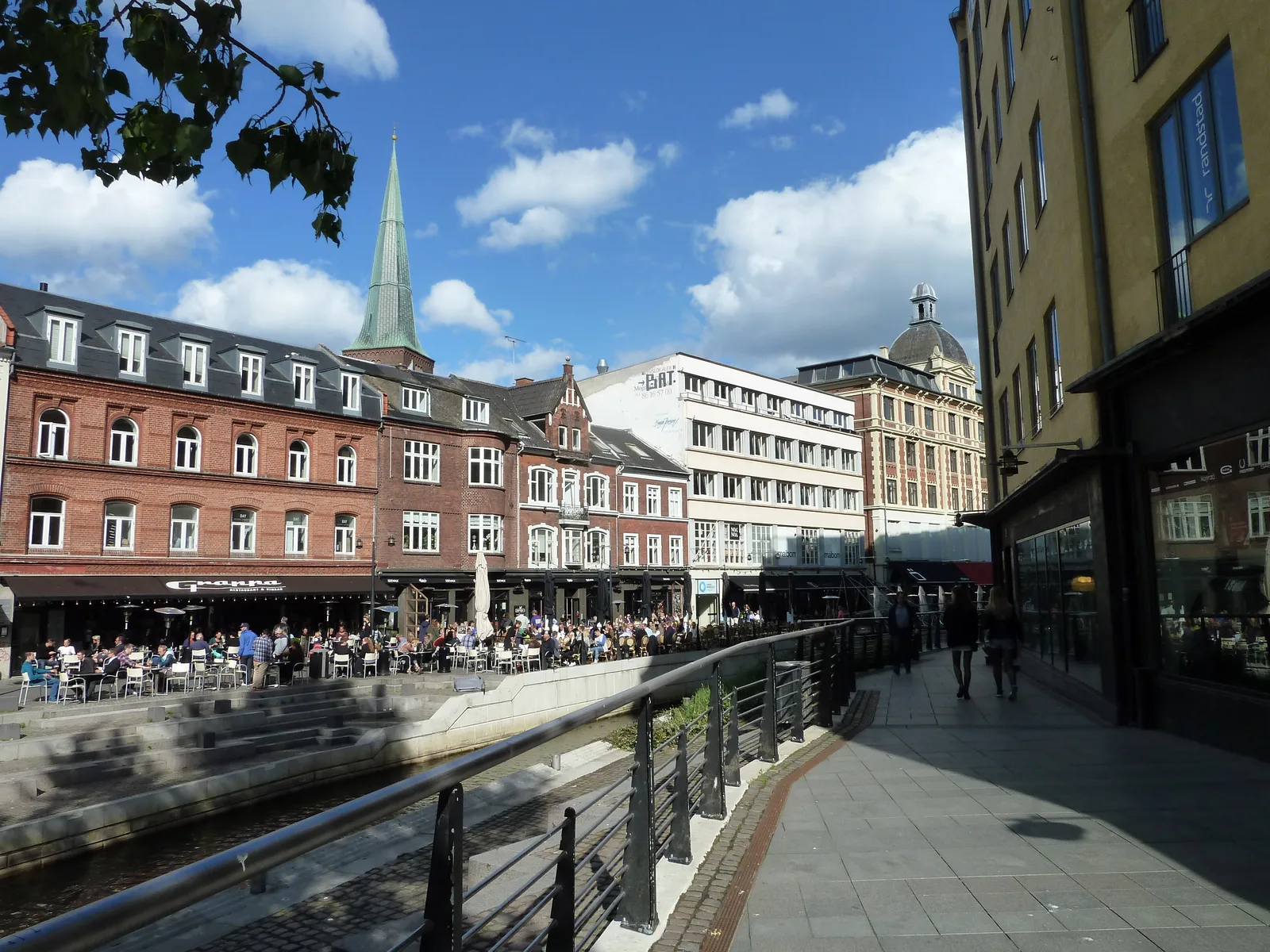
Copenhagen dominates the conversation about Denmark, but Aarhus wins on a different set of criteria. Copenhagen is a sprawling metropolitan capital with a dense tourist circuit; Aarhus is a compact university city where everything is within a twenty-minute walk and the queues are shorter. Nearly 300,000 people live in Aarhus compared to Copenhagen's 700,000 — that difference in scale is something you feel immediately when you arrive.
On price, Aarhus is marginally cheaper. A mid-range dinner in Aarhus typically runs 200–300 DKK per person; the same meal in Copenhagen is often 50–100 DKK more. Museum entry costs are similar in both cities, around 150–200 DKK. Budget hotels in Aarhus start around 700 DKK per night, while Copenhagen budget options rarely fall below 900 DKK.
On vibe, Copenhagen has Nyhavn and the grandeur of a capital city. Aarhus has the Latin Quarter and a genuine student-driven energy that keeps the bars full on Tuesday nights. On walkability, Aarhus wins clearly: the entire city center, the deer park, and the harbor all connect on foot or by bike without needing public transport. For a first trip to Denmark, Copenhagen is the natural starting point. For a second trip, or for travelers who prefer depth over breadth, Aarhus is the better choice.
12 Best Things to Do in Aarhus
The following list covers the absolute best Aarhus attractions that every first-time visitor should prioritize. I have grouped these to include iconic landmarks, hidden gems, and essential local food experiences. Most of these sites sit within a two-kilometer radius of the central train station, and you can cover the city-center highlights in two full days at a comfortable pace.
Keep in mind that many Danish museums close on Mondays, especially during the shoulder season. Always check the official websites for the latest holiday hours before you set off for the day. Many attractions offer discounted tickets for students and seniors with a valid ID.
-
ARoS Aarhus Kunstmuseum and Your Rainbow Panorama
- This world-class art museum holds the largest art collection in Denmark outside Copenhagen, with a signature circular glass walkway on the roof.
- Entry costs around 160–185 DKK (roughly $23–$27) and the ARoS Aarhus Kunstmuseum opens Tuesday to Sunday, 10:00–22:00 on Wednesdays and 10:00–17:00 on other days.
- The rainbow panorama sits 3.5 metres above the roof level. Visit around 20:00 on a summer evening for golden-hour color through the glass without the midday glare that bleaches photos between 12:00–15:00.
- Allow at least two hours inside and combine it with Møllestien Street directly afterward — it is a five-minute walk south.
-
Den Gamle By Open Air Old Town Museum
- This living history museum features over 75 historic houses relocated from across Denmark, covering four centuries from the 1600s to the 1970s.
- Tickets cost 145–200 DKK depending on the month, and the Den Gamle By - The Old Town Museum opens daily at 10:00.
- Located in the western city center, plan three to six hours; the sheer size surprises most first-time visitors.
- Try the traditional pastries at the 1885 bakery near the main entrance. If you visit in December, the museum transforms into one of Denmark's most atmospheric Christmas experiences.
-
Wander the Latin Quarter and Møllestien Street
- Møllestien is a 240-metre cobblestone lane lined with 18th-century houses painted in blues, yellows, and reds, covered in hollyhocks in summer. It is the most-photographed street in Aarhus.
- The street is free to visit at any time, but residents still live in these houses. Arrive before 09:00 to photograph the facades without tour groups blocking the doorways.
- The lane is short — you are through it in ten minutes — so combine it with a wider wander through the Latin Quarter's side streets: Klostergade, Mejlgade, and Graven all have independent cafés and design shops worth exploring.
- Café Drudenfuss on Graven 30 is the best breakfast stop in the quarter. The egg florentine and the outdoor seating for people-watching make it worth building your morning around.
-
Salling Rooftop and the Glass Skywalk
- The Salling Rooftop on Søndergade 27 offers a 360-degree view of Aarhus at no cost during department store hours, roughly 10:00–20:00 on weekdays (closes 19:00 Saturday, 18:00 Sunday).
- The glass skywalk extends out over the street below for a mild vertigo-inducing perspective. From up here you can spot the ARoS rainbow panorama, the cathedral spires, and the Aarhus Ø district all at once.
- Golden hour — around 21:00 in summer — produces the best harbor photographs from this vantage point. Arrive thirty minutes before sunset to claim one of the edge seats before the crowd builds.
- The rooftop is free year-round with no advance booking required, making it the city's best budget activity.
-
Indulge at Aarhus Street Food Market
- Housed in a converted bus garage at Ny Banegårdsgade 46, the Aarhus Street Food market packs over 30 stalls serving everything from Danish smørrebrød to Vietnamese bánh mì and Nepalese momos.
- Dishes cost 80–140 DKK, and the venue opens at 11:30 daily, closing around 21:00. It is directly beside the central bus station, making it an easy first or last stop.
- Look for the Danish tarteletter stall for a classic pastry shell filled with chicken and asparagus — it is the most distinctly local option in the hall.
- On rainy days, this is the warmest and most social indoor spot in the city. The communal tables fill up fast on Friday evenings.
-
See the Deer at Marselisborg Dyrehave
- This free-to-enter deer park south of the city allows you to walk among sika and fallow deer in a coastal forest setting. The animals are habituated to humans and will often approach you on the path.
- Note that feeding the deer is not permitted here, and during the autumn rutting season (September–October) you should maintain a safe distance as the males become territorial.
- The park is open year-round from sunrise to sunset. A fifteen-minute bike ride south along the coastal path from Aarhus brings you directly to the park entrance.
- Combine this visit with the Infinite Bridge at Ballehage Beach, which is a ten-minute walk further south.
-
Cycle the Scenic Coastline Toward the Beaches
- The cycling route south from Aarhus passes the royal Marselisborg Palace gardens (free to enter when the royals are not in residence), the deer park, and continues to Moesgaard Beach — a 12-kilometre round trip with almost no significant hills.
- Bike rentals cost around 130–150 DKK per day via the Donkey Republic app (look for the orange bikes). Return to a designated drop-off point; stranding a bike outside the zone triggers a fine.
- Check the wind direction before setting off. The prevailing westerly wind in Jutland can make the return leg against the breeze significantly harder than the outward leg. Start north-to-south in the morning when wind is lightest.
- The coastal path north of the city toward Risskov forest is a shorter and flatter option if you want a forty-minute leisure ride rather than a half-day expedition.
-
Aarhus Cathedral and the Underground Viking Museum
- Dating from the 12th century, Aarhus Cathedral is the longest church in Denmark at 93 metres, with medieval frescoes that cover nearly the entire interior vault.
- Entry to the cathedral is free; the tower climb costs around 35 DKK and gives a rooftop perspective that rivals Salling.
- Directly beneath the adjacent streets sits the Aarhus Viking Museum, built around the foundations of a 10th-century Viking settlement discovered during construction work in the 1960s. Entry costs around 60 DKK.
- Visit both together as a single "Viking history block." The combination of walking from a living cathedral into a below-ground excavation site — within fifty metres of each other — captures Aarhus's layered history more efficiently than either site alone.
-
Explore Modern Architecture in Aarhus Ø
- Aarhus Ø (Aarhus East) is the city's redeveloped harbour district, a showcase of contemporary Danish architecture built on reclaimed land over the last fifteen years.
- The landmark Isbjerget complex at the waterfront was designed to resemble a calving iceberg, with white angular facades that tilt at different angles. Walking around it is free.
- The Lighthouse building at 142 metres is the tallest completed structure in Denmark. The paid Aarhus Øje viewpoint at its summit costs around 140 DKK but gives a wider panorama than Salling Rooftop.
- Dokk1, the city's main public library and cultural centre, sits just west of the Ø district and is free to enter. Its riverfront promenade is one of the best places to sit with a coffee on a summer afternoon.
-
Walk the Infinite Bridge at Varna Beach
- Den Uendelige Bro — the Infinite Bridge — is a circular wooden pier that extends into Aarhus Bay, designed so that walkers circle back to their starting point without ever reaching an end.
- The bridge is free to walk but is only installed from approximately April through October each year. It is taken down in winter to protect the timber from storm damage. Do not plan a winter visit around it.
- It sits at Ballehage Beach near Varna Palæet, around 4 kilometres south of the city center. Cycling is the best way to reach it; combine the trip with Marselisborg Dyrehave.
- Early morning visits — before 09:00 in summer — give you the bridge almost to yourself with low-angle light across the water.
-
Moesgaard Museum Prehistoric Exhibits
- This award-winning museum 10 kilometres south of the city sits inside a sloping grass-roofed building that blends into the hillside. The Grauballe Man, a 2,400-year-old Iron Age bog body preserved in remarkable condition, is the centrepiece exhibit.
- Tickets cost 160–175 DKK and the museum opens daily 10:00–17:00 (closes 21:00 on Thursdays). Bus 18 departs from Park Allé in the city center.
- Walk up the sloping grass roof after your visit for a panoramic view of the bay. The museum's forested grounds connect to hiking trails toward Moesgaard Beach.
- Plan half a day rather than just an hour: the Stone Age through Viking Age walk-through is genuinely absorbing, and the drive south passes the royal palace grounds.
-
Street Art and the Self-Guided Møllestien Walk
- Aarhus has a dense concentration of large-scale murals, partly driven by its substantial university population and the annual Create Aarhus art events. The best-known piece is "The Seagull Kiss" on Fiskergade, designed by Danish artist Hans Krull.
- A practical 30-minute self-guided route links most of the central murals: start at Møllestien for the architectural photography, walk north along Fiskergade to the Seagull Kiss, then cut through the Latin Quarter side streets where smaller tagged works appear on building ends and courtyard walls.
- The full map of Aarhus street art is available via aarhusinside.dk, which plots over 40 murals across the city. Searching "Street Art Aarhus" on Google Maps also surfaces individual pins.
- Unlike many Scandinavian cities where street art is confined to industrial suburbs, Aarhus murals sit within the walkable city center. You will pass several without seeking them out.
Where to Stay in Aarhus: Neighborhood and Hotel Guide
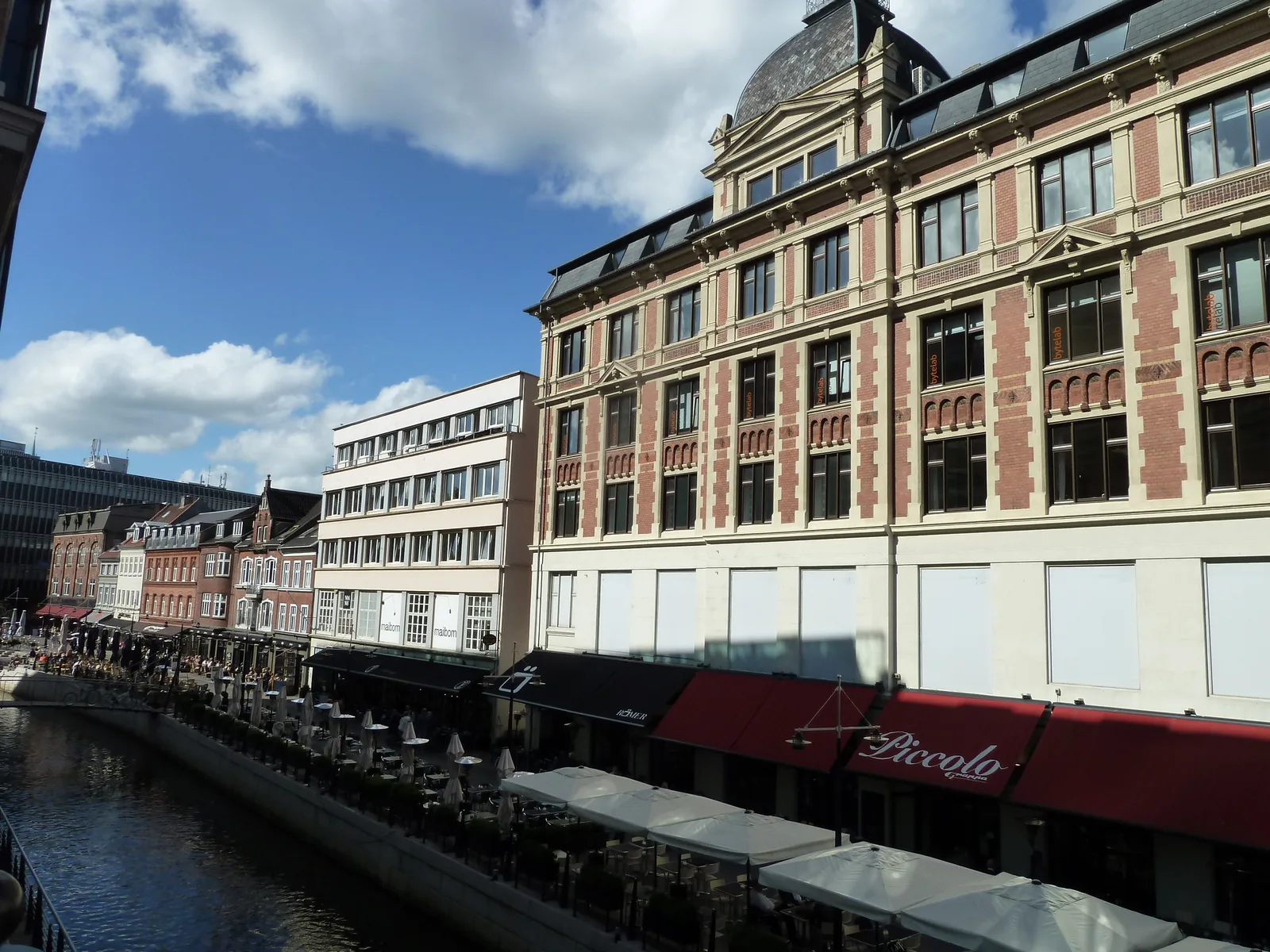
The Latin Quarter is the most atmospheric base for first-time visitors. Boutique hotels and rental apartments here put you within a five-minute walk of the cathedral, Møllestien Street, Café Drudenfuss, and the best independent coffee shops. Narrow streets and old brick buildings give this area a character that no other part of the city replicates. Budget for 900–1,400 DKK per night for a decent double room in this zone.
| Neighborhood | Best For | Walk to Center | Price Range | Vibe |
|---|---|---|---|---|
| Latin Quarter | First-time visitors | Walking | 900–1,400 DKK | Historic, bohemian |
| Frederiksbjerg | Food lovers, local life | 10 minutes | 700–1,100 DKK | Residential, quiet |
| Aarhus Ø | Modern architecture, harbor views | 20 minutes | 1,200+ DKK | Contemporary, waterfront |
| Central Station Zone | Budget travelers | Walking | 550–700 DKK | Transit hub, affordable |
Frederiksbjerg, the residential neighborhood directly south of the central station, is the best choice for food-focused travelers. The area has a concentration of neighborhood bistros, morning bakeries, and the kind of quiet residential atmosphere that feels closer to local life than the tourist center. It is a ten-minute walk from most major sights. Mid-range hotels and Airbnb apartments here typically run 700–1,100 DKK per night.
For the most modern option, look toward the Aarhus Ø district on the waterfront. Hotels here offer sea views and easy access to the harbor bath in summer. Rates tend to be higher — 1,200 DKK and up for a standard room — and the area is a twenty-minute walk from the Latin Quarter. Budget travelers should consider WakeUp Aarhus or CABINN, both of which sit near the central station with rates from around 550–700 DKK per night. Regardless of category, look for hotels with an "8000 Aarhus C" postcode to stay within the walkable center.
Essential Logistics: Getting to and Around Aarhus
Most international travelers arrive via Copenhagen Airport and take a direct DSB train to Aarhus Central Station. The fastest services cover the 300-kilometre journey in approximately 2 hours 45 minutes. Advance "Orange" tickets on the DSB website start from 99 DKK ($14) — the price rises sharply closer to departure. Book a seat reservation separately; standing for three hours on a delayed train is a well-documented Aarhus visitor experience.
From abroad, Billund Airport (one hour by bus and train via Vejle) handles more international routes than Aarhus Airport. Budget carriers including Ryanair and easyJet serve Billund from several European cities. By ferry, Kombardo Expressen operates a bus-plus-boat service from Copenhagen via Sjællands Odde in roughly three and a half hours — a scenic alternative worth considering in good weather.
Aarhus Central Station sits at the southern edge of the city center. Walking covers most attractions; the transit app Rejsekort handles buses for longer trips. Biking is the most efficient method for reaching the outer sights like Moesgaard Museum or Marselisborg Dyrehave. The Donkey Republic app offers city bike rentals from around 130–150 DKK per day, with dedicated bike lanes throughout the center. The light rail (Letbanen) runs east–west across the city if you need a rest from walking.
Frequently Asked Questions
How many days do you need to see Aarhus?
You should plan for at least two to three days to see the main attractions. This allows time for the major museums like ARoS and Den Gamle By without rushing. A third day is ideal for exploring the coastal forests and the Moesgaard Museum.
Is Aarhus expensive for tourists?
Aarhus is moderately expensive, similar to other major Scandinavian cities. You can save money by eating at the street food market and using the free city bikes. Most major museums have entry fees between $20 and $30 per person.
What is the best time of year to visit Aarhus?
The best time to visit is from June to August when the weather is warm and the Infinite Bridge is installed. September is also excellent for the Aarhus Festival, which brings art and music to the streets. Winters are cold but cozy for museum hopping.
Aarhus is a city that rewards slow exploration and a curious mind. From the vibrant colors of the ARoS panorama to the quiet paths of the deer park, it offers a perfect balance of culture and nature. I hope this guide helps you navigate the best Aarhus attractions during your upcoming Danish adventure.
Remember to pack a good pair of walking shoes and a windproof jacket for the coastal paths. The Jutland wind catches visitors off guard even in summer, particularly on the Infinite Bridge and the coastal cycling route south. For more tips on planning your Nordic journey, check our full Aarhus guide for the latest updates on what to skip and where to spend your limited days wisely.
Explore More Aarhus Guides
Deep-dive guides for planning an Aarhus trip — what to do, where to eat, getting there, and seasonal highlights.
You might also like


Continue reading
More guides you'll find useful