

Is Aarhus Worth Visiting? 11 Things to Know Before You Go
Is Aarhus worth visiting? Discover the verdict in our complete guide covering 11 essential things to know, from the ARoS rainbow to budget tips and street food.
On this page
Is Aarhus Worth Visiting? 11 Things to Know Before You Go
Yes, Aarhus is absolutely worth visiting for its unique blend of modern art and Viking history. If you prefer a much larger metropolis with more nightlife options, consider visiting Copenhagen instead. Updated for 2026 after a recent spring visit to the Jutland peninsula.
I visited Aarhus expecting a quiet university town but found a vibrant cultural powerhouse. The city feels more manageable than the capital while offering world-class museums and dining. Walking through the Latin Quarter, I felt genuine Danish hygge without the massive tourist crowds. My honest opinion is that it offers a more authentic look at modern Danish life.
Is Aarhus Worth Visiting? The Verdict
Aarhus is Denmark's second-largest city and, for many visitors, the more enjoyable one. It has a world-class art museum, a genuinely historic quarter, and coastline within cycling distance of the center. Crowds are a fraction of what you encounter in Copenhagen, and the overall atmosphere feels lived-in rather than staged for tourism.
The city suits art lovers, history buffs, and anyone who wants to understand modern Denmark beyond the capital's polished surface. It is less suited to visitors who need a dense nightlife scene or a wide selection of luxury hotels. If your itinerary already includes Copenhagen, adding Aarhus for two nights turns a capital trip into a genuine Jutland experience.
The biggest caveat for 2026 is timing: the Infinite Bridge (Den Uendelige Bro) is only in place from late April through October, so a winter visit means missing one of the coast's most photographed landmarks. Plan around that and the city rewards you at any season.
Aarhus vs. Copenhagen: Which is Better?
Deciding between Aarhus and Copenhagen often depends on your preferred pace of travel. Copenhagen offers grand palaces and a bustling international feel that is hard to beat. Aarhus provides a more intimate experience where you can walk across the center in twenty minutes. Local prices for coffee and meals are roughly 10–15% lower here than in the capital.
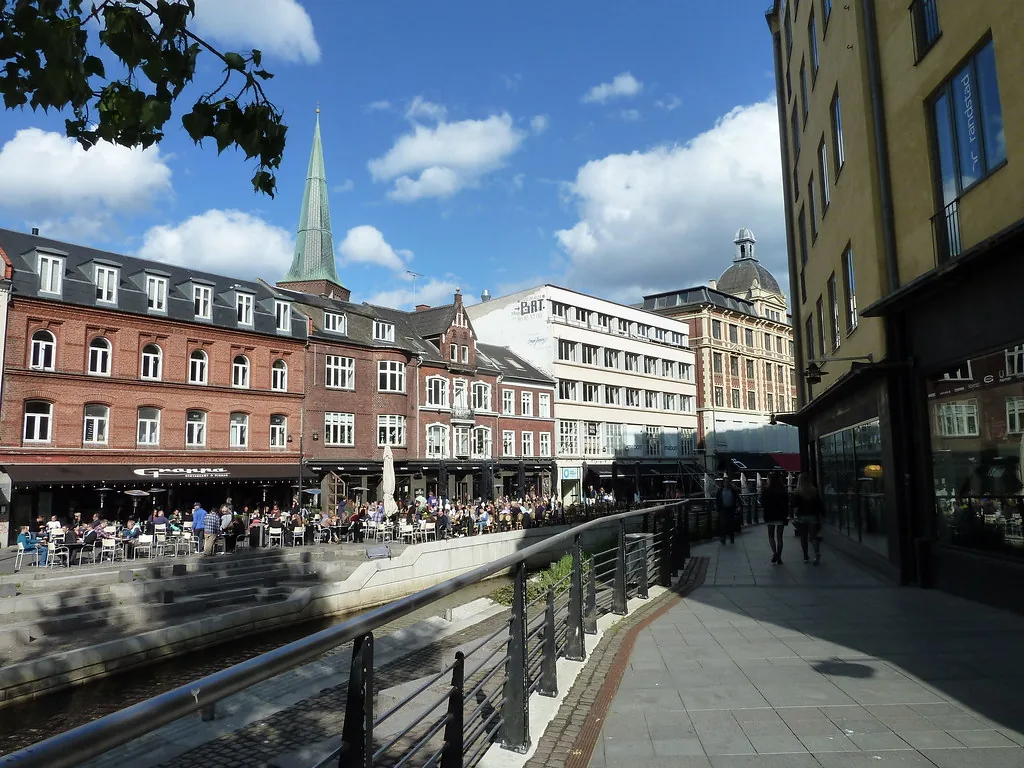
The coastal scenery in Aarhus adds a natural element that Copenhagen lacks in its dense center. Cycling to the Marselisborg forests takes only ten minutes from the shopping streets. I found the locals in Aarhus to be more relaxed and willing to chat with visitors. However, the shopping selection is notably smaller than what you find on Strøget.
Choosing Aarhus lets you explore the top attractions without long transit times. Most major sites are clustered together, making it perfect for those who dislike public transport. The city also serves as a better gateway if you plan to explore the rest of Jutland. Ultimately, Aarhus feels like a lived-in city rather than a purely tourist destination.
- Pros of choosing Aarhus: extremely walkable center, world-class ARoS Museum, more affordable dining, authentic Latin Quarter atmosphere, easy access to beaches and forests.
- Cons to consider: fewer international flight connections, smaller selection of luxury hotels, many shops close early on Sundays, strong coastal winds from November to March, limited nightlife compared to the capital.
How Many Days Do You Need in Aarhus?
Two full days covers the essential highlights without feeling rushed. On day one you can do ARoS in the morning, the Latin Quarter and Møllestien in the afternoon, and the Salling Rooftop at sunset. Day two handles Den Gamle By and the Aarhus Street Food hall in the evening.
A third day is worth it if you want to reach Moesgaard Museum or cycle down the coast to Den Uendelige Bro. Both require a half-day and are best done when the weather cooperates. I stayed four nights and did not run out of things to do, particularly once I started exploring Frederiksbjerg and the Aarhus Ø harbor district.
Day trips from Copenhagen are possible — the train takes roughly two hours and 45 minutes on a fast DSB service — but they make for an exhausting day. You spend about five and a half hours in transit for perhaps seven hours in the city. Staying overnight transforms the experience; evening light in the Latin Quarter is among the best things Aarhus offers.
Best Time to Visit for a City Trip
May, June, and September are the sweet spot for an Aarhus city trip. The Infinite Bridge is open, the Marselisborg Dyrehave deer park is at its greenest, and crowds have not yet reached July–August peak levels. Hotel prices in September are noticeably lower than mid-summer rates.
July and August bring the Aarhus Festival (last week of August), which fills the city with free outdoor concerts and events. It is an excellent time to visit but expect higher accommodation prices and fuller restaurants. Book at least three weeks in advance if you want a central hotel during festival week.
Winter visits are quieter and cheaper. Christmas markets run from mid-November through December, and Den Gamle By transforms into a fully decorated Christmas experience. The Salling Rooftop terrace turns into a festive spectacle of lights and music in December. Just accept that Den Uendelige Bro will not be there, and dress for coastal winds.
| Season | Weather | Crowds | Price | Top Feature |
|---|---|---|---|---|
| June–August | Warm, 15–20°C | Peak | High | Festival (late Aug), long days |
| May & September | Comfortable, 12–17°C | Moderate | Low–Mid | Infinite Bridge open, all attractions |
| October–April | Cold/windy, 0–8°C | Low | Low | Infinite Bridge closed, cosy cafés |
| December | Cold, −1 to 3°C | Low–Mod | Mid | Christmas markets, festive Den Gamle By |
How to Get to Aarhus
By train from Copenhagen the journey takes two hours and 45 minutes on the fastest DSB InterCity Express services. Advance "orange tickets" start from 99 DKK (around €13) when booked early on the DSB app. Book a reserved seat alongside your ticket — the Copenhagen–Aarhus route fills up on Friday afternoons and Sunday evenings.
Flixbus connects Central Copenhagen to Aarhus bus station in roughly three hours and is often the cheapest option, regularly under 100 DKK. The scenic alternative is the Kombardo Expressen ferry from Sjællands Odde: a shuttle bus from Copenhagen, a ferry across the Kattegat, and a bus into the city center. The combined journey takes about three and a half hours and is a genuine highlight in summer.
Flying is also an option. Billund Airport, about an hour south, serves more international routes than Aarhus Airport and is the practical entry point for visitors coming from the UK, Germany, or elsewhere in Europe. From Billund, take the bus to Vejle and a direct train to Aarhus — the combined journey is around 60 to 70 minutes. From Aarhus Airport, the airport bus runs directly into the city center in about an hour.
Where to Stay: Top Neighborhoods
The Latin Quarter is the most atmospheric place to base yourself. You are within five minutes of ARoS, Den Gamle By, the Cathedral, and the Botanical Garden. Streets here are narrow and cobbled, and the hotels tend to be smaller boutique properties rather than chains. Expect to pay more for the location.
Frederiksbjerg sits just south of the main train station and is the neighborhood locals actually live in. It has excellent independent coffee shops and bakeries, and the best mid-range restaurants are concentrated here. It is slightly less central than the Latin Quarter but very walkable and usually 10–15% cheaper for accommodation.
Budget travelers should look at CABINN Aarhus, which offers clean, compact rooms close to the station from around 600 DKK per night. For most visitors, any hotel with an "8000 Aarhus C" postcode puts you within the city center and removes the need for public transport entirely. Parking in the center is available but expensive — around 25–35 DKK per hour.
Is Aarhus Expensive? Budget Tips
Denmark is famously expensive, but Aarhus offers several ways to manage costs. A casual meal at Aarhus Street Food runs roughly 100 to 140 DKK. Coffee at a local café costs 45–55 DKK. A sit-down dinner at a restaurant in Frederiksbjerg typically starts at 200 DKK per person for a main course.
Museum entry is where costs add up: ARoS costs 175 DKK, Den Gamle By 190 DKK, and Moesgaard Museum around 165 DKK in 2026. The Aarhus Card covers entry to more than 25 attractions plus unlimited public transport. A 24-hour card is 329 DKK and a 48-hour card is 429 DKK — for a two-day visit where you hit ARoS and Den Gamle By alone that is 365 DKK in tickets, meaning the 48-hour card at 429 DKK adds all transport and 23 more venues for just 64 DKK extra. It is worth it the moment you plan to see three or more museums.
The Salling Rooftop viewpoint is completely free and rivals paid alternatives. Tap water in Denmark is excellent, saving you money over bottled water. Cycling the coastline requires only a bike rental (from around 100 DKK per day via the Donkey Republic app) and costs nothing beyond that. The Aarhus Cathedral and the Botanical Garden are both free to enter.
- ARoS Museum: 175 DKK, open Tuesday–Friday 10:00–21:00, weekends 10:00–17:00.
- Den Gamle By: 190 DKK, open daily 10:00–17:00 (extended hours in summer).
- Moesgaard Museum: 165 DKK, closed Mondays.
- Aarhus Card: 329 DKK (24h) / 429 DKK (48h) — covers transport and 25+ attractions.
- Street Food meal: 100–140 DKK. Coffee: 45–55 DKK. Budget dinner: from 180 DKK.
Top Things to Do and See in Aarhus
The ARoS Aarhus Kunstmuseum is the city's most iconic landmark. The Your Rainbow Panorama walkway on the roof — a 150-meter circular glass corridor floated 3.5 meters above the building — gives a surreal, color-filtered view of the entire city and bay. Below it, the galleries hold the largest art collection outside Copenhagen, including Ron Mueck's four-and-a-half-metre "Boy" sculpture. Plan two to three hours minimum.
Den Gamle By is an open-air museum that walks you through 400 years of Danish history. Unlike most heritage museums, it includes a remarkably authentic 1970s street with a vintage electronics shop, a bakery, and period advertising. Staff in costume work the historic sections. Set aside at least four hours — rushing it is a disservice. The free Salling Rooftop on Søndergade 27 offers arguably the best city panorama at zero cost; it is open daily from 10:00 and is an easy first or last stop on any walk through the center.
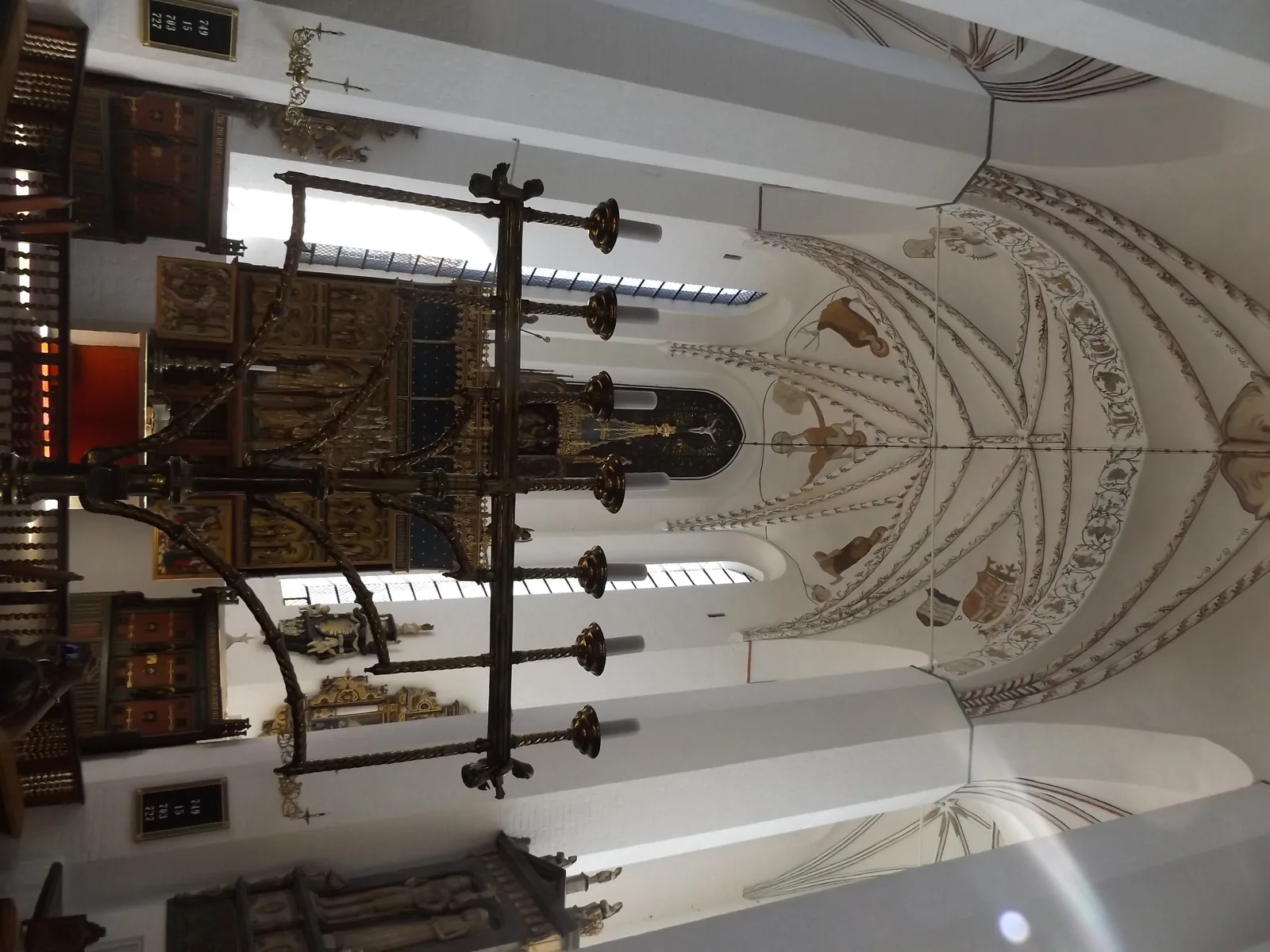
The Latin Quarter (Latinerkvarteret) rewards slow walking. Streets like Graven, Mejlgade, and Klostergade are lined with independent design shops, coffee houses, and small galleries. Møllestien, a 240-meter cobbled alley in the heart of the quarter, is the city's most photographed street: small houses painted in yellows, blues, and reds, with hollyhocks climbing the facades in summer. The Aarhus Cathedral (Domkirke), a Gothic structure from the 12th century, sits at the center — entry is free.
Marselisborg Dyrehave is a free deer park ten minutes by bike from the shopping streets. Dozens of deer roam freely and approach visitors. Do not feed them, and keep your distance in autumn rutting season. The Aarhus Ø district showcases the city's architectural ambition: the Isbjerget apartment complex, the Aarhus Øje viewpoint atop Denmark's tallest building (142 metres), and the harbor baths at Havnebadet are all within a short walk of each other.
Grab Some Local Street Food
Aarhus Street Food on Ny Banegårdsgade 46 is the city's best casual eating option. It is a large indoor hall with stalls covering Italian, Arabic, Vietnamese, Nepalese, Danish, and many other cuisines. A full meal costs 100–140 DKK and the quality is consistently high. It opens daily at 11:30 and closes at 21:00, except on Christmas and New Year's Eve.
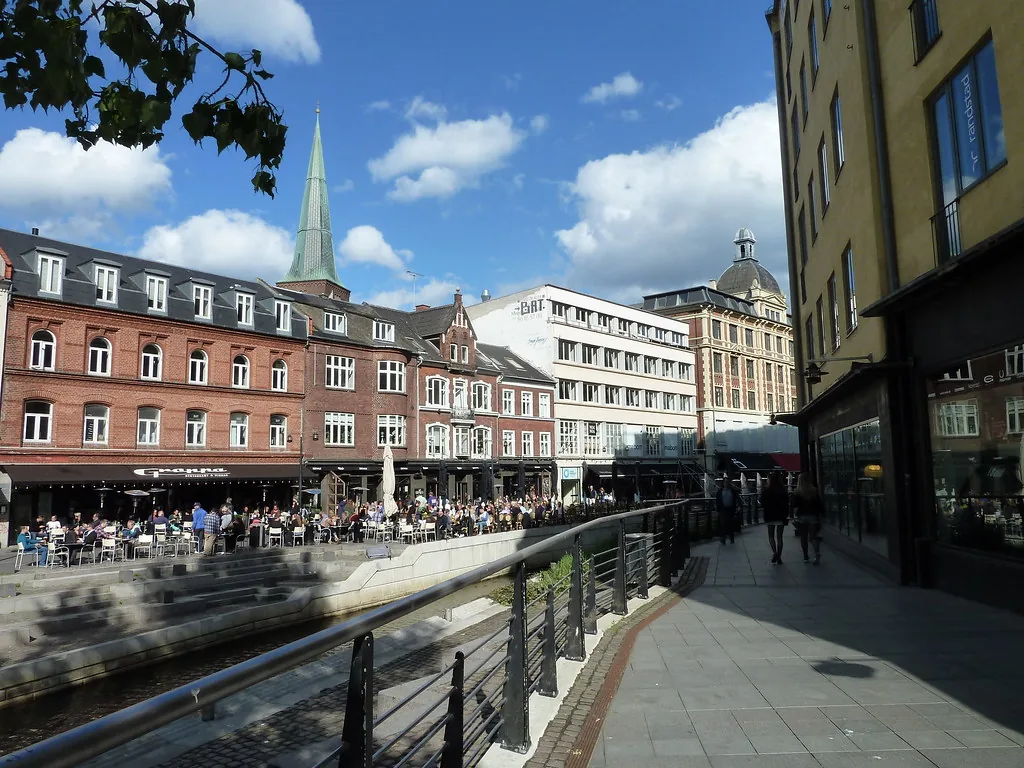
For a more local dining choice, Café Drudenfuss on Graven 30 in the Latin Quarter is the insider pick over the tourist-heavy spots on the main pedestrian street. The egg florentine at brunch and the fish and chips at dinner are both worth ordering. You can sit outside on the cobblestones in good weather. Book in advance for weekends.
Mammis Gelato on Rosensgade 34 is the best ice cream stop in the center. The gelato-style scoops are richer than typical Danish soft-serve and the queue on a warm afternoon moves quickly. Frederiksbjerg's bakeries are worth a morning stop before the main museums open — the Danes take their pastries seriously, and the neighborhood cafés reflect that.
Moesgaard Museum: The Aarhus Advantage
Every competitor guide mentions Moesgaard Museum in passing, but it deserves more than a line item. Located 30 minutes south of the center by bus 18, it is one of the best-designed museums in Scandinavia. The building itself slopes into a hillside — you can walk up and over the grass-covered roof for panoramic views across the forest and the sea below.
Inside, the museum covers human history from the Stone Age through the Viking Age with exceptional clarity and production values. The standout exhibit is Grauballe Man, a 2,400-year-old bog body found in Jutland in 1952 and preserved in near-perfect condition. His face, hair, and fingernails are intact. No amount of reading prepares you for the experience of standing in front of him — it is the most viscerally memorable moment in Danish museum-going, and Aarhus is the only place in the world you can see it.
The museum has a good café with views over the surrounding landscape. Budget four hours for the full visit. If the Aarhus Card is in your wallet, entry is covered. Without it, admission is around 165 DKK in 2026. Moesgaard is the single strongest argument for spending three nights in Aarhus instead of two.
Exploring the Surroundings of Aarhus
Aarhus sits at the edge of Jutland's most varied landscape. A short bike ride south along the coast leads to Ballehage Strand and the Infinite Bridge. The wooden circular pier extends into Aarhus Bay and circles back on itself, giving walkers an unbroken 360-degree view of the water and the Marselisborg forest behind the beach. It is free, open from roughly late April to October, and one of the most calming experiences in the region.

Mols Bjerge National Park is reachable in about 40 minutes by bus 123 from the Rutebilstation (the main bus station). It is a rolling, hilly landscape unusual for Denmark — think heath-covered hills rather than flat farmland. The nearby town of Ebeltoft has colorful half-timbered buildings and a restored 18th-century warship worth a few hours of exploration. Both are easy half-day trips from Aarhus.
Aalborg is two hours north by train and a worthwhile overnight if your schedule allows. LEGOLAND in Billund is an hour south by bus and train, well-suited to visits with children. The area around Aarhus makes a strong case for spending extra days in Jutland rather than simply commuting back to Copenhagen.
Practical Tips for a Smooth Visit
Card payments are accepted virtually everywhere in Aarhus — restaurants, taxis, market stalls. You do not need Danish Krone in cash. The Donkey Republic app (orange bikes) offers the easiest bike rental; return the bike to a designated dock or you will be charged a free-roaming fee. Bikes make the coastal route and the deer park far more enjoyable than any bus alternative.
Museums generally open at 10:00 and are quietest in the first hour. Mondays are often closed days for smaller galleries and some shops. ARoS is open until 21:00 on Tuesday through Friday, which makes a weekday evening visit an effective way to avoid the weekend crowd. Book Den Gamle By tickets online to save queuing time, especially in summer.
If you are cycling to Den Uendelige Bro, confirm it is installed before heading out — the exact April opening date shifts year to year and Google Maps sometimes shows outdated information. Pack a windproof layer regardless of the season; the Jutland coast can be biting even in July. The DSB train app handles all public transport in the Aarhus region and accepts international credit cards without issue.
Frequently Asked Questions
Is Aarhus cheaper than Copenhagen?
Yes, Aarhus is generally 10-15% cheaper than Copenhagen for dining and accommodation. While still expensive by global standards, you will find better value in local cafes. Many major attractions are also within walking distance, saving you daily transport costs.
How many days do you need for Aarhus?
You need two full days to see the main highlights like ARoS and Den Gamle By. A third day allows for a trip to the Moesgaard Museum or the coastline. Most visitors find that 48 hours is the perfect duration for a city break.
Is the Aarhus Card worth it?
The Aarhus Card is worth it if you plan to visit at least two museums per day. It includes free public transport and entry to over 25 attractions. For a 24-hour intensive sightseeing trip, it provides excellent savings over individual tickets.
Aarhus is a gem of a city that proves Denmark is more than just Copenhagen. From the rainbow rooftop of ARoS to the cobblestones of the Latin Quarter, it charms every visitor. Plan your visit for late spring or early autumn in 2026 to ensure you see the Infinite Bridge and avoid the August festival crowds. You will likely leave Aarhus already planning your next trip back to Jutland.
You might also like


Continue reading
More guides you'll find useful


