Aarhus Cathedral Guide: History, Art, and Visiting Tips
Explore Aarhus Cathedral, Denmark's longest church. Discover Gothic frescoes, the Bernt Notke altarpiece, and practical tips for family treasure hunts.
On this page
Aarhus Cathedral (Aarhus Domkirke)
Aarhus Cathedral stands as a massive red brick landmark in the center of Denmark's second-largest city.
Visitors often find themselves marveling at the scale of this structure while wandering through the historic Store Torv.
Many travelers wonder is Aarhus worth visiting for its historical sites alone.
This cathedral provides a definitive answer with its record-breaking dimensions, centuries of preserved Danish art, and a collection of interior details that reward a slow, careful visit.
Aarhus Cathedral: A Landmark in the Heart of Aarhus
The cathedral occupies a commanding position at Store Torv and Bispetorv in the old center of Aarhus. Its red brick exterior dominates the skyline and provides an orienting point for anyone exploring the medieval street grid nearby. The square in front of the church opens wide enough that you can step back and take in the full length of the facade without craning your neck.
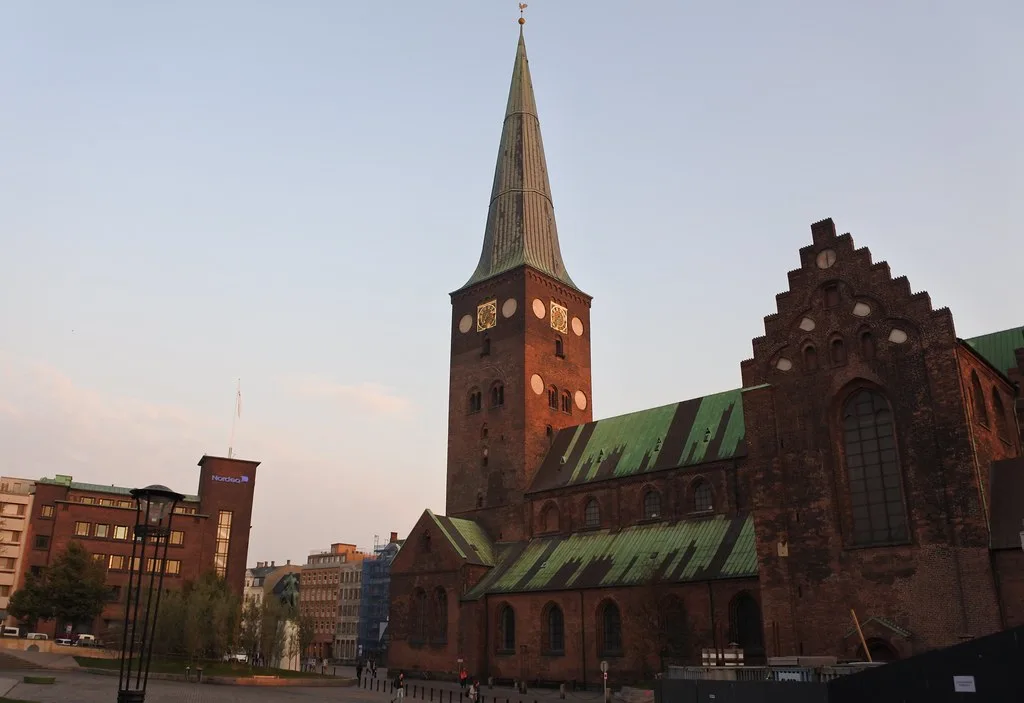
It is one of the most significant Aarhus attractions for anyone interested in Nordic history. The building stretches 93 meters from end to end, making it the longest church in Denmark. Its tower reaches 92 meters, a height that remained unchallenged among Danish church spires for centuries. Morning light hitting the high Gothic windows from Bispetorv creates some of the best photography conditions in the city.
The cathedral remains an active Lutheran parish church, which means you will share the space with worshippers on Sunday mornings. Visiting mid-week in the late morning generally gives you the quietest experience. The building is a working symbol of the city's continuity from a Viking-era settlement through to a modern cultural hub.
The Legend of St. Clement: History and Origins
The church is dedicated to St. Clement, the patron saint of sailors. According to legend, Clement was martyred by being tied to an anchor and thrown into the sea. Aarhus was a maritime trading city, and the choice of this particular saint directly reflected the livelihoods of the people who first built here.
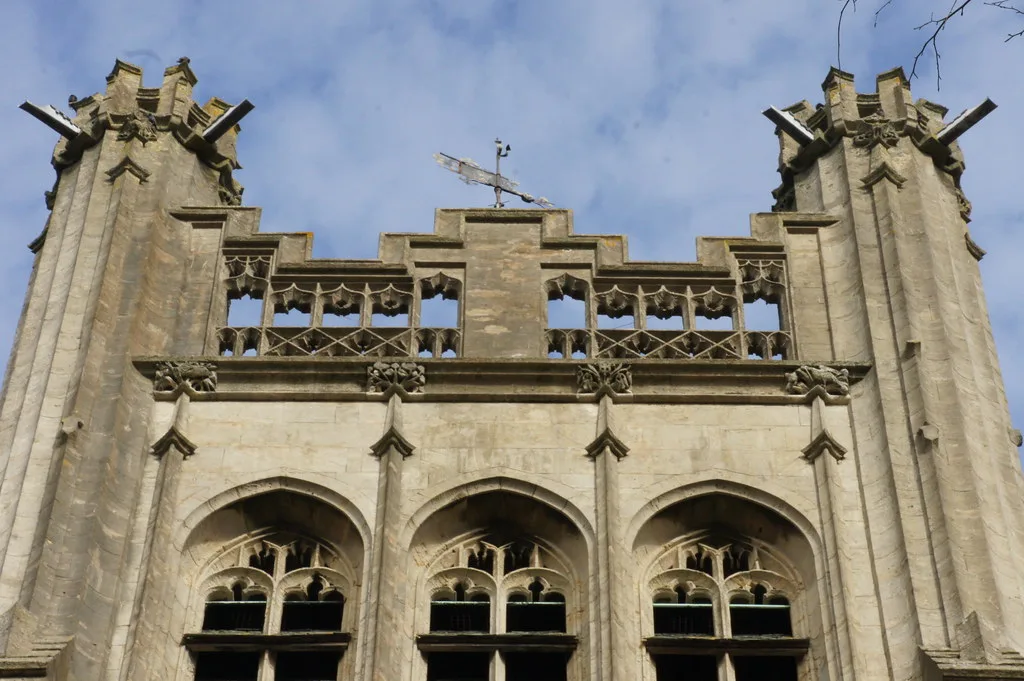
Bishop Peder Vognsen began construction of the original church between 1180 and 1200 on a site where a smaller wooden structure dedicated to St. Clement already stood. The relics of a local saint named Niels were also kept here, giving the site dual significance in early Danish Christianity. Historians mark this founding as one of the earliest major building projects in medieval Jutland.
Anchor motifs appear throughout the interior as a direct reference to St. Clement's martyrdom. Look for them in the fresco panels, carved decorative details near the choir, and in the iconography surrounding the main altar area. Knowing the legend in advance transforms what might seem like decorative details into a coherent visual language running through the entire building.
Architectural Transformation: From Romanesque to Gothic
The original church was built in the Romanesque style, with half-rounded arches, thick walls, and a flat timber ceiling. Construction completed around 1300 produced a solid but relatively low interior. A fire in 1330 caused serious damage and the building was largely abandoned until 1449, when reconstruction began under conditions that would change its character entirely.
By 1449 the Gothic style had reached Denmark, and Bishop Jens Iversen Lange led a comprehensive transformation of Aarhus Domkirke. The nave was elevated to receive star vaults, the side aisles gained cross vaults and larger windows, and a new west tower was built bearing the bishop's coat of arms. The renovations continued through the 1490s under Bishop Niels Clausen, who extended the choir with an ambulatory. The building reached its current 93-meter length by around 1500.
The use of red brick throughout is a hallmark of the Baltic Gothic style common across Northern Europe. It allowed for taller, lighter structures compared to the heavy stone construction of French Gothic cathedrals. The following table compares Aarhus Cathedral's dimensions to the other major historic cathedrals in Denmark.
| Cathedral | Length | Tower/Spire Height | Style & Notes |
|---|---|---|---|
| Aarhus Cathedral (Aarhus Domkirke) | 93 meters | 92 meters | Gothic and Romanesque — Denmark's longest church |
| Roskilde Cathedral | 86 meters | 75 meters | French Gothic — UNESCO World Heritage Site, burial church for Danish royalty |
| Viborg Cathedral | 70 meters | 42 meters | Neo-Romanesque, rebuilt 1864–1876 |
Later centuries brought further change. In 1642 the tower burned and was replaced by a shorter octagonal spire locals nicknamed the "coffee pot lid." Extensive 19th and 20th-century restorations under architects Hack Kampmann and Mogens Clemmensen gradually returned the building toward its late medieval appearance, including rebuilding the tall spire that stands today.
Interior Masterpieces: Frescoes and the Bernt Notke Altarpiece
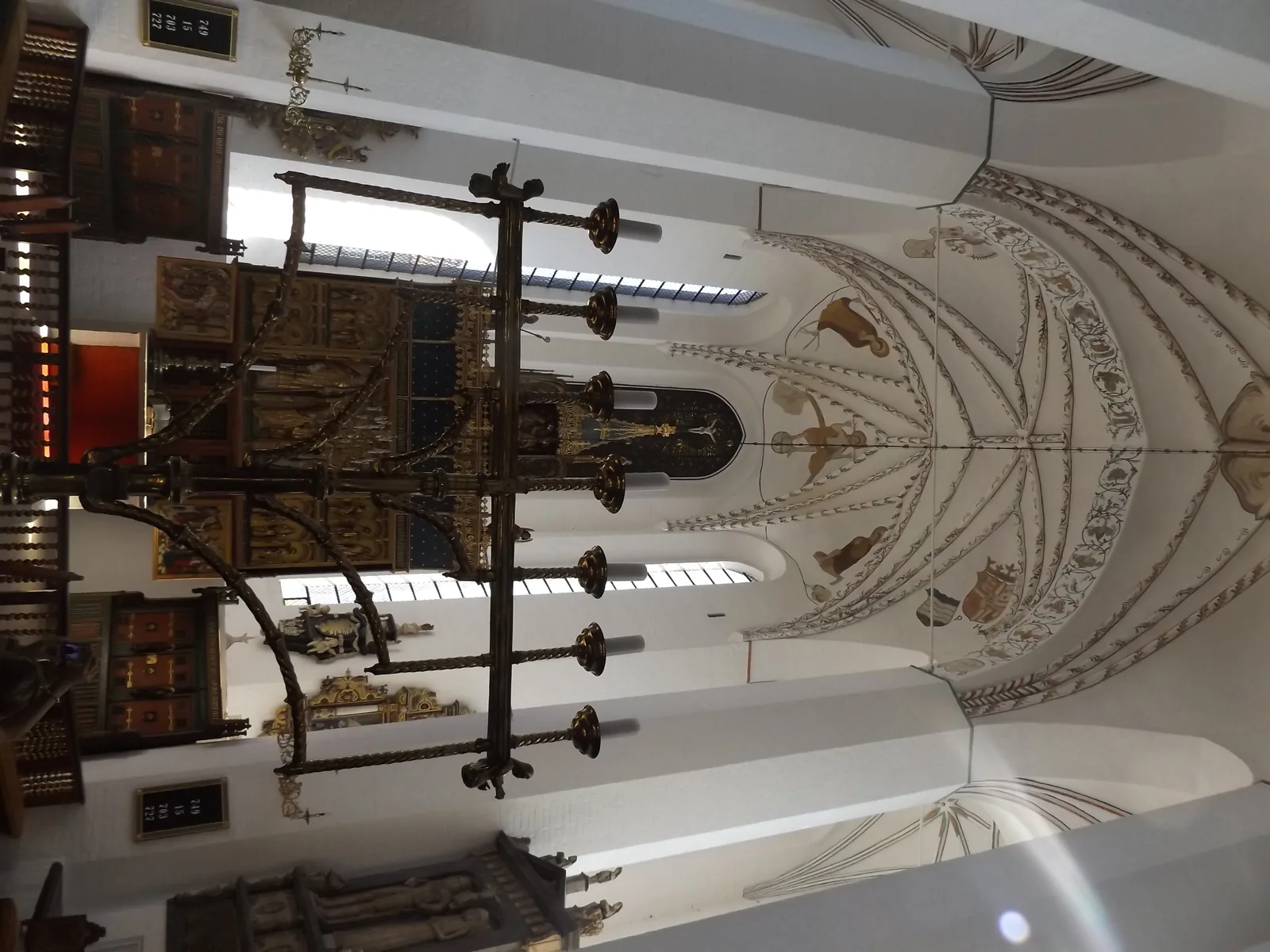
The interior of Aarhus Cathedral contains over 220 square meters of medieval frescoes, the largest coverage of any church in Denmark. These paintings were whitewashed after the Reformation and only rediscovered and carefully restored in the 20th century. They were produced between roughly 1470 and 1520, meaning they date almost entirely from the Gothic rebuilding phase. Particularly striking are the tall depictions of St. Christopher and St. Clement, which count among the largest such figures in the country.
The altarpiece carved by the Lübeck sculptor Bernt Notke is the cathedral's most celebrated single object. It was dedicated on Easter Sunday 1479 and features movable panels that reveal different scenes according to the liturgical calendar. The level of craftsmanship — gold leaf, precisely carved apostolic figures, and scenes from the life of the Virgin — is rarely matched in Danish churches of this era. According to the Guide Michelin Travel guide, the altarpiece is a must-see for any visitor with an interest in medieval art.
The oak pulpit, carved by Mikkel van Groningen and installed in 1588, occupies the center of the nave and depicts scenes from both the Old and New Testaments. Nearby, the baptismal font cast in copper by bell maker Peter Hansen of Flensborg in 1481 stands on four pedestals shaped as the heads of the four evangelists, each shown with their symbolic animal. It was a gift from Bishop Jens Iversen Lange — the same bishop who commissioned the Notke altarpiece — giving these two objects a shared patron and a close stylistic relationship.
The Stained Glass Window and the Lazarus Opening
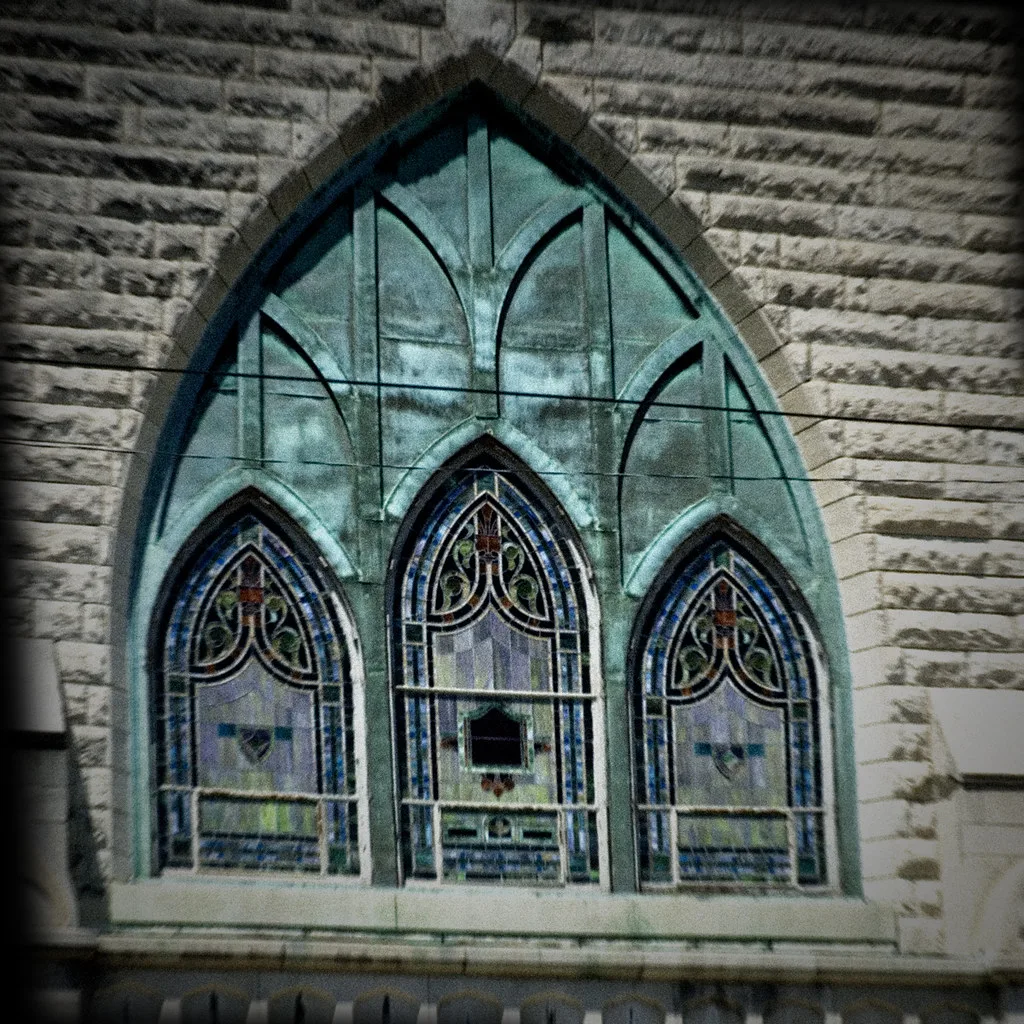
One feature that most visitors overlook is the single large stained glass window created by Norwegian artist Emanuel Vigeland in 1926. Standing 14 meters tall, it is the largest stained glass window in Denmark. The theme is drawn from a hymn by N. F. S. Grundtvig, and the three panels show Christ in his tomb, the Crucifixion, and Christ in golden light. Art historians note that the Crucifixion panel is unusual: it shows Jesus's head falling to the left, the opposite of the traditional convention. This deliberate deviation from iconographic norms makes it one of the most quietly radical religious images in the country.
At the base of the eastern end of the nave there is a small opening in the wall known as the Lazarus Window, dating to around 1300. This opening predates the Gothic renovation and survives from the original Romanesque structure. It was used to pass food and alms to lepers who were forbidden from entering the church. The opening is easy to miss, but it speaks directly to how medieval communities managed illness while maintaining spiritual inclusion for the sick.
Together these two details — a 1926 modernist window and a 1300 leper hatch — illustrate the full span of the building's active life. No other feature in the cathedral makes that temporal range as tangible.
The Great Organ: A Musical Marvel of 6,000 Pipes
The main organ in Aarhus Domkirke contains over 6,000 pipes and is the largest church organ in Denmark. Its sound fills the entire 93-meter nave during weekly services and special concerts, with a reverb that can sustain for several seconds in the brick interior. The instrument has been expanded multiple times since its original installation, with modern maintenance technology now supporting the complex mechanical action.
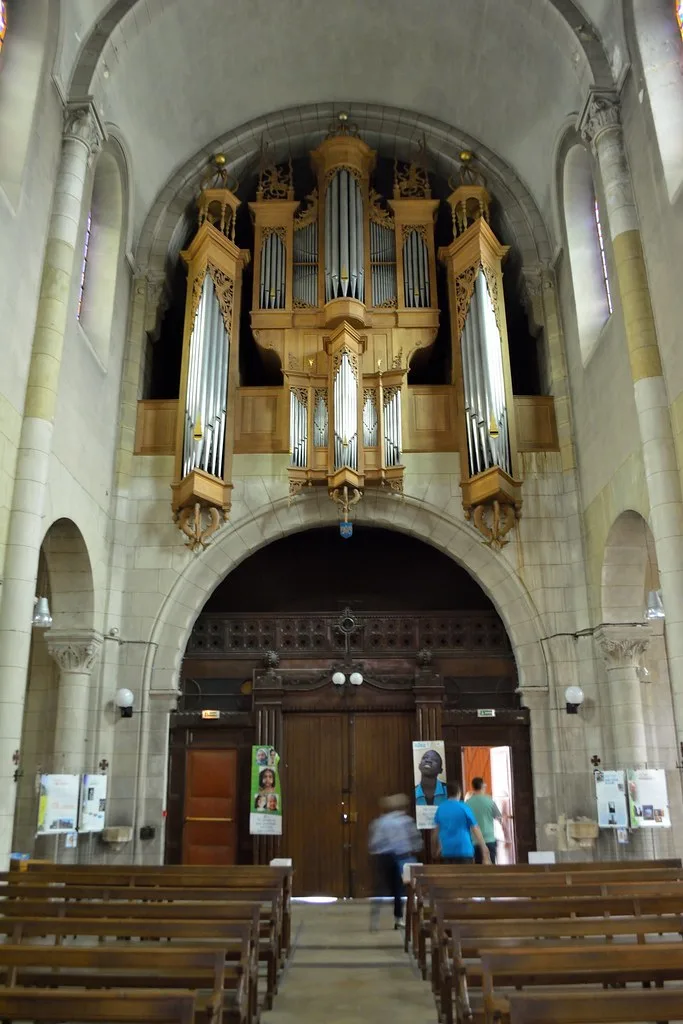
Organists from across Europe travel to Aarhus specifically to perform on this instrument. The acoustic conditions created by the Gothic vaults and the brick side walls give the space a warmth that recording cannot fully capture. If you want to hear the organ played, Sunday morning services at 10:00 are the most reliable opportunity. The cathedral also hosts occasional evening organ recitals — check the notice board at the entrance or the cathedral's official website for current schedules during your visit in 2026.
Even when the organ is silent, look up at the instrument itself. The facade pipes are decoratively gilded and the casework is carved in a style consistent with the 17th-century renovations of the choir. It is a visually impressive object quite apart from its sound.
Family Exploration: Treasure Maps for Children
Families visiting Aarhus Domkirke can collect a treasure map at the entrance, available at no extra cost. The maps come in two difficulty levels aimed at children aged 4–7 and 8 and above. Although the text on the maps is in Danish, the format is predominantly image-led, with visual clues that guide children to specific carved animals, painted figures, and architectural details throughout the building. International families can follow the trail without knowing Danish.
Children typically search for a small set of hidden details — carved creatures on the vaulted ceiling bosses, specific figures in the frescoes, and decorative elements near the altar area. The hunt takes roughly 20 to 30 minutes at a child's pace and ends at the font or the entrance, where staff can stamp a card. The activity keeps younger visitors genuinely engaged while adults spend time with the frescoes and the altarpiece.
The approach is worth knowing for parents planning the visit: the cathedral is a quiet place of worship, so children should be told to speak softly. The floor is stone and there are no barriers around most of the artwork, which means the building is accessible and visible at close range for small children. Pushchairs can be brought inside.
Practical Visitor Guide: Hours, Entry, and Location
Entry to the main nave is free. The tower climb requires a small fee and the stairs are steep, so it is better suited to older children and adults with no mobility concerns. The tower offers panoramic views over Aarhus Bay and the rooftops of the Latin Quarter. Check the VisitAarhus Official Site for current opening hours, as they vary slightly by season.
- Summer hours (approx. May–September): 09:30–16:00, Monday to Saturday
- Winter hours (approx. October–April): 10:00–15:00, Monday to Saturday
- Sunday: open for services; tourist access limited until after the morning service ends (typically around 11:30)
- Closed: during funerals and special services — check the notice board at the main door
The address is Store Torv, 8000 Aarhus C. The cathedral sits at the edge of the Latin Quarter, roughly a 10-minute walk from the main train station at Banegårdspladsen. Several city bus lines stop at Klostertorv or Skolebakken, both under five minutes on foot. Accessible entry is available at the side entrance; the main floor inside is level. Plan at least 45 to 60 minutes for a thorough visit including the treasury-hunt for children.
Cultural Atmosphere: Services and Concerts
Aarhus Cathedral maintains a full calendar of religious services, choir rehearsals, and public concerts. The cathedral choir is one of the oldest in Denmark, and attending a choral evensong gives a very different experience from a daytime sightseeing visit — the candles lit along the nave and the reverb of voices in the Gothic vault are genuinely atmospheric. During the annual Aarhus Festival (Aarhus Festuge), which typically runs across ten days in late August and early September, the cathedral and its square take part in city-wide programming that blends contemporary art with the historic setting.
Evening organ and choral concerts run periodically through the year and are often free or low-cost. Tickets, where required, are typically sold at the door. The winter months are particularly good for evening concerts because the interior is lit primarily by artificial light, which throws the frescoes and the gilded altarpiece into high relief. It is worth checking the cathedral's schedule online before your trip if music is a priority for your visit to Aarhus.
Beyond the Cathedral: Exploring Store Torv and the Latin Quarter
After your visit, the Latin Quarter immediately surrounding the cathedral rewards slow exploration. The cobblestone streets between Store Torv and Graven date back several centuries, and many of the buildings here predate the modern city by a significant margin. Independent cafes, bookshops, and small galleries occupy the ground floors of former merchant houses.
The world-class ARoS Art Museum Aarhus is roughly a 10-minute walk to the west. You might also consider visiting Den Gamle By Aarhus — an open-air museum of historic Danish buildings — which sits on the edge of the botanical gardens about 15 minutes on foot from the cathedral. There are many other things to do in Aarhus within comfortable walking distance of Store Torv, and the cathedral makes a natural start or end point for a half-day loop through the city center.
Local restaurants around the square serve traditional Danish smørrebrød at lunchtime. The harbor front is another 15-minute walk east from here if you want to extend the day with a stroll along the waterfront after finishing your tour of the church.
Frequently Asked Questions
Is Aarhus Cathedral free to visit?
Yes, entry to the main nave of Aarhus Cathedral is free for all visitors. However, there is a small fee if you wish to climb the tower for city views. You might also visit the Aarhus Botanical Garden for another excellent free activity in the city.
How old is the Aarhus Cathedral?
Construction on the original Romanesque church began in the late 12th century, around 1190. It was later expanded into its current Gothic form during the 15th century. This long history makes it one of the oldest and most significant buildings in Denmark.
What is the tallest church in Denmark?
Aarhus Cathedral holds the record for being the tallest church in Denmark, with a tower reaching 92 meters. It is also the longest church in the country, measuring 93 meters from end to end. These dimensions make it a dominant feature of the Aarhus skyline.
Can you climb the tower at Aarhus Cathedral?
Yes, visitors can climb the tower to enjoy panoramic views of the city and the Aarhus Bay. A small admission fee is required for the climb, and access may be limited during religious services. The stairs are quite steep, so a moderate level of fitness is recommended.
What are the must-see frescoes in Aarhus Domkirke?
The must-see frescoes include the large depictions of St. Clement and St. George fighting the dragon. These 15th-century paintings cover over 220 square meters of the interior walls. They provide a fascinating look into medieval religious beliefs and artistic styles in Northern Europe.
Aarhus Cathedral is more than just a religious site; it is a living timeline of Danish culture.
From its massive organ to its delicate frescoes, every corner tells a story of the past.
Make sure to include this landmark on your next trip to Jutland for a truly grand experience.
For the bigger picture, see our complete things to do in Aarhus guide. See also our ARoS Aarhus Art Museum and Aarhus Botanical Garden guides.
You can find more travel inspiration on the Denmark Wander blog to plan your perfect Nordic adventure.
You might also like



Continue reading
More guides you'll find useful